Flower & Food Festival

This is one of the highlights of my gardening year – Dundee’s Flower and Food Festival.

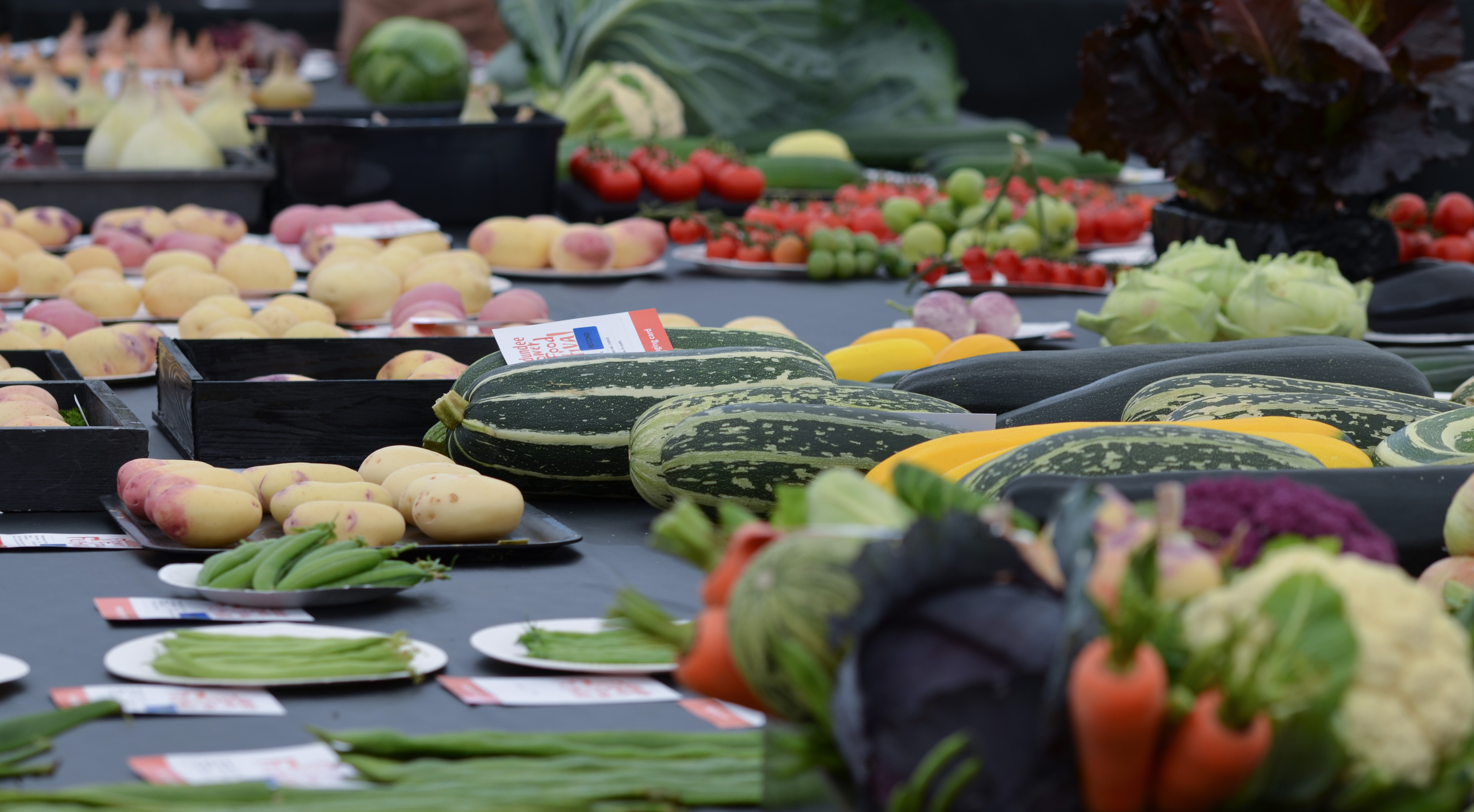
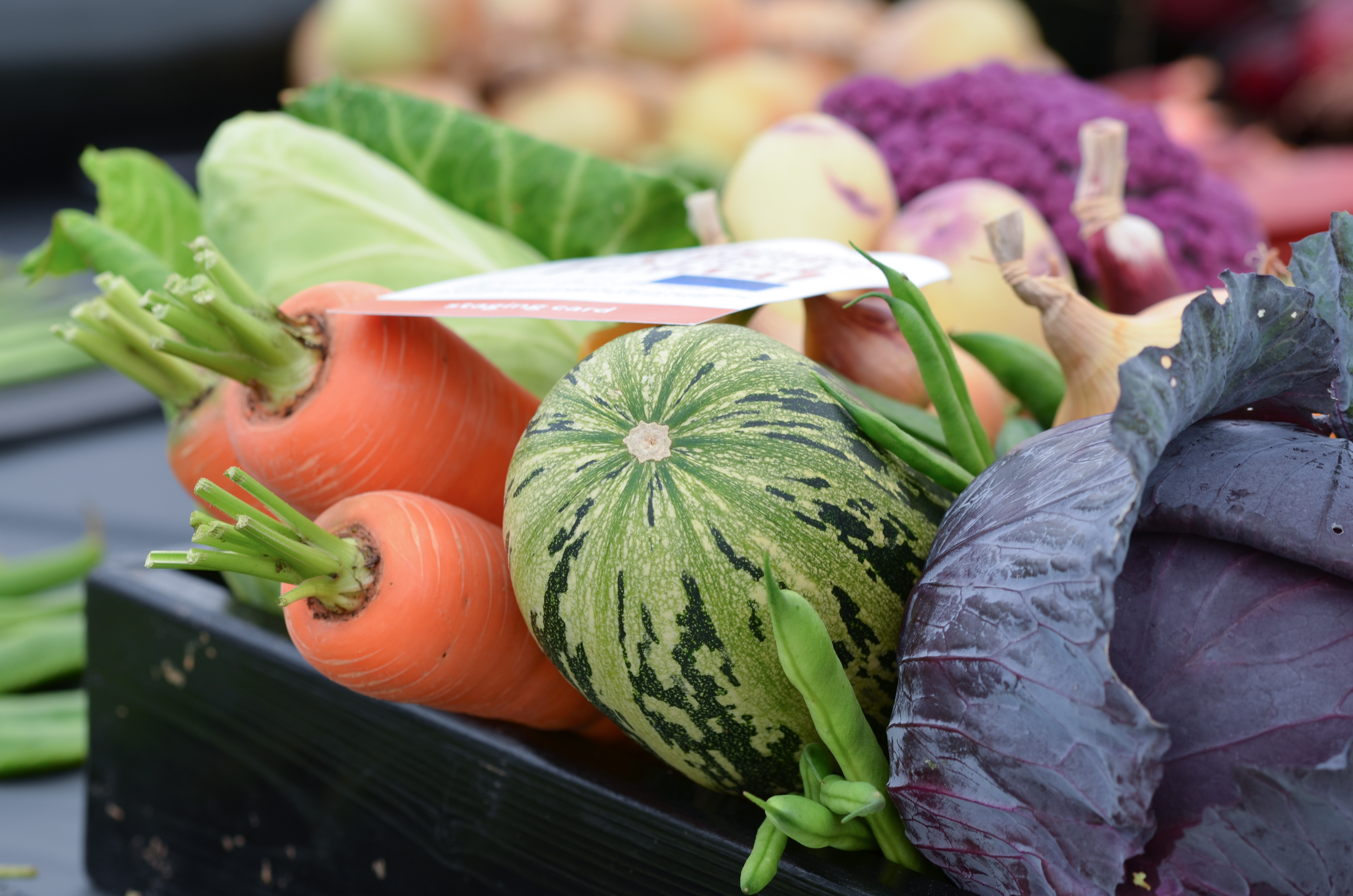
I go every year and really enjoy being in the midst of the best of what our area has to offer in terms of plants, produce and food.  There are displays of beautiful plants and flowers, from amateurs, dedicated growers and local businesses.  Not to mention the rows of fruit and veg and the amazing giant leeks, carrots and cabbages.  It feels like an exhibition built on the hours of love and joy which people have put into growing their favourite things.

I have a new-found appreciation for the people who enter these competitions.  You can’t accidentally grow three petal-perfect chrysanthemums or dahlias.  It’s impossible to grow a leek the size of a plank without putting in a great deal of time and effort to make it as large and perfect as it can be.  Maybe someday when I have more experience, and a great deal more time, I’ll consider trying my hand at a competition bloom, but for now I think I’ll continue to enjoy the flowers and veg I grow on my windowsill or on my plate…

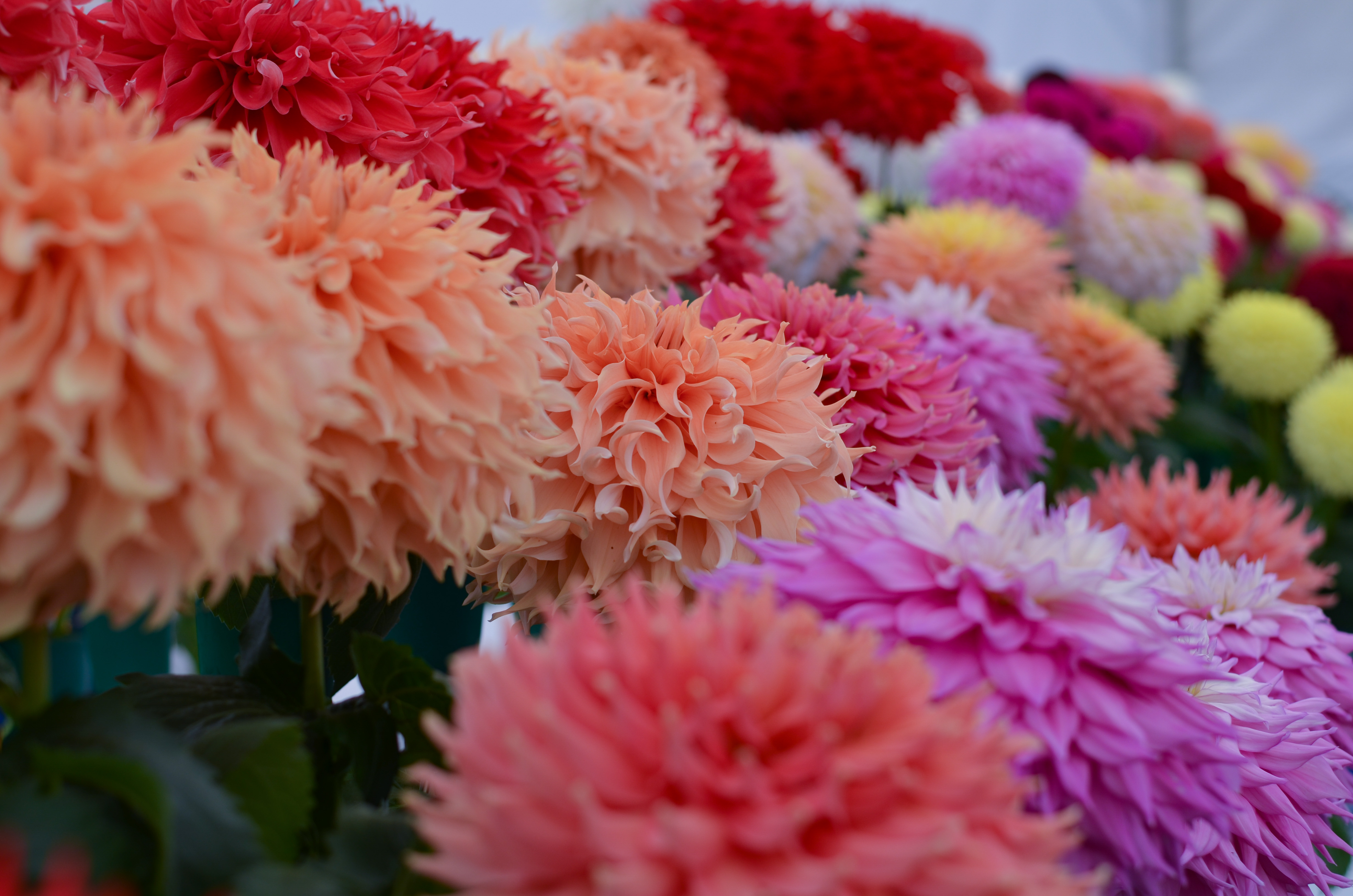
Dahlia heaven at the Flower and Food Festival – so many beautiful blooms on display as part of the Scottish Dahlia and Chrysanthemum Society’s annual competition.

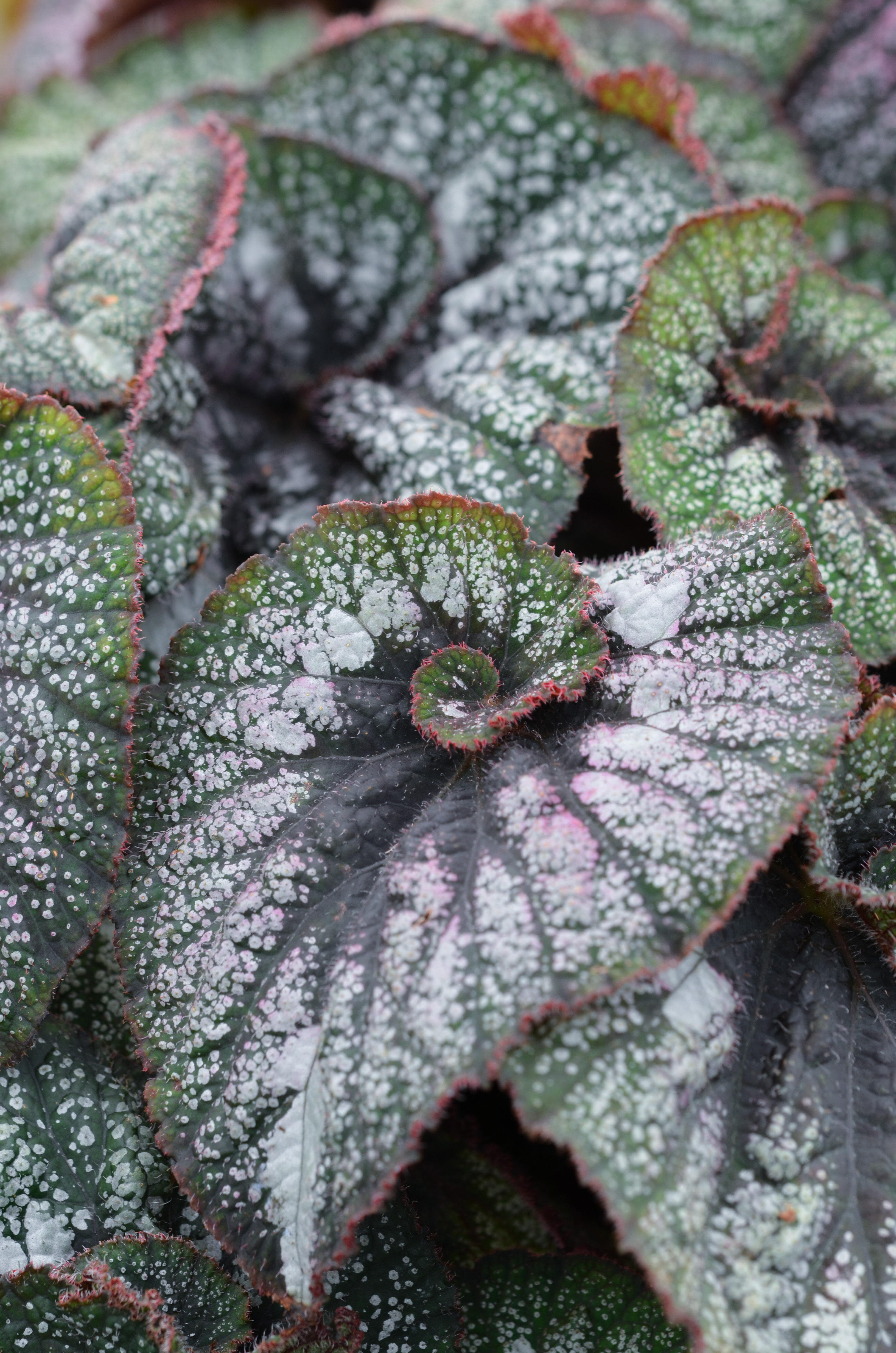
I was also very taken with some of the indoor plants on display – especially this frilly variety of coleus and these gorgeous swirly begonias.

The fruit and veg looked so healthy and colourful – you can tell the people who produced them just love growing!  #veggiegoals

Learning lessons…

This summer I have been learning a few lessons.  Not the book-reading kind – I’ve taken a break from horticulture studies as I decided that it would be madness to add this to the summer agenda of school holidays, parenting, working, enjoying the heatwave and almost constant watering.  I plan to resume studies in September (seems like a good ‘new-term’ kind of time to do it) but there have been plenty of other things to learn on a more practical level during the past few weeks:

1. I CAN have a nursery in my back garden.  This is number one because it’s been the most exciting and satisfying lesson of recent weeks.  For quite a while I’ve dreamed of having my own nursery – growing the kind of plants I love to sell to others – and I’ve take a big step forward by simply doing it.  I had quite a large number of surplus perennials and annuals which I had grown for planting in the front garden.  So I started a Facebook page, listed a few plants on FB Marketplace – and people actually wanted to buy them!

img_58871
The Secret Garden is open for busines…

I’ve called this a micro-nursery because it really is tiny – both in size and in stock availability – compared to a proper commercial nursery anyway! It’s very small-scale and I have not made a huge amount of money – perhaps enough to re-invest in some plants and seeds for next year.  But it has been worth it for the experience of producing plants for others, learning how to market them and deal with customers and moving towards my dream of owning a little independent nursery growing wonderful perennials, annuals, herbs and shrubs suitable for Scottish gardens.  In fact, I suddenly realised that not only moving towards it but I’m actually doing my dream – the Secret Garden micro-nursery is my own little corner of the earth for doing just that.  It may be small, and I may not make a living from it just now – or ever – but I’m doing it!  Having dipped my toe in the water this summer, so to speak, I’m excited to see how I can take it forward.  I am already planning ahead for next year: which plants to grow again and which were not successful or less popular; better ways to market the business, how to grow and expand via social media…. I have so many ideas for how to keep going and growing – and I’m so glad I’ve taken the first step.

2. Echinaceas are tricky to grow from seed.

When they do succeed and flower in the garden they are gorgeous and are currently providing a fantastic pop of pink in my front border.  But I have been trying since early spring to grow the intriguing looking variety ‘Double Decker’ and this is the result…

img_59072

Barely an inch of growth for the entire season.  I don’t know if it’s the seed, the soil, the conditions, or my lack of faith.  But those echinaceas are not going to grow into beautiful, flowering plants.  Mainly because I’ve composted them.

3. Don’t grow cucamelons too close together.

This was a difficult lesson to learn, resulting in me recruiting my eldest daughter to help me untangle about 20 young cucamelon seedlings which had started to twine around each other as well as other plants in the greenhouse.   We spent some time separating the cucamelons’ delicate tendrils, trying not to damage them.  Finally we got them all apart, so I potted up the ones I wanted to grow on, supporting them with bamboo canes.  I also potted a few more into a hanging basket, to see if they’ll grow as successfully hanging down.  However I was still left with quite a number of plants which no-one showed any interest in buying (I guess my local customers are not as interested as I am in experimental or exotic fruit/veg!) so I had to compost these too.  Which leads me to the next lesson…

3. Don’t sow too many seeds!

I do this Every.  Single.  Year.  and tell myself I don’t care – I just want loads of plants!

img_59191
Composting healthy cucamelons…argh! 

But inevitably there are Too Many Plants.  So I have to spend more time and effort potting on, watering and resisting throwing them away because I hate getting rid of potential plants.  However they do end up going in the compost as I have no room or they’re not selling or become too poor quality to sell.  If I want to raise more plants to sell I must be more efficient with space, materials and my time. So – I will sow more sensibly next year.  I will sow more sensibly next year.  I will sow more sensibly next year… I will…

4. Don’t dig – and don’t do green manure

I wanted to have a no-dig policy this year…but then I also decided it would be a good idea to sow green manure.  But these two things are not entirely compatible.  Yes, I think it is possible to do both – but I ended up doing neither very well.  The green manure grew well in some beds, but not so well in others, at least giving me an indication of the soil quality in each one.  But in the spring I then had to cut down and either remove or dig in the plants.  I tried to remove the majority of the largest plants, but eventually ended up digging over most of the soil, which still had shoots and roots left in them.  This is, of course, what you are supposed to do with green manure – but didn’t comply with the no-dig theory!  This autumn I will try to mulch the beds and may well cover some over if they are bare.  I don’t tend to grow many winter crops so I think I will mulch, cover and officially begin my no-dig policy next spring.

img_5915
The Secret Garden in early August

5. It’s all about layers

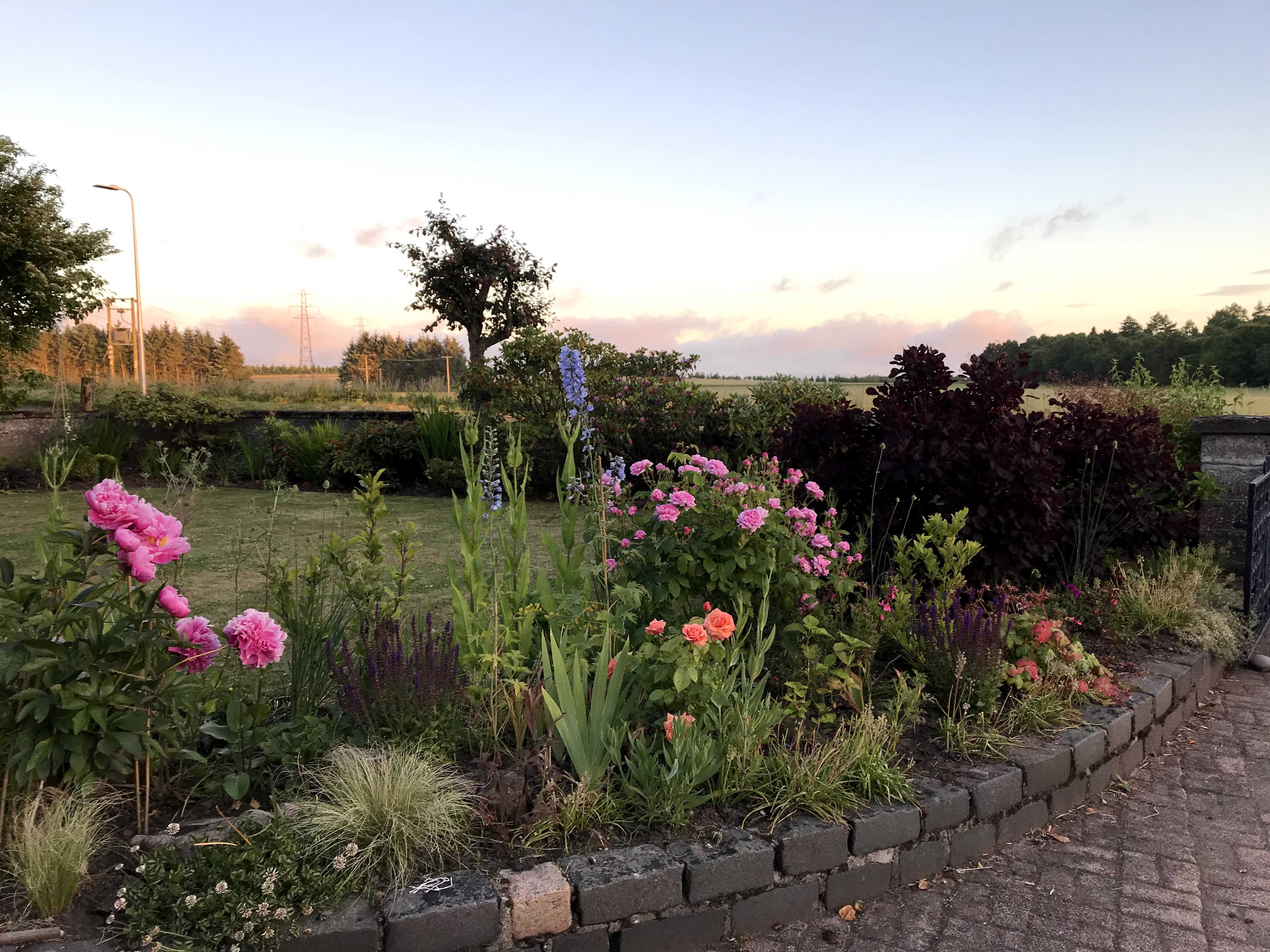
The front garden is looking well – probably deserves its own separate post to update on how it’s developing – but I still see lots of gaps.  I can see bare soil and smaller-than-they-should-be plants.  When I visit other gardens, I notice the fullness of the planting, how each plant blends together and merges to create a whole effect.  I think I am moving towards this, but it’s taking time.  And that’s ok.  I’m learning that I can’t achieve this look in one growing season, unless I empty the bank account at the local garden centre (not an option, according to my husband).  But I appreciate that this year there’s an extra layer that wasn’t there last year.  And next year there will be another and then another, until I’ve got the overflowing herbaceous border that I can see in my mind’s eye!  I’m playing the long game – and that’s good, because I’m really enjoying it.

20170821-DSC_0438
Echinacea purpurea – as it should look – in the front garden

Playing the long game…

Gardening is a lesson in playing the long game.

I’m a quick-fix, instant-gratification type of person, so my growing love of the garden has brought with it an appreciation for taking things a bit slower.  For taking the long view and planning ahead for the same season, the next season, the next year, the next few years…

Very few aspects of gardening are instant.  You can buy a fully grown plant in a pot and have instant colour.  Buy a few of them and you’ve got instant impact.  But like many ‘instant’ things in life, the satisfaction is fleeting.

I’m learning to love the long game.  I have no choice, really, as I don’t have the budget for an instant garden!  But even if I did, I think I would still choose to plan and sow, make careful selections and take the time to move and shape things over the course of days, weeks and months.

Take delphiniums for example.  I have sown many of these this year, some to share and sell, others will hopefully find a home in my garden,  but I am taking the time to grow these in pots until they’re large and healthy and can withstand the assaults of the various snails and slugs patrolling my front garden.  It’s true, even large plants can be decimated by the jaws of a hungry gastropod, but the larger ones stand a better chance of survival.  As an experiment, I planted out a few young delphiniums into the front border and in a matter of days – as I suspected – they’d been torn to shreds.

DSC_0221

Delphiniums…worth waiting for (as this bee will testify) 

This border itself is another example.  In many ways I wish I could blow the bank account and buy dozens of plants to fill the bare soil still showing in the front…and yet by sowing and propagating, along with some careful bargain-spotting at plant sales and garden centres, I’ve managed to gradually fill gaps in around two thirds of the garden so far.  I like seeing it take shape gradually, and it gives me time to pause and redesign areas which aren’t working, or try new ideas when I’m inspired by a photo or magazine article.

In that very border are two mature philadelphus shrubs.  Last autumn I pruned them hard – knowing this would mean no flowering for at least a year.  They had flowered poorly the previous summer anyway and were congested and overgrown.  So I played the long game – removing most of the older stems and branches to leave a healthy selection of wood with a far better structure.  I’ve missed the flowers but hopefully next year I’ll find out if my hard work has paid off and be rewarded with a much healthier and better flowering plant.

img_4647

The front border is filling up slowly but surely…

My studies are part of my long-term plans too.  Much as I would like to, I can’t train in horticulture full-time – work and family commitments demand my time and ensure an income.  But I can take little steps forward – studying for half an hour each morning, taking a couple of exams every few months…inching forward towards a qualification which might come in useful, or might simply make me a better gardener.  Either way, I’m enjoying the process and I know that the theoretical learning is going hand in hand with what I’m practicing over time in my own garden.

This week I sowed biennials – again, another long wait to see how they’ll turn out.  Biennial plants flower the season after sowing, so the foxgloves and hesperis seeds I’ve sown now won’t flower until next spring and will need cared for in the greenhouse during autumn and winter.  But it will be worth it when they’re finally planted out in the garden, proving colour and scent and encouraging insects and wildlife.

img_4687

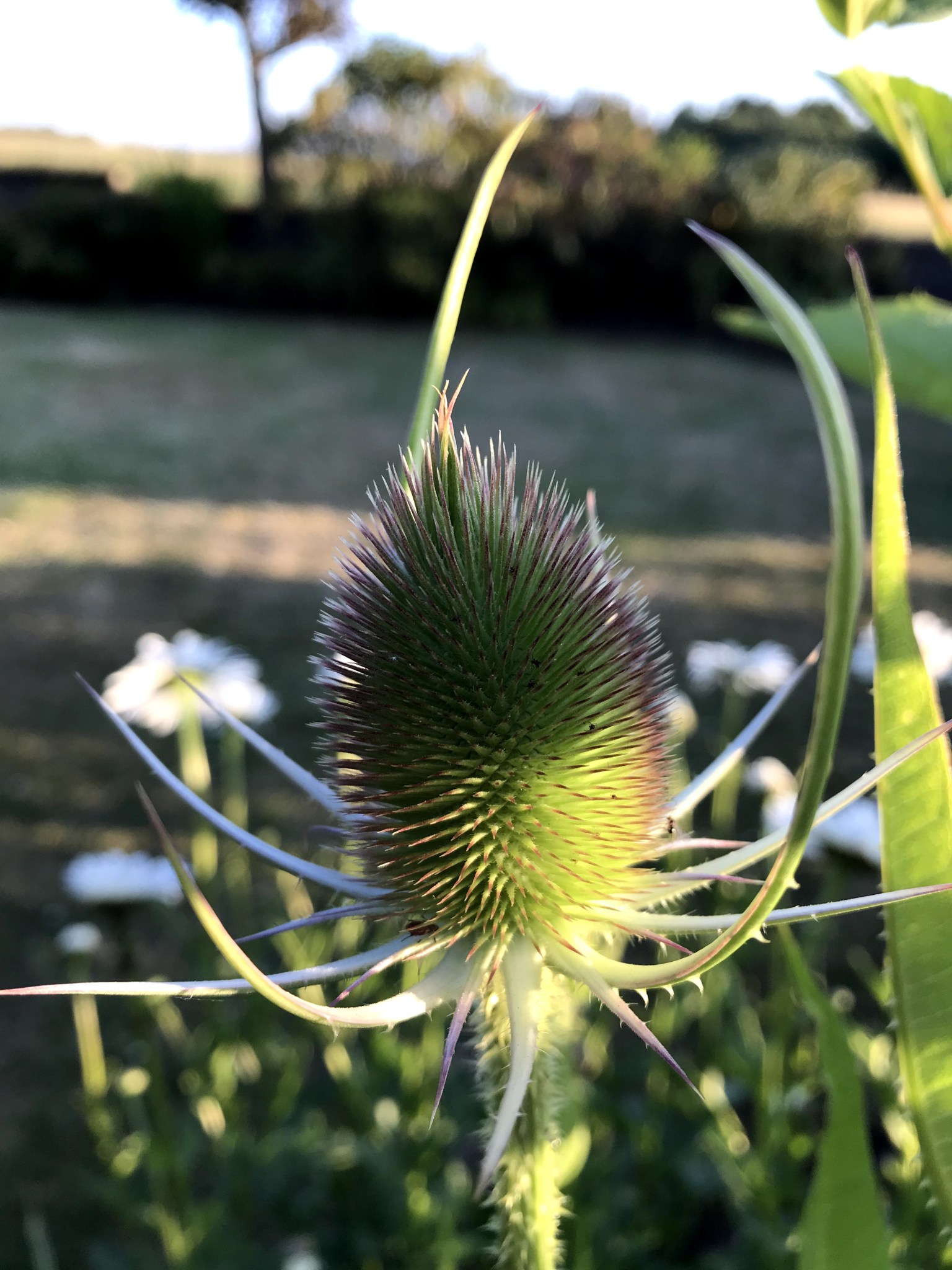
The teasels I sowed at the end of last summer are making an appearance now

So yes, even though ‘instant’ gardening can be a good thing, playing the long game is better for me – it slows me down and asks me to think and plan and anticipate what’s to come.  When many other aspects of my life seem to be whizzing past at speed, I’m grateful for the garden, which slows me down and helps me to appreciate what I have in front of me.


#TBT to Chelsea Flower Show 2018

As it’s Thursday, and I didn’t have the time to write about it at the time, here’s my own little summary of the joyous day I spent at RHS Chelsea Flower Show 2018!

20180526-DSC_1272

Me on my first visit to Chelsea Flower Show

This was my first ever visit to the show and it’s fair to say I was excited.  Very excited.  The event lived up to my expectations and I felt awed, inspired, influenced and delighted while I was there.  Although watching the highlights on TV give you a pretty in-depth view of the show gardens and plants, as well as a useful commentary from experts and the designers themselves, there’s nothing like standing right beside that garden and experiencing it for yourself.  Admittedly, you’re sharing that experience with hundreds of other people, all jostling for a good view, but it’s still a great experience.

Of the show gardens, my ultimate favourite was probably the Yorkshire Garden – I just loved its lush cottage garden planting, the stream and the beautiful stone building.  It looked like somewhere I could sit and enjoy for hours (assuming it wasn’t still in the middle of Chelsea and being viewed by thousands of plant-hungry people).

20180526-DSC_1190

I also loved the artistic creativity of the Harber and Savills Garden – I enjoyed its colours and the view down the line of the garden to the sculpture at its centre.   The one that took me by surprise was the South African Wine Estate, which I expected to feel ambivalent about – in fact I loved the different stages of this garden and the way it captured all the aspects (I assume) of the kind of land it was depicting.

20180526-DSC_1208

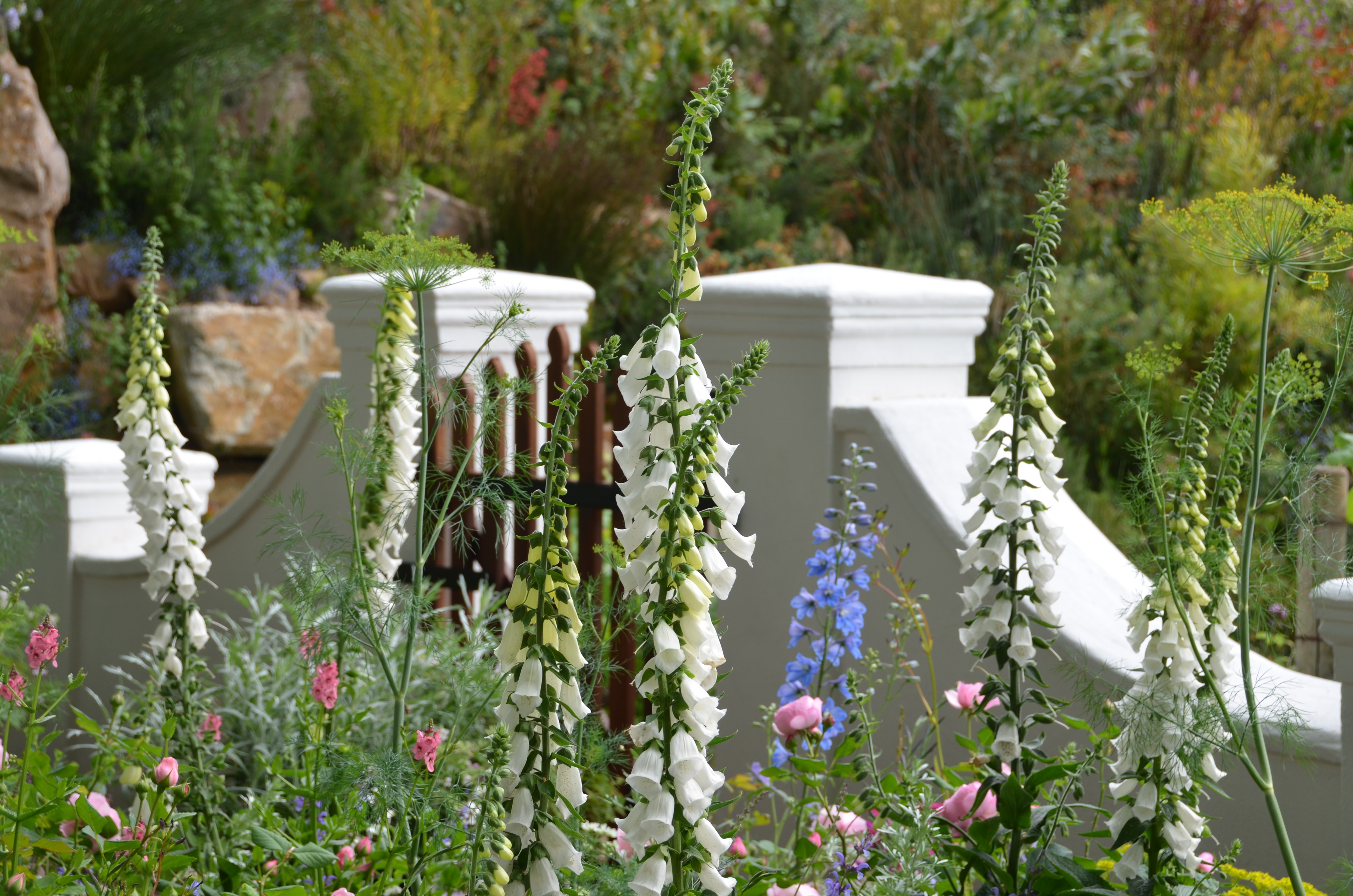
Delphiniums, roses, foxgloves…perfect cottage garden planting
20180526-DSC_1209

Cottage garden section of the South African Wine Estate 

The winner of Best Show Garden was of course Chris Beardshaw’s garden for the NSPCC.  I felt a little underwhelmed by it at the time, but I now wish I could go back and take another look at it again, having read a little more about it.  I think you would also fully appreciate the garden if you were able to get inside it and stand amongst the plants and enjoy the seating spaces.  This is, of course, impossible, but it must give the judges, celebrities and journalists a sense of each garden which we can’t quite achieve observing from the outside.
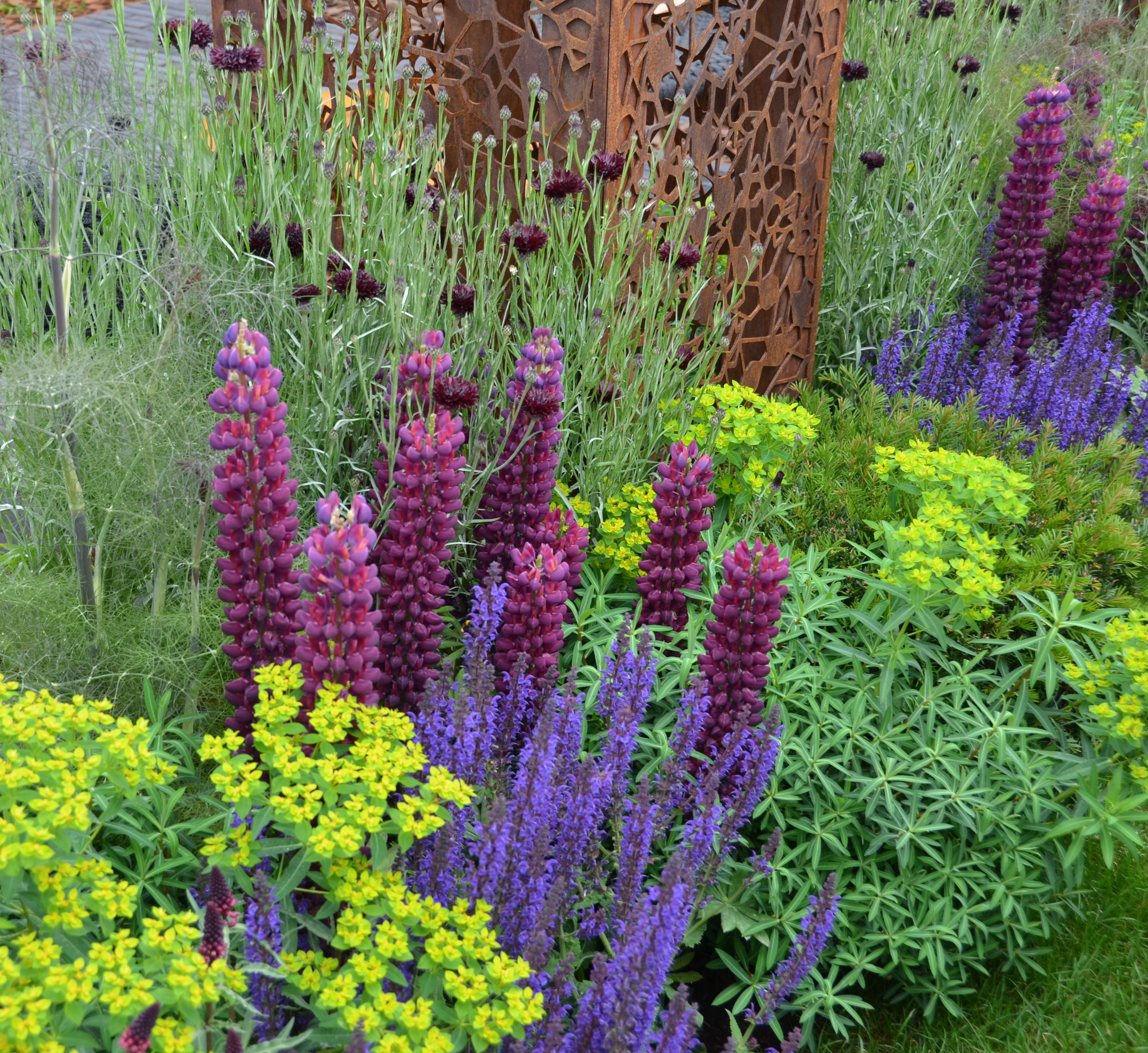
20180526-DSC_1148

I loved this planting combination – purples, red-purples and zingy greens, with the dark cornflowers popping up in the background

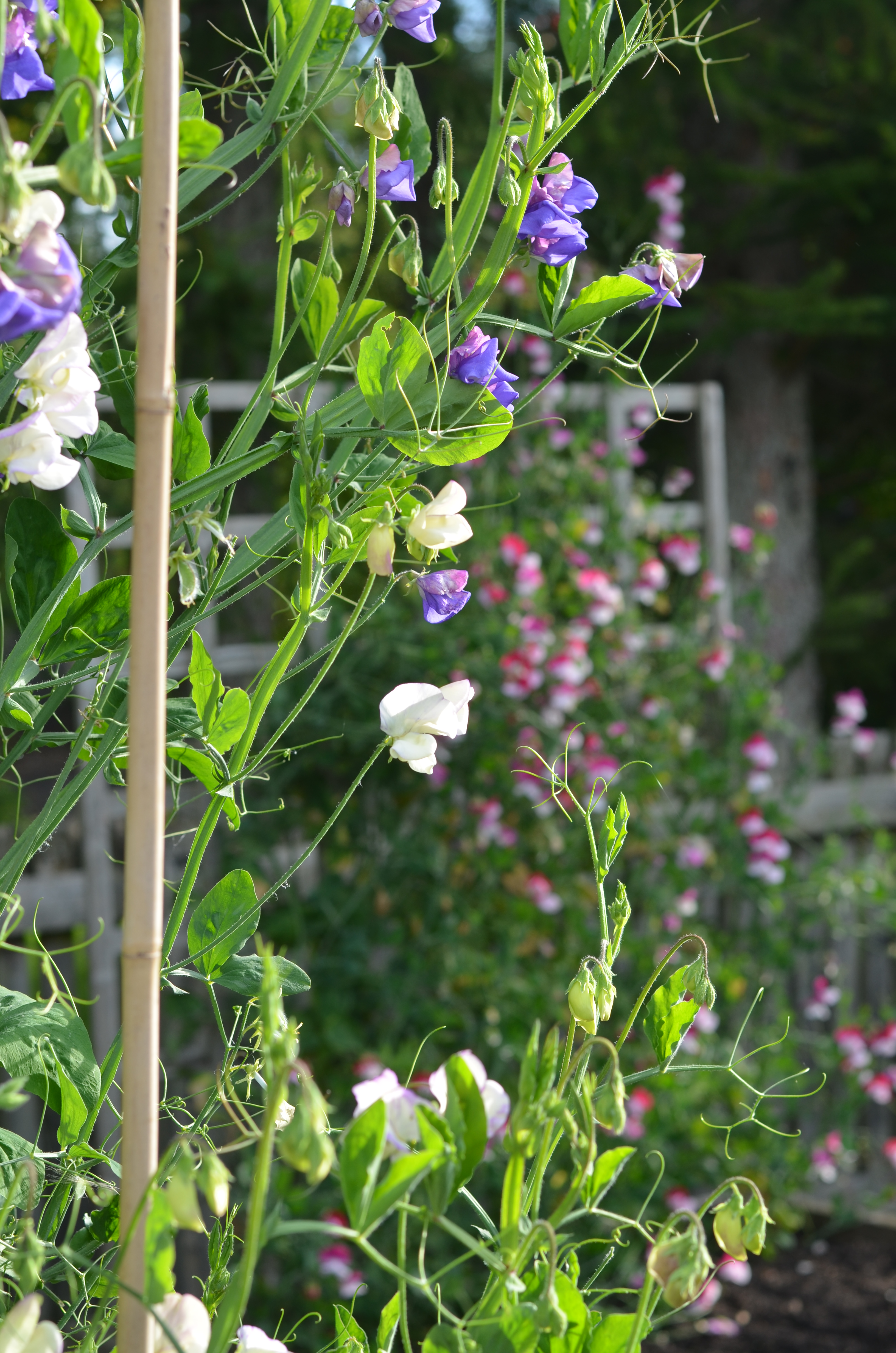
I felt the greatest connection to some of the smaller gardens, however.  The playfulness of the Seedlip Garden was brilliant.  I loved that every plant in it was from the pea family, and yet it was interesting and varied, as well as educational – I never knew there were so many ornamentals in the pea family!   (As a sidenote, if you haven’t tried Seedlip I’d encourage you to do so!  It’s a non-alcoholic spirit and it tastes of the garden.  Lovely with an elderflower tonic.)
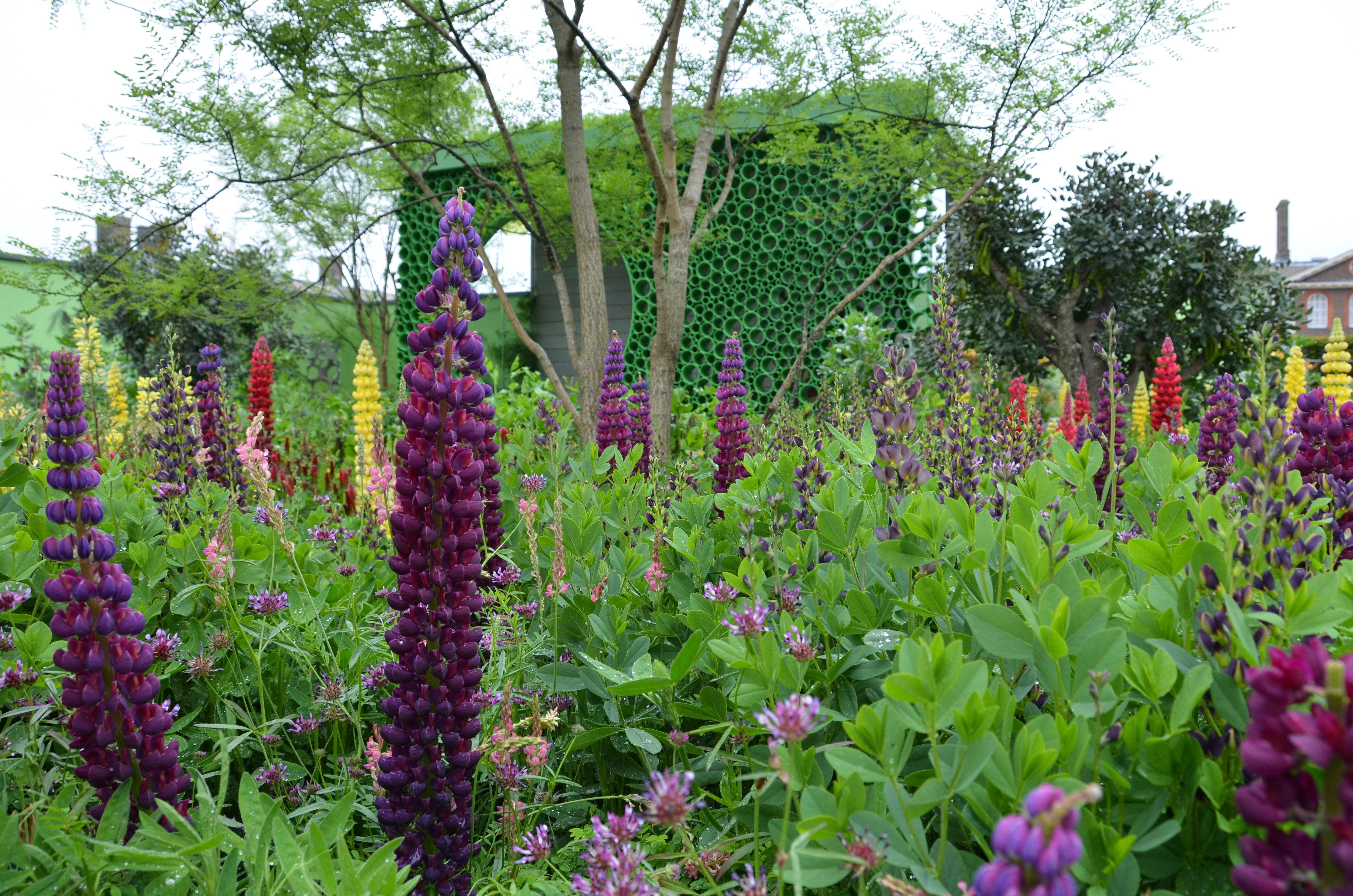
20180526-DSC_0974

Lupins and other pea-family planting in the Seedlip Garden.  Note the brilliant pea-villion! 

The Artisan Gardens also impressed me – they also seemed more playful in their creativeness; there was a freedom in these which I imagine the bigger Show Gardens can’t quite access.

Of these, the ones which stood out for me were the Billion Dreams Indian garden with its blue Mecanopsis and gorgeous patterned marble walls; the peaceful and elegant Japanese Hospitality Garden (amazing moss balls!) and the Laced with Hope Garden – this last one reflecting on the journey of a child with cancer.  Its graffiti wall certainly wouldn’t be for everyone but I loved the explosion of colour, which was also reflected in the planting, and the sculptures which I think really illustrated what the garden was trying to achieve.

This slideshow requires JavaScript.


The Great Pavillion was almost overwhelming there were so many flowers and plants on display.  The highlight for me was the The National Dahlia Collection.  So many dahlias on display in one place… I added loads to my wish list but the real inspiration was the planting combinations.  They looked fantastic next to hostas, grasses, foxgloves and aquilegia.  I’m still learning about how and where to grow my dahlias and this was really helpful and interesting.  I will definitely try to combine some of these in my garden in future.
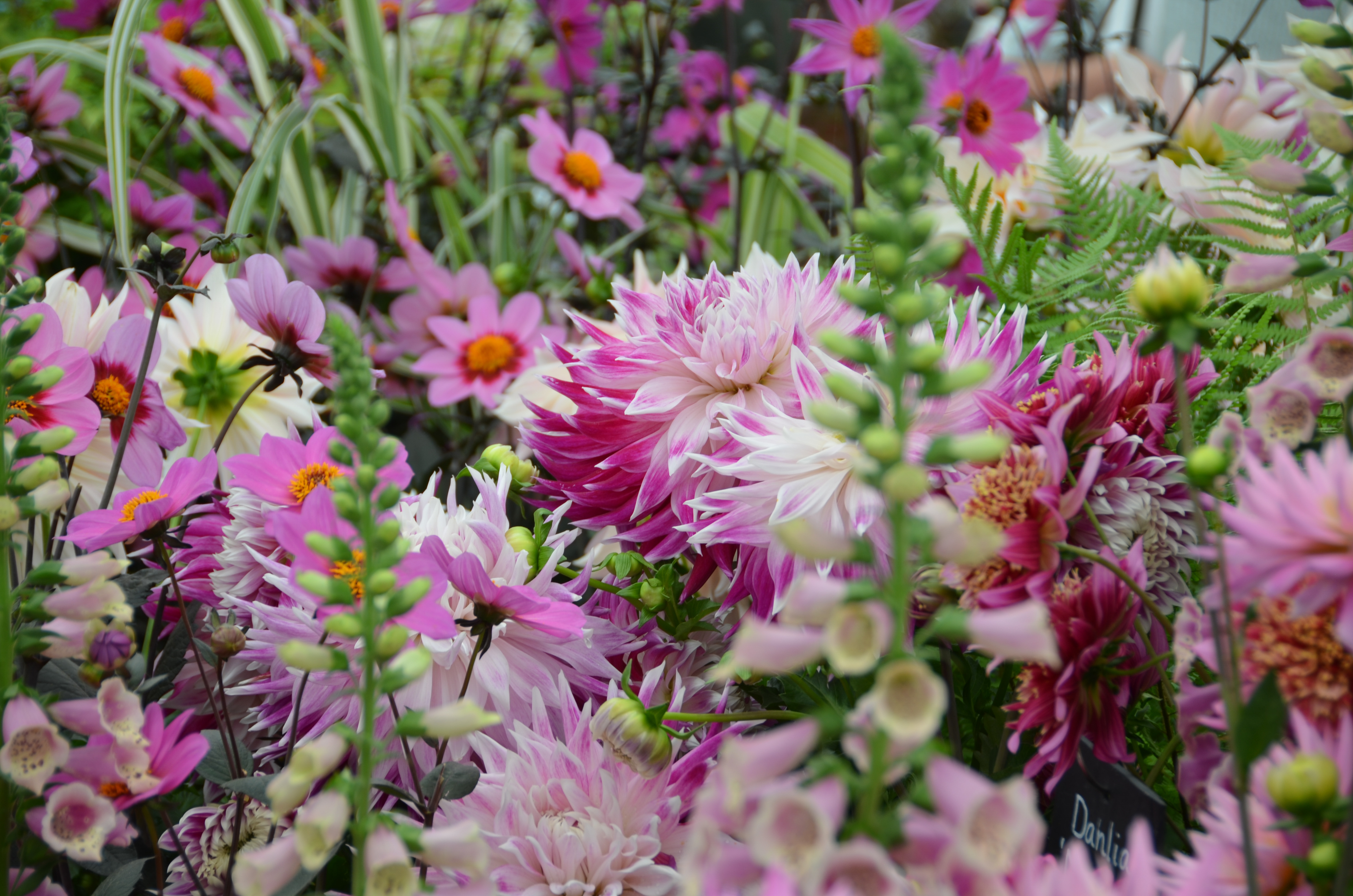
20180526-DSC_1102

Dahlias planted with foxgloves, grasses, ferns, aquilegia 

So, what did I take away from Chelsea? Inspiration, ideas and a packet of seeds.  Sweet pea ‘Harlequin’ in fact.  Other stand-out plants which I will now seek out: lupins (especially ‘Masterpiece’), more geums (‘Mai Tai’, ‘Cosmopolitan’) and it’s reaffirmed my desire for some astrantia, having seen a variety of these on show too.

20180526-DSC_1267

Lupin ‘Masterpiece’ and Cerinthe major

20180526-DSC_1151

Astrantia – I need some! 

20180526-DSC_1177

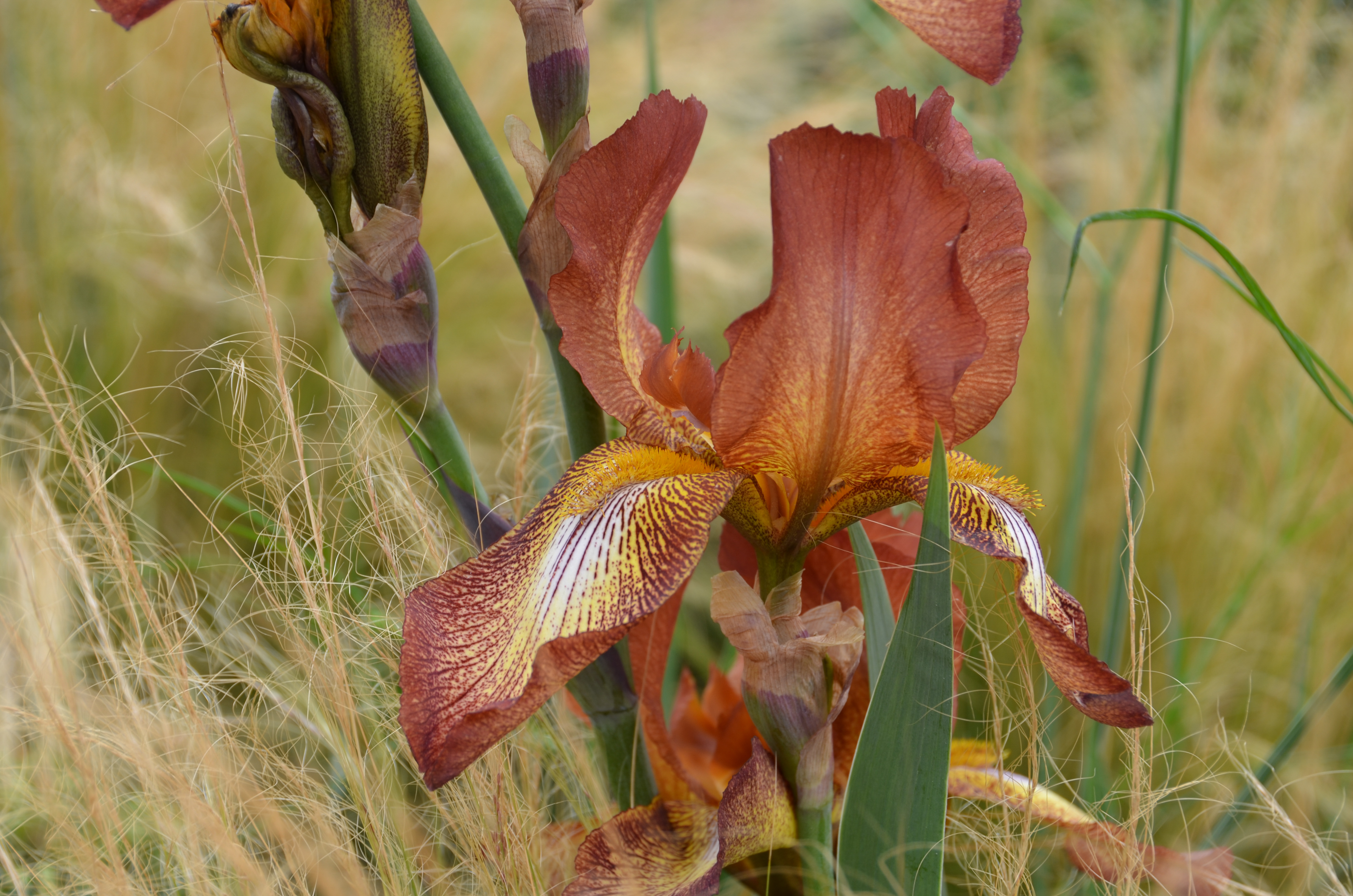
I wasn’t sure about this Iris – until I saw it planted with this straw-coloured grass

I really did love my visit to Chelsea – I felt like I was in Plant Heaven all day, which is how I feel in my own garden, only with extra Pimms and a few more celebrities!  Will I go back?  Yes I think I would – although ideally on a day or time when you could avoid the worst of the crowds.  It’s definitely made me keen to see more of the RHS Shows too – next on the list, Chatsworth… 😉

This slideshow requires JavaScript.


May snapshot

As I suspected, with the coming of Spring is the waning of the blog. However, I would never judge another garden blogger for forsaking screen in favour of soil, so I hope you won’t judge me similarly!

It’s now early June and I want the garden to stay as it is for a little while longer – everything seems to be in bloom at once.  I’m sure it’s a result of the delayed spring which means all the flowers have held back that little bit longer, and instead of appearing sequentially they’re putting on a fantastic show all together.  The laburnum tree in the back is humming with bees and spills over the pink rhodedendron, which is complemented by the dicentra and aquilegia popping up under the shrubs, with the foliage of those yet to bloom – hostas, alchemilla, lupins – filling out the gaps and making it all look quite lush.  And the clematis and honeysuckle are clambering over each other, competing to see who can look the prettiest (clematis wins this contest, but honeysuckle beats her on scent every time).

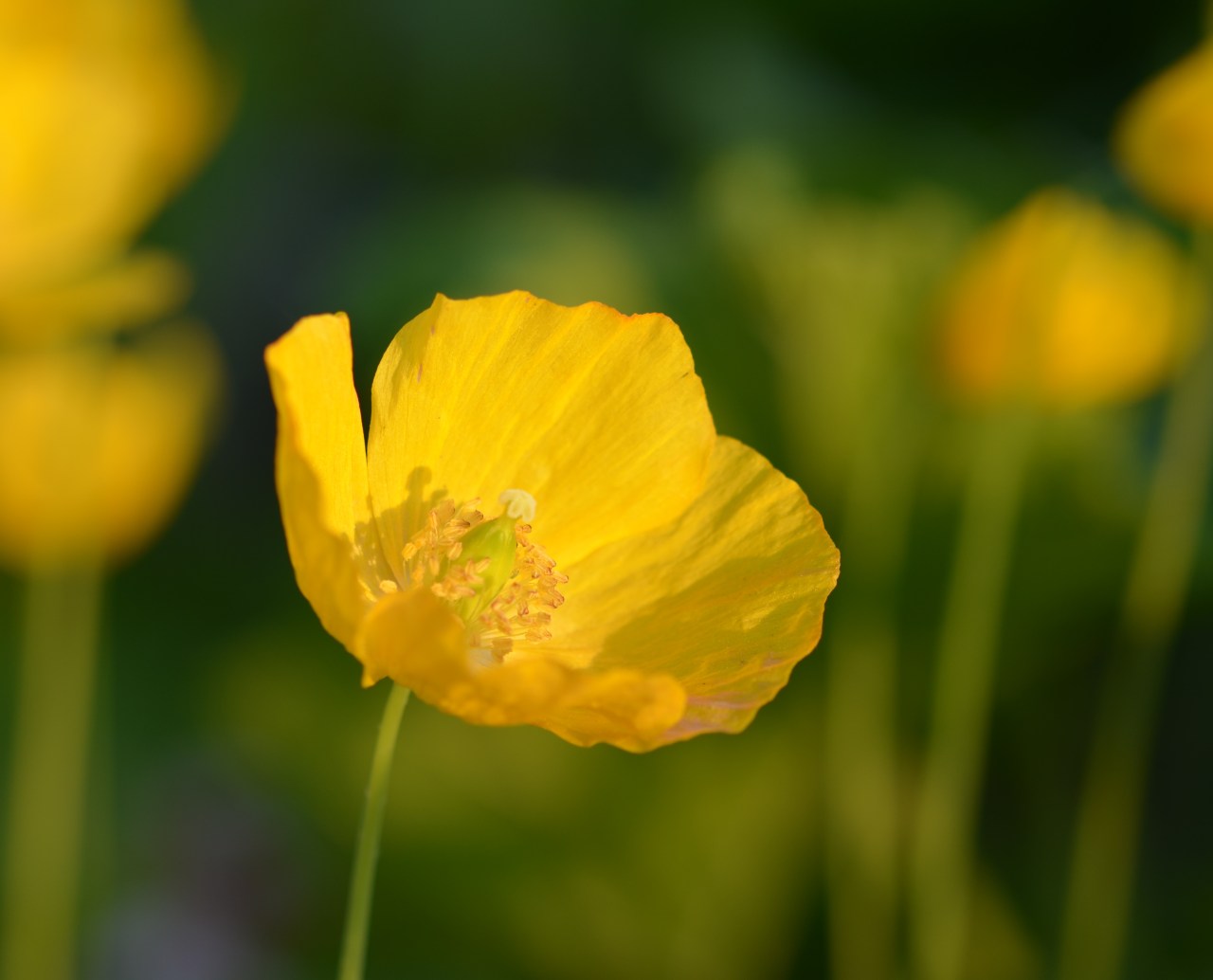
Yes, I wish I could pause the garden for a bit longer – I can tell it’s about to tip over from fresh and bright and frothy into overgrown and blousy and blown-out.  Not to worry…we might lose the primroses, forget-me-nots and aquilegia but the geraniums and roses are waiting in the wings – not to mention the geums and poppies already putting on a show in the front garden.

The flowers of May have also encouraged me to ramp up my photography – there are so many to capture after a long, cold, colour-free winter!

Here’s a snapshot of the garden last month, which will hopefully serve as a catch-up.

There are plenty more photos of what I’ve been up to in the garden on my Instagram feed @mycorneroftheearth.

This slideshow requires JavaScript.


Spring has sprung…

…and my blog is suffering!  But it’s a good sign – I’m blogging less because I’m spending more time in the garden.  I have to – there are seedlings to prick out, beds to mulch, weeds to weed and plants to pot up.  And it’s only going to get busier from here on in!

Real Life is also getting in the way of Creative Life, as it sometimes does.

The best way to bring you up to speed is perhaps to post a few photographs of some of the garden jobs I’ve been up to in the past month or so…

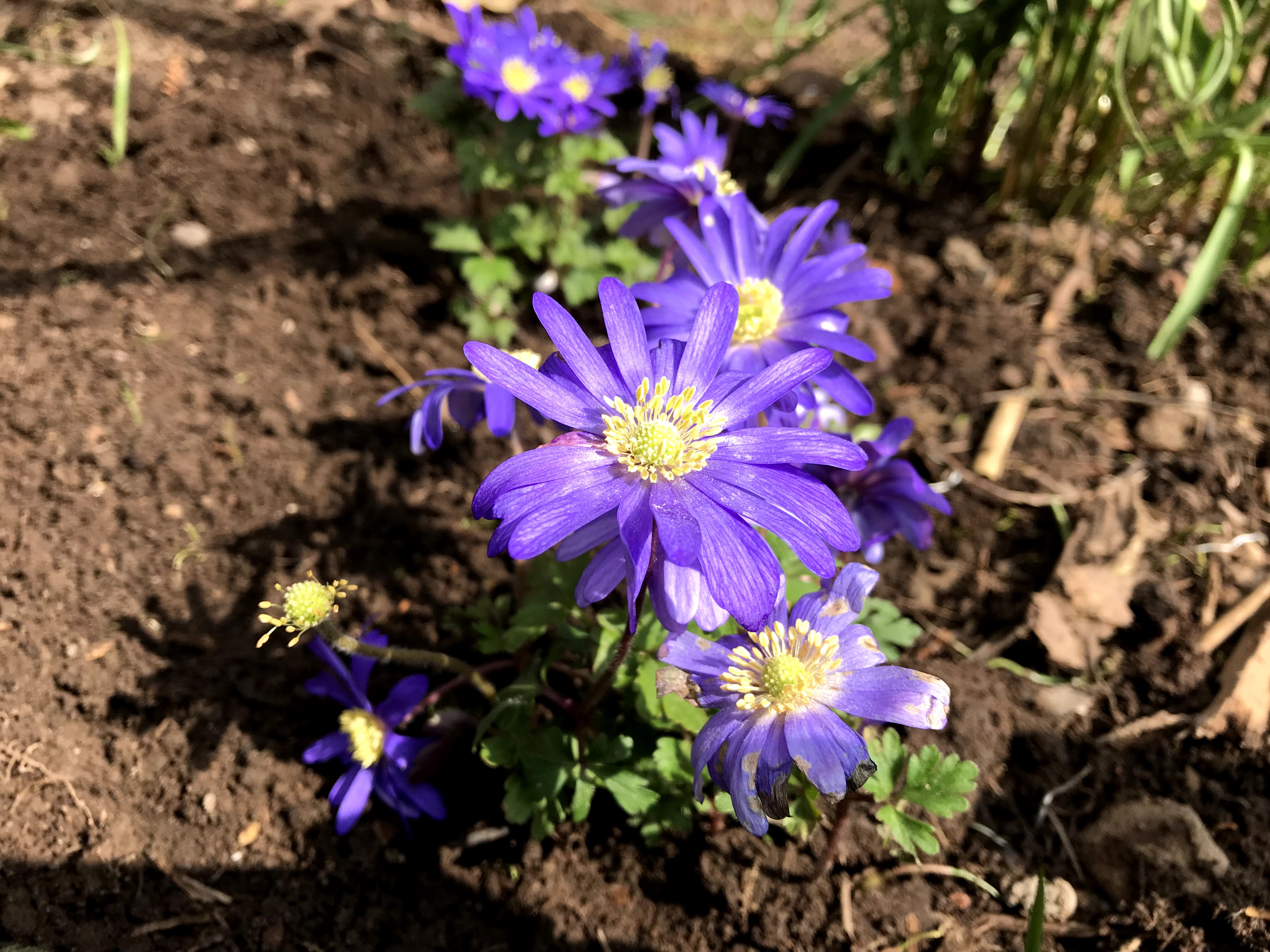
IMG_2400.jpg

I’ve bought and planted half a dozen Anemone blanda to perk up a bare patch of earth under the magnolia in the back garden

IMG_2367.jpg

I’ve got two plants for my tin-bath pond – a lovely double marsh marigold and a corkscrew rush

IMG_2657.jpg

The forced rhubarb is about ready to pick!


IMG_2629.jpg

I briefly considered starting a sycamore farm – these are all the seedlings germinating at the side of the greenhouse… and there are many, many, many more popping up around the raised beds, paths, plant pots, in between paving stones…

IMG_2046.jpg

I’ve started all my dahlias…and *may* have bought some more along the way… #dahliaaddict

IMG_2406.jpg

Most of my seedlings and young plants are progressing well – some of these I’ve already planted out, like the forget-me-nots, wallflowers and gypsophilia.

IMG_2810.jpg

Basically I am loving the fact that Spring has arrived, bulbs are blooming and the sun is occasionally shining – long may it continue!

It’s the age-old battle for a garden blogger – blog vs garden.

I suspect I will be posting monthly for the forseeable, however I do post much more frequently on Instagram and you can follow me there for some micro-blogging action at @mycorneroftheearth.


Houseplants

Blame it on the winter weather, blame it on Instagram, blame it on Jane Perrone and her brilliant On the Ledge podcast… Actually I think I have only myself to blame – it was only a matter of time before my plant obsession came indoors…

IMG_1479.jpg

Yes, I have succumbed to the charms of houseplants.

I have resisted in the past as they honestly didn’t interest me that much; I have had a handful for a while which I have either been given or were picked up when I took pity on them in the bargain basement section of the local DIY store.  I have ignored them a lot, watering sporadically, allowing the dust to collect, and they’ve mostly survived, despite the neglect.  I’ve taken little interest in them in garden centres, plant fairs, books and magazines.

But something has changed in the past few weeks and I’m looking at houseplants with a fresh, and somewhat lustful, eye.

Monstera delisiosa Philodendron                                                                                                                                                      More

Monstera deliciosa – image courtesy of Pinterest

I mean, who couldn’t love a plant with the name Monstera deliciosa.

We had one of these, growing up in a bungalow in Northern Ireland in the 80s.  It’s also known as the Swiss Cheese Plant.  The leaves are whole when they begin to grow and then later develop the ‘swiss cheese’ holes.  I want one now for my own house – a really big one. I would put it in the dining room and polish its leaves lovingly.  See, my attitude to houseplants is definitely shifting…

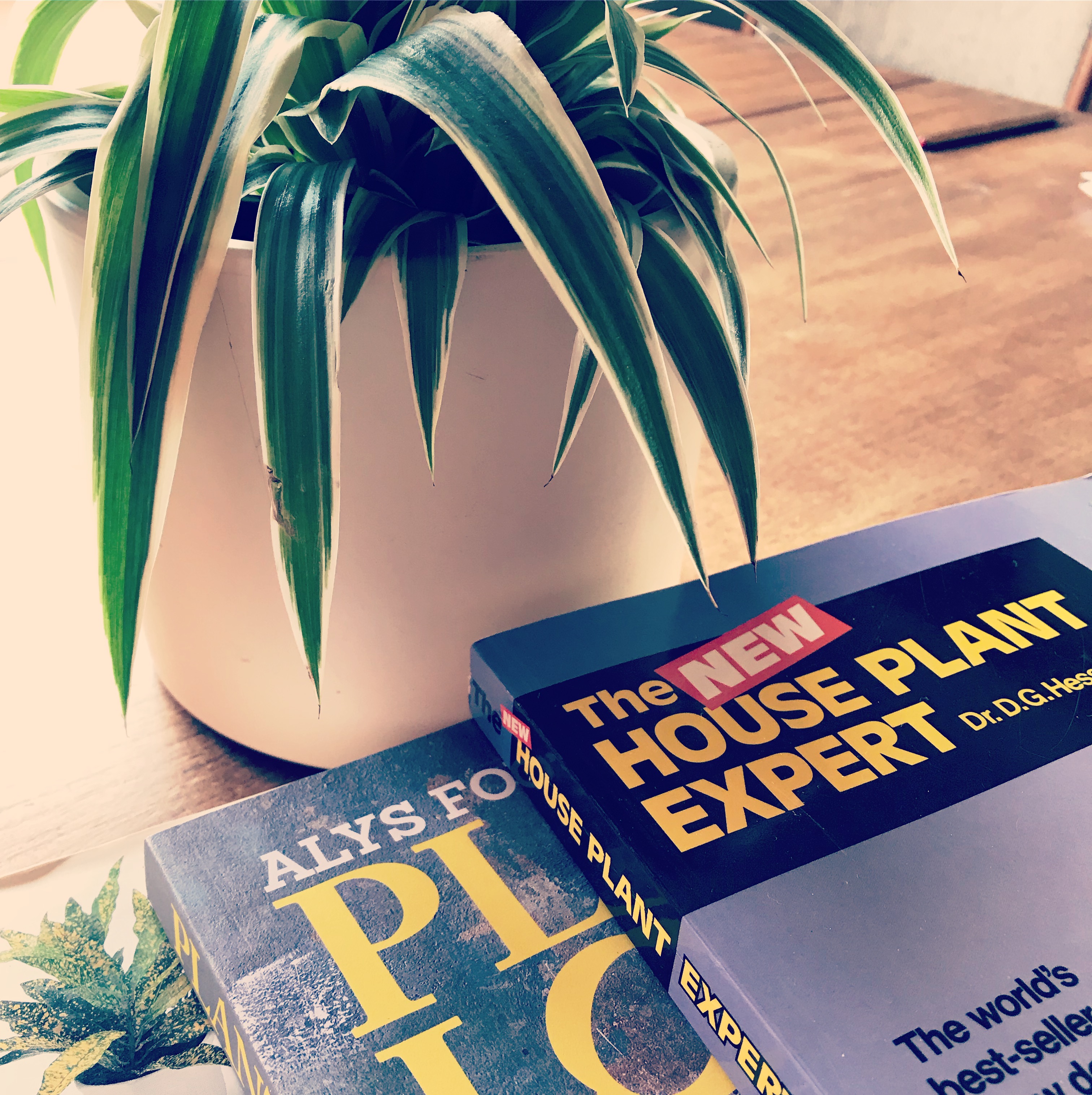
Binge-listening to On The Ledge certainly hasn’t helped – Jane and her guests discuss various houseplant related issues and the podcast is full of top tips and helpful advice for getting the most out of indoor gardening.  I recently listened to Jane and James Wong enthuse about ‘Dr H’ and his House Plant Expert book – one of the many books in Dr Hessayon’s ‘Expert’ range.  The next day I was in town for a meeting and decided to kill some time in one of the local charity shops (I always make a beeline for the gardening books – there are always gardening books in charity shops).  What did I find?  The new (well, 1980s!), updated bumper edition of Dr Hessayon’s House Plant Expert, plus another excellent guide with lots of useful photos, written by Matt Biggs of GQT fame.  Both of these cost me just £5!

I’ve also invested in Alys Fowler’s ‘Plant Love’ , which I think I would be tempted to buy even if I wasn’t newly-obsessed with houseplants as it’s a really beautiful book.

I’m already loving learning about a whole new genre of plants, and as well as picking up a couple of waifs at B&Q (a sorry looking Guzmania and a yet-to-be-identified but healthy looking possible ficus) I’m also growing my own.  Yes, yet another way I can indulge my love of sowing and growing.  There’s a sowalong happening over at On The Ledge so I’m joining in by growing Pelargonium ‘Attar of Roses’ and Sempervivum tectorum, otherwise known as houseleeks.

IMG_1514.jpg

Seeds of Pelargonium ‘Attar of Roses’

The pelargonium seeds are AMAZING.  They have twisty tails which wind and unwind according to the moisture of the soil, helping them to bury themselves into it and then germinate.  AMAZING.

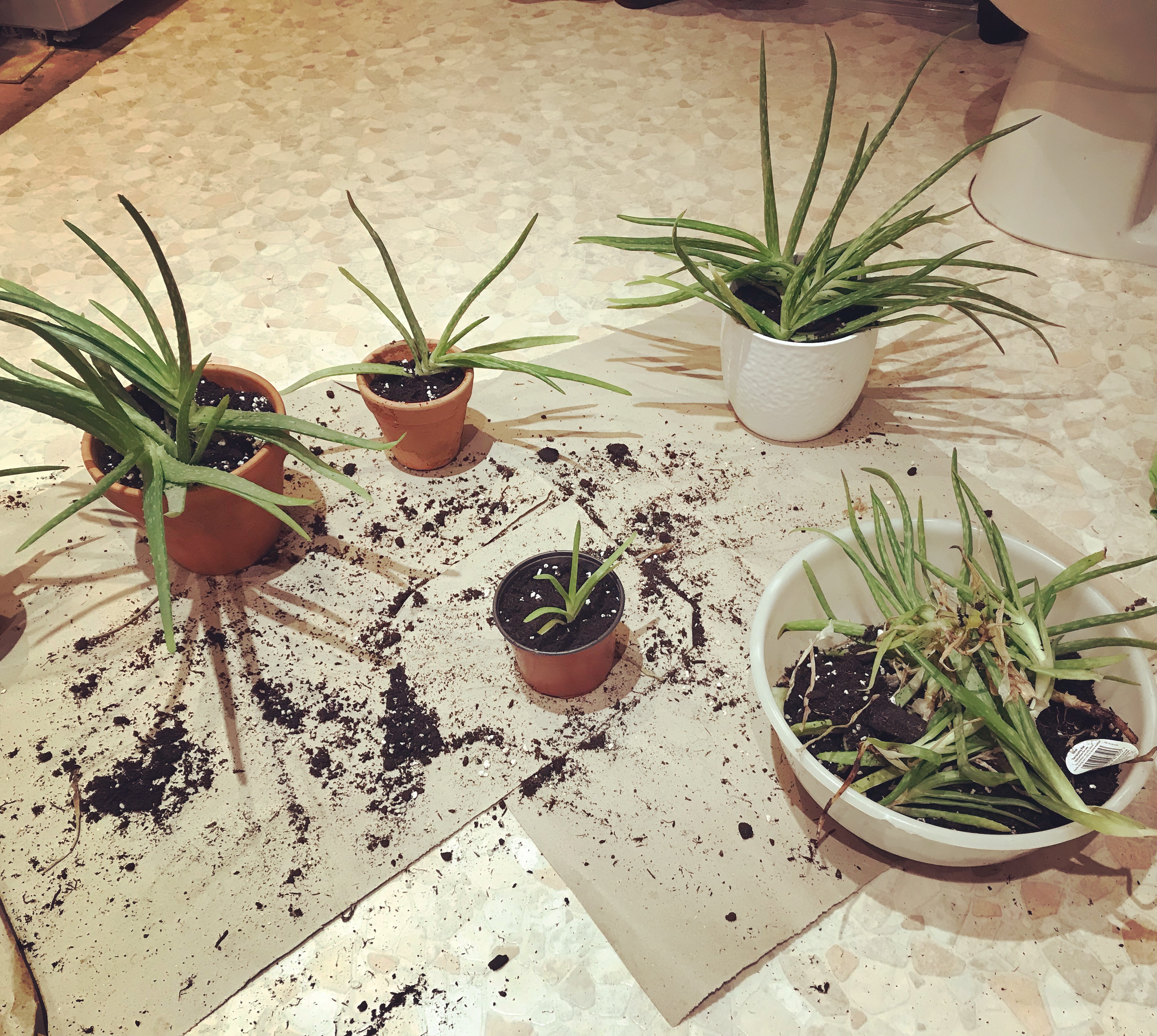
And the joy of houseplants is that even when the weather is not great for gardening outside, you can still care for and take joy from your indoor plants.  Today has been a great example of this; we are currently in the grip of the Beast from the East – a Siberian snow storm which has dumped about a foot of snow on us and closed schools and workplaces.  Gardening is out of the question – but today I managed to get my hands dirty and do some propagation, sowing the Sempervivum seeds and splitting and re-potting a large Aloe vera.

IMG_1621.jpg

I commandeered the laundry room floor for some indoor gardening

Instagram is currently heaving with trendy photos of fashionable houseplants – it’s the New Thing in gardening.  Am I being brainwashed?  Possibly.  Am I jumping on the bandwagon?  Maybe.  Do I care?  No!  I’m looking forward to growing my collection of beautiful houseplants – glossy green foliage, strappy variegated leaves, delicate flowers and patterns – and taking my own trendy photos to post on Instagram!

#plantaddict #sorrynotsorry


Back garden planning…

It’s time to concentrate on the back garden for a while.

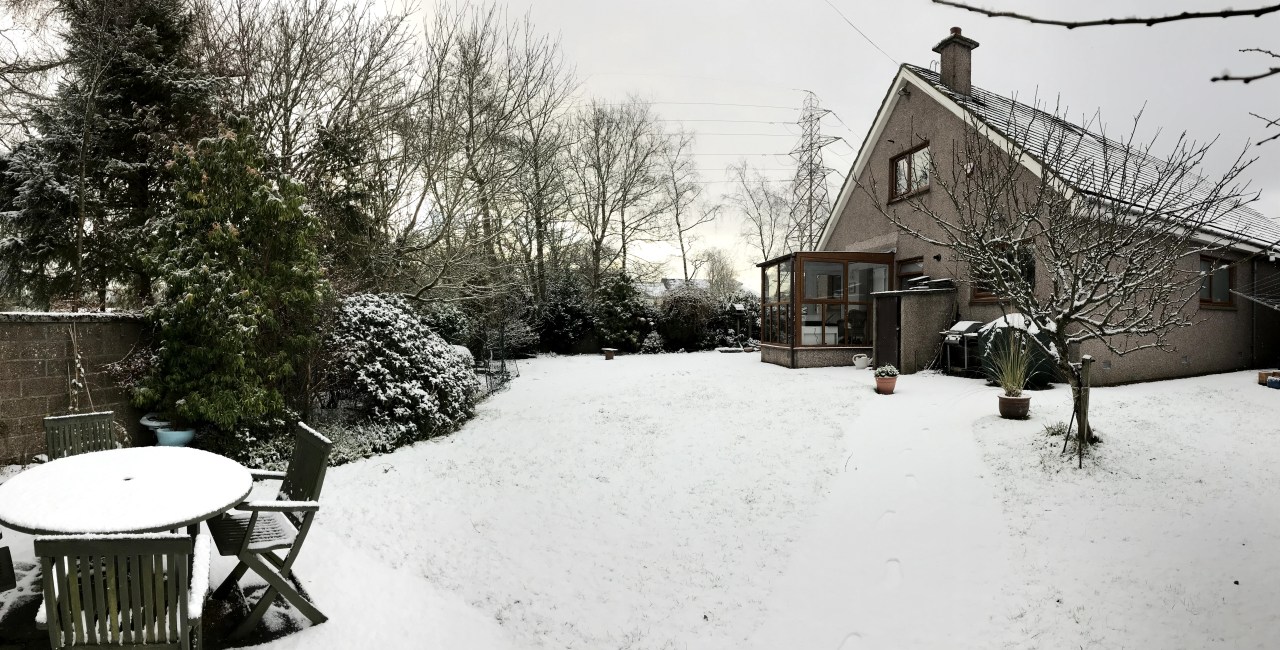
IMG_1528.jpg

View of the back garden.  Obviously, it’s not normally covered in snow…

I’ve been turning my attention to planning the front borders up until now because there’s just so much bare soil out there.   I now have this space three-quarters planned – there’s just one corner I’m not exactly sure what I’ll do with yet.  I’ve moved most of the shrubs I want to move and even binned a couple which have outlived their usefulness.  Now it’s a case of waiting for everything to grow; most of the herbaceous perennials or annuals I want to plant in the front I will grow from seed.  This is probably ambitious, to say the least, but I simply couldn’t afford to go into a garden centre and buy everything I’ll need to fill the front garden, and I kind of want the satisfaction of knowing I’ve created much of it myself, from seed.   Don’t get me wrong – I have bought and will continue to pick up bits and pieces along the way, especially if I spy bargains at a plant sale or special offer.  But I’m trying my best to grow most of it, and that process is already underway.

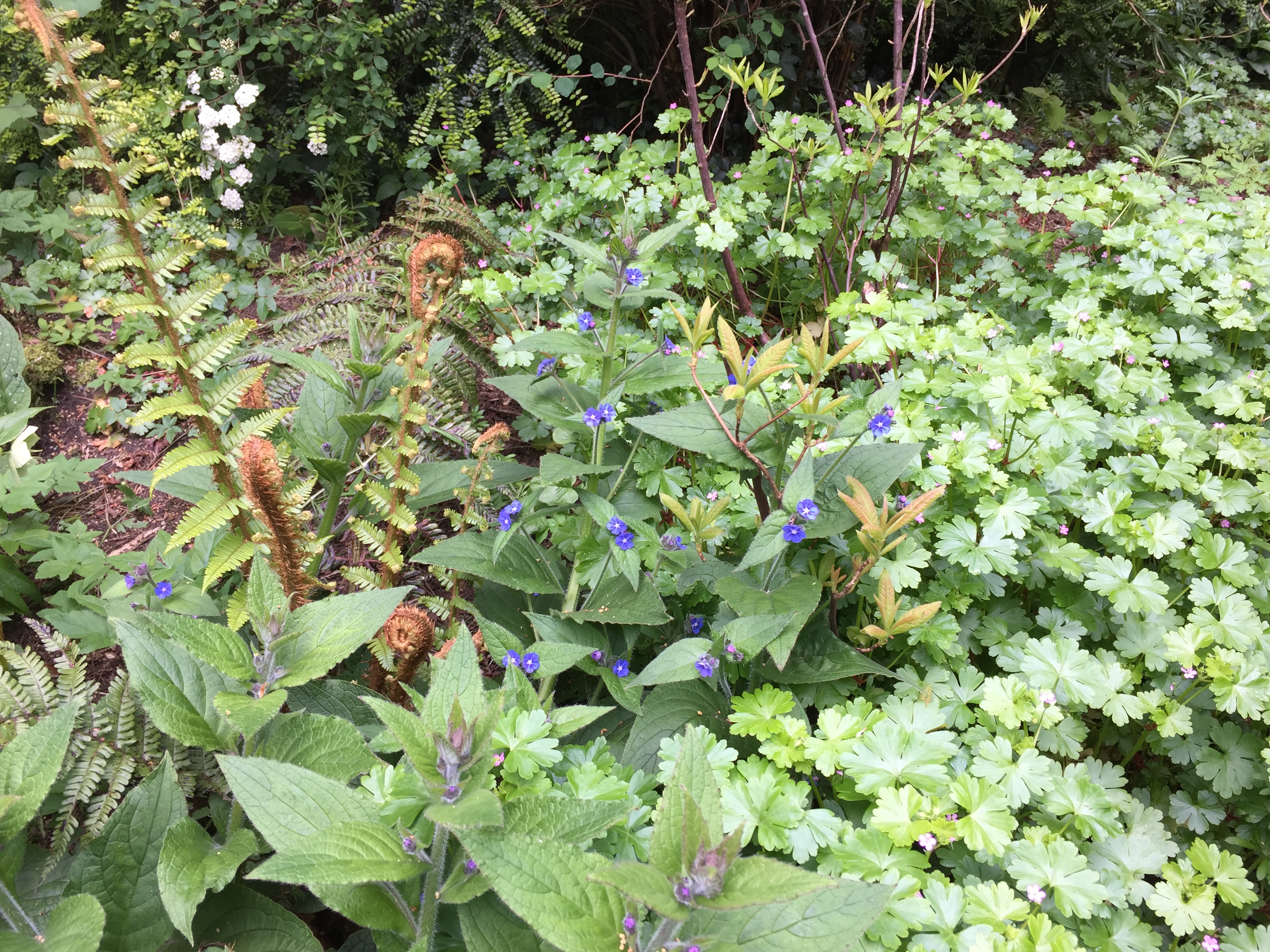
So, with spring fast approaching, it’s time to look again at the rear garden.  There’s plenty of bare soil here too and I want to take a different approach with this area.    I have had the idea of woodland planting for the back garden for a while, as it tends to be more shady and there are a lot of mature, established shrubs and conifers.  This was confirmed on a visit to Belfast Botanic Garden in late spring last year when much of the planting which caught my eye was lovely lush, untamed woodland-style planting and I was inspired by many of the combinations – pulmonaria and geraniums, ferns and tiarella, hostas and hellebores, planted alongside rhodedendrons, pieris and euphorbia.  It struck me that I have the basis of this kind of planting already and want to keep the theme going.

IMG_1358.jpg

Ferns and pulmonaria at Belfast’s Botanic Garden

There are other criteria for the back garden: I would also like it to more or less take care of itself, I’m happy with a slightly ‘wild’ look and the plants will also need to be fairly tough as the chickens are free-ranging out there regularly now and love to scratch about in these borders and take dust baths in the driest spots.

Colour-wise, everything that’s out there already is purple, pink or white and that’s a theme I quite like and will continue – with the exception of wild primroses.  I really want these, as they are perfect woodland plants, will spread and provide early spring colour.  I hope their soft yellow shade will be a nice contrast for other planting in this area.

The plants which already shine in the back garden are geraniums, hostas, aquilegia and some alchemilla mollis which I have to keep an eye on or it would take over.  There are quite a few Fritilliaria melleagris (snakes head fritillaries) which will soon be emerging I hope and I’m also watching for the hellebores to make an appearance.    Last year I also added some white Hesperis matronalis (sweet rocket) which I really like and some Japanese anemones – I hope these will settle in and spread around the back and in between the larger shrubs.

So, the planting is already fairly ‘woodland’ or ‘wildflower’ in theme and I want to continue that, adding some sturdy specimens which will provide more colour for more of the year, and preferably ground cover too.

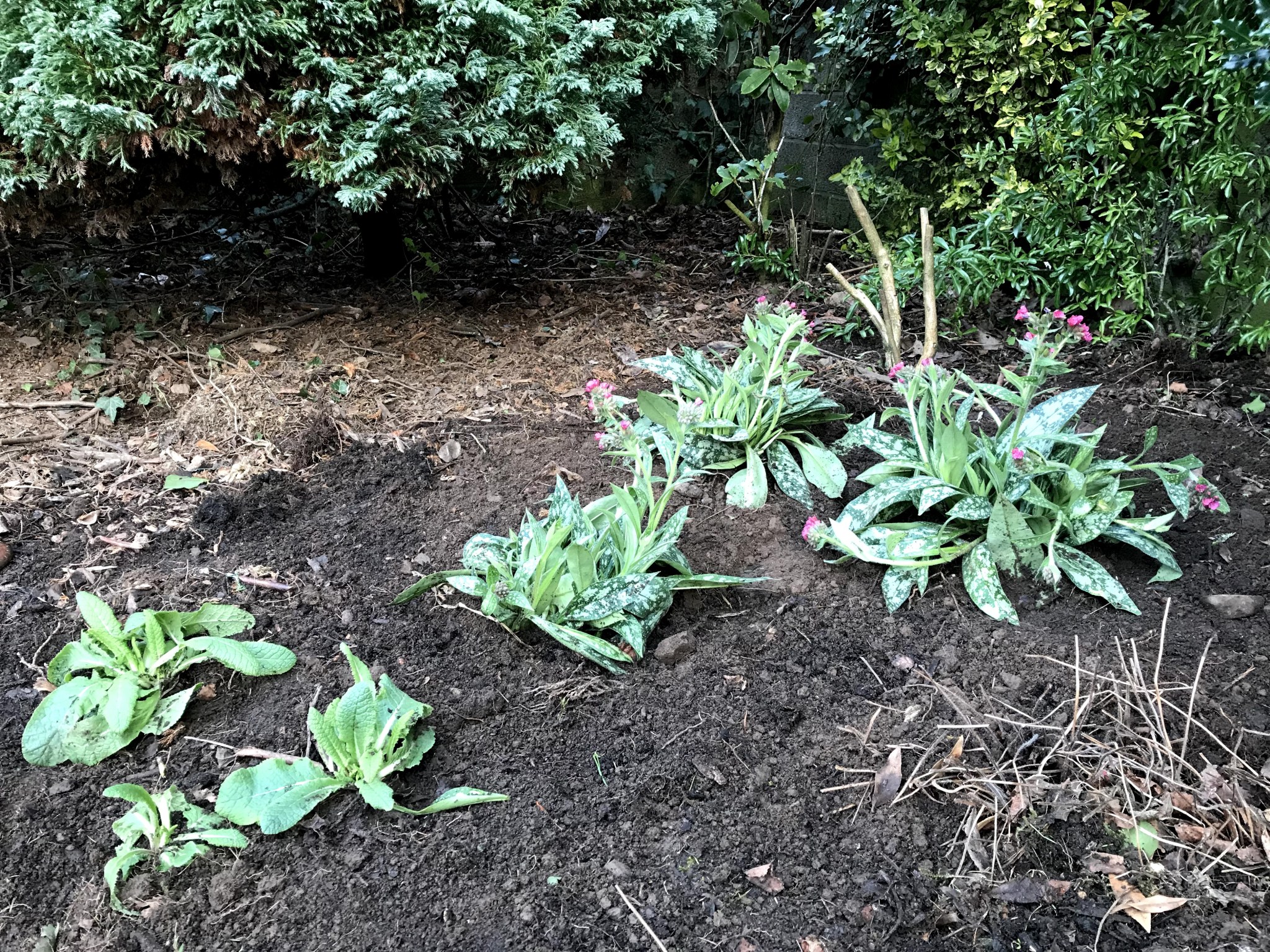
I’ve made a start – my local garden centre had an offer on pulmonaria this weekend, so I’ve picked up three ‘Raspberry Splash’.  These have lovely silvery-variegated leaves and are a pink-red colour which I like as an alternative to the more common purple variety.  They’re quite large so I’m pleased that they’ve already filled quite a good-sized gap.  I also spied primula vulgaris, which I’ve been hankering after and got half a dozen to plant at the front of the border.  They’re not in flower yet but I really hope they’ll establish and provide a very welcome spot of early colour.

Here’s how it’s looking now they’re in place:

IMG_1506.jpg

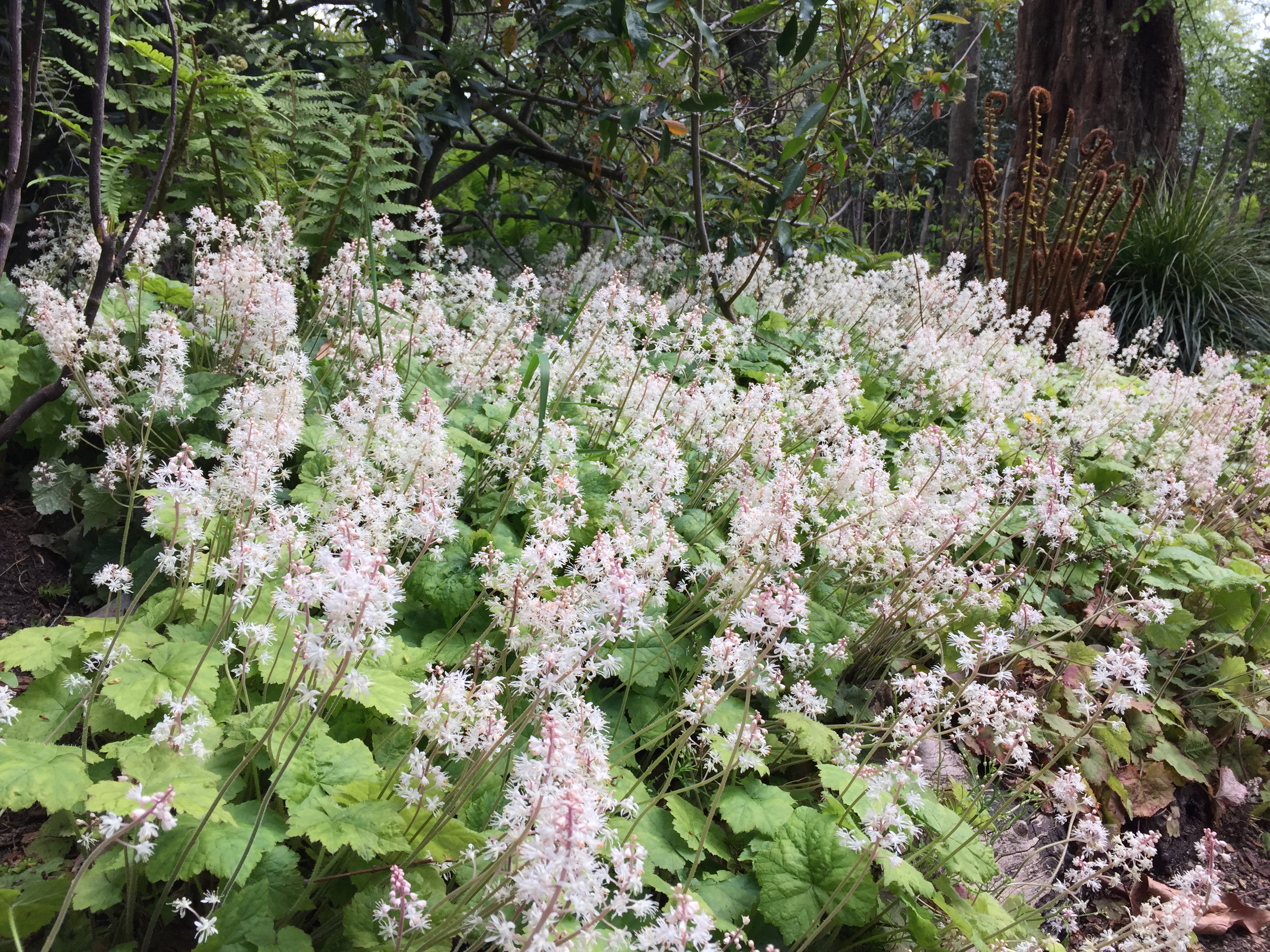
Obviously, still quite a lot of soil on show, but as we know, gardening is about playing the long game, and I’m hopeful these young plants will establish and spread over time.  I expect I may still have to use some annuals or bedding plants to fill in the gaps for a year or two but that’s fine with me.  In fact, I have a plenty of forget me nots grown from seed which will need a home and I think they will work nicely here too.  The other plant I want for the back garden is tiarella – I think the frothy white spires will provide a nice contrast to some of the other plants and, again, should provide some good ground cover in time.

IMG_1355.jpg

Tiarella at Belfast’s Botanic Garden – I love the fresh green leaves of this variety

So watch this space – I certainly am!  I’m checking almost every day for the little green shoots of bulbs, hostas and other perennials emerging in this part of the garden and I’m looking forward to creating a little bit of Belfast Botanic Garden which I can see from my kitchen window.


Garden visit: Cambo Estate

This is the perfect time of year to visit Cambo Estate in Fife, when it hosts its annual snowdrop festival.

I make a point of going each winter/spring because there’s no better way to lift you out of the winter doldrums than gazing at hundreds of snowdrops.  And there are, literally, hundreds of snowdrops at Cambo.  There are 350 different varieties on display in the gardens and around 70 acres of woods, carpetted with snowdrops and aconites.

DSC_0845

Not only that but the grounds of Cambo Country House also include a walled garden, prairie planting, beds of winter interest planting and piglets!

In winter the walled garden is full of grasses and seedheads, with sculptures dotted around, a huge weeping willow over a stream, a pergola and glasshouses with specimens of succulents and pelargoniums.  It’s one of my favourite places to be and I’ve promised myself to go back in the summer so that I can see how different it looks at that time of year.  I love it in winter so can’t wait to see what impact it has full of flowers and greenery.

This slideshow requires JavaScript.

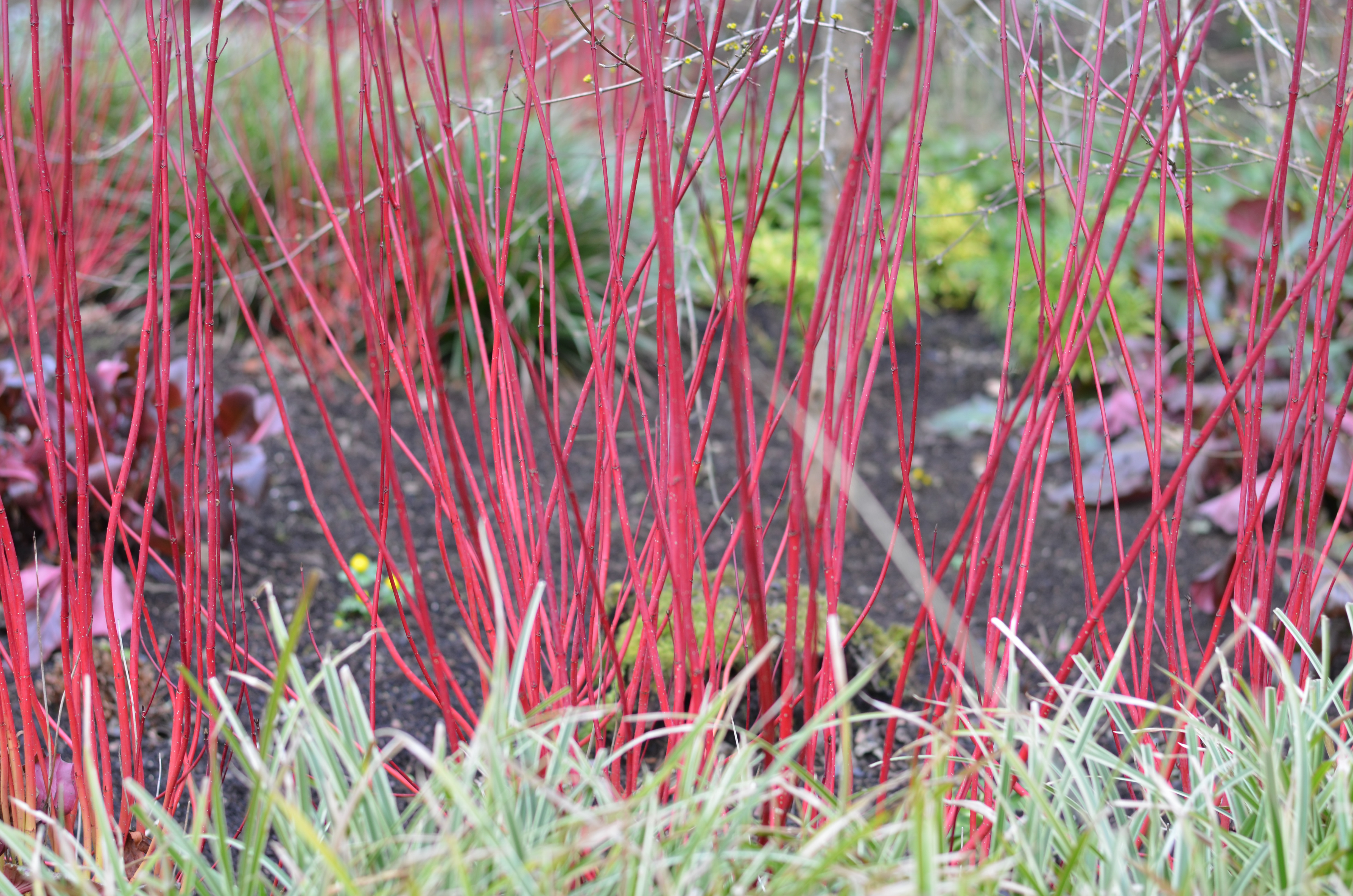
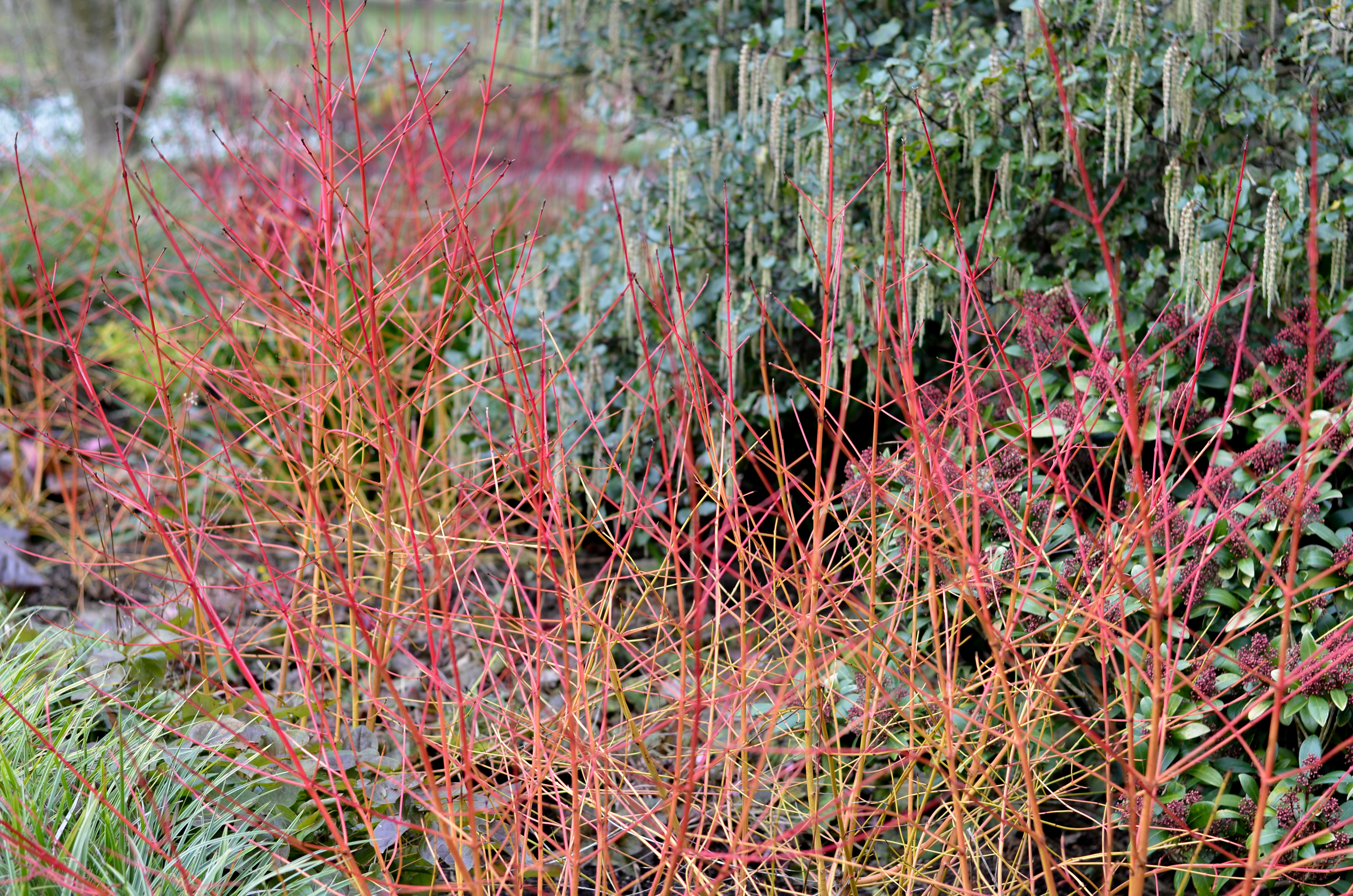
The garden isn’t all brown seedheads and straw coloured feathery grasses…check out this dogwood – no filter or post-processing for this image!

20180217-DSC_0996

BLAM.  They also had some Cornus ‘Midwinter Fire’ which I may have coveted for my own garden…20180217-DSC_0993.jpg

And another hit of colour in the glasshouse…20180217-DSC_0980

One of the highlights of the visit at this time of year is the large daphne planted at the rear of the house.  You can smell it before you see it…follow your nose and you’re rewarded by the most beautiful scent.  Daphnes can be tricky plants to grow, liking only specific conditions – well, this one must be very happy because its flowers this year are prolific and the fragrance is amazing.

IMG_1427.jpg

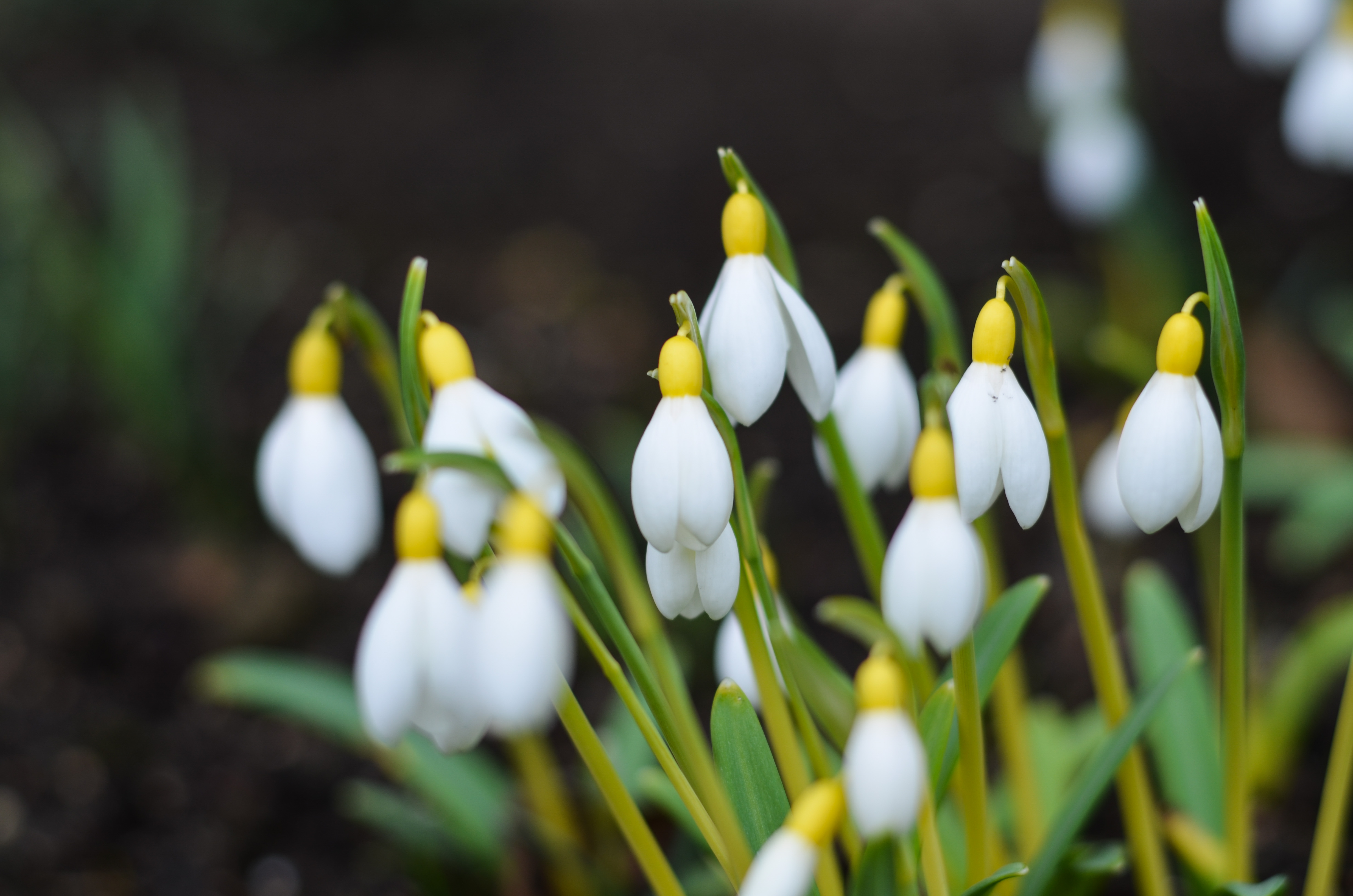
The snowdrops which caught my eye this year had a touch of yellow to them:

20180217-DSC_0002

These may have been ‘Hippolyta’ although I admit I forgot to snap a picture of the label to remind me. However I did get a photo of  ‘Lady Elphinstone’ as she was another favourite.

I didn’t allow myself to fall completely in love with snowdrops…as galanthophiles will tell you, it can be an expensive obsession, with some single snowdrops selling at Cambo’s visitors centre for as much as £20.  However I did manage to come home with a small clump of doubles which I’ve planted ‘in the green’ under the magnolia bush in the back garden.  I hope they’ll thrive and multiply so that I can enjoy a little corner of Cambo in my own garden.

20180217-DSC_0001


Sow many seeds…so many seedlings

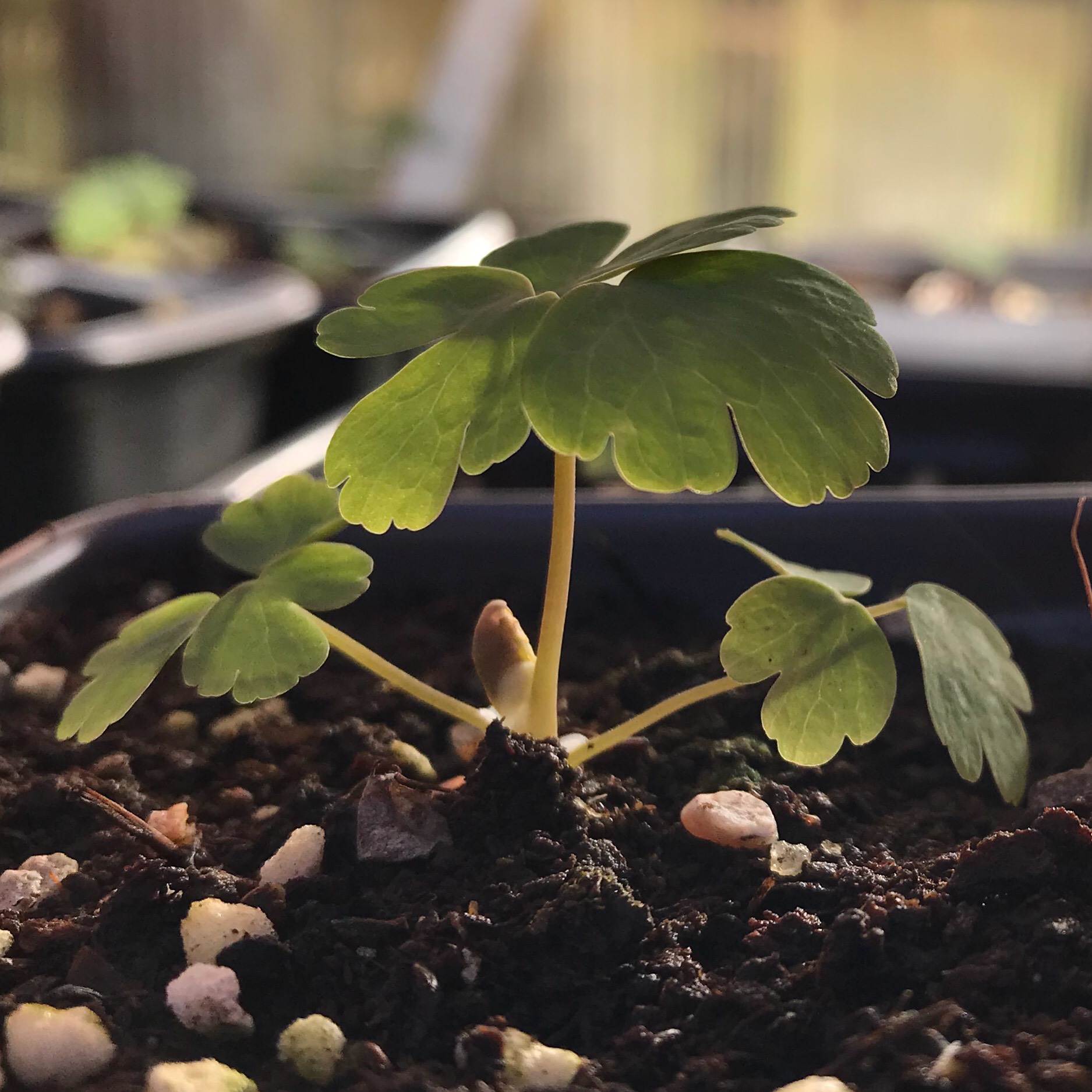
aquilegia seedling

I’ve been on a sowing frenzy.

Although I work part time and theoretically have two days each week to spend in the garden/greenhouse doing lots of lovely gardening…it never usually works out that way.  Family/work/home responsibilities often creep into this time and so I have to grab gardening opportunities with both hands and make the most of it.  This sometimes means that I will sow like mad or get planting even if conditions aren’t perfect or if it’s a bit early or late – because if I wait until just the right time, I may miss it.

Yesterday gave me just the right opportunity for a bit of seed-sowing: some spare time, a sunny day and the need to stay close to home to nurse a poorly hen (latest on her on my Instagram feed @mycorneroftheearth).  Also we’re into another month – February! – and this brings with it a whole new set of seed packets to crack open and sow to get things off to a nice and early start.  I realise this can be a risky move, as seedlings can end up leggy or be exposed to frosty weather if sown very early.  However, where we live (North-east Scotland) it can be fairly cold and even frosty right into April/May and summers are frustratingly short.  So this year I’ve decided to give many of my plants a good head start so that they can flower for as much as possible of that short window of time when summer properly begins and autumn hits us again.

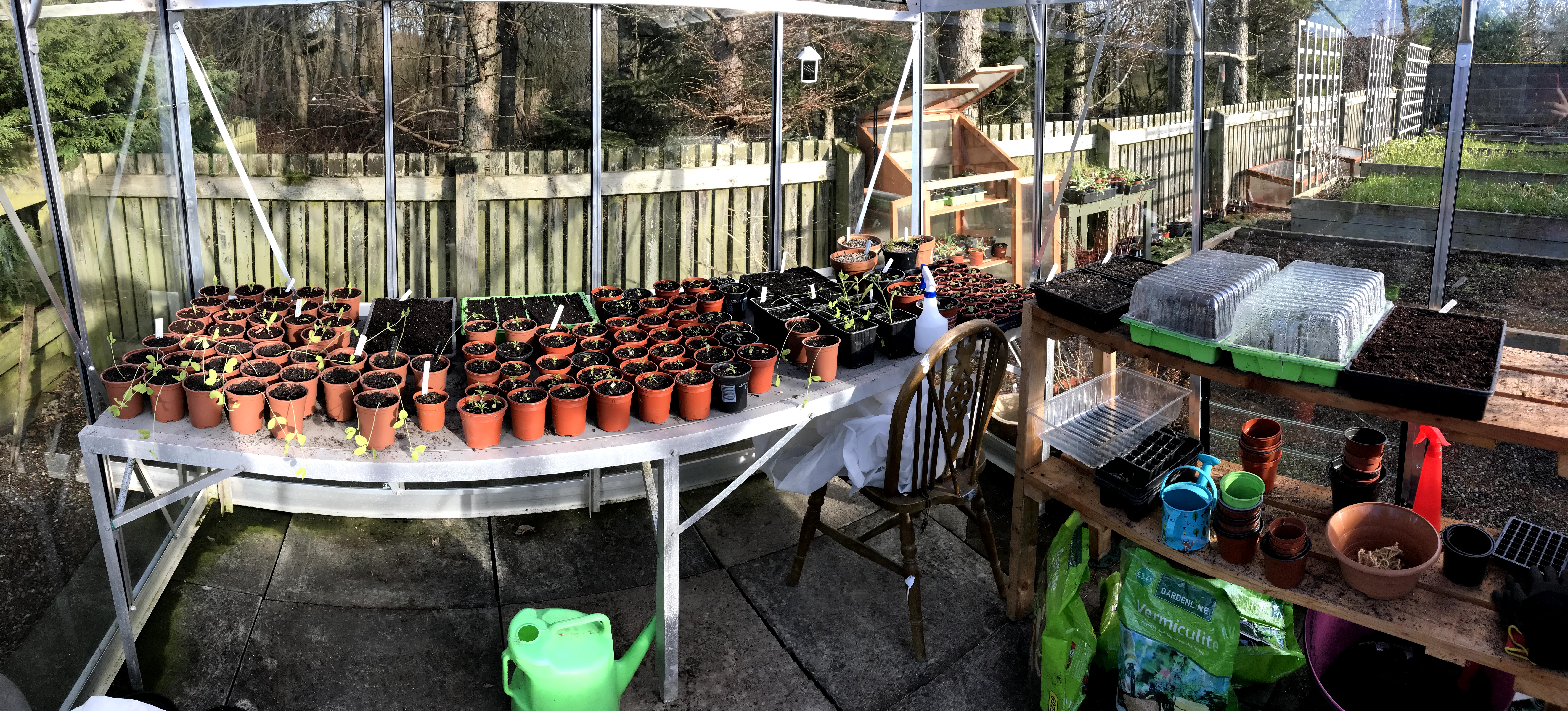
So my greenhouse is already looking pretty busy…

IMG_1255.jpg

This panoramic shot makes it look like the bench is bending under the weight – but we’re not quite at that stage…yet!  We have: sweet peas, calendula, greater knapweed, leeks, wallflowers, more sweet peas, nasturtiums, various cuttings, astrantia (taking a while to germinate!) two varieties of cosmos and shasta daisies.

And outside I’m hardening off the seedlings which were sown in the autumn and have been overwintering in the greenhouse…

This selection includes aquilegia, gypsophila, some geum cuttings, plus hollyhocks and stipa tenuissima.  What you can’t see on the ground under the table and along the fence is all the extra teasels, lavender and various cuttings of shrubs and fruit trees which I grew last autumn too!

What am I going to do with all these plants?  Well, some of them will definitely be planted out in the front garden.  I’m deliberately sowing a lot of herbaceous perennials and hardy annuals according to my planting plans for the front.  However, I know I’ll end up with too many.  Some, I will probably gift to family and friends but if I really end up with a lot of extra plants, I’m seriously considering selling them – I’m just not quite sure how to do that yet.  More on that later, perhaps.

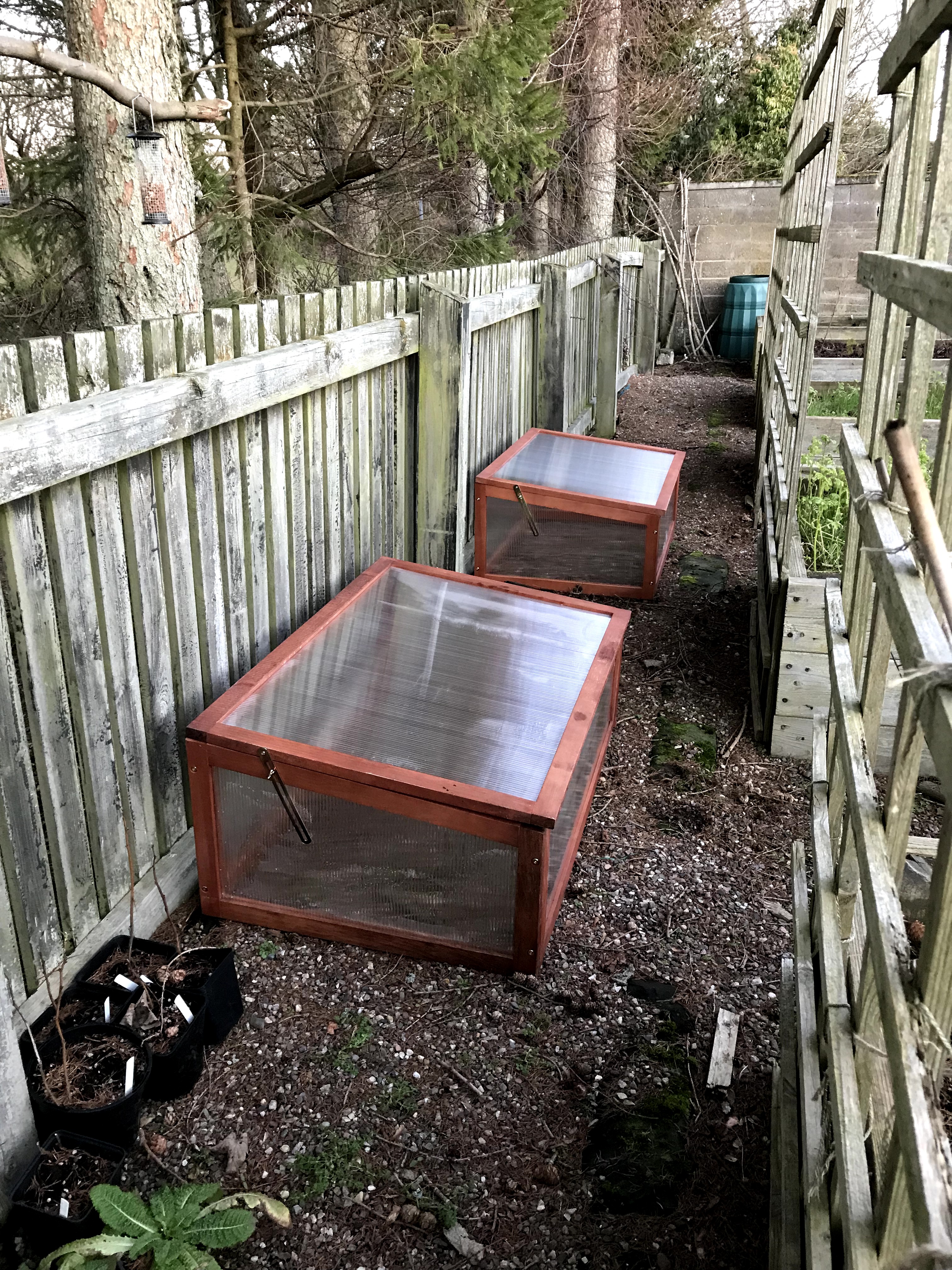
Bearing in mind all this new growing activity, I’m going to need more kit.  I will definitely need more pots.  Thankfully I spied a bargain recently which will help with hardening off all these new seedlings – my local B&Q was selling off hardwood cold frames marked down from £48 to £20, so I snapped up two!  My husband very kindly put them together for me yesterday.

IMG_1248.jpg

So that’s what’s going on in the Secret Garden at the moment.  Lots of sowing and growing already – and I haven’t even started on veg and/or cut flowers for the raised beds yet!  Spring isn’t quite here yet but I’m getting ready for her…

Witch Hazel

20180125-DSC_0710

I take photos of the witch hazel every year when it blooms.  I think it’s because I’m just so glad to see some colour in the garden.  This bush shines like a little beacon in the darkest corner of the garden, close to the compost bin, and I don’t always notice it straight away, but when I do it makes me feel really happy.  Those delicate yellow ribbons are a sign that there’s much more to come…Spring is on her way.

A total redesign

These are scary words!  A TOTAL REDESIGN of the front garden.  This means digging, moving, sowing, replanting, more digging, weeding, propagating… I can’t wait.

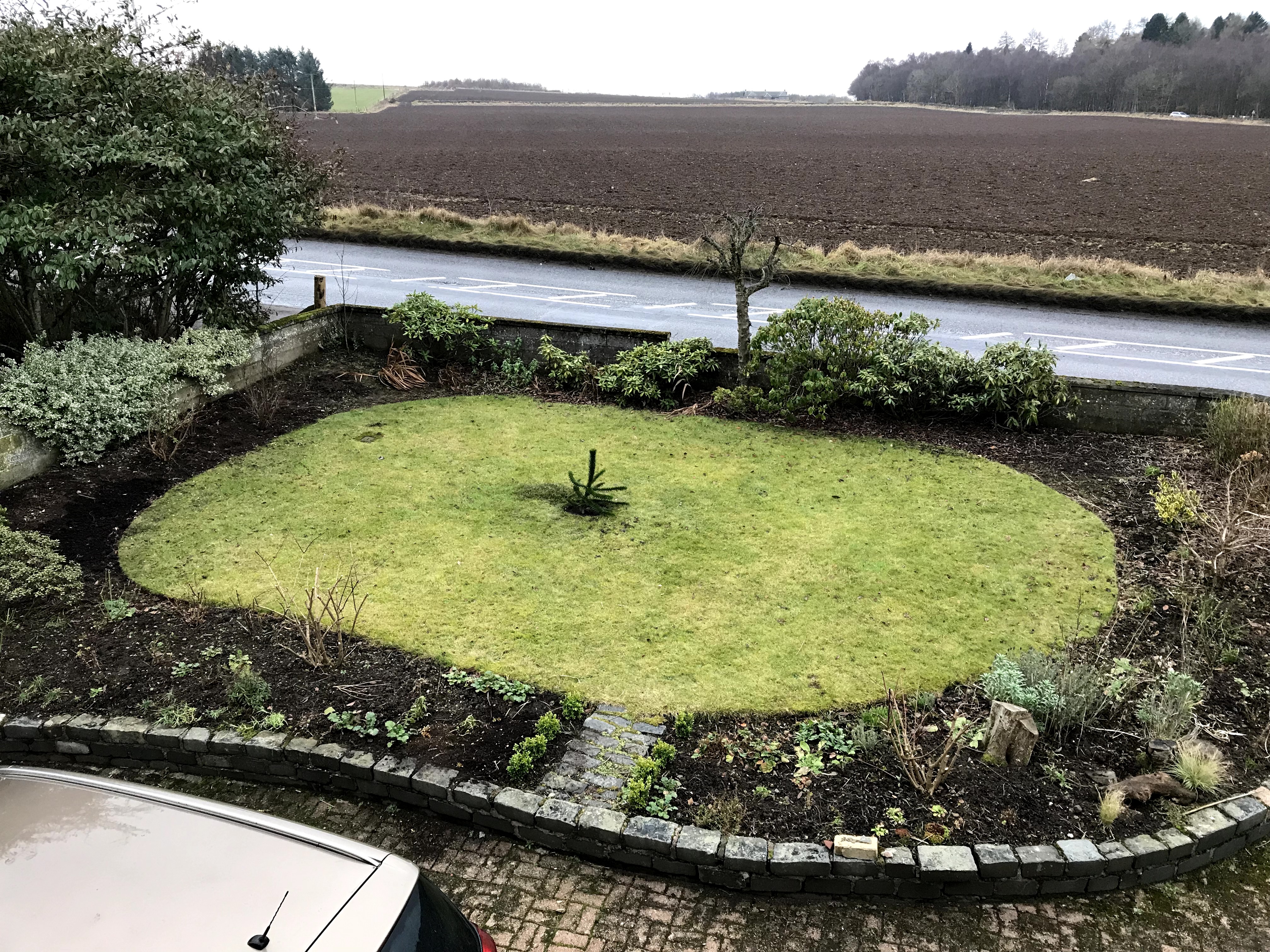
We’ve lived here for three years now and I have tweaked the front garden only slightly each year.  It’s been good to wait and live with the garden for a while.  To see what thrives and what doesn’t; what I look forward to seeing each year and what bores me.  I’ve added bulbs for spring colour and a number of roses.  I’ve hauled out a couple of shrubs which did nothing for me or the garden, and experimented with adding a few annuals and perennials.   It’s a very mature ‘shrubby’ garden – there are several rhodedendrons and azaleas, a skimmia and a couple of handsome continus, for example.  And while many of these plants do very well and have their moments throughout the season I want to introduce interest right through from spring to autumn.

Last year saw the biggest change and I chose a section beside the driveway to add more planting than ever – mostly herbaceous perennials and a couple of new roses and shrubs.  And even though I didn’t really plan it properly and added things ad-hoc, perhaps slightly haphazardly and sometimes just to fill gaps…it looked great!  It gave me a vision for how the whole of the garden could look and made me realise that cottage garden style planting is the way forward.  For this particular section of the border I was attracted to echinaceas, lavender, roses, hollyhocks, geums, more roses, salvias and gypsophila.  Soft colour, blousy petals, frothy flowers were held together by showy dahlias and some good old-fashioned roses.  I enjoyed the colour, the scent, the fact that there was always something in flower to enjoy and that the seedheads and stems are there to keep things interesting even now, in the middle of winter.

So – a cottage garden it is.  And the planning is underway…

Now, I am not a designer – I’m not even a particularly good artist so please forgive the slightly scrappy drawings, but I’m loving sketching out plans for what should go where and creating ‘mood boards’ to give me a clear idea of the kinds of plants I want to grow and plant.  I’ve even gone into Full Organisation Mode, using spreadsheets to keep track of what seeds I have, when to sow them and to keep a record of what I’ve grown as I go along this year.

IMG_0567.jpg

I’ll be honest – I’m not normally this organised, and you don’t have to do this to be a ‘good gardener’.  Up until now I’ve had a pretty relaxed ‘it’ll grow when it grows’ attitude to what I’ve sown and planted!  But this is such a big project for me – my first proper garden project in fact – that I want to try and document it as much as I can.  I feel like I’ve been my own apprentice up until now, messing about with growing a few veg, sowing some flowers and I’ve been surprised at my own success.  Now I feel like it’s time to graduate up to Assistant Gardener/Trainee Designer!

Work will begin in earnest in a few short weeks but as well as all the indoor planning and a little bit of seed-sowing (sweet peas, delphiniums, astrantia and echinacea are in the propagators as I write) I’ve managed to do a bit of preparation in the garden itself, taking away some of the lawn to widen the borders at each corner, hard pruning of two shrubs (which are either Philadelphus or Deutzia but haven’t flowered for a couple of years so I can’t ID them! Hence the hard pruning…) and I’ve also moved the Monkey Puzzle, as blogged here.  As soon as the weather warms up enough for me to dig a bit more I’ll move some more shrubs into better locations – I want to keep them for structure and because I like most of them, but they need spaced out to make way for interplanting of all those lovely herbaceous perennials and annuals.

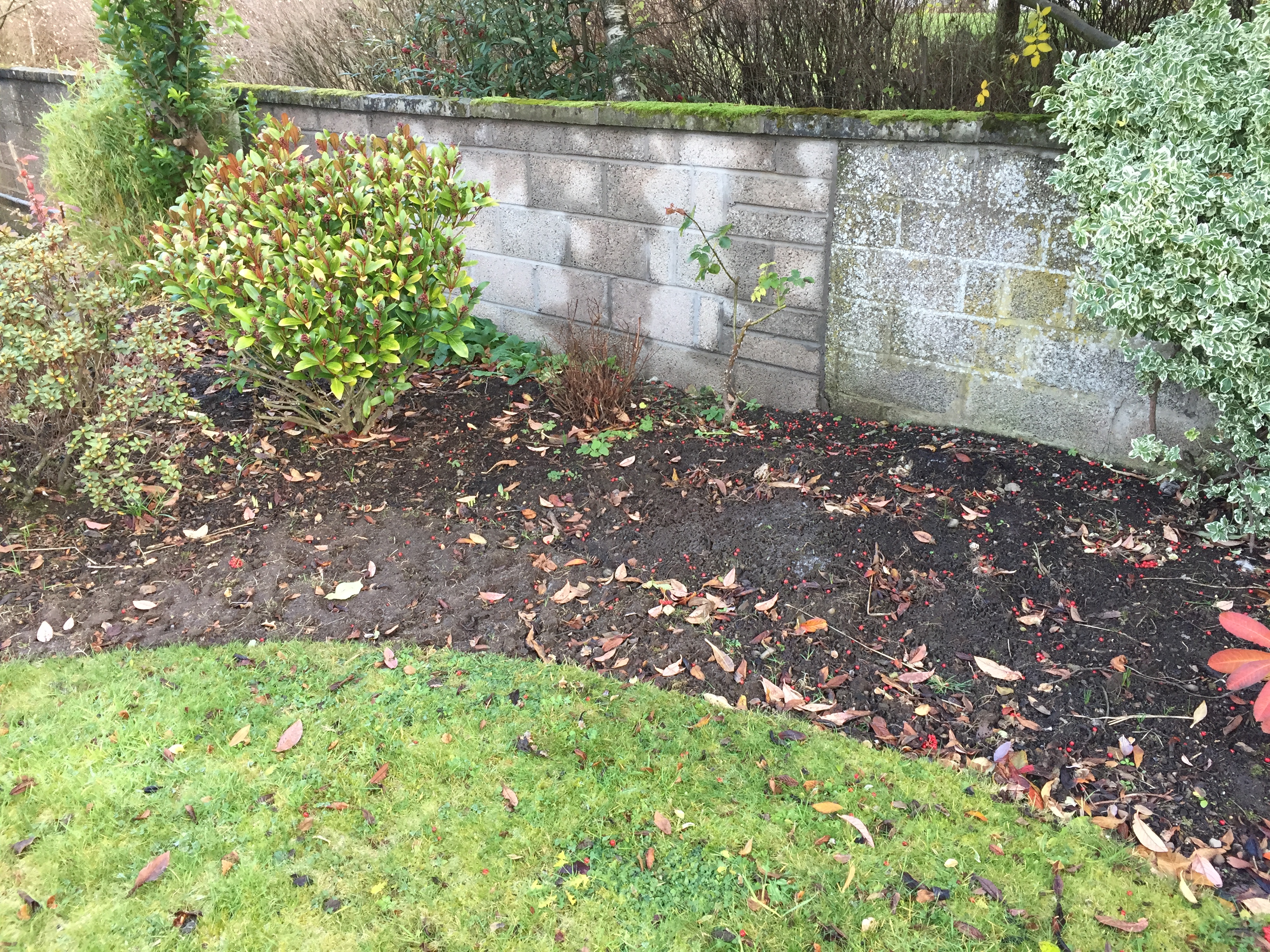
A few ‘Before’ photos…

IMG_3945.jpgIMG_3946.jpgIMG_3944.jpg

See – lots of bare soil and potential.  Wish me luck, there’s lots of ground to cover!

And finally some of the stars last year’s trial ‘herbaceous border’…

This slideshow requires JavaScript.


Curly wurly

I’m noticing a certain kind of shape around me at the moment – for the past few days I’ve been spotting curls and twists, exposed I suppose by the bare branches of winter.

IMG_0705.jpg

One that I notice daily is the contorted hazel (Corylus avellana ‘Contorta’which is right outside our back door.  This large shrub is also known as a twisted or corkscrew hazel and by the nickname of ‘Harry Lauder’s walking stick’, after a Scottish entertainer who apparently used to carry a walking stick made from a branch of the shrub.

Only a couple of days ago I was listening to a podcast of Gardener’s Question Time and this plant came up – one of the panellists revealed that the twisted hazel was first discovered by a drunken vicar, who fell into a hedge, looked up and saw the contorted stems.  So he took a cutting, grew the plant and that’s how it’s ended up in many of our gardens (according to Chris Beardshaw!).

It’s a fascinating shrub to look at, but especially in winter, when you can see the exposed shapes of the branches, and then in spring when little yellow catkins appear.  Even its leaves are quite bumpy and textured so it’s well worth having one in the garden for year-round interest.  You can even bring it indoors – sort of.  I’ve pruned a few branches from mine as each year it throws up a few vertically, which is out of keeping with its general weeping shape; so I’ve put the pruned shoots into glass vases so I can admire the twists and turns inside as well as out.
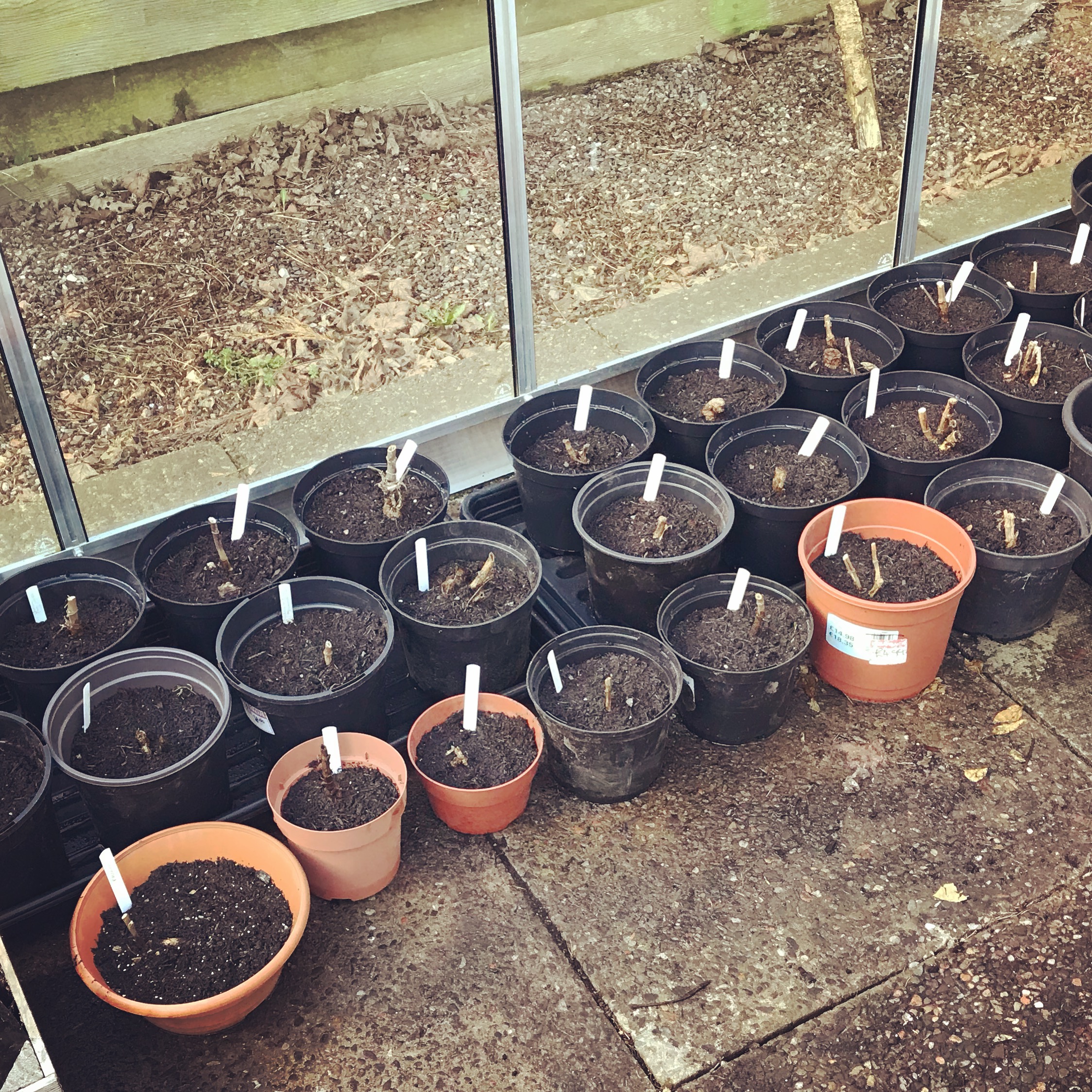
And now it appears I’m being followed by twisted branches… on a visit to the hospital last week to donate blood I noticed a twisted hazel in one of the flower beds in the grounds.

IMG_0723.jpg

It looks quite good with the background of the brighter green conifer.

Then on a walk around the village a few days later, I looked up and noticed these striking trees in someone’s garden:

IMG_0730.jpgI’m not certain if these are hazel or not – I expect this is the ‘tree’ version of my medium-sized shrub.   I couldn’t get close enough to check but they make a fantastic silhouette against the winter sky.
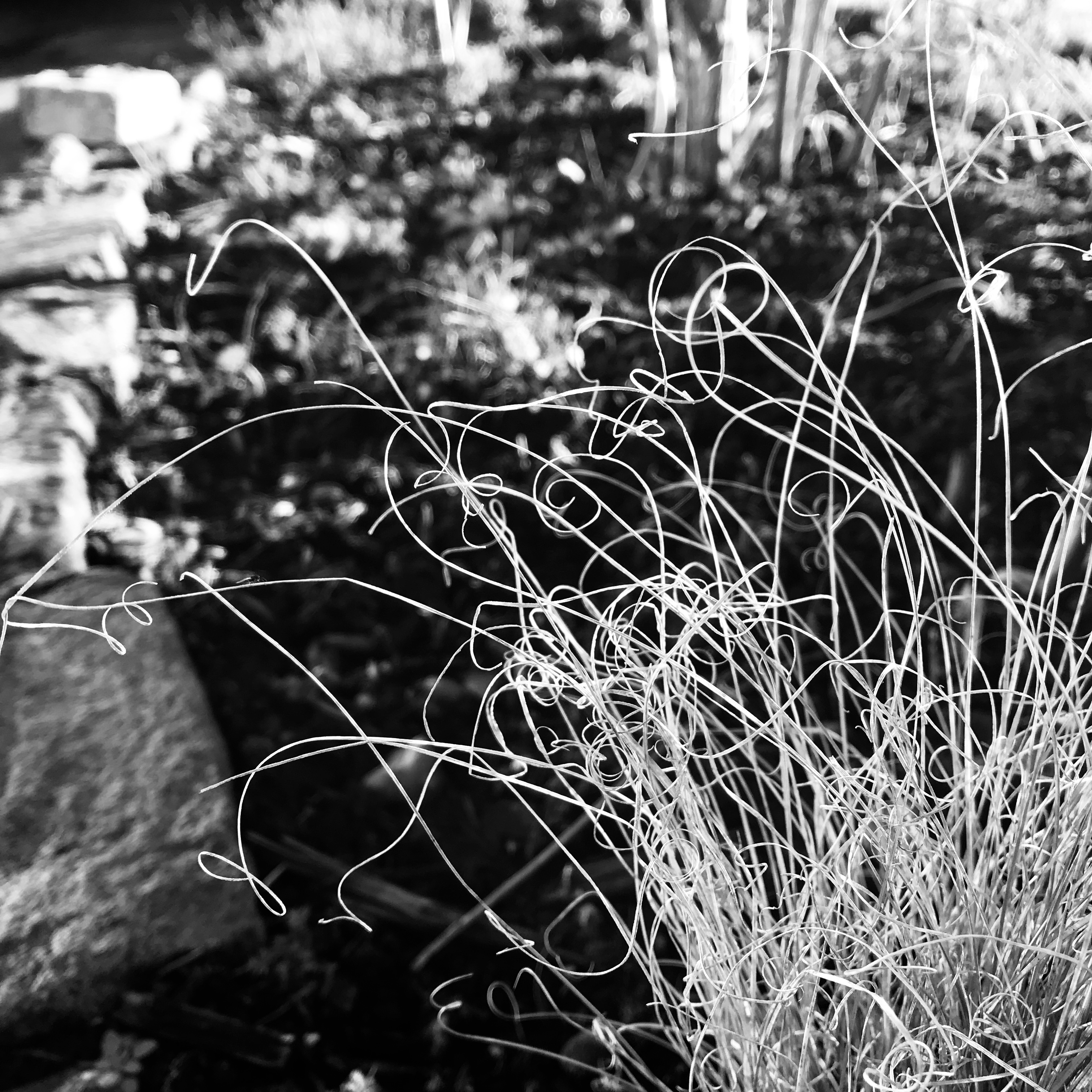
Finally, one of my favourite little plants in my garden, this little grass…

IMG_0688.jpg

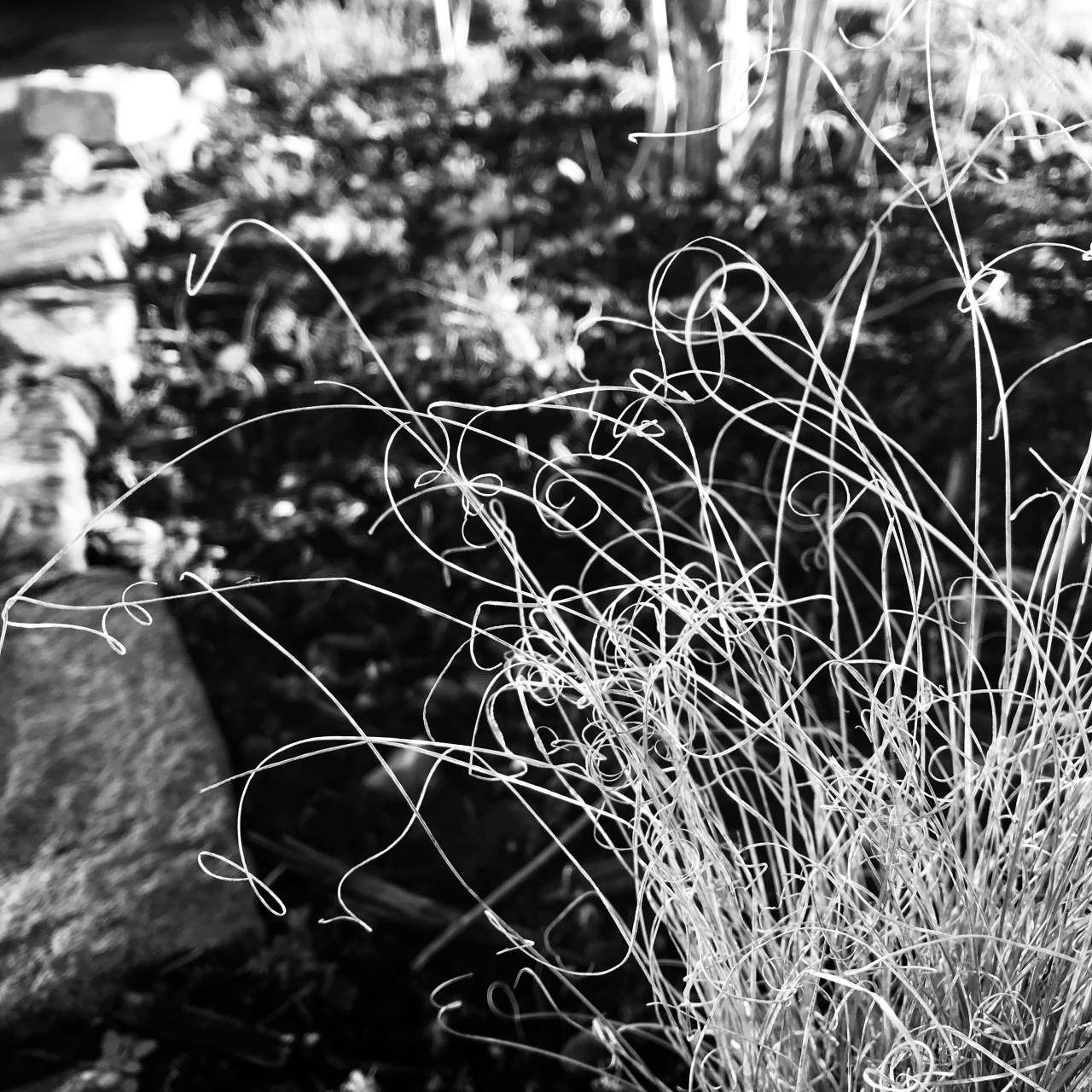
…which is Carex comans ‘Frosted Curls’ and provides a wee corner of interest in its spot in the front garden all year round.  At this time of year its little curls bounce around in the wind and towards the end of last summer it provided a brilliant backdrop for the chocolate cosmos I planted next to it.

20170930-DSC_0120

So there you have it, everything’s a bit twirly at the moment and I like it.  Nature really doesn’t do straight lines and what’s more interesting for your winter garden than a twisty, turny, curly, wurly plant to make you stop and look for a while…


Monkeying around…

I’m really quite pleased with this weekend’s main gardening project – moving my monkey puzzle tree.

Actually I’m really quite pleased to have been in the garden at all – it’s been ages.  Pre-Christmas, Christmas and post-Christmas did not leave much time to get outside and tackle winter gardening jobs, and when there was a bit of spare time the ground was so hard and frosted there wasn’t much point!

So now that we’re back to school/work and in the regular routine, I spent a few hours on my non-working days in the greenhouse and the front garden.  It was so good to get my hands dirty again.  As well as sowing a few seeds in the greenhouse and my new propagator – see below, isn’t she pretty…?

IMG_0725.jpg

This was an early birthday present to myself – a bargain in the Black Friday sales.  It’s currently warming up some astrantia and echinacea seeds – fingers crossed it will do the trick.

Anyway, back to the monkey puzzle.  Moving it is Step 1 of my grand plan for the front garden, which I am attempting to totally redesign.  Previously shrubby and a bit, well, boring, I have already begun removing the most dull/old/overgrown shrubs and last year managed to introduce a few perennials.  This year I will be moving a few plants around, and planting as many perennials as I can get my hands on.   More on the Grand Plan in a later post – back to Step 1.

I wanted to move the monkey puzzle as I had put it to the front corner of the garden after we moved in here.  We acquired it when my youngest daughter was just a few days old so it’s almost 8 now.  It’s done fine and is gradually getting bigger (they grow very slowly for the first 5-10 years) but the branches are growing towards one direction, a bit like arms which are stretching towards you for a hug…but this would be a very bad idea as it’s incredibly prickly.  I think this is because the trees behind are shading it and it’s been growing in the direction it gets most sunlight (west).  So I’m hoping that moving it into the middle will enable it to get a more even tan, so to speak, and might help it to rebalance its direction of growth.

I was a bit nervous about moving a tree which is about seven years old and had been in its current position for about three years, but when I came across Rachel the Gardeners post on this here I was reassured that, with a bit of care, it should survive the transplanting process.  So I dug carefully around it, lifted it with as many roots intact as possible and replaced it into the nice deep hole I dug in the centre* of the front garden.

*Please note my entirely UNscientific method of measuring the centre: pace lengthways across the garden and pace the breadth.  Then take half the number of paces each way and you’re in the middle.  Simples.  I don’t really do measuring.

Et voila – one replanted monkey puzzle tree.

IMG_0754.jpg

I really like it there – it seems to change the whole nature of the front garden.  I guess it’s the addition of a focal point.  So I’m hoping that I can nurture it into its new home and that it will continue to grow and thrive, and that in years to come I can give people directions to my home by telling them ‘we’re the first house as you enter the village – you can’t miss us as there’s a massive monkey puzzle tree slap bang in the middle of the front garden.’

Now for the botanical bit…

Monkey puzzle (Araucaria araucana) originates in Chile, South America and came to Britain in the 1800s.  Its common name derives from this time, when it was very rare to see one.  Apparently Sir William Molesworth, who owned a young specimen at Pencarrow garden in Cornwall was showing it to a friend who remarked “It would puzzle a monkey to climb that”.  The name has stuck – as has the novelty of seeing one in someone’s garden and my own children frequently enjoying shouting ‘MONKEY PUZZLE’ at the top of their voices when we pass one.

Trees can grow more than 12 metres tall, although it will take at least 20 years for it to reach its full height.  They usually bear either male or female cones, although it won’t produce seeds until it is at least 30-40 years old.  It’s thought they can live up to 1000 years.

Bittersweet peas

I’m having a love/hate relationship with sweet peas.

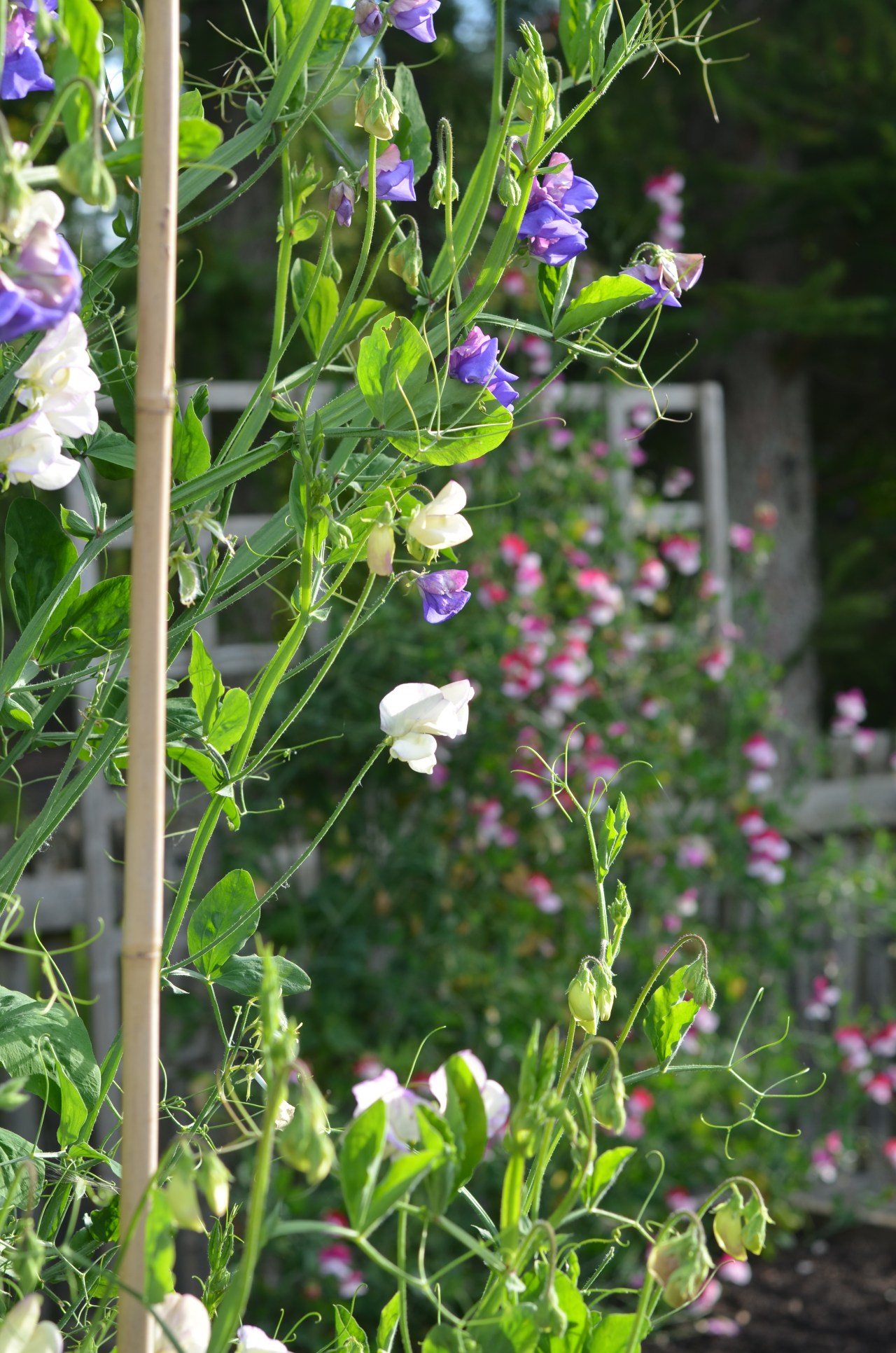
Actually that’s not strictly true – I love them really, but I hate the way they make me sneeze.  I’m growing lots of different varieties this year and although it’s now September and Autumn is definitely peeking its head round the corner, they’re still going strong in my garden.  So I’m bringing in bunches of them every few days – but the pollen is definitely exacerbating my allergies and every morning when I wake up I explode a number of times and end up looking like I’ve been crying for a week.  But that scent though…

I nabbed some photos of the main offenders this morning to ‘review’ the varieties I’ve been growing this year.  Way back in March I treated myself to a window propagator from Marshalls like this one, which came with a selection of new varieties of sweet pea seeds.   I grew a few of each in two batches, one of which was quite late and I guess that’s why I’m still picking them mid-September.

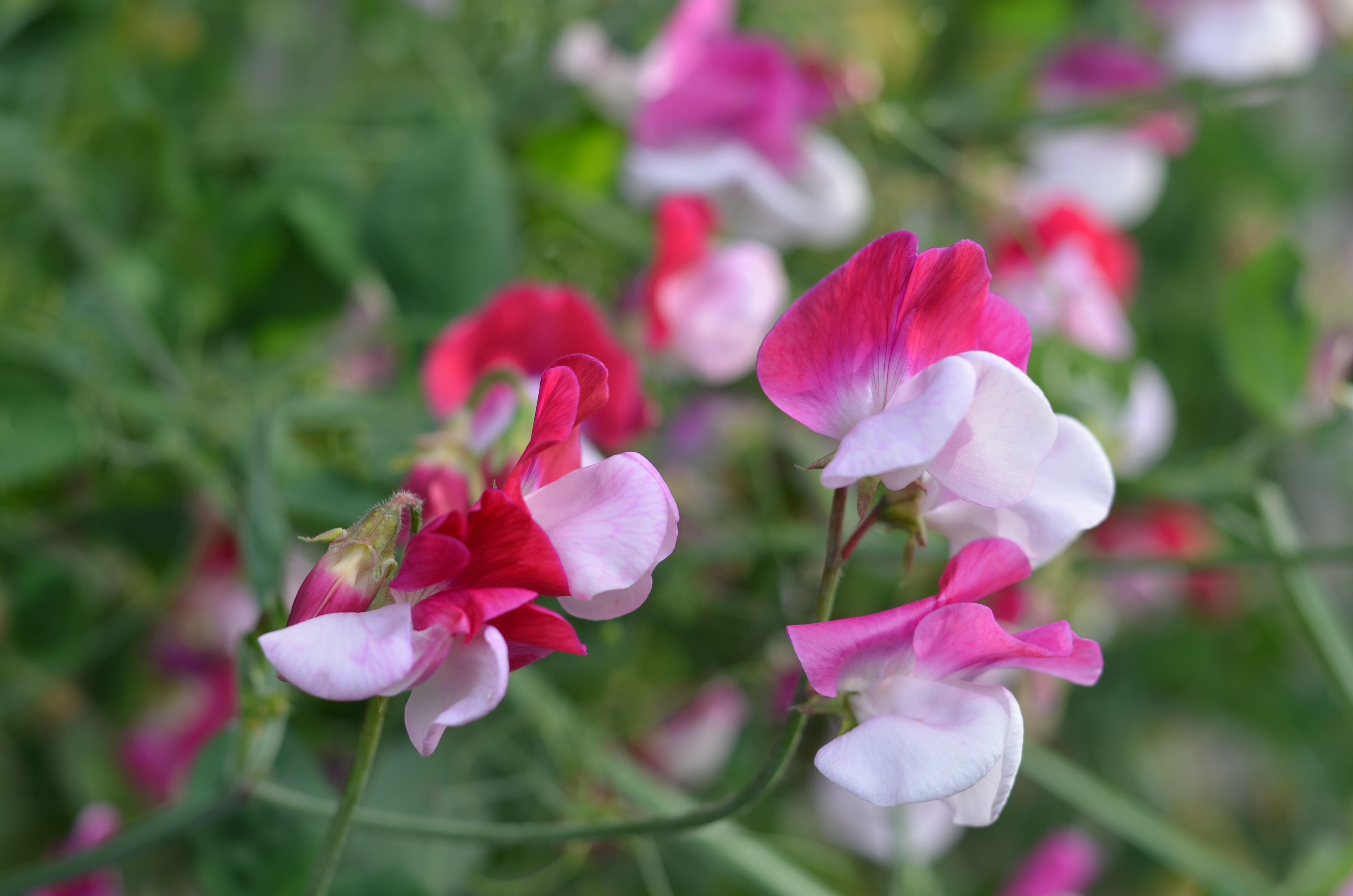
The prize for the most prolific goes to…Little Red Riding Hood:

DSC_0628

This one has been covered in flowers for a number of weeks and is really bright and cheery.  There are so many that I’ve never yet managed to take off every flower with each picking – I’d run out of vases!  The stems are on the short side but if you don’t mind that, this flower just gives and gives the whole season.

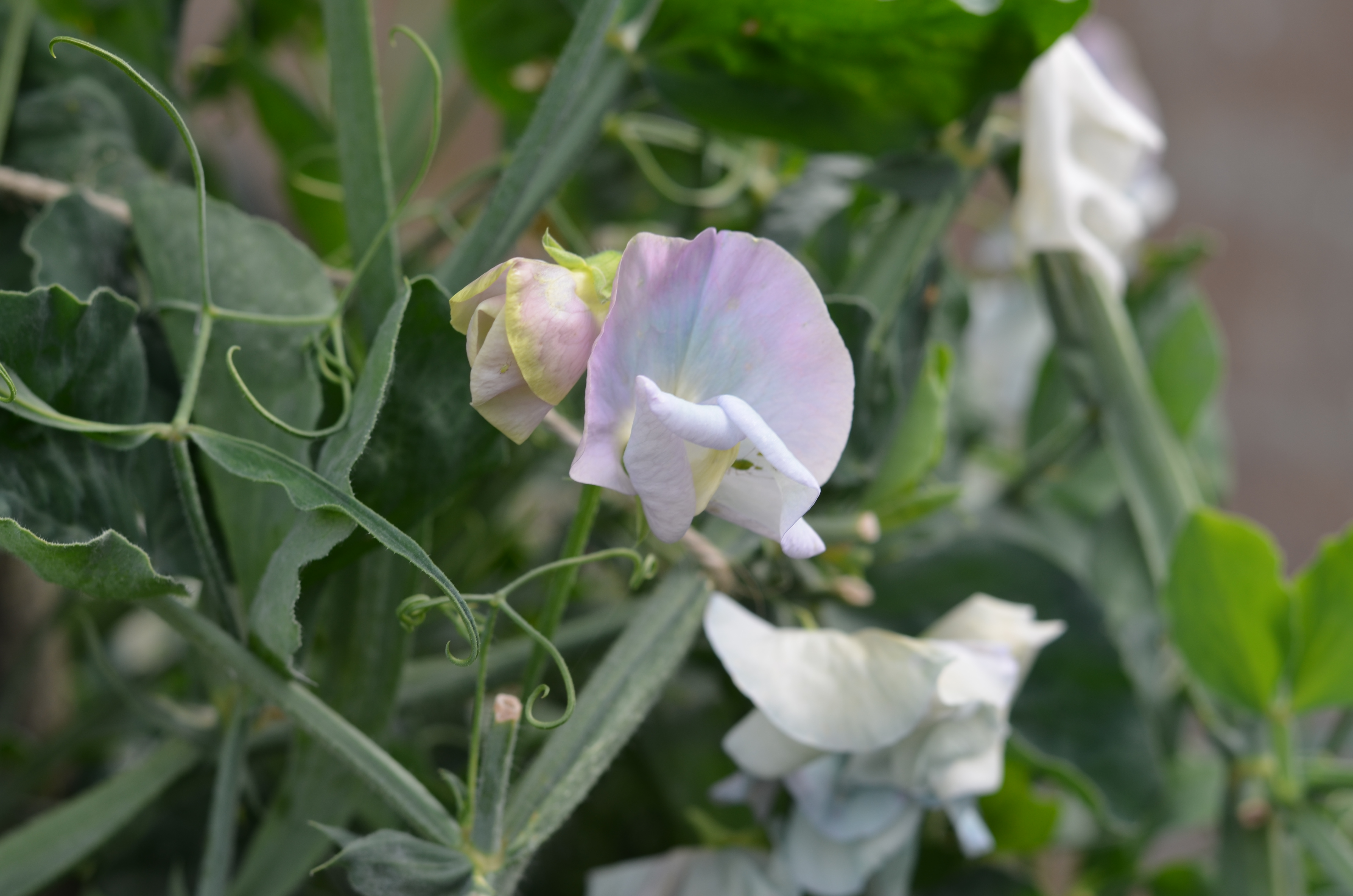
The prize for the prettiest colour goes to…Erewhon:

DSC_0610

This flower is such a delicate blue-purple with just a hint of pink.  It’s really gorgeous and very subtle.  Can you spot the aphid in the photo above by the way??

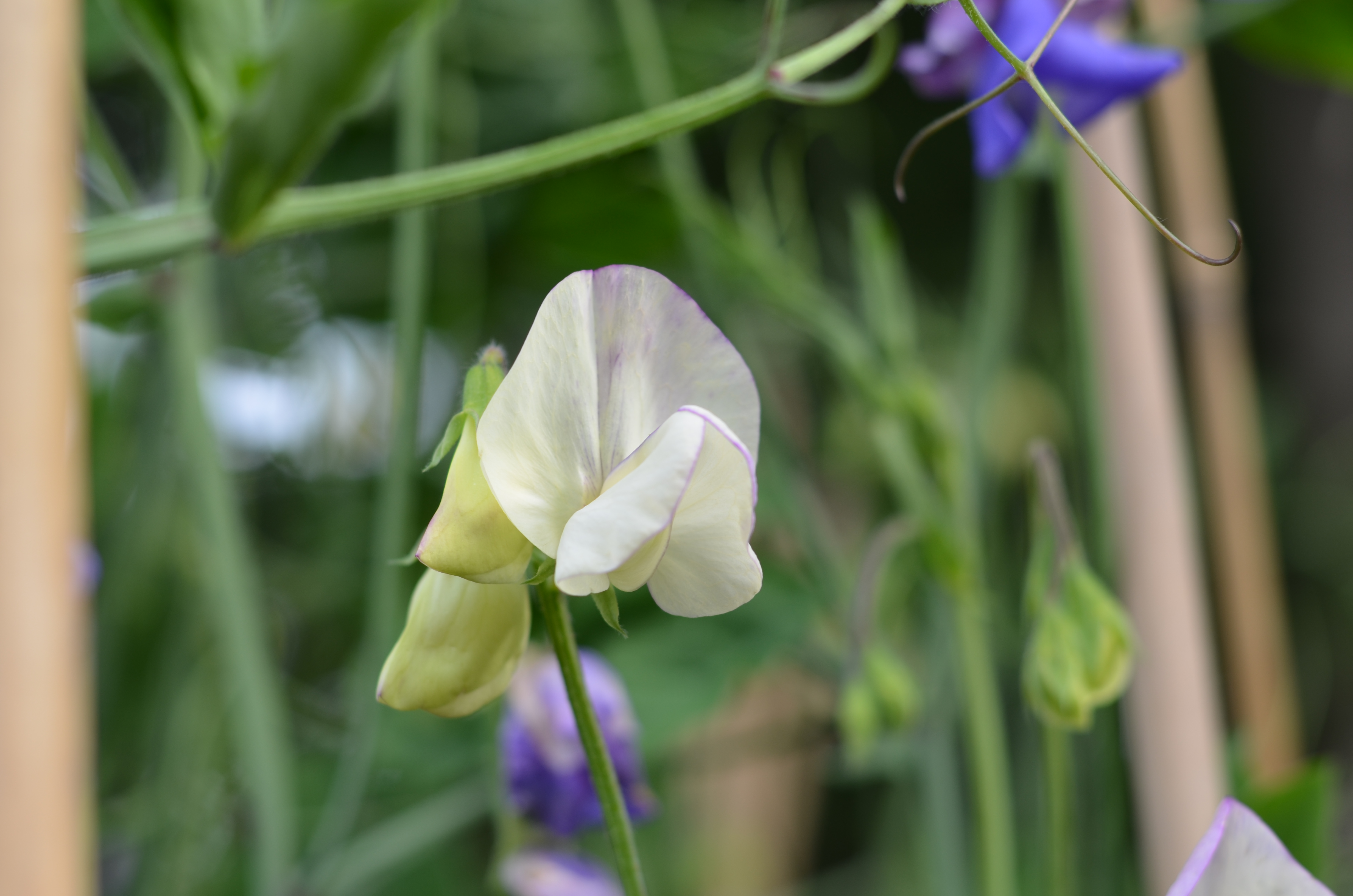
Which brings me to – the prize for the most covered in aphids goes to…Cream Eggs:

DSC_0623

These are also a really pretty colour, with delicate purple veining inside and around the edges, and they smell beautiful.  However, I’ve been chasing aphids off the buds and flowers for several weeks – they hide inside the folds of the flower until you bring them inside and then invade your house too – grrr.

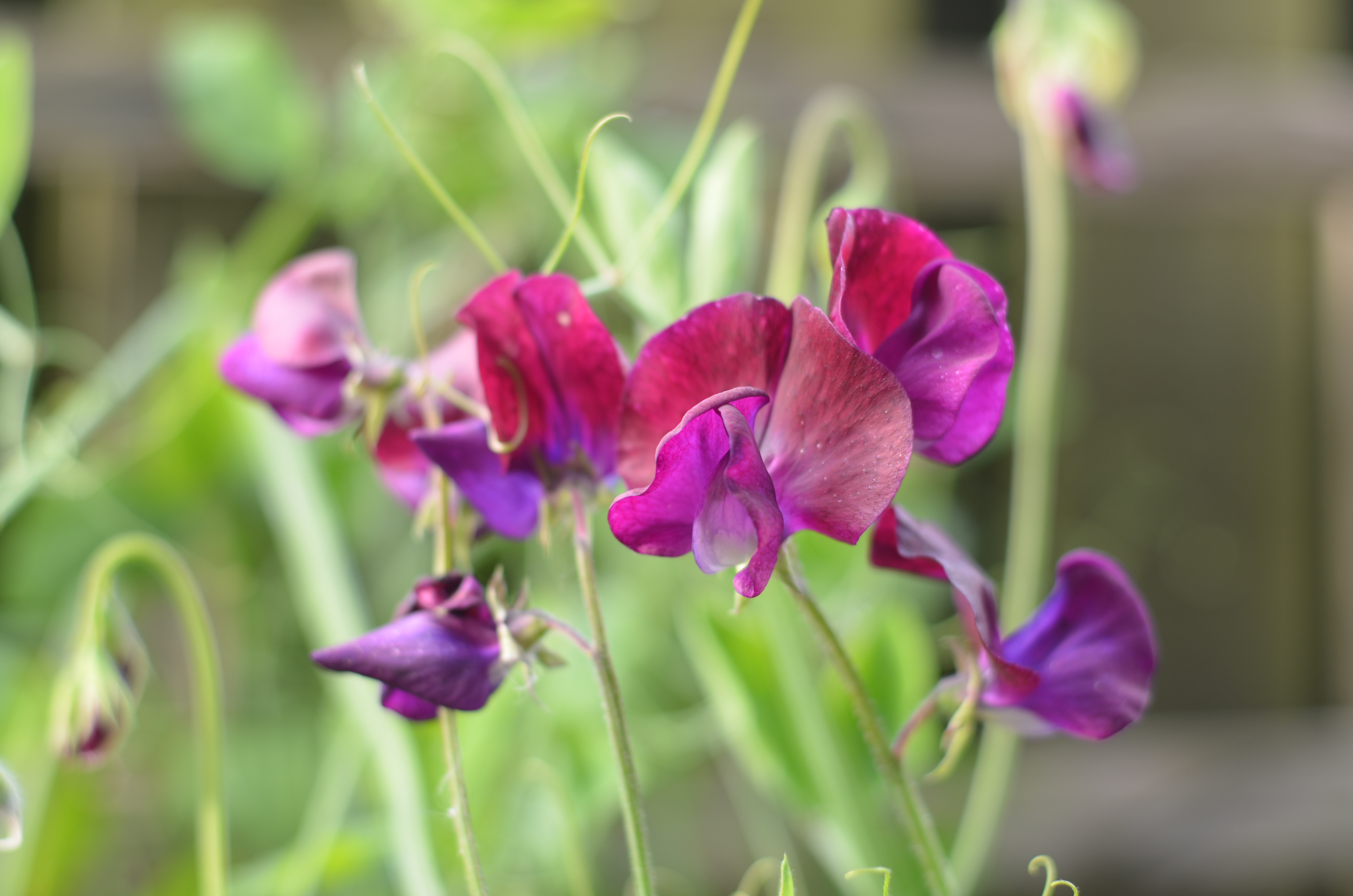
The prize for the most dramatic flower goes to…Berry Kiss: DSC_0618

This has produced lovely deep pink and purple flowers, although these tend to fade quicker and can look a bit tatty after rain.

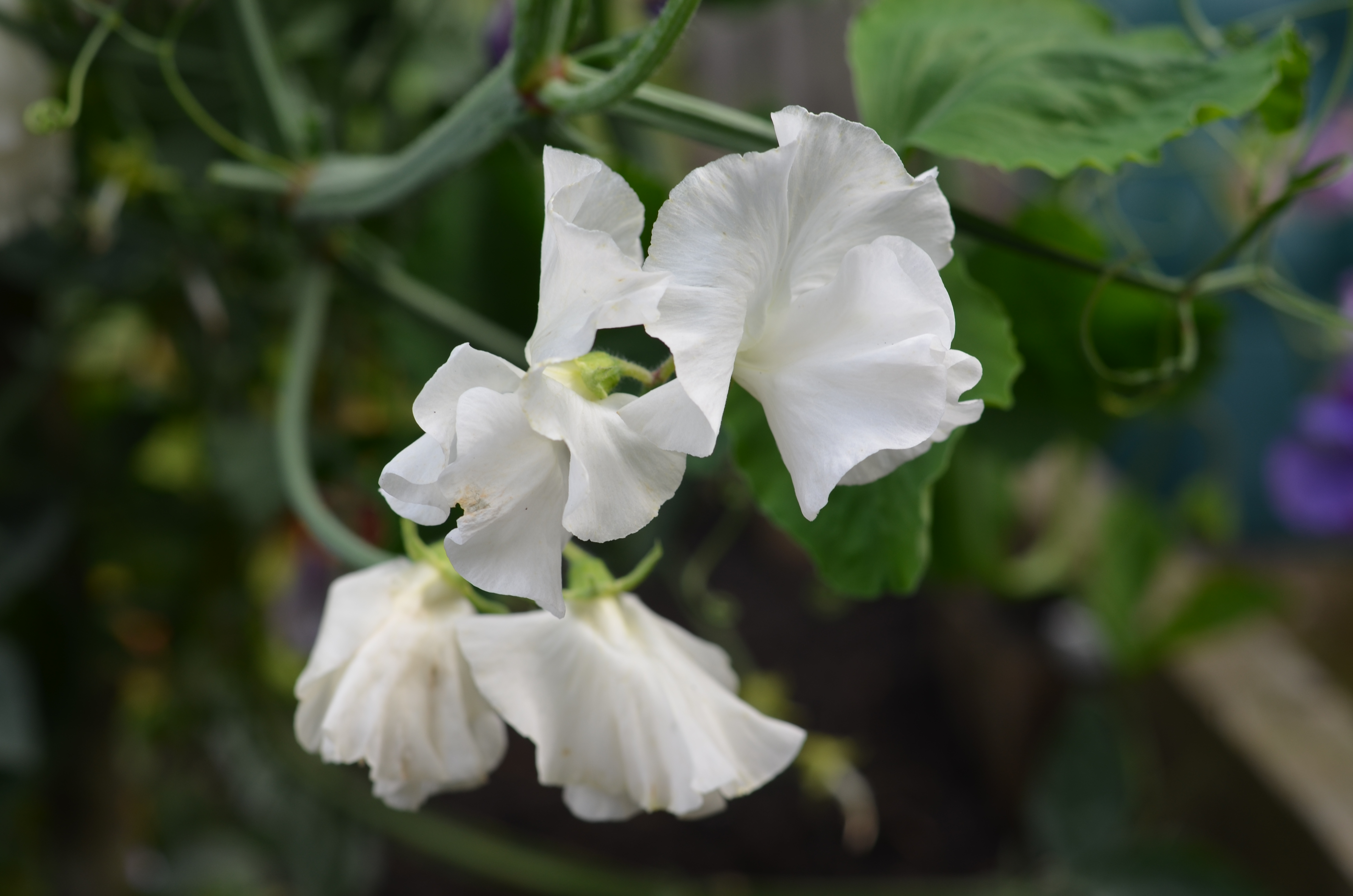
And the prize for the purest, ruffliest sweet pea goes to…Misty Mountains:

DSC_0608

This mix also has dark and paler purple flowers in it, but I’ve been most struck by the white ones, which look like they’ve fallen straight off an Elizabethan gentleman’s shirt sleeves.  Lovely.

However my favourite sweet pea for this season is a bit of a wild card – it’s a dwarf variety which I planted into a blue pot and set by the front door.  Although it didn’t last as long as the rest, the colour was magical – it’s Northern Lights:

IMG_2165

What a beauty.  The plant has finished flowering but I’ve kept it aside in the hope of keeping some of the seed to sow more next year.

So there you have it, my sweet pea selection.  I’m off to take another antihistamine and enjoy more of one of my favourite flowers in the garden…

DSC_0636