No Mow May

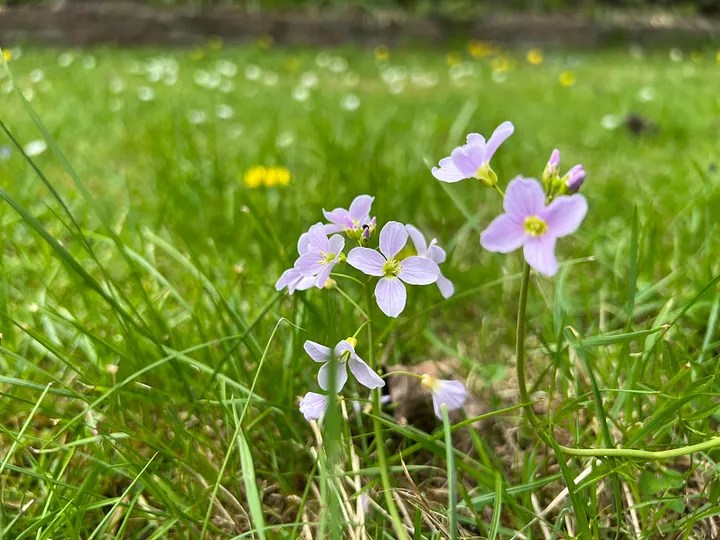
I’ve spotted little flashes of soft pink and purple in my back garden in the past few days, glad to see the return of some of the wildflowers which will help the local pollinator population.

It’s No Mow May, which is a great initiative for improving biodiversity and encouraging homeowners to do their bit to help bees and other pollinators. It’s a very appealing opportunity to be lazy in order to benefit wildlife – basically all you have to do is… nothing! Just don’t mow your grass for the month of May, allowing daisies, dandelions and other wildflowers, which would otherwise be razed, to spring up. This then provides a feast for bees, butterflies and other insects during spring and early summer as they feast on the pollen and nectar provided by lawns full of flowers.

There’s evidence that bees and other pollinators are in decline; we’ve also lost nearly 97% of flower rich meadows since the 1970’s. However, there’s a patchwork of gardens across Britain, which has the potential and the plant diversity to provide a feast for our struggling insects.

Daisies, dandelions, clover, buttercups, self-heal, speedwell, ladies’ smock… these are all the wildflowers – not weeds – which spring up in my garden when left unchecked. When you think of them as wildflowers, and not weeds, and you consider how pretty they really are, it’s much easier to keep the lawnmower tucked away in the shed. Not only that, but they are excellent sources of nectar and pollen for bees and other insects.
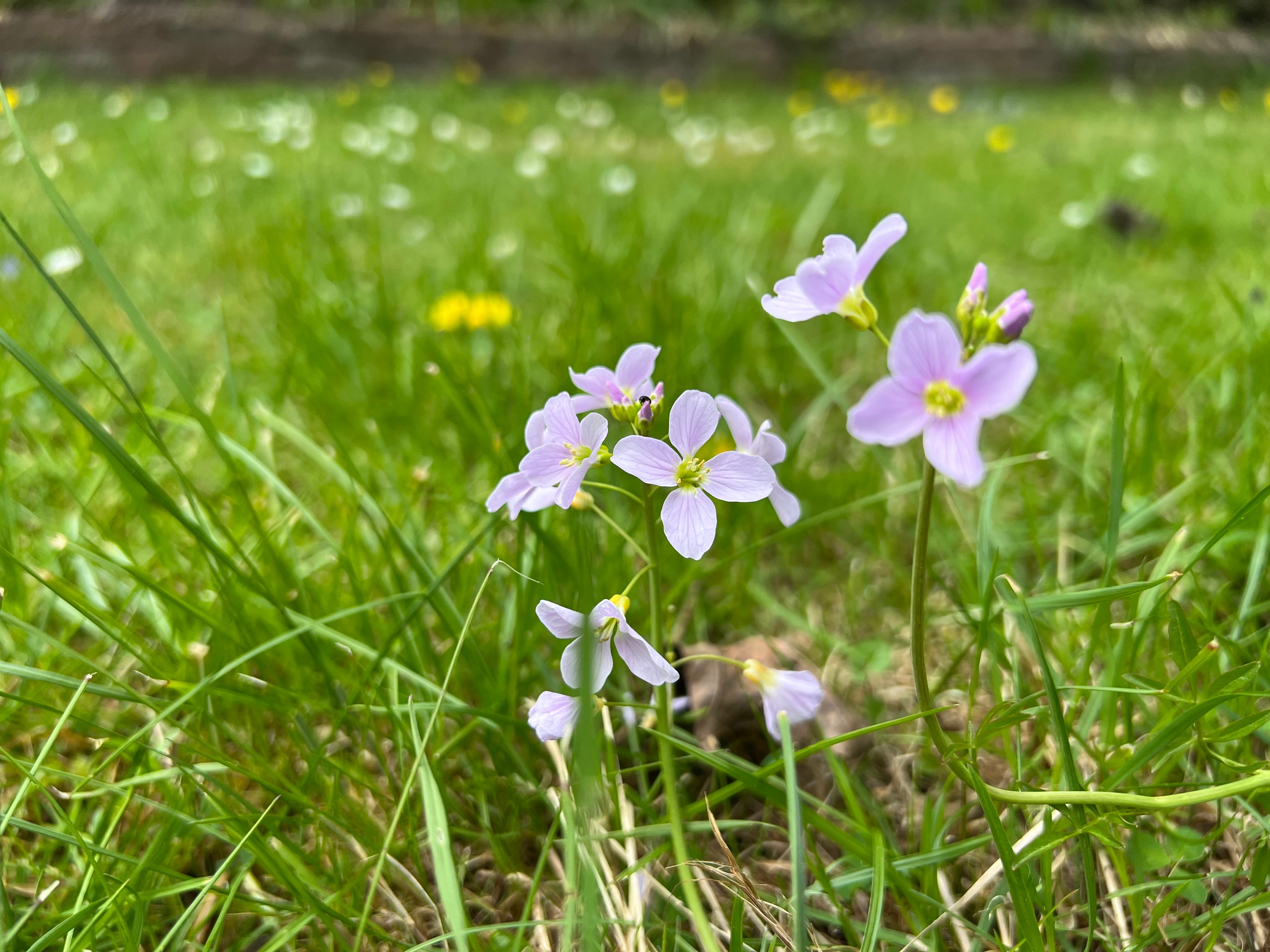
Cardamine pratensis – aka the cuckoo flower, lady’s smock, mayflower, or milkmaids

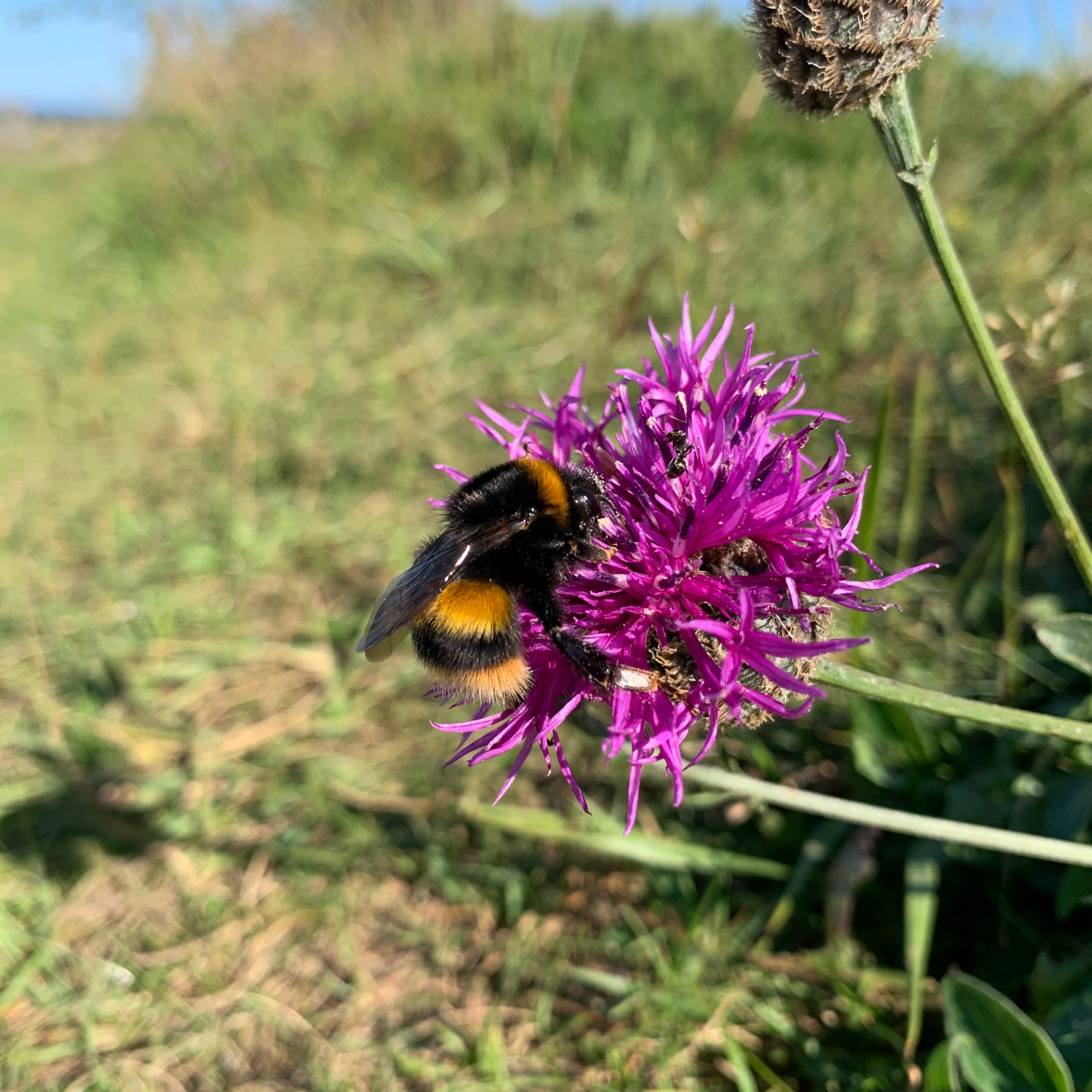
I enjoy taking part in No Mow May, partly because I love to see the grass in my garden come to life on a sunny day, with big fat bumble bees bouncing from flower to flower. Plus it’s easy, you really don’t have to do anything – an excellent propostition for the time-pressed amongst us. Less time mowing, more time to spend sowing seeds, keeping on top of weeds and planting up the summer borders – what’s not to like?!

I hope that people aren’t put off by the month-long commitment of No Mow May, or feel pressure not to mow – or worse, feel shame if they do mow! Gardening shouldn’t be about guilt – it’s about doing what’s right for you and your garden. And if you are twitching at the sight of the grass getting up to your ankles there are plenty of things you can do to boost biodiversity during May.

🌼Mow your lawn if it’s really getting too long and you can’t stand the scruff – but choose an out of the way patch to leave uncut, or leave the edges to grow long instead.

🌼Alternatively if you’re into a super-neat look then mow as usual, but consider planting up some containers with a wildflower mix in it, or some seasonal pollinator friendly flowers – pots of lavender, catmint, hardy geraniums or late spring bulbs will provide some goodness for the insects, with the added benefit of adding some colour to your garden.

🌼Do ‘Minimal Mow May’ – this is a less catchy name but is fun to say. Minimal Mow May is what I do – we have a back garden regularly used by family members and chickens, so it’s a bit more practical to keep it fairly short – I usually do at least one cut during the month of May, leaving some wild edges and a patch of longer grass at one side. We also have a front lawn which sets off the borders nicely when it’s neat, at least for a few days – all the dandelions and daisies tend to grow back very quickly anyway both front and back, so I never feel like I’m depriving the pollinators for very long.

Find out more about No Mow May at the Plantlife website.

The RHS has more tips on how gardeners can help pollinators here.
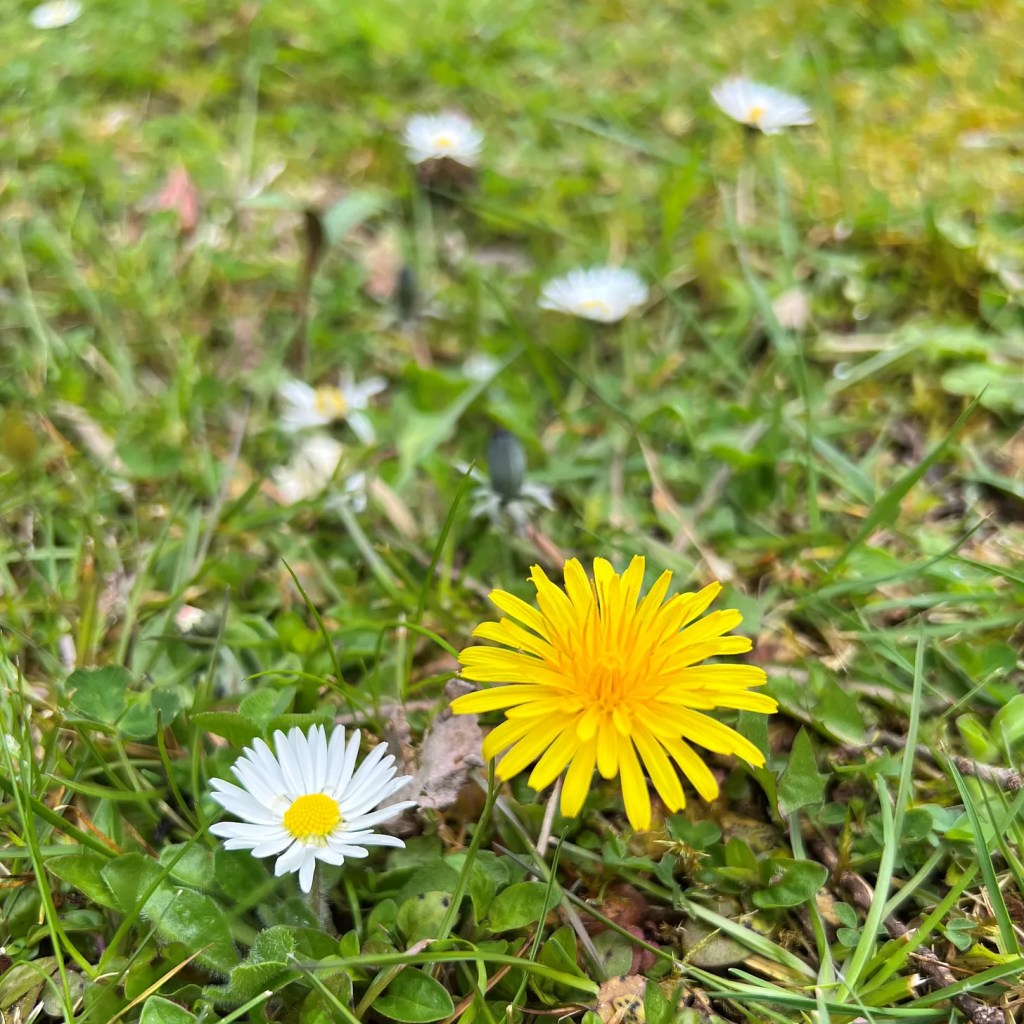
Wildflower Love ♥

This year I have set myself a casual challenge to learn to identify more wildflowers.  When I say it’s a casual challenge, it’s one that has developed in part because of my natural curiosity about plants and in part through necessity.  Garden visits have been almost impossible this spring and summer because of lockdown restrictions, so my focus has fallen to the flowers and plants around me – in the woods and hedgerows where we’ve walked more than ever, as well as further afield as restrictions have been eased and we’ve been able to go out for day trips.  

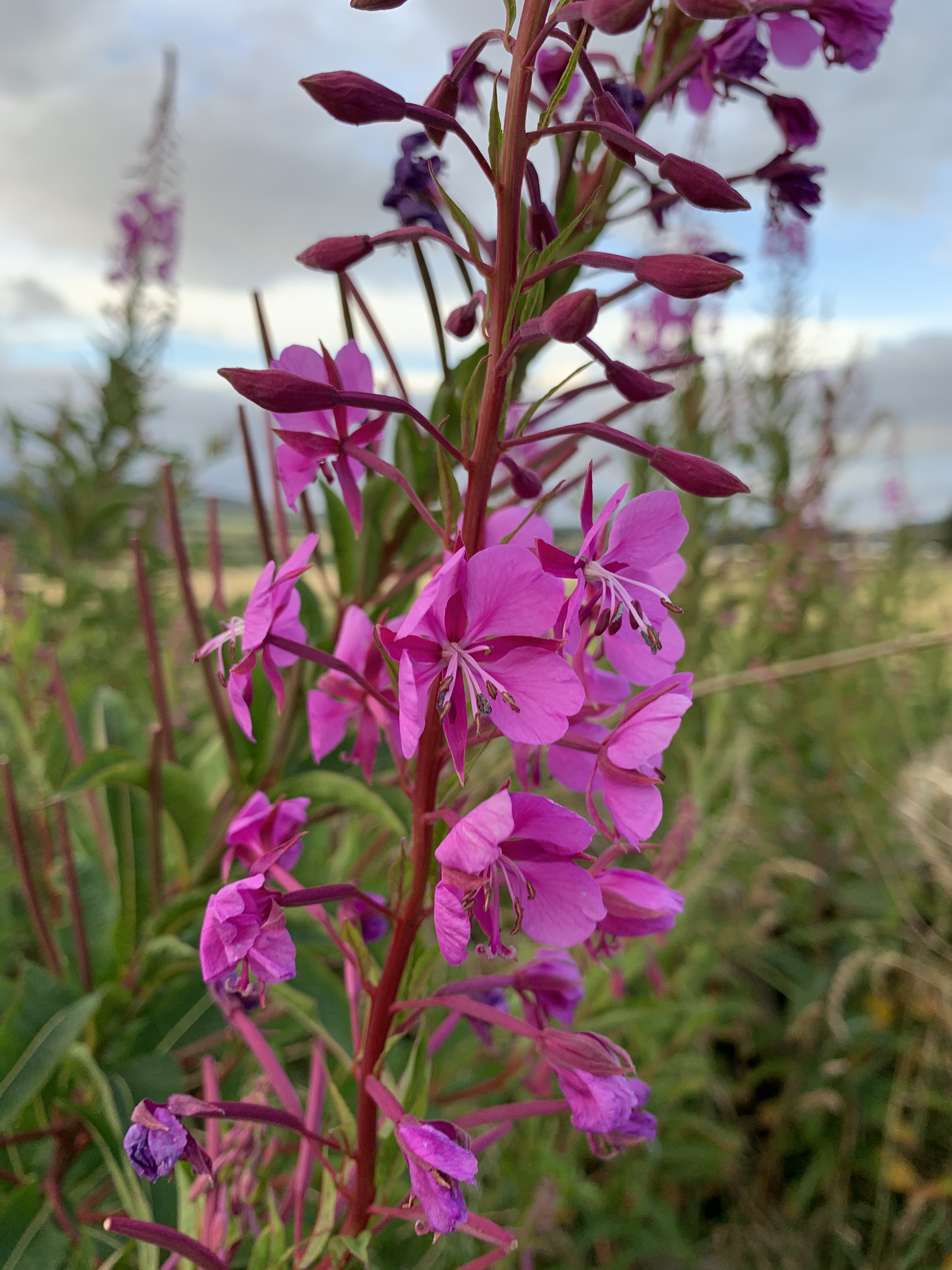
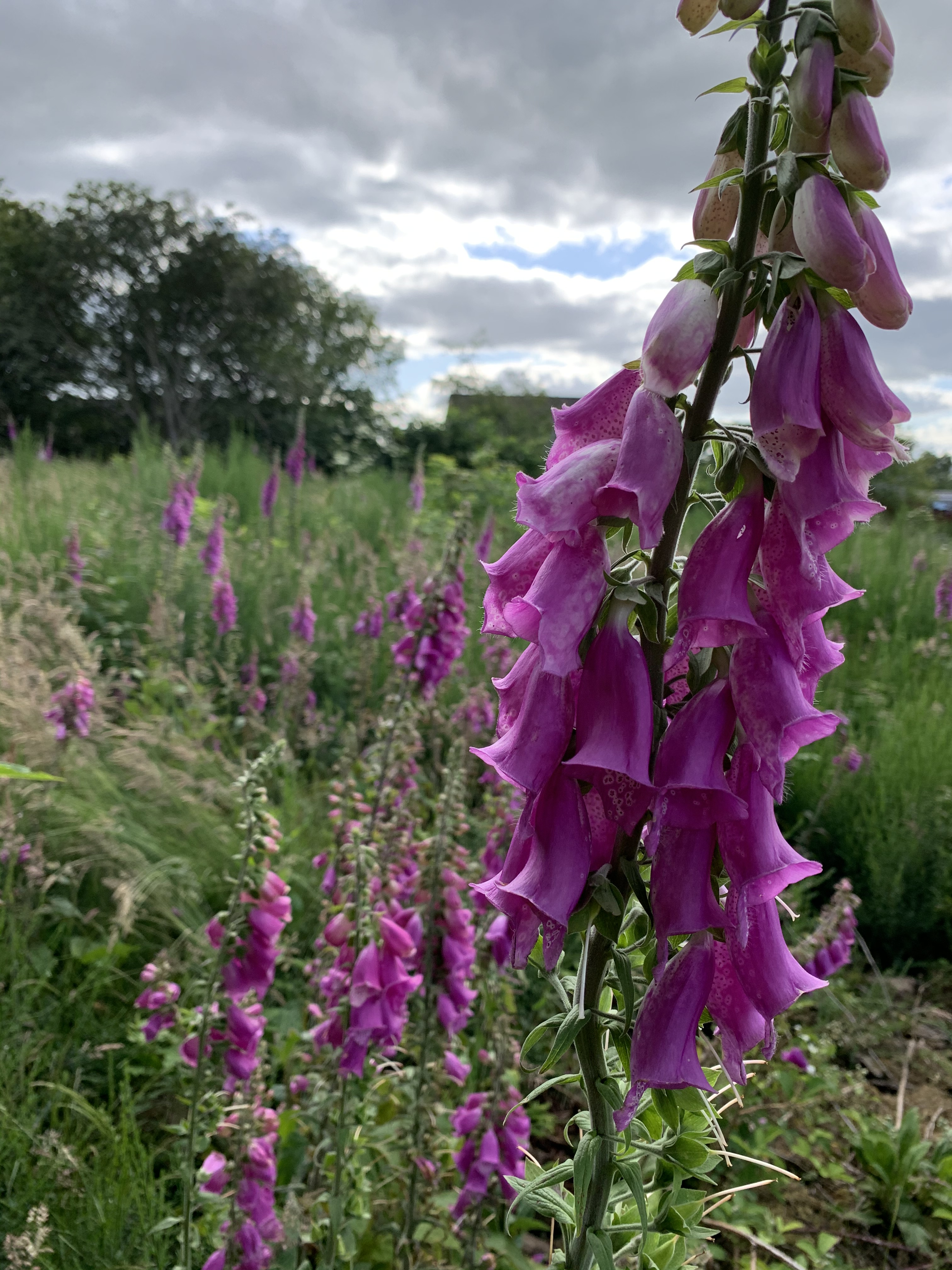
I’ve looked out for all kinds of wildflowers since they began emerging in the spring, and have watched the forest floor and the hedgerows grow and develop through into summer.  Some plants are of course common and easy to identify – wild roses, foxgloves, cowslips and primroses for example.  I love the big fat red clover flowers which are a cousin of the smaller variety popping up in my lawn.  It’s also fairly simple to spot ox-eye daisies and now at this time of year the statuesque rosebay willowherb is gradually turning its eye-poppingly pink flowers to fluffy seedheads.  

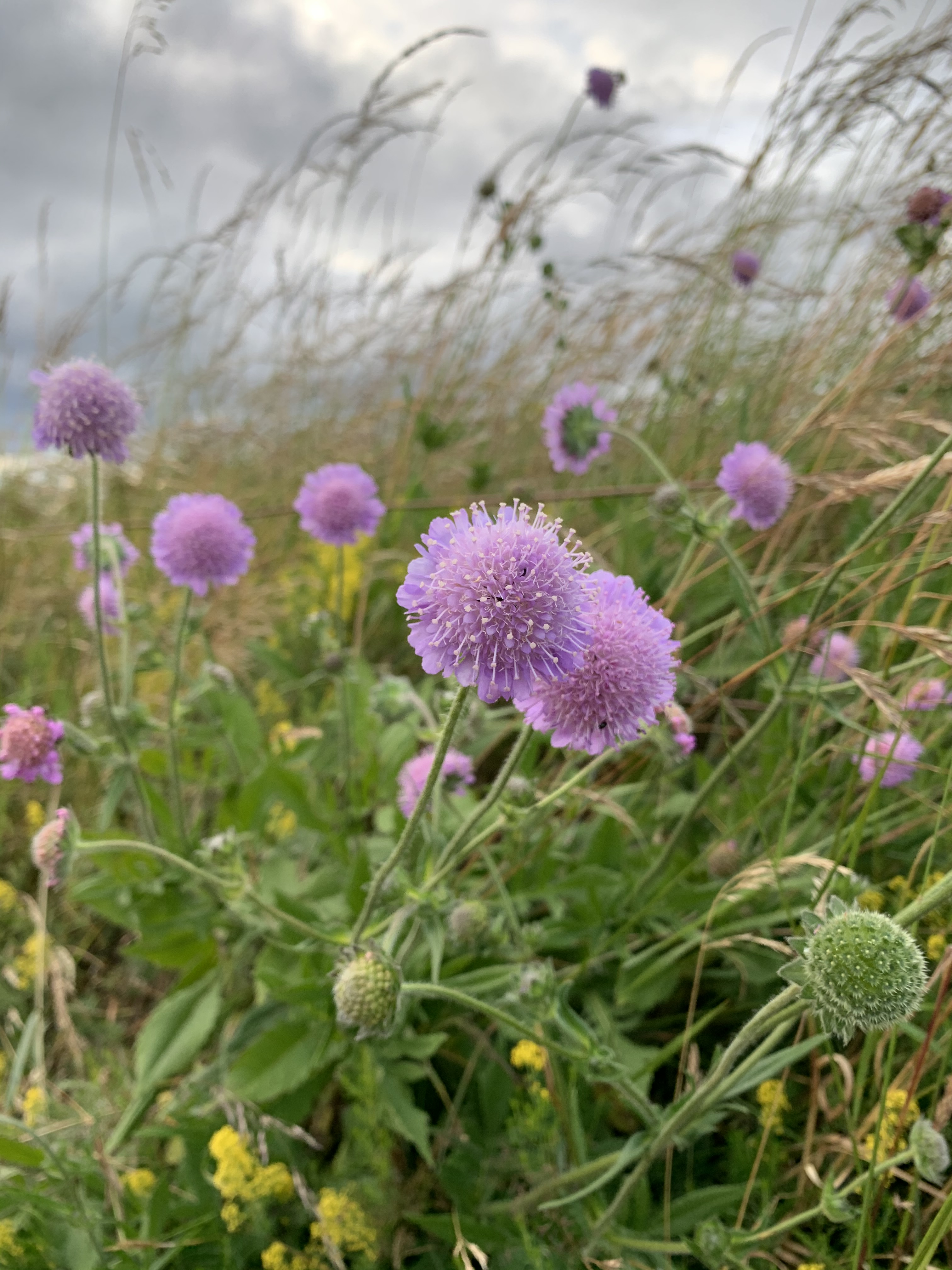
All the pinks and purples! Rosebay willowherb, red clover, field scabious, pink yarrow, foxgloves

But there are lots of flowers which I had previously disregarded or just didn’t look closely enough to really see them, and now I find myself peering into the undergrowth when I visit a new place to see if I can find anything unusual. I use my phone to take photos of whatever I find, and anything I really can’t identify I can then look up in my handy Wild Flowers book at home.  It’s a slightly old-fashioned book, with illustrations instead of photos but I’ve found it simple to identify each plant according to its kind, and I can also be slightly smug with myself about looking up an actual reference book for a change instead of relying on Google or an app!   

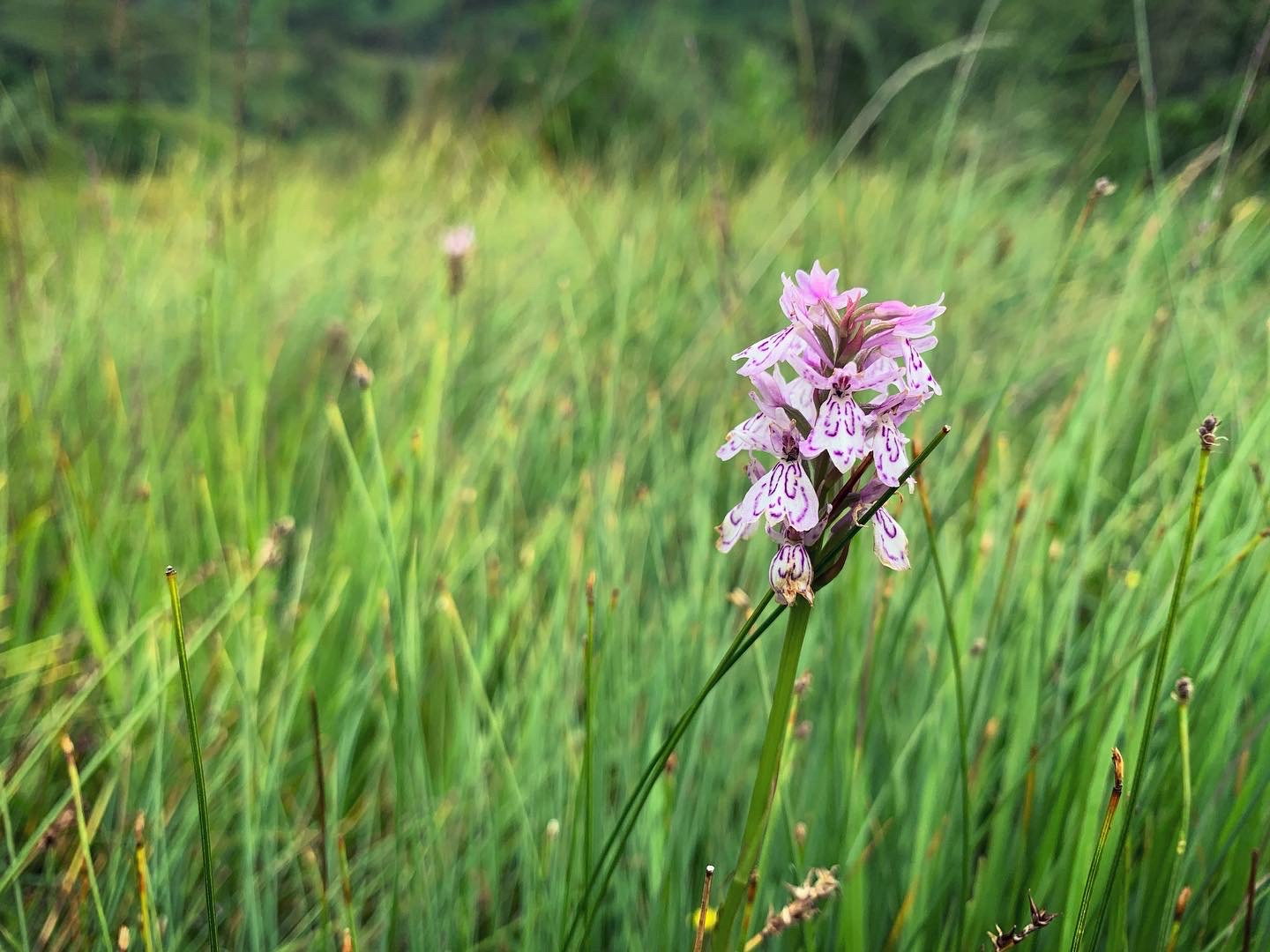
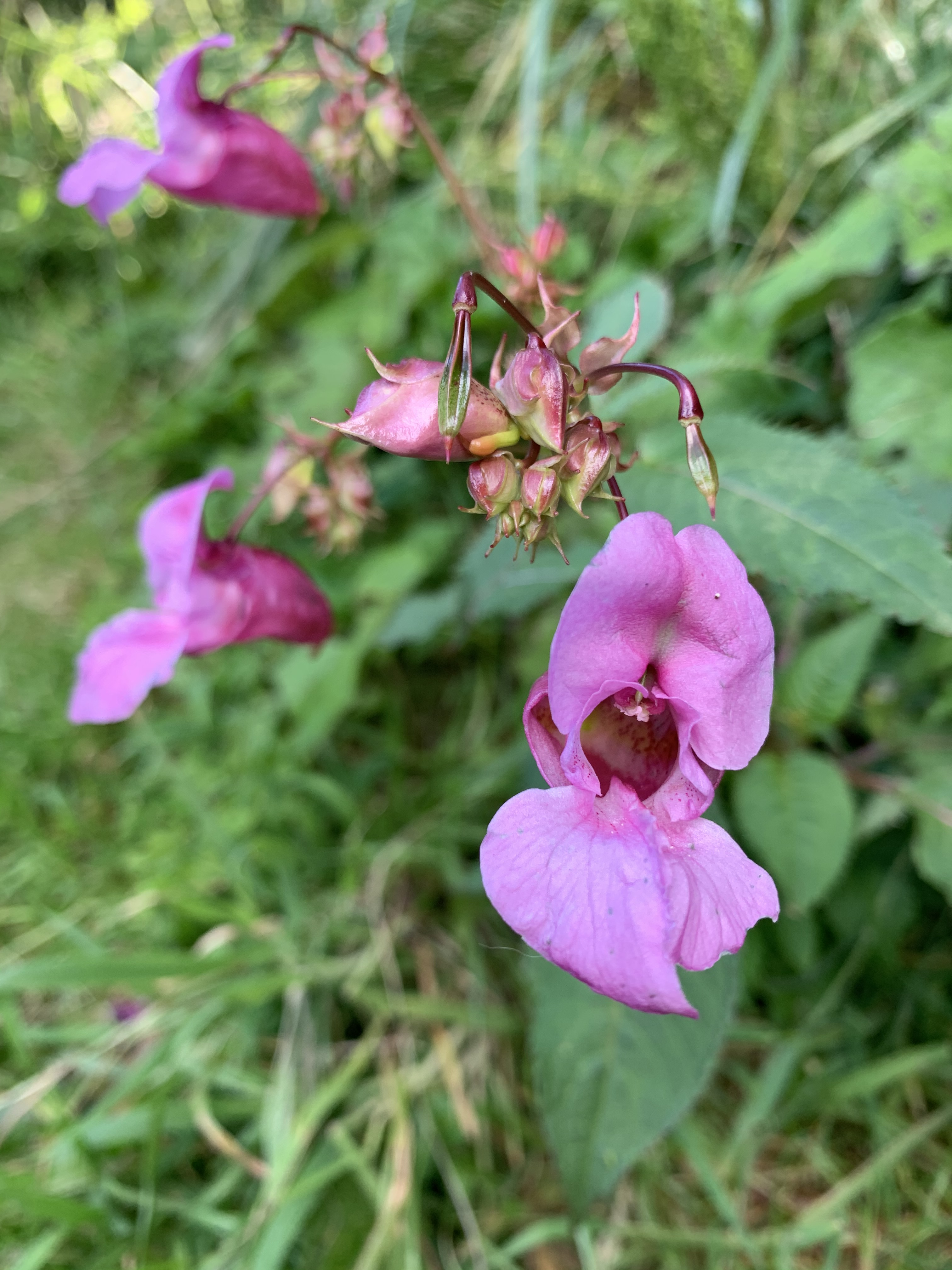
One of my most exciting finds this summer was a Common Spotted Orchid, discovered at the Glenfinnan Viaduct, and the infamous Himalyan Balsam which I found on the banks of the River North Esk.  It’s not uncommon, which is part of its problem – it’s an infamously invasive non-native plant but up until recently I had read about it, but never knowingly seen it.  

Common-spotted orchid, Himalayan balsam

Closer to home, I was also gifted a Seedball to trial earlier in the year, so I’ve used it to help develop a wildflower section in one of my raised beds.  I’ve documented the sowing and growing on my Instagram feed, and there’s a video in my Highlights showing just how easy these are – you just scatter the little clay balls in spring around the area where you want to grow your wildflowers and they will naturally break down and germinate in time to flower for the summer.  I’ve also been growing Ragged Robin from seed, a wildflower which loves damp soil around ponds, so a little group of these is now in a pot next to my tin bath pond. I would love to introduce more wildflowers to my garden – they’re tough but pretty in a natural, uncultivated way, and loved by all kinds of insects.  

Corn Marigolds popping up where I scattered my tin of Seedballs

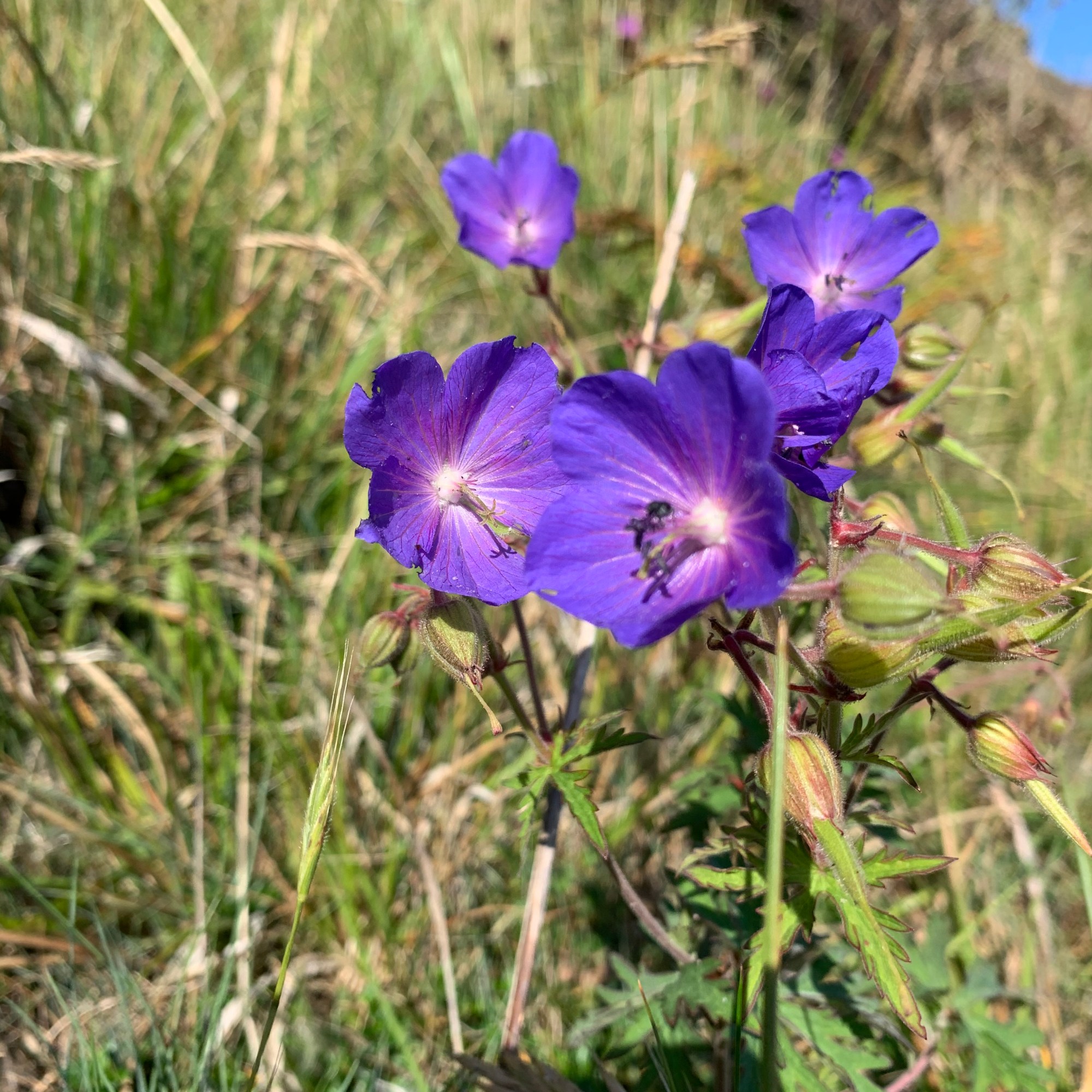
So it’s been a mini journey of discovery for me so far this year.  I’ve really enjoyed spotting and identifying the plants I’ve seen every day but couldn’t name, such as lady’s bedstraw, field scabious, self-heal, eyebright and also looking out for the best and most beautiful specimens of some old favourites, like harebells, foxgloves and meadow cranesbill.  Try it yourself – take a closer look and use a book or an app to figure out what you’ve found.  The plants which grow in our home environment are so important for biodiversity, supporting pollinators, providing a healthy eco-system and help us to notice the change in seasons as early dots of colour give way to blousy, overblown hedgerows.   It’s useful and enjoyable to know what’s growing just outside your garden walls. 

Harebells and self-heal at the River North Esk
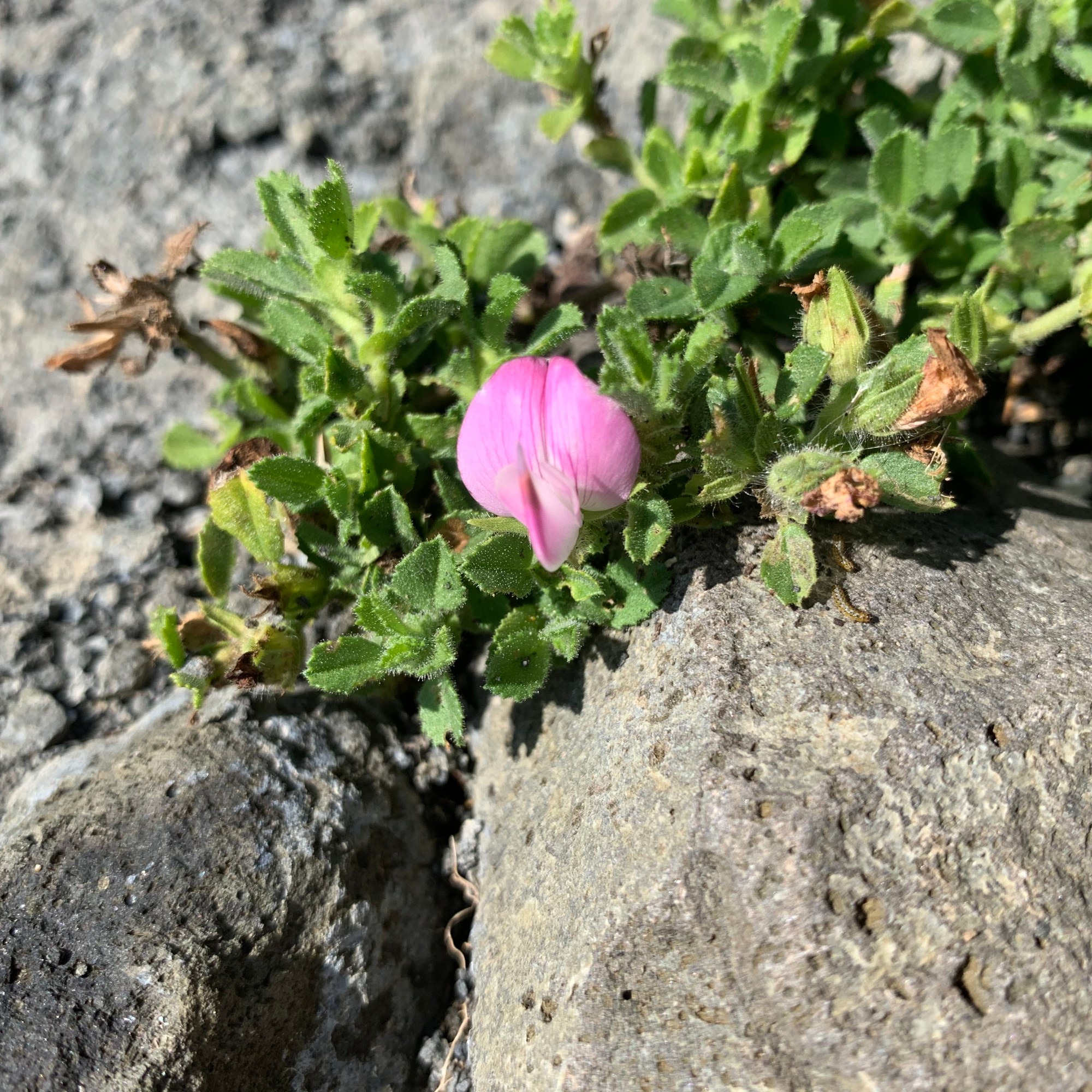
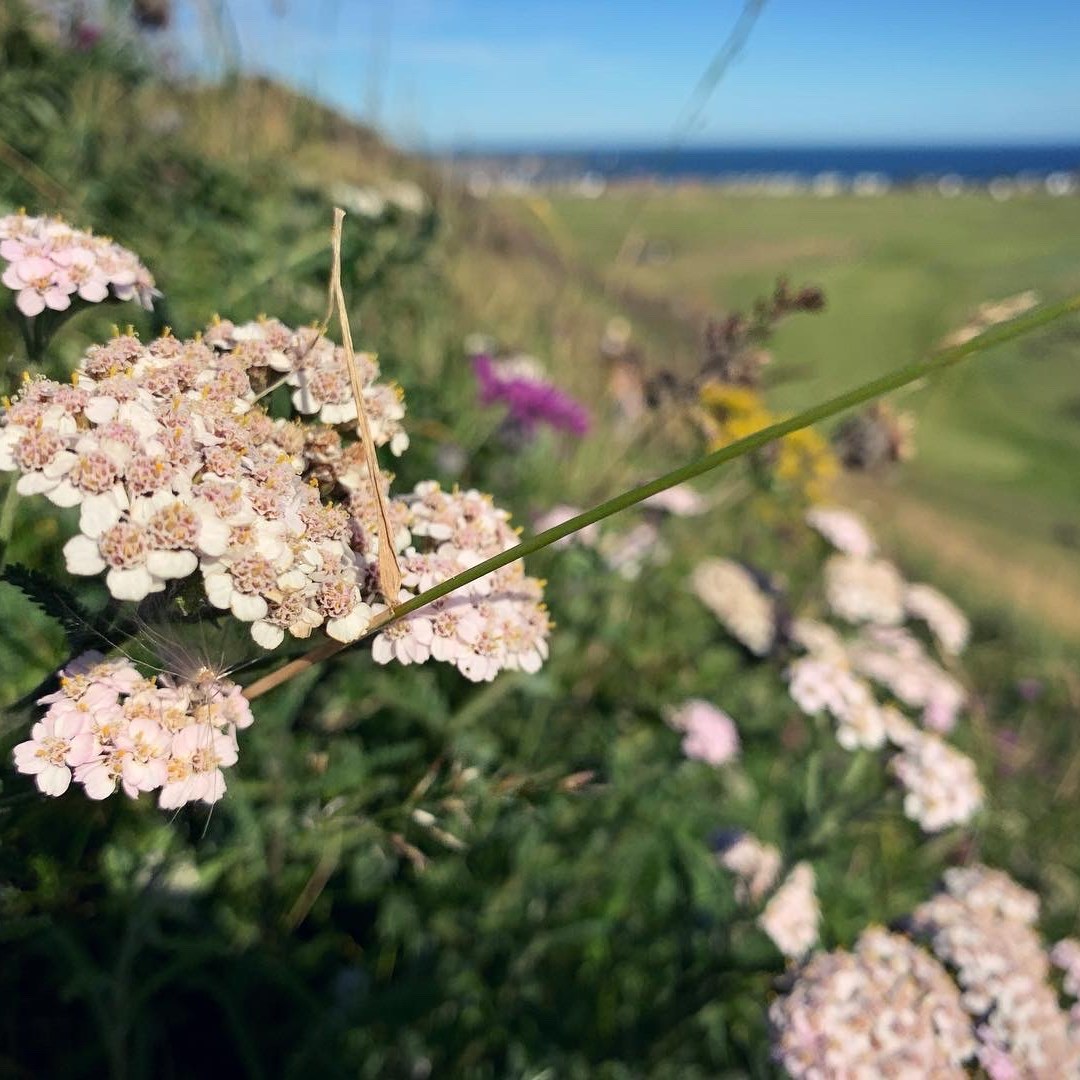
Meadow cranesbill, evening primrose, wild thyme, cornflower, rest-harrow (I think!), yarrow at Elie, Fife
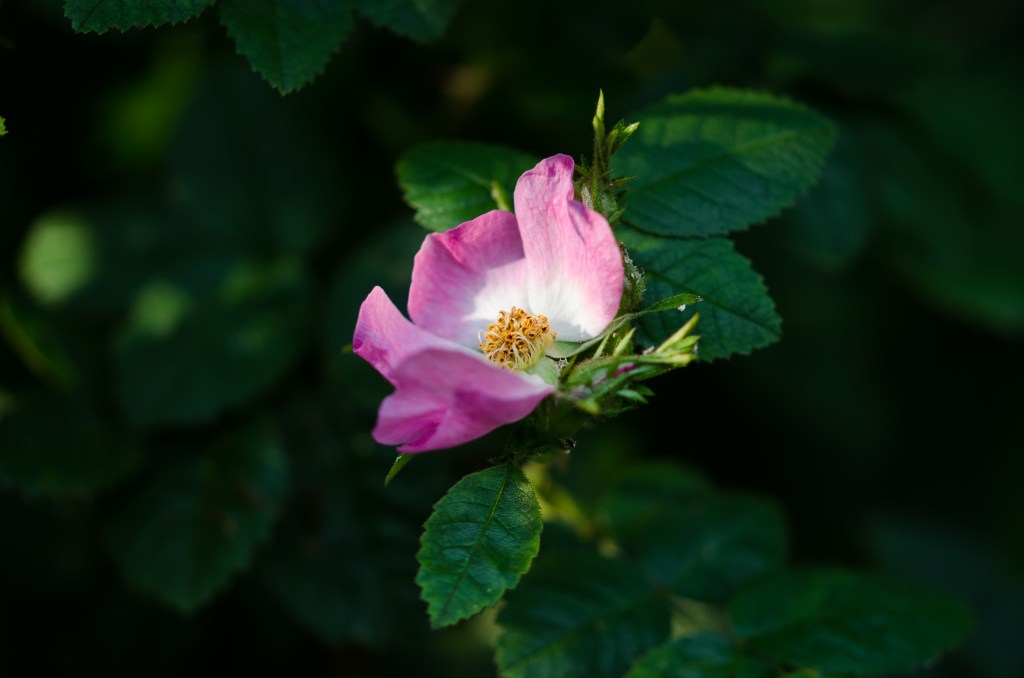
Wild rose, in the woods behind my home

Garden Goodies @ GPE 2020

Last week I attended the Garden Press Event in London for the first time – this is an event organised to allow the horticulture industry to come together so that journalists can view the latest products, find out about new campaigns and generally share information and news. It was a whistlestop tour of all the big names in the industry, plus lots of smaller and emerging businesses with new and interesting products to bring to the market. Not to mention initiatives like National Children’s Gardening Week and Garden Day which aim to raise the profile of gardening generally.

There were a few items which particularly caught my attention, so here’s my list of Top 5 Garden Goodies from the GPE 2020:

  • Nemaknights – I had spotted this advertised in a magazine and then promptly forgot what it was called, so I was delighted to find NemaKnights had a stall, and quizzed them on this potentially transformative product! Essentially it’s nematodes in granular form which you can shake onto the soil as and when you need it. It’s a biological pest control which is child, pet and wildlife friendly and targets slugs and snails, although it’s also available for vine weevils, ants and sciarid flies. If you’ve used nematodes before you’ll know that up until now they’ve been a bit fiddly to use – with a short shelf life, they’re kept in the fridge then you’ve got to add water, mix and water into your soil. Nemaknights seems to eliminate the fuss, making it much easier to use a pesticide-free solution to an age-old problem. I’m looking forward to trying this as we do have many slugs in our garden – I’d also be keen to use it for fungus gnats because this is the time of year they tend to reappear, when my windowsills are full of germinating seed trays!

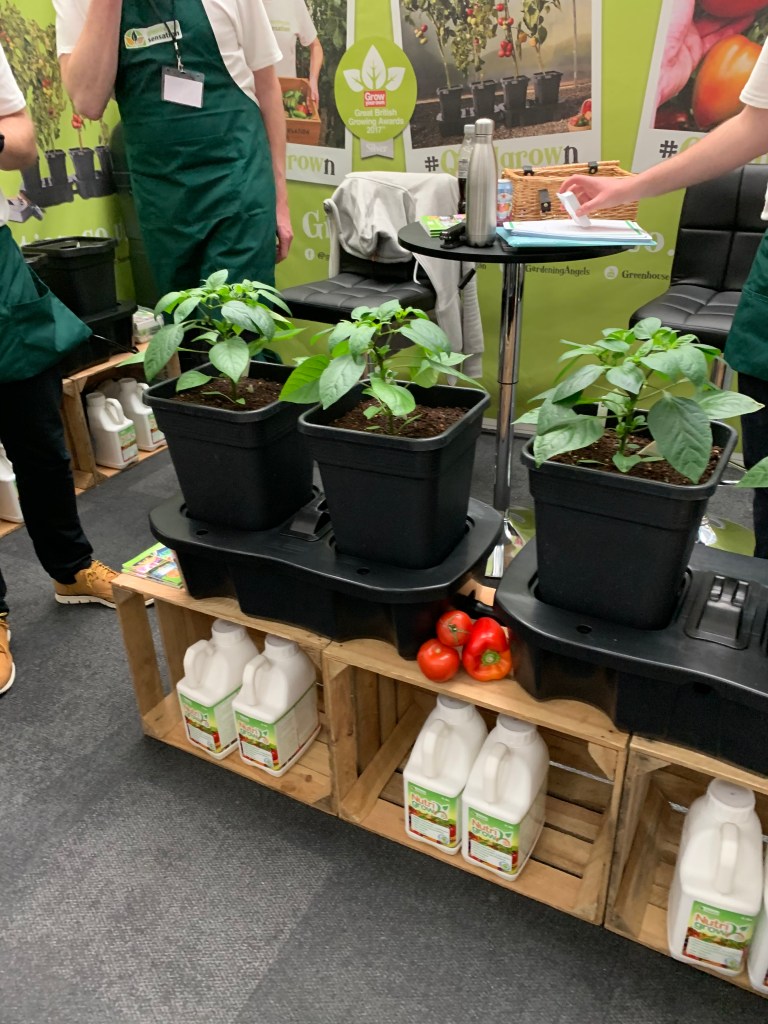
Quadgrow – another product I was very taken by was the Quadgrow by Greenhouse Sensation. This is a self-watering planter, ideal for crops such as tomatoes, peppers, aubergines or courgettes, and can be used in the greenhouse, polytunnel or on a patio. It promises to keep plants at just the right moisture level for around 14 days using a wicking system, resulting in 2x bigger harvests compared to grow bags or pots. I can see this working well for my tomatoes – or possibly the aubergines and courgettes which are currently only seedlings… so watch this space!

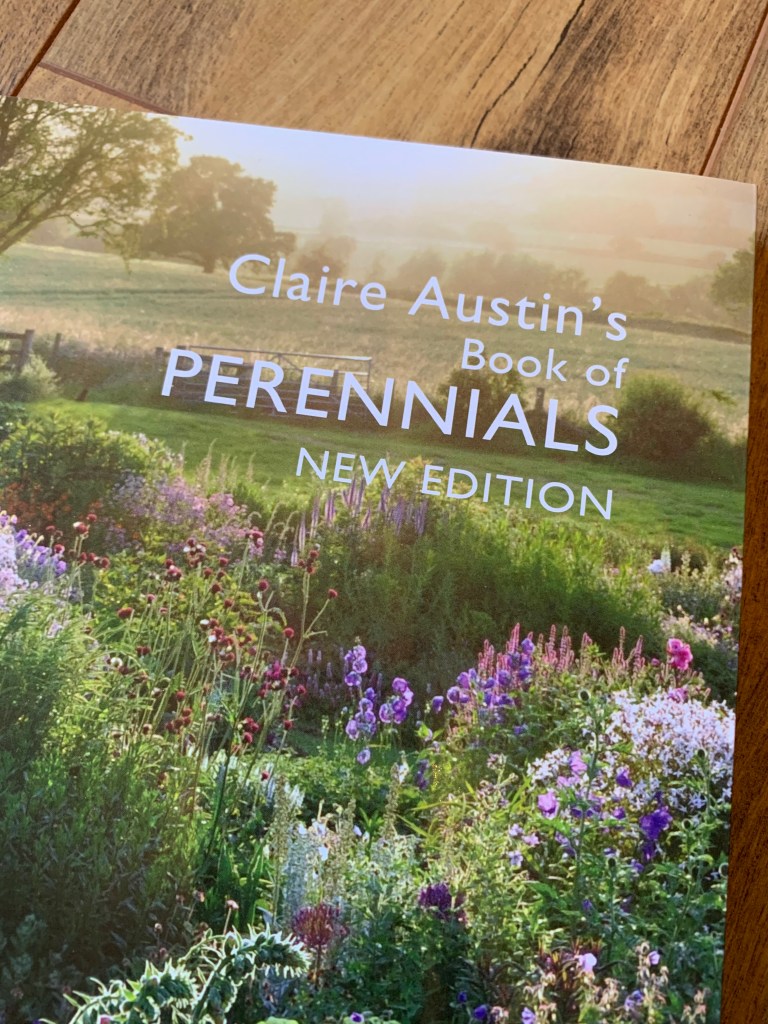
Claire Austin’s Book of Perennials – it was great to speak to Claire Austin herself who was there to promote her newly revised Book of Perennials. I had read about her most recent venture The Sarn in February’s Gardens Illustrated and loved the idea of opening a pub with a plant nursery out the back! Beer and plants – what more could you want?! And I was lucky enough to take away a copy of the book, which I am certain will fuel my daydream of one day owning my own independent nursery. The book was first published in 2015 and has been revised to include 180 new varieties with extended features on peonies and irises. It’s full of advice on choosing and caring for perennials, and how to plant them together. Plus there are 700 plants listed – a perennial lovers paradise.

Honeyfield’s – this is a company producing wild bird food and associated feeders, nest boxes etc. The brand is owned by Marriages, which makes pet food and animal feed, and is now an authority on environmentally friendly wild bird care. Honeyfield’s stands apart from other suppliers in its approach to sourcing seed and sustainability – it’s the first supplier of Fair to Nature bird seed in the UK, which means it’s commited to using cereals and other feeds from farms which grow crops to sustain farmland bird species. So Honeyfield’s not only feeds garden birds, but also looks after those in the countryside too. Not only that, but their packaging is recyclable and they encourage consumer to use a refillable ‘Tub for Life’ for zero-waste shopping. I’ll be popping one of their Easy Clean Seed Feeders out into the garden shortly and I’m certain the local birds are going to love it! Check out Honeyfield’s excellent range of feeding guides here and their brilliant Bird Bites videos, which cover a host of different wild bird care topics.

Activearth – I was very intrigued by this new product, which claims to supercharge your soil. As the owner of some under-performing raised beds, I’m currently on the hunt for ideas to help increase the nutrient levels of my soil and improve the health of the plants I grow in them. Activearth is an organic pellet which provides the soil with 4 essential minerals (Magnesium, Calcium, Hydrogen and Potassium) plus beneficial soil bacteria, to improve fertility and plant growth in a slow release format. Scattered over the growing area, Activearth promises to transform the soil ‘from compacted and dormant to biologically active and nutrient-rich’. This, I like the sound of. So I will try the small sample I’ve got and see if there are any significant improvements – it sounds like a magic formula, and it smells like biscuits! Is it too good to be true? I hope to find out and report back…

Where do ladybirds go in winter?

This is the question I’ve been asking myself lately.

I’ve noticed more ladybirds than ever in my garden this year.  They’ve popped up all over the place – in pots, under the bin lids, on doorframes, in the house, and – thankfully – on my plants, presumably feasting on any pests which would dare to come their way.  It’s no coincidence that I’ve barely noticed a single greenfly since the spring.

20180826-DSC_0563

They seemed particularly happy perching in and around the sunflower heads, especially the slightly dried-and-curled-up faded flowers which must give them plenty of nooks and crannies in which to hide.

img_6982

They also – strangely – took to congregating in the multiple hose head thing which I installed to try and keep the plants watered while we were on holiday.  I’ve no idea why this was an attractive place to gather, but each time I looked in there were at least half a dozen piled into it.

img_6442

So, as the season has changed and the temperature’s dropped, I’ve been asking myself what’s going to happen to the ladybirds now?  Many of them still seemed to be hiding out in my faded sunflowers, and I needed to cut these down – but I didn’t want to disturb them or compost their winter hideaway.  And I don’t have a bug hotel in my garden which I could encourage them to populate instead.

dsc_0494

Apparently they do hibernate for the winter in various types of sheltered spots – tree bark, leaf litter etc.   They like crevices, leaves, bark, often low down.  So, having spent some time clearing the raised beds today, I did cut down the sunflowers, but took the heads of the flowers off first with a short section of stem and have piled them, and their little ladybird occupants, in a sheltered corner.  Hopefully the ladybirds will make themselves cosy there for the winter or can crawl away to the many trees and piles of leaves nearby which might make a more suitable winter holiday home.

I certainly hope they will wake up and return in the spring – it’s been a real joy to have a loveliness of ladybirds sharing my garden this year.


dsc_0382

September Stars

It seems I have a late summer garden – there’s more colour on show in September than there has been during the rest of the year.

img_6299

The front garden is currently showing off all its colours – yellows, pinks, peachy dahlias and flashes of reds from the crocosmia, roses and even a few second-flowering geums.  I haven’t really planned a late summer garden, but each season I have been adding layers of colour and texture so there’s as much interest throughout the year as possible.  It looks like I’ve certainly been attracted to late season plants!


I do love my dahlias, of course, and they’re really hitting their stride at the moment.  I’m also really enjoying the echinaceas which are flourishing, the rudbeckias (still small, only sown this year) and the cosmos, which is a great gap filler.  I bought a couple of sedums several weeks ago and love to see the bees still busy around these flowers as they deepen in colour each day.  These are all being propped up by some of the shrubs and plants which may have finished flowering but are still providing essential structure and mass – the two cotinus, the damask rose, teasels and eryngium for example, whose spiky texture is also providing soft browns and purples.

20180826-DSC_0503


Some of my front garden plants have had a second wind, most likely due to the very warm summer we’ve had.  The geums I’ve already mentioned – these first bloomed in May I think and are still popping out a few flowers! The hot pink salvia is coming out again for another throw, along with the geranium ‘Lace Time’ with its pretty veined pink flowers.


But the stand-out repeat flowerer has to be the rose ‘Lady Marmalade’.  I might be wrong, but I think she’s currently in flower for the third time – and still looking beautiful.

Lady m BEST-4

‘Lady Marmalade’

It’s lovely, as the summer slips away and the temperature starts to fall, that the hot colours are still warming up the garden.  I feel a bit sad about the season changing – I really loved the hot weather – but I can still enjoy the summer blooms.  Plus now is the time to collect seed, take cuttings and begin thinking about next year.  I know – it’s only September! – but I’m already thinking of what I want to grow and/or sell in the Secret Garden next spring and what I will add to the borders, front and back, to keep building those layers of colour, texture and foliage.

The hit list for next year includes more Stachys byzantina for its gorgeous soft leaves and rich pink flowers; more Verbena bonariensis as it’s so bee-friendly, the usual cosmos, sweet peas and aquilegia, and a plan for some new plants – Sanguisorba (inspired by a recent visit to Cambo’s walled garden) and Cerinthe major (which I loved at Chelsea).  I’ll also be sowing some Stipa tenuissima as I want to add some more soft grasses and I just love the texture and movement of this feathery grass.

image_558445370734348

Sanguisorba and Stipa tenuissima in the beautiful perennial borders at Cambo

And that’s just a small selection of the seed packets I currently have spread out across my dining room table!  There will be a lull around November/December but between now and next spring there’s a lot of sowing and growing to do.  If you want me, I’ll be in the greenhouse…

img_6861


Playing the long game…

Gardening is a lesson in playing the long game.

I’m a quick-fix, instant-gratification type of person, so my growing love of the garden has brought with it an appreciation for taking things a bit slower.  For taking the long view and planning ahead for the same season, the next season, the next year, the next few years…

Very few aspects of gardening are instant.  You can buy a fully grown plant in a pot and have instant colour.  Buy a few of them and you’ve got instant impact.  But like many ‘instant’ things in life, the satisfaction is fleeting.

I’m learning to love the long game.  I have no choice, really, as I don’t have the budget for an instant garden!  But even if I did, I think I would still choose to plan and sow, make careful selections and take the time to move and shape things over the course of days, weeks and months.

Take delphiniums for example.  I have sown many of these this year, some to share and sell, others will hopefully find a home in my garden,  but I am taking the time to grow these in pots until they’re large and healthy and can withstand the assaults of the various snails and slugs patrolling my front garden.  It’s true, even large plants can be decimated by the jaws of a hungry gastropod, but the larger ones stand a better chance of survival.  As an experiment, I planted out a few young delphiniums into the front border and in a matter of days – as I suspected – they’d been torn to shreds.

DSC_0221

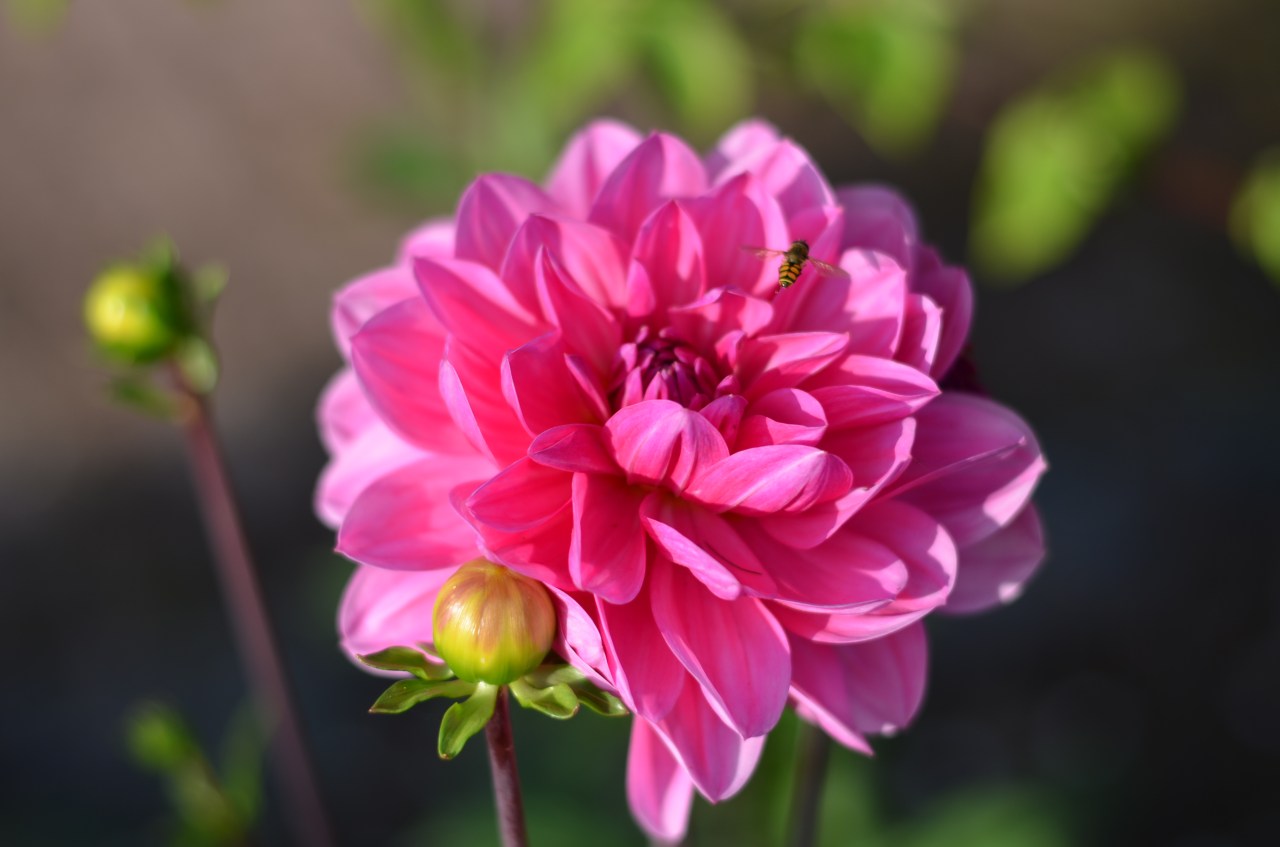
Delphiniums…worth waiting for (as this bee will testify) 

This border itself is another example.  In many ways I wish I could blow the bank account and buy dozens of plants to fill the bare soil still showing in the front…and yet by sowing and propagating, along with some careful bargain-spotting at plant sales and garden centres, I’ve managed to gradually fill gaps in around two thirds of the garden so far.  I like seeing it take shape gradually, and it gives me time to pause and redesign areas which aren’t working, or try new ideas when I’m inspired by a photo or magazine article.

In that very border are two mature philadelphus shrubs.  Last autumn I pruned them hard – knowing this would mean no flowering for at least a year.  They had flowered poorly the previous summer anyway and were congested and overgrown.  So I played the long game – removing most of the older stems and branches to leave a healthy selection of wood with a far better structure.  I’ve missed the flowers but hopefully next year I’ll find out if my hard work has paid off and be rewarded with a much healthier and better flowering plant.

img_4647

The front border is filling up slowly but surely…

My studies are part of my long-term plans too.  Much as I would like to, I can’t train in horticulture full-time – work and family commitments demand my time and ensure an income.  But I can take little steps forward – studying for half an hour each morning, taking a couple of exams every few months…inching forward towards a qualification which might come in useful, or might simply make me a better gardener.  Either way, I’m enjoying the process and I know that the theoretical learning is going hand in hand with what I’m practicing over time in my own garden.

This week I sowed biennials – again, another long wait to see how they’ll turn out.  Biennial plants flower the season after sowing, so the foxgloves and hesperis seeds I’ve sown now won’t flower until next spring and will need cared for in the greenhouse during autumn and winter.  But it will be worth it when they’re finally planted out in the garden, proving colour and scent and encouraging insects and wildlife.

img_4687

The teasels I sowed at the end of last summer are making an appearance now

So yes, even though ‘instant’ gardening can be a good thing, playing the long game is better for me – it slows me down and asks me to think and plan and anticipate what’s to come.  When many other aspects of my life seem to be whizzing past at speed, I’m grateful for the garden, which slows me down and helps me to appreciate what I have in front of me.


Shinrin-yoku: forest bathing

Tree-huggers and leaf lovers, come this way…

After a week of house arrest due to the snow, then frantic work days catching up after the snow, plus too much talking, eating, drinking, thinking and social-media-ing I decided that the best and quickest way to feed my soul and enter recovery mode was a good solid walk in the woods .

IMG_1793.jpg

The Japanese call it shinrin-yoku, which means ‘forest bathing’ and I can’t think of a better way to describe the act of putting on a pair of boots and walking alone amongst trees, fields and birdsong.  It’s been a thing in Japan since the 80s and its aim is to encourage a healthier lifestyle by taking walks in specially designated forests.  Forest bathing is not just about relaxation, although that’s a big part of it; studies have been done by Japanese scientists which show it can improve your physical health by boosting immune systems, reducing stress hormones, enhancing mental wellness and brain health. It might even blood glucose levels among diabetes sufferers.

I can certainly report it’s good for my soul as well as my health.  I always find something  in the woods to make me smile – today it was a flock of geese which passed so low overhead I could hear their wings beating.  And I also spotted lots of little chewed cones and nut remnants lying on the path which made me look up and wonder if there had been a little squirrel feast overhead.

I’m now wishing I had taken a photo of these…but then part of the joy of forest bathing is sometimes stopping to take photos, and sometimes simply enjoying the moment and not viewing it through a lens.

So I walked, breathed, greeted a couple of friendly dog walkers, and felt the sun on my back – it was wonderful.  I am extremely fortunate to have a number of woods just a short distance from home – I can leave my doorstep and walk to one of three woods within 5 minutes and if I ever got bored of these I could jump in the car and drive north to Big Tree Country in Perthshire, where there are some fantastic forests and woods to walk in.

However I do have a growing desire to visit Japan for some authentic forest-bathing.  I’ve been fascinated by the country and its culture for a long time and the more I read about it, the more I want to experience it for myself.  The Japanese relax by gazing at trees, lying on logs and breathing in forest smells.  Not to mention their cherry blossom festivals, zen gardens and moss meditation… for a garden-loving introvert it sounds like heaven!

For now though I will grab any opportunity I can to gaze at a Scots pine or my own (not-so-zen) garden.  Now the snow is melting the signs of Spring are showing up again at last.

IMG_1789.jpg


Curly wurly

I’m noticing a certain kind of shape around me at the moment – for the past few days I’ve been spotting curls and twists, exposed I suppose by the bare branches of winter.

IMG_0705.jpg

One that I notice daily is the contorted hazel (Corylus avellana ‘Contorta’which is right outside our back door.  This large shrub is also known as a twisted or corkscrew hazel and by the nickname of ‘Harry Lauder’s walking stick’, after a Scottish entertainer who apparently used to carry a walking stick made from a branch of the shrub.

Only a couple of days ago I was listening to a podcast of Gardener’s Question Time and this plant came up – one of the panellists revealed that the twisted hazel was first discovered by a drunken vicar, who fell into a hedge, looked up and saw the contorted stems.  So he took a cutting, grew the plant and that’s how it’s ended up in many of our gardens (according to Chris Beardshaw!).

It’s a fascinating shrub to look at, but especially in winter, when you can see the exposed shapes of the branches, and then in spring when little yellow catkins appear.  Even its leaves are quite bumpy and textured so it’s well worth having one in the garden for year-round interest.  You can even bring it indoors – sort of.  I’ve pruned a few branches from mine as each year it throws up a few vertically, which is out of keeping with its general weeping shape; so I’ve put the pruned shoots into glass vases so I can admire the twists and turns inside as well as out.

And now it appears I’m being followed by twisted branches… on a visit to the hospital last week to donate blood I noticed a twisted hazel in one of the flower beds in the grounds.

IMG_0723.jpg

It looks quite good with the background of the brighter green conifer.

Then on a walk around the village a few days later, I looked up and noticed these striking trees in someone’s garden:

IMG_0730.jpgI’m not certain if these are hazel or not – I expect this is the ‘tree’ version of my medium-sized shrub.   I couldn’t get close enough to check but they make a fantastic silhouette against the winter sky.

Finally, one of my favourite little plants in my garden, this little grass…

IMG_0688.jpg

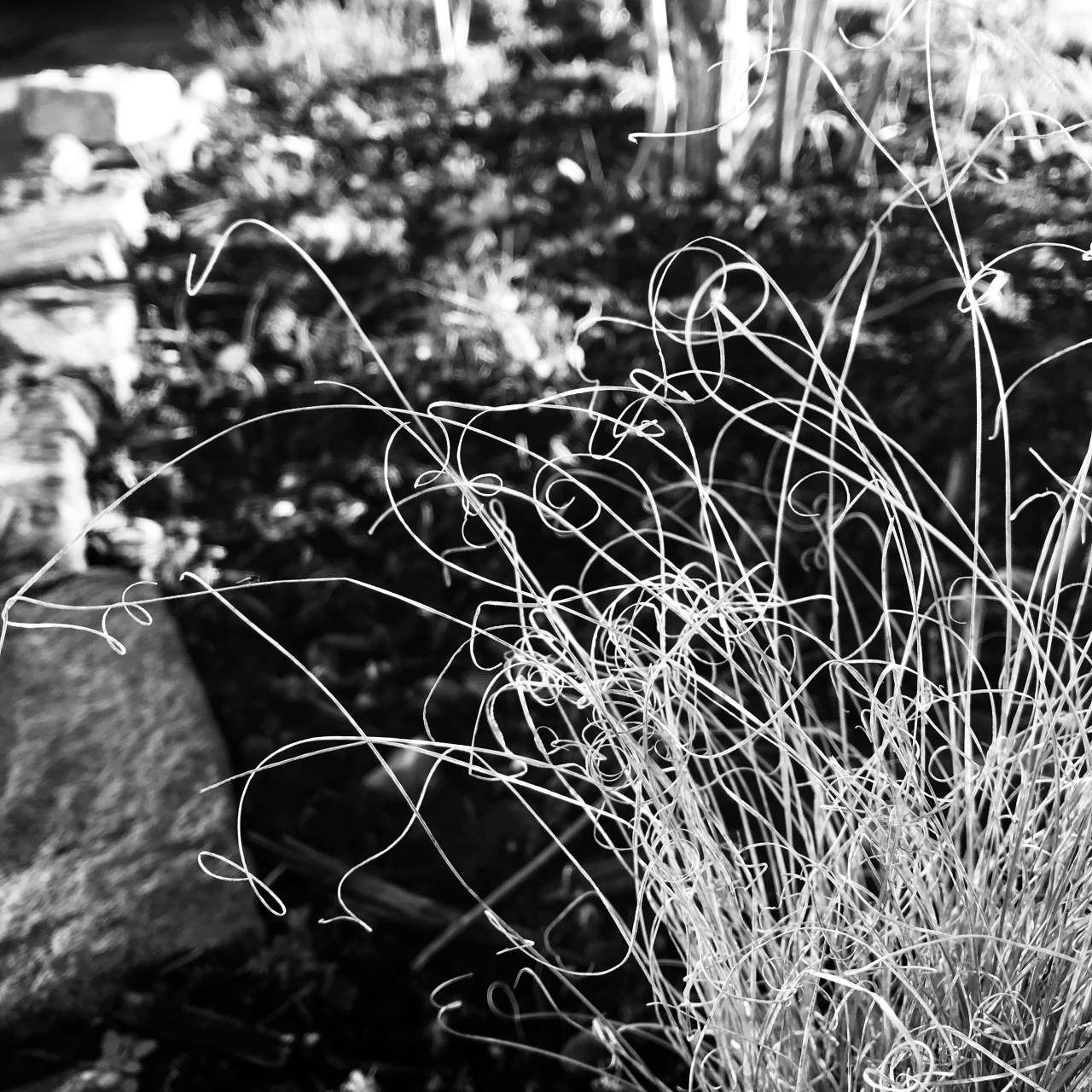
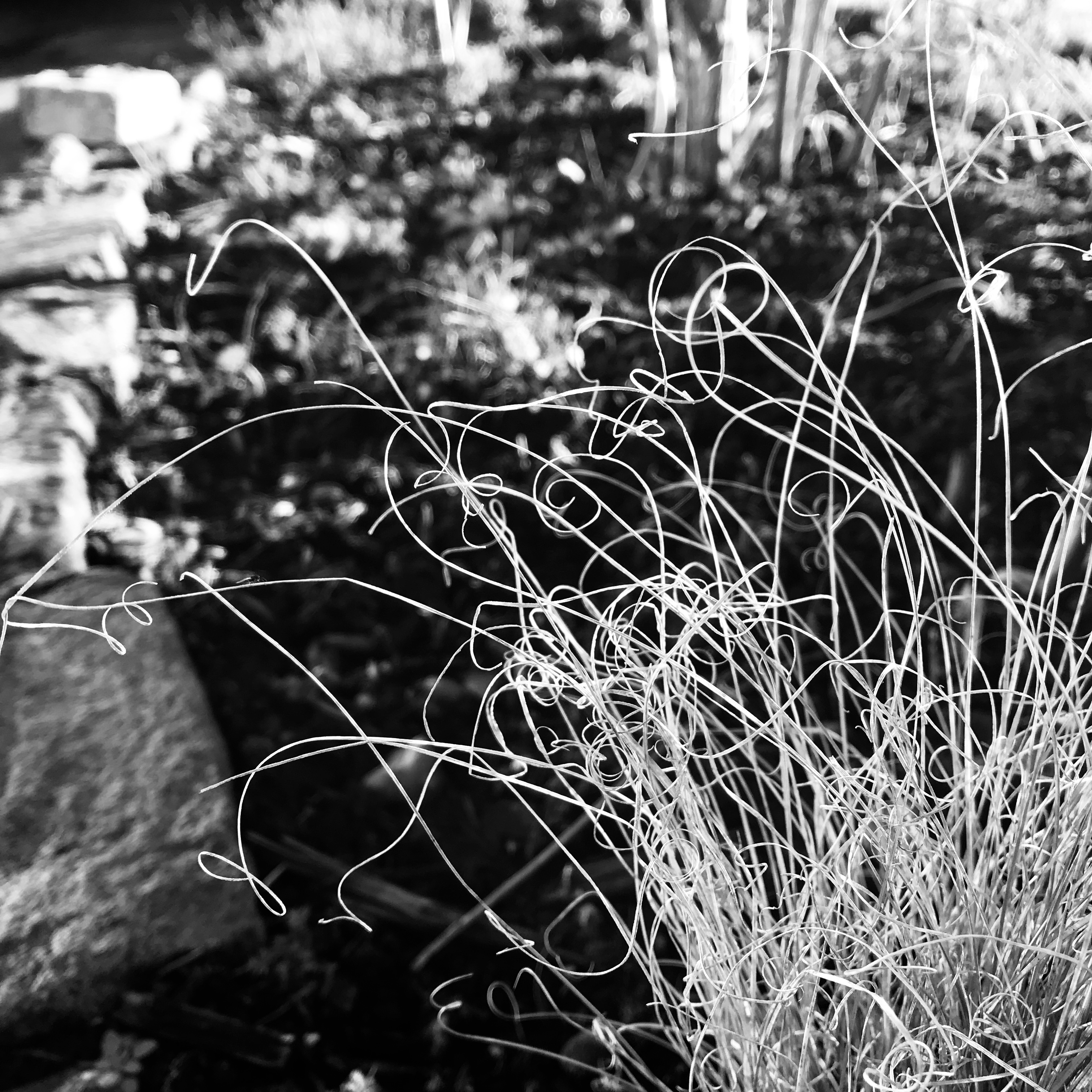
…which is Carex comans ‘Frosted Curls’ and provides a wee corner of interest in its spot in the front garden all year round.  At this time of year its little curls bounce around in the wind and towards the end of last summer it provided a brilliant backdrop for the chocolate cosmos I planted next to it.

20170930-DSC_0120

So there you have it, everything’s a bit twirly at the moment and I like it.  Nature really doesn’t do straight lines and what’s more interesting for your winter garden than a twisty, turny, curly, wurly plant to make you stop and look for a while…


A day in Edinburgh

When I’m not in the garden I do my best to hold down a job, working in communications.  Today I’ve been in Edinburgh at a PR festival, in an attempt to learn a bit more about my profession and do some networking. So I’ve spent the day listening to PR experts discuss the media, politics, best practice and public affairs.

Here are the highlights of my day:


sorry it’s not too clear – it was hard to get close!

Make sense? Nope, not to me either! I realised by the time I got onto the train home this evening (where I’m typing this post!) that all the things that have made me smile today have been to do with gardens or nature.  Walking through Princes Street Gardens this morning I noticed most of their roses are blooming and enjoyed seeing new cosmos plants being put into the borders around a fountain.

At lunch I escaped all the people and went in search of cake, which I found at the fantastic cafe Love Crumbs. As I ate I looked out of the window to a courtyard below which was full of plants but looking a bit scruffy. I wished I could get my hands on it to pull the weeds and tidy up the plants which were in need of a bit of tlc. I also stopped in at the second hand bookshops to indulge my love of old-fashioned gardening books and found this:


Who better to get some wisdom from than the grande dame of gardening, Gertrude Jekyll?!

Later, on the way back through the grounds of the Parish Church of St Cuthbert I spotted, an instantly fell in love with, a lovely double-petalled geranium. And to crown it all I saw a family of magpies!  They were floating through the trees the way they seem to do on those black and white wings, the youngsters calling to the parents; they stopped under a bench for some crumbs presumably left from lunchtime, the older birds feeding the fledglings. It was fantastic – the first time I’ve ever seen six magpies together – a whole family.

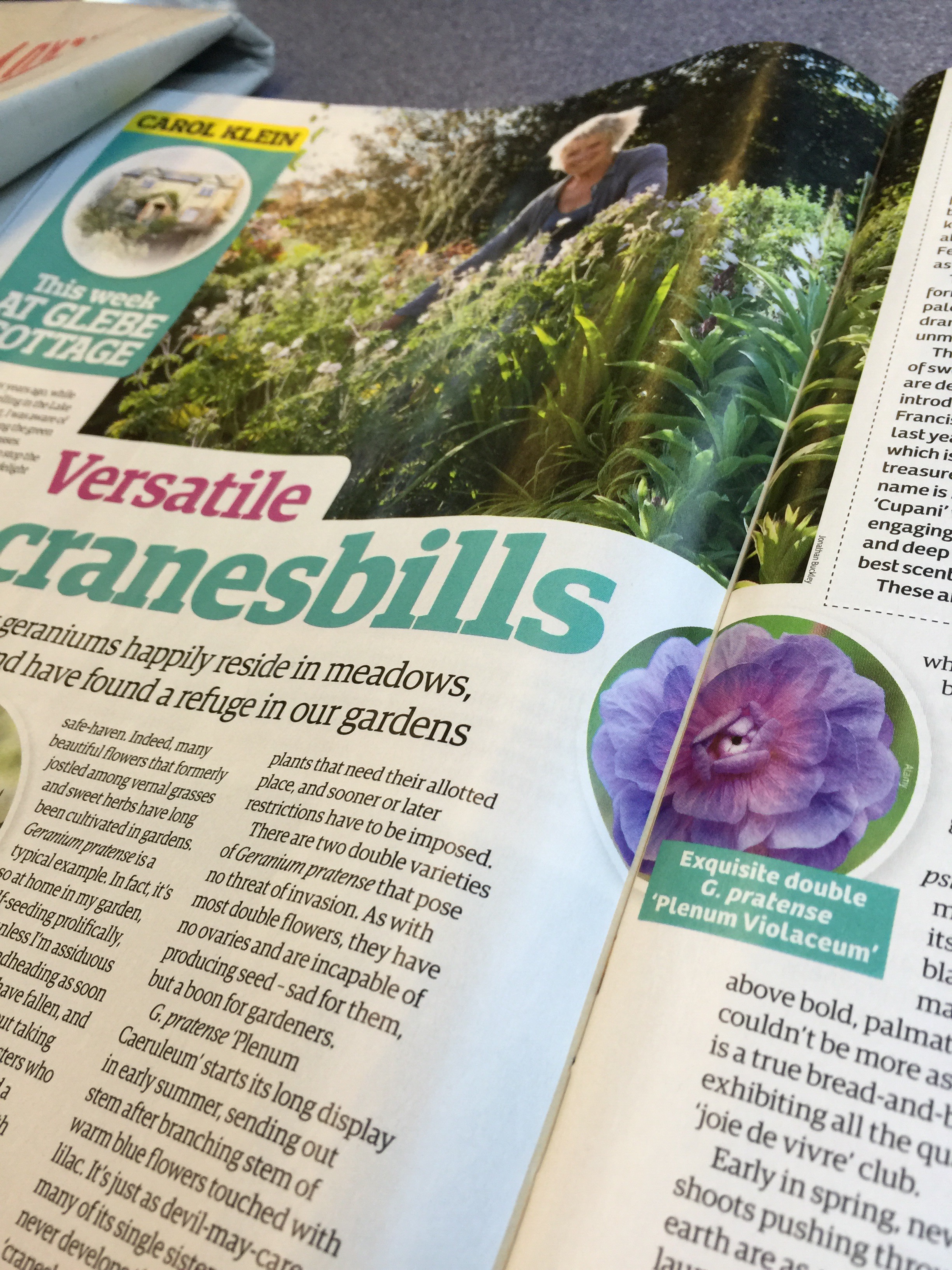
And now, as I type this on the train I have in front of me a copy of Garden News which I brought with me to read…and inside is Carol Klein, describing one of her favourite geraniums, Plenum Violaceum, a double variety of a meadow cranesbill!


So it’s been an interesting day. I expected to come home buzzing with enthusiasm for public relations and communications practice. And I have to admit I did enjoy the conference and learned a few things.

However, what I’ve been most excited about is all the green stuff I’ve seen, new plants and books I’ve discovered and an awesome bird-spot.  Whatever this all adds up to, it’s been a good day.

Beetroot & Coconut cake with Earl Grey

A murmuration of starlings

Although there wasn’t much murmuring going on, more like a joyful breakfast cacophony!

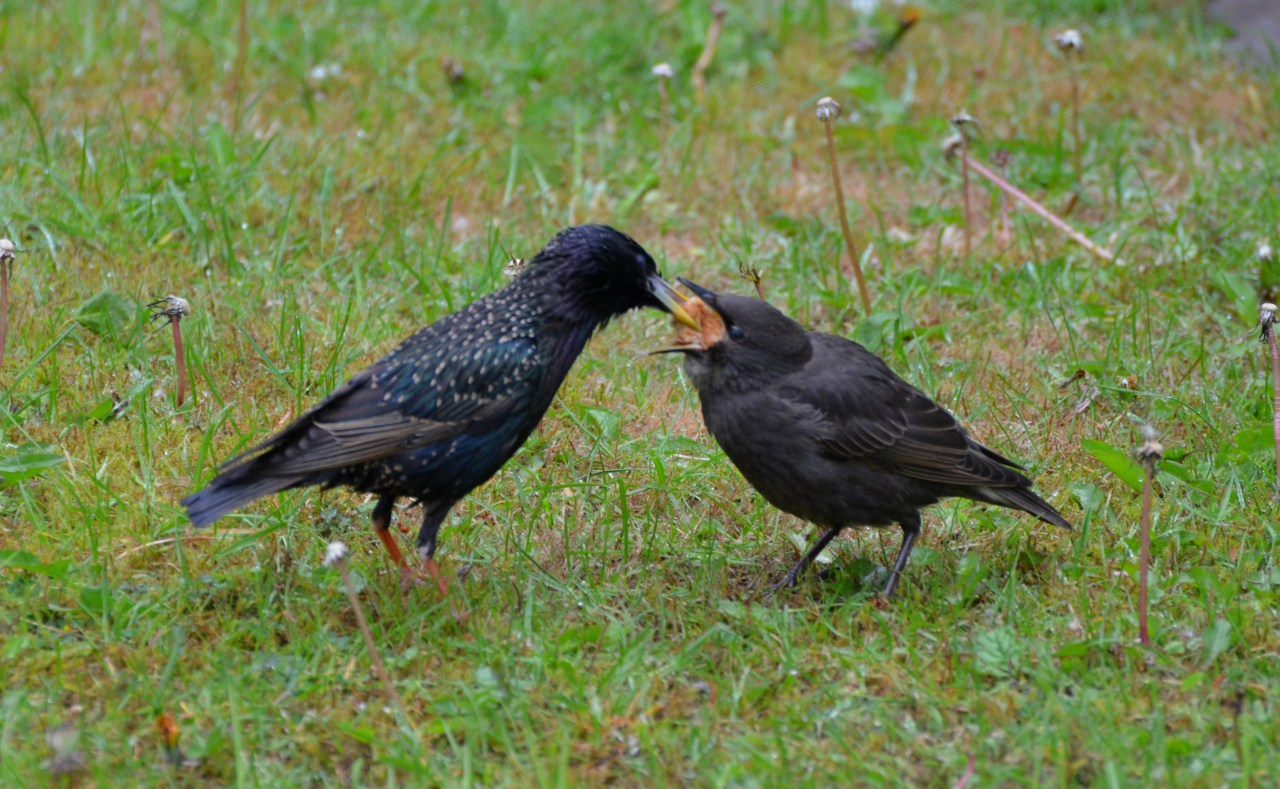
We were visited yesterday morning by a little flock of parents and fledglings – a kind of nursery outing if you will.  Some of the babies looked very newly fledged, others were bigger and bolder and all were calling frequently to the parents, who were working hard to pick up insects, worms and the bits of bread which I’d thrown out a few minutes before.

It was fascinating to watch, especially the behaviour of the young birds.  At one point a group of them hijacked my bird table and crowded inside and on top of it, still calling and asking for food, the parents duly delivering a mouthful to the nearest open beak. !

It was almost as if they were trying to recreate the nest – a safe spot where they could huddle up and wait for the next food delivery.

Starlings flock together naturally so it’s not unusual to see these family groups together.  They usually lay 4-6 eggs in the middle of April and the young fledge when they are about three weeks old.  The are only fed for a couple of weeks, until they can fend for themselves.   I feel quite privileged to have viewed this brief stage in the starlings’ lives, it was a quick but joyful visit!

This slideshow requires JavaScript.

Catching up…

Well it seems it’s been a busy couple of weeks since I last wrote a post.  Thankfully, part of the reason for that has been some lovely weather – when the sun’s shining I’m not inclined to stay in the house and stare at a computer screen, I want to get outside and garden!

Some updates on what’s happening out there:

Sad news first – the blackbird nest which was in the ivy on the back wall has failed.  I went out one morning about a week ago to discover it was on the ground.  I don’t know what happened, perhaps it simply collapsed, or perhaps a fox or bigger bird came along and attacked.  I investigated briefly using a stick (it was hard to reach!) and couldn’t see any eggs but it was surprisingly solid to try to turn over.  Here’s a photo of Mrs Blackbird which I took literally the day before the nest came down…

DSC_0108

I felt quite sad for the pair – they spent so long building the nest and she’d been sitting in it for a few days before it failed.  However, it seems that this is common with blackbirds as their nests are so open and therefore vulnerable to predators and the elements.  The good news is that I think they are now building another nest inside a large conifer nearby.  Will it be third time lucky?  We’ll have to wait and see.

I have been watering like mad over the past few days.  The sunny and warm weather means the veg beds have been looking parched and the seedlings (cosmos, marigolds and zinnia) which are now outside in the growhouse need a drink almost twice a day!  They’re getting quite large now and I’m hoping to start planting them out in the next few days.

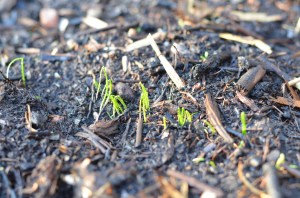
The raised beds are looking good – every one now has a little row or sprig of green appearing, with the peas/carrots/lettuce bed looking the most healthy of all.  I have high hopes for the peas, especially after they did so poorly last year.  The potatoes are now all sprouting, after my worry that they were nowhere to be seen, and even the little leeks are popping up…

DSC_0290

…I noticed these yesterday morning and could have sworn they were about a centimetre bigger by the evening after a day of sunshine and a liberal hosing!

I’m also making a fairly sizeable change in the front garden; I’ve removed a large ceonothus and another unidentified shrub which have been taking over a large section close to the driveway.  I plan to extend the rose bed and perhaps also use the space for bedding and dahlias.  It was a bit of a gamble as they took up quite a lot of room, but the space looks nice and clear now and is another corner to play with, so I’m happy.  Sorry no before/after photos because I forgot to take them!

Lastly, a chicken update: we are now getting three eggs a day, as Iona has joined her two friends and begun laying – hurrah!  She’s also developing her comb and her voice and likes a good cluck when you go into the run or if she thinks something’s amiss.  Perhaps the quietest hen will turn out to be the noisiest?!

DSC_0089

New layer Iona gets extra cuddles from Biggest Daughter 


Nesting

DSC_0610

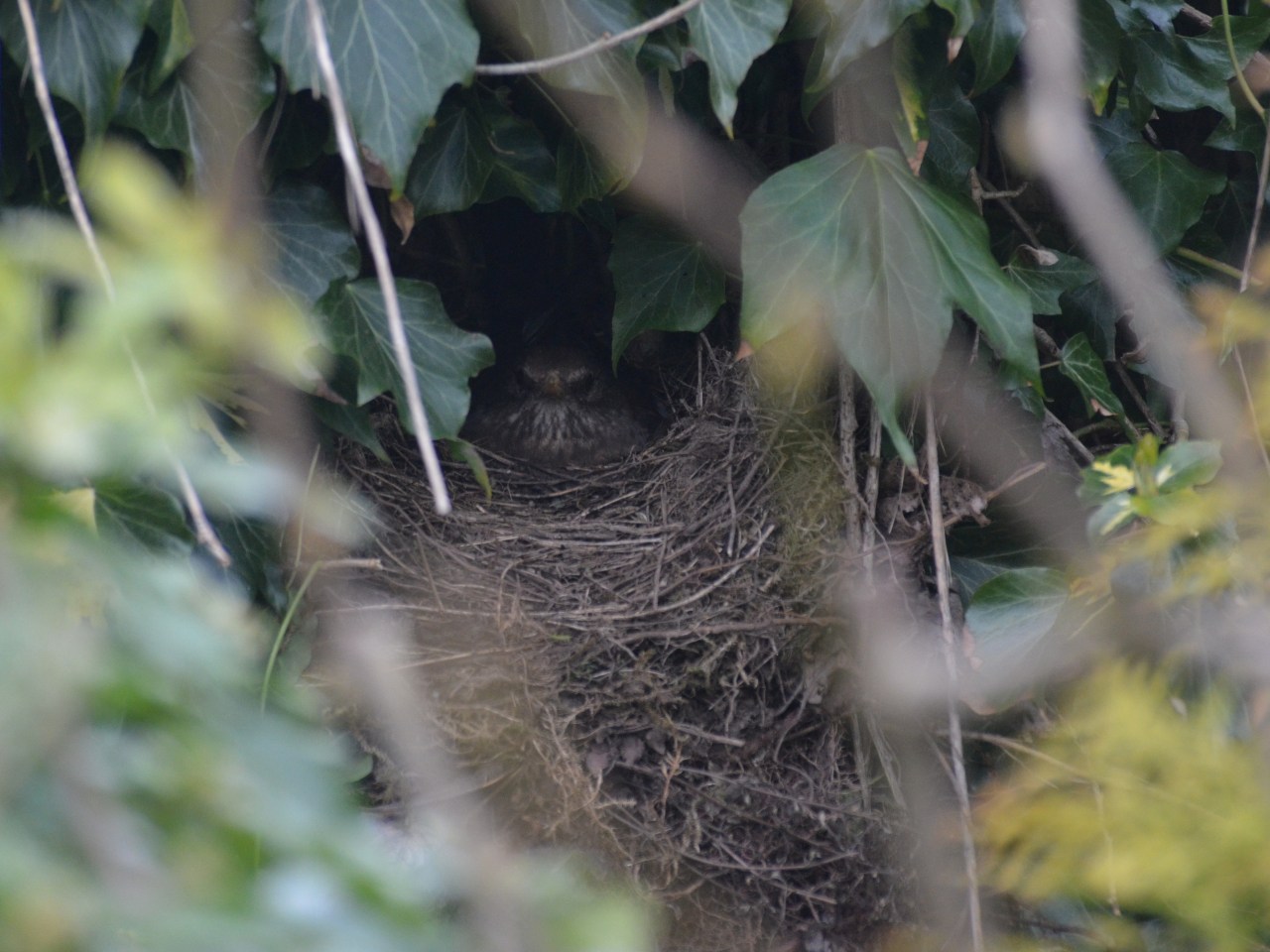
Spotted this afternoon…Mrs Blackbird sitting in the large nest she and Mr Blackbird have built in the ivy wall in the back garden, nicely hidden behind a large conifer.

I noticed the nest a few days ago but it was only today I spied one of them actually in it. And she spied me spying on her – she doesn’t look very happy about it does she?!

Nesting & a New Visitor

Happy Easter!  I hope your Easter weekend was filled with happy and peaceful times, as well as chocolate eggs 🙂

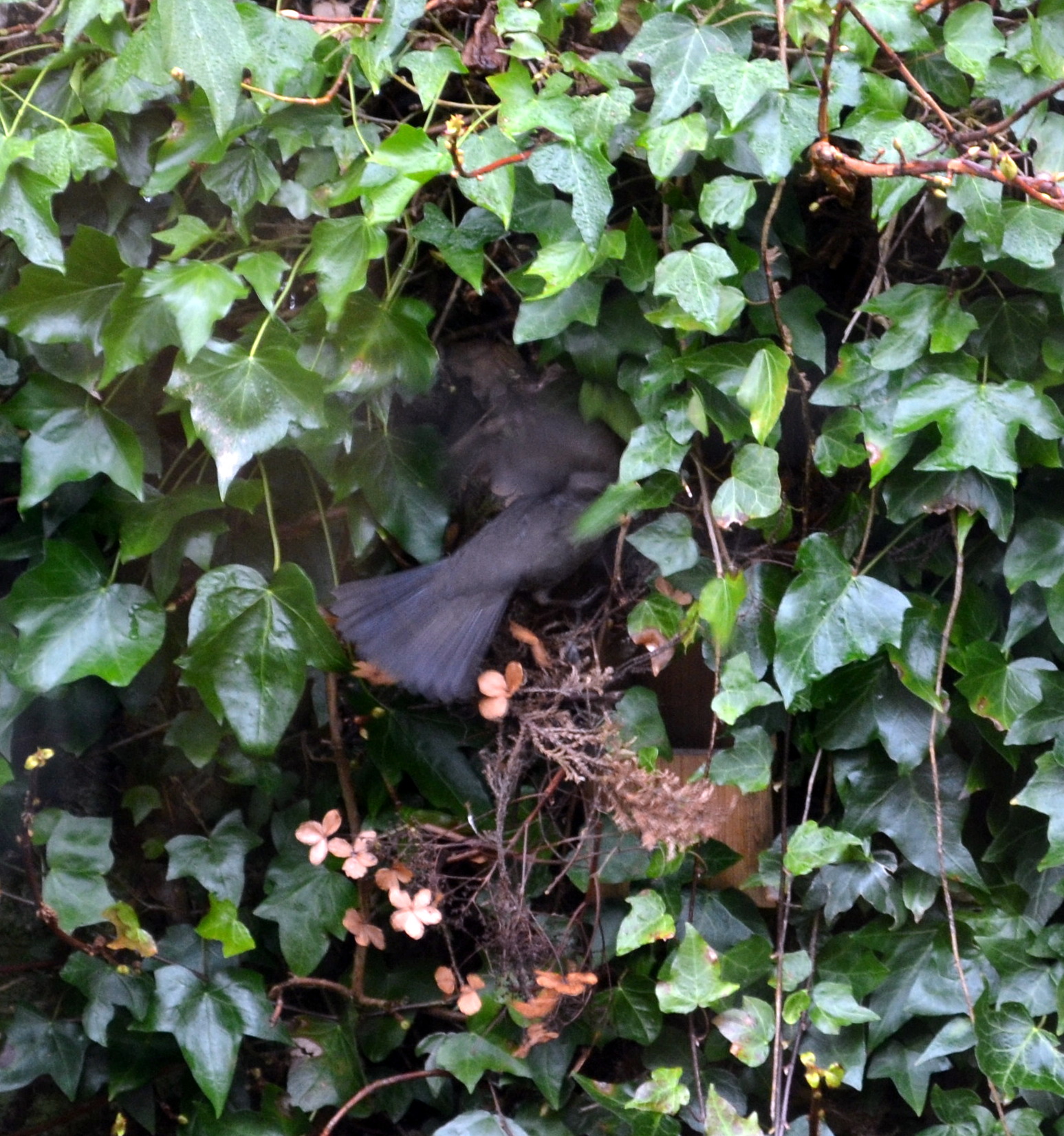
I have eggs of another kind on my mind at the moment, because for the past couple of weeks I have spotted a blackbird making a nest in our garden.  She’s borrowing the top of a robin nesting box which we put up a couple of springs ago, not long after we moved in here.  Robins have so far never used it, but apparently it makes the base of a very good, if somewhat messy, blackbird nest!  I haven’t seen her there for a few days, and was beginning to think they’d given up on it, but this morning the female was back with a beakful of dry grass and old leaves and disappeared into the hole in the ivy, adding a bit more to her presumably cosy little structure.  I have also discovered it’s VERY difficult to take a photo of her doing this!  But here’s a pic of her tail disappearing into the undergrowth…

DSC_0136

There must be all sorts of materials in there – you can clearly see a large piece of lacecap hydrangea and a bit of a fir branch hanging out of the nest.  I do wonder if she’s nearly finished it – apparently blackbirds take around two weeks to build a nest.  It’s usually made of grass, straw, twigs and other plant material (clearly!) and they may use it to raise two or three broods.

The site is just opposite one of our kitchen windows, and pretty close to the back door of the house.  I put the nest box there purposefully as I thought if it ever gets used we’ll have a great view of what’s going on – but I’m hoping they don’t abandon it at any point because of us coming and going nearby.  I’m really very excited about this nest!  A little blackbird family could be living, literally, right on our doorstep.  I’m looking forward to watching their progress.

These could be the pair in question – but it’s hard to tell because there are quite a number of blackbirds present in our garden at the moment.  Sometimes it’s like Blackbird Wars out there as territorial males chase each other about!

We have also had a new visitor lately – a jackdaw, which comes down and nicks scraps from the tall bird table, occasionally visiting the feeders.  It’s only recently when I saw this one that I noticed what striking eyes they have – so pale against the dark feathers.  They’re really quite handsome birds.  Here’s our new pal…

DSC_0201

It’s not the best shot of him – I’ll keep trying!


Yellow

I have spent ALL DAY outside today, and it’s been wonderful.  Yellow has been a theme running through…

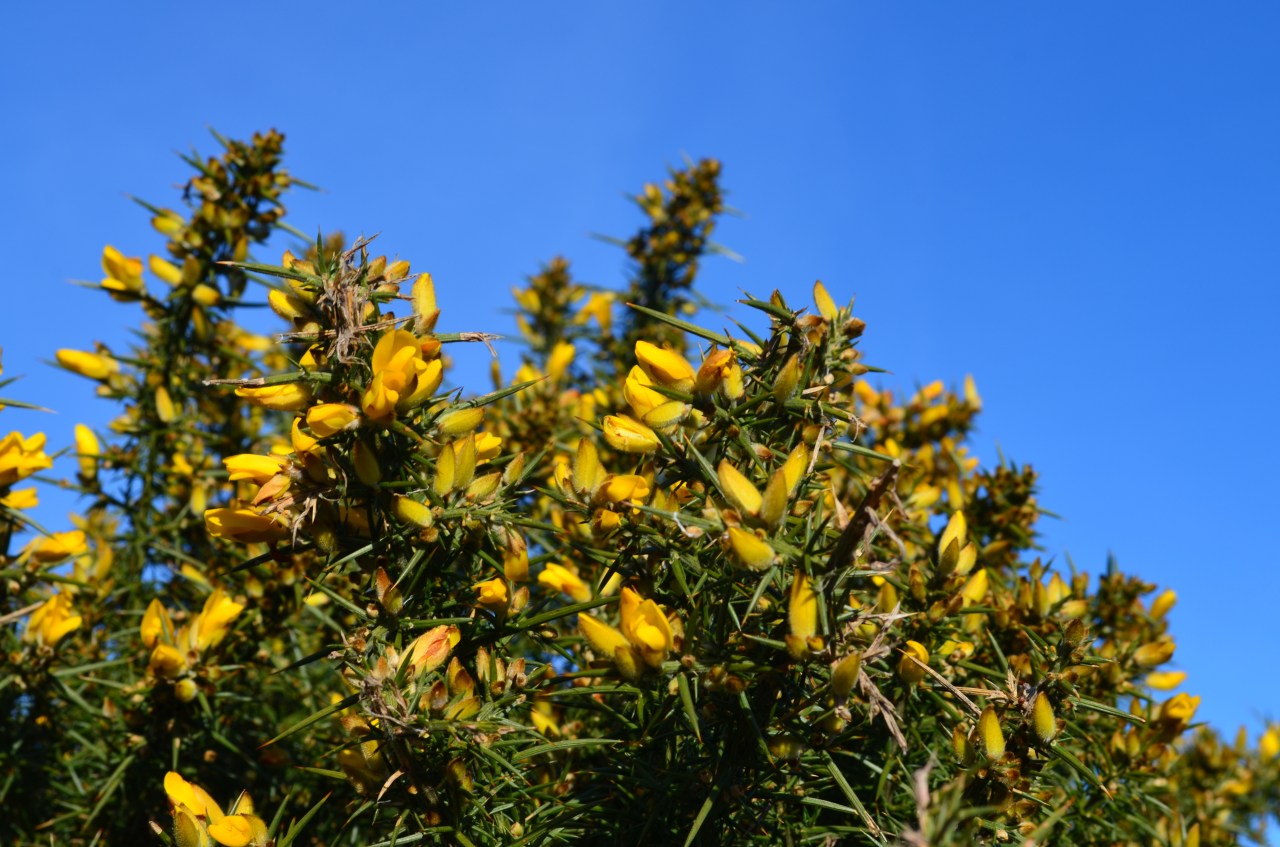
It was bright and only a wee bit cold so I headed out straight after the school run on my new favourite walking route, which goes through fields, past some interesting houses and into the woods, with some cracking views both to the north and south.  The gorse is already showing a generous sprinkling of yellow flowers in places here.

DSC_0012

There was a plethora of bird life on offer too – blue tits, great tits, some more flirty chaffinches and a few flocks of geese crossing overhead, presumably ready to leave their winter holidays in the UK behind and head back to their breeding grounds for the spring. However ‘tweet of the day’ was the yellowhammer.  I didn’t actually clap eyes on one, but a number of them made their presence felt as I made my way along a path through Christmas tree fields – they were telling me over and over about a ‘little bit of bread and no cheese’ – their distinctive song which, for me, is the sound of country fields and hedgerows, the bird’s typical habitat.

This was not the first yellow bird I’ve noticed today, as the siskins on my bird feeder caught my eye this morning.  These bold little visitors have been coming to the garden for several weeks now.  The first time I saw one, I thought it was a yellowhammer, but consequently realised it was a smaller, but similar, siskin.  They’re not often seen in gardens, but are driven into them when the weather is wet and the cones which they usually feed from are closed up.

They started off sharing the nyger seed with the goldfinches and now seem to have taken over this particular feeder, with four of them squabbling over the feeder at breakfast time this morning.  They’re not shy either – quite often they stay on the feeder when I approach it, only wheeling off at the last minute when I get a little too close for comfort.  With the cold, wet winter finally losing its grip on us, I wonder how much longer I’ll see these little flashes of yellow sparking in the back corner of the garden.

DSC_0673

Siskin and Goldfinch share the nyger seeds