5 top tips for a water-saving garden

Although we’re still in the depths of winter and the gardening season is yet to get underway, there’s still plenty you can do to be more water-conscious before your garden wakes up in the coming weeks. Mulching beds and borders is a great way to lock moisture in the soil, and of course installing a water butt (or two!) will make the most of any rainy weather and help to save water for when we really need it in spring and summer. And if you’re planning any major landscaping, consider the benefits of better drainage.

Read on for five top tips to help you save water in winter.
Snowdrops are nodding in the borders, the first tips of daffodils and crocus are showing through the soil, and the garden is still half-asleep. It’s a good point in the year to have a think about the structure and landscaping of your garden, and make some preparations which will improve water conservation, ready for the coming growing season. 

Here are 5 things to consider when you’re planning your 2024 garden: 

1. Hard surfaces

Does your garden drain the rain? And do you wonder why your street or driveway keeps flooding?  It’s because too many hard surfaces, driveways and paved over gardens aren’t allowing rainwater to drain away properly.

  • monoblock paths and drive ways drain poorly and pool water
  • paving, tarmac and concrete are also less porous
  • additional water flows into street drains, putting pressure on the sewer network – that’s why localised flooding can occur, affecting people’s homes and gardens

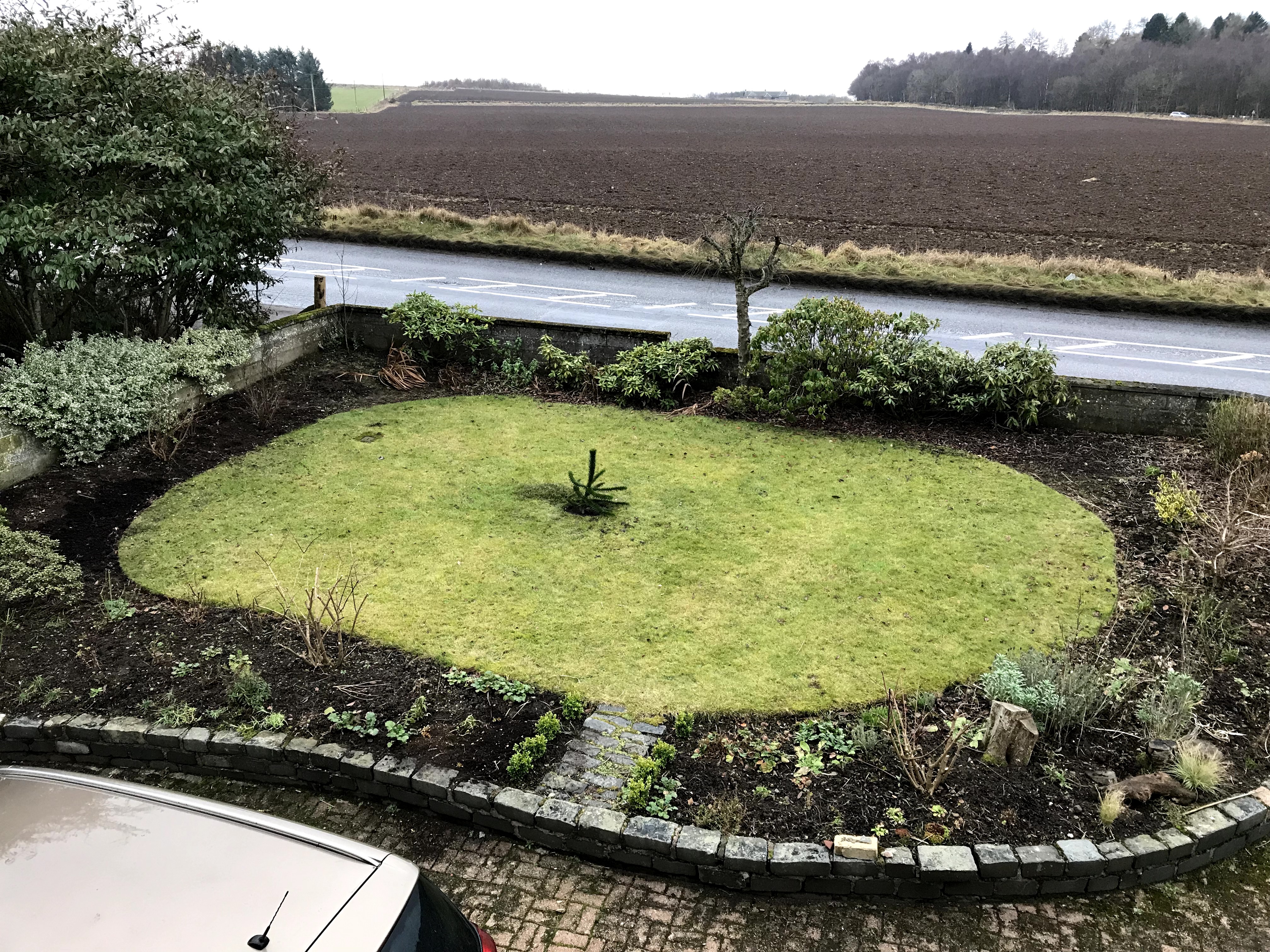
So what can you do instead? Keep hard surfaces in your outdoor space to a minimum – and go for grass or gravel when you’re landscaping. If you’re building a new driveway, patio or path – or planning an upgrade – then choose permeable paving. Gravel is especially cheap and you can plant into it easily. Consider also retaining as much grass in your front garden as possible – it’s better for biodiversity and it holds rainwater, preventing runoff.

2. Avoid artificial grass 

When your grass is living, there’s life in your grass – and the rest of your garden benefits too. 

  • grass and the soil below it supports a huge ecosystem of insects, worms, nutrients and micro-organisms  
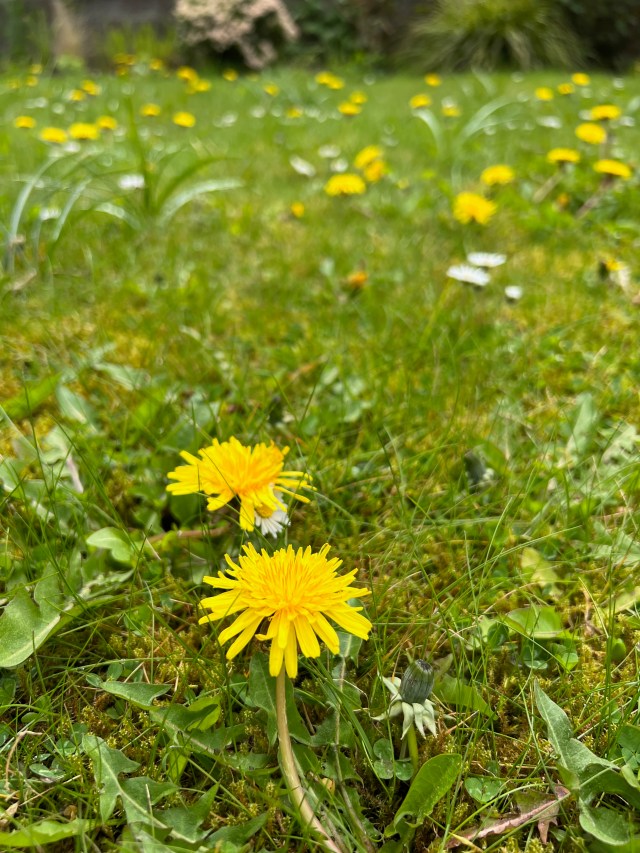
  • daisies, dandelions and other wildflowers in your lawn are food for bees, flies and other pollinators
  • it’s a feast for the senses – walking barefoot on grass, the smell of a freshly mown lawn, the sound of bees buzzing on the flowers, a lush, green oasis of calm

Artificial grass may seem like a good alternative – but it has a really big carbon footprint caused by manufacture, transport and installation, and it involves huge areas of plastic which can’t be recycled.

Although it’s designed to drain, water runoff can be a problem with fake grass, as doesn’t absorb rain in the same way as soil; plus, micro-plastics are washed into the ground, polluting it for centuries. Although it seems like an easier, low-maintenance option, artificial lawns have serious implications for the environment, including water conservation. 
3. Install a water butt 

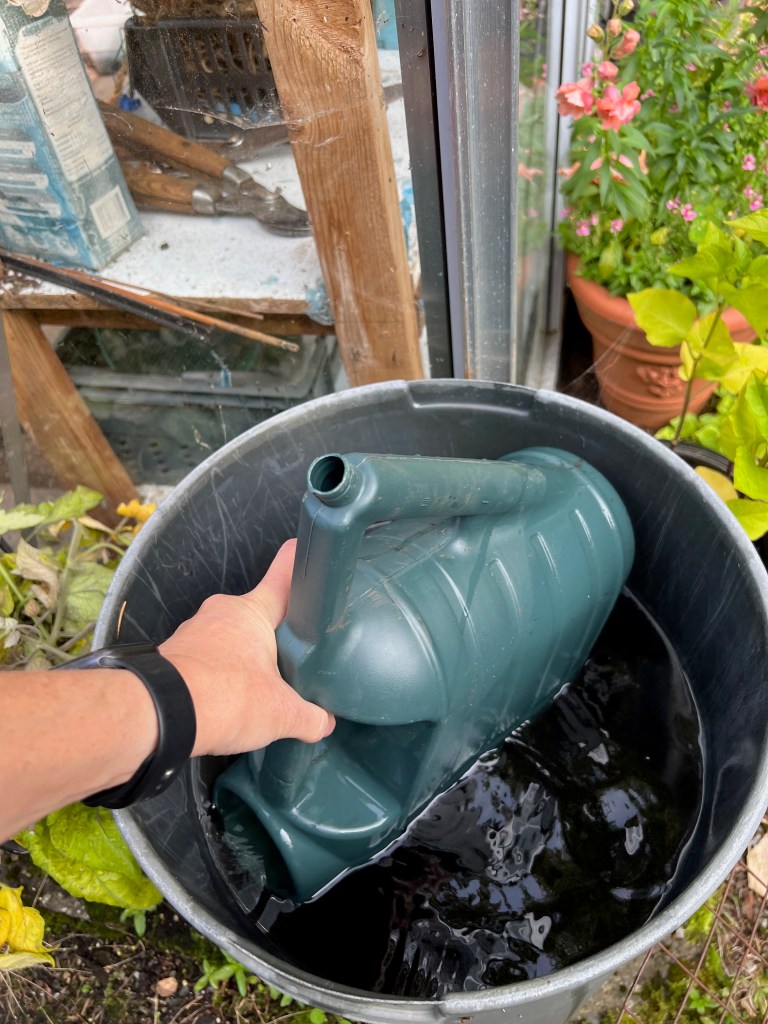
Now is actually a great time to think about how to reduce your overall water use – a few preparations will set you up for this year’s growing and reduce the likelihood of flooding during the wetter months. It’s the perfect time to install a water butt, to collect any rainfall in the coming weeks – it should be nice and full come spring! You can watch our video on installing a water butt here.

4. Spring bare root planting 

Spring, like autumn, is a great time to get new plants in the ground, giving them time to put down roots and reduce the need for extra watering when it’s warm again. Many are sold bare-root during autumn and winter, which often reduces the packaging required too. Bare-root is just what it sounds like – the plants are sold without pots and soil, and it doesn’t cause them any harm because they’re dormant. They often benefit from a good soak in a bucket of water before being placed into their planting spot with some fresh compost. 

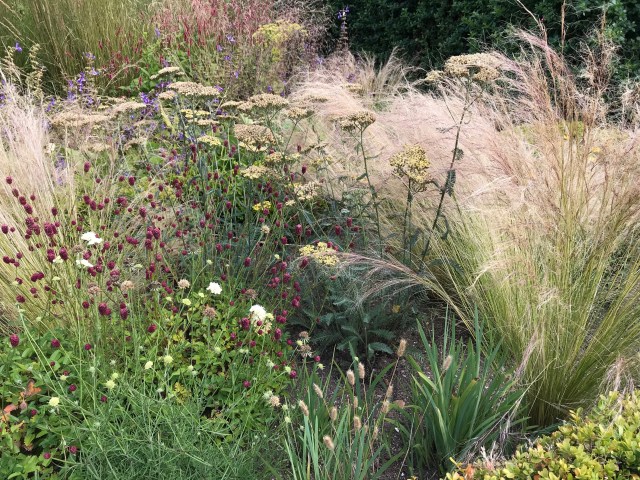
You could consider filling those gaps in your borders with more drought-tolerant planting too – for example, scented Lavender, soft Stachys, bee-friendly Echinops and swooshy Stipa are all great examples of sun-lovers which don’t need much watering, even in a heatwave.
5. Mulching 

Mulching your beds and borders is a one of the top tasks to undertake in spring  – there are so many benefits for your garden, including helping to lock moisture in the soil, reducing the need for watering. Mulching simply involves spreading a layer of organic matter on the surface of the soil – this can be compost, spent soil from tubs and containers, leaf mould, grass clippings, chipped wood or bark or any other dead plant material. The mulch will gradually be broken down over time by weather and insects, and absorbed into the soil, making it healthier and introducing nutrients to help feed your plants naturally. 

Mulching with homemade compost is even better, as it’s a really circular way to re-use the clippings, prunings and old plant material you’ve collected over the course of the previous year. Allowing these to break down in a compost bin or heap will provide you with nutrient rich mulch, returning the goodness back into your garden.

New Year, new blog post, new garden plans

It’s 2023! Garden-wise January can be a bit of a grim month. Everything looks brown and soggy and the days are still very short and usually cold, offering far fewer opportunities to get outside and do anything more than tidying up fallen leaves or cut down decaying stalks.

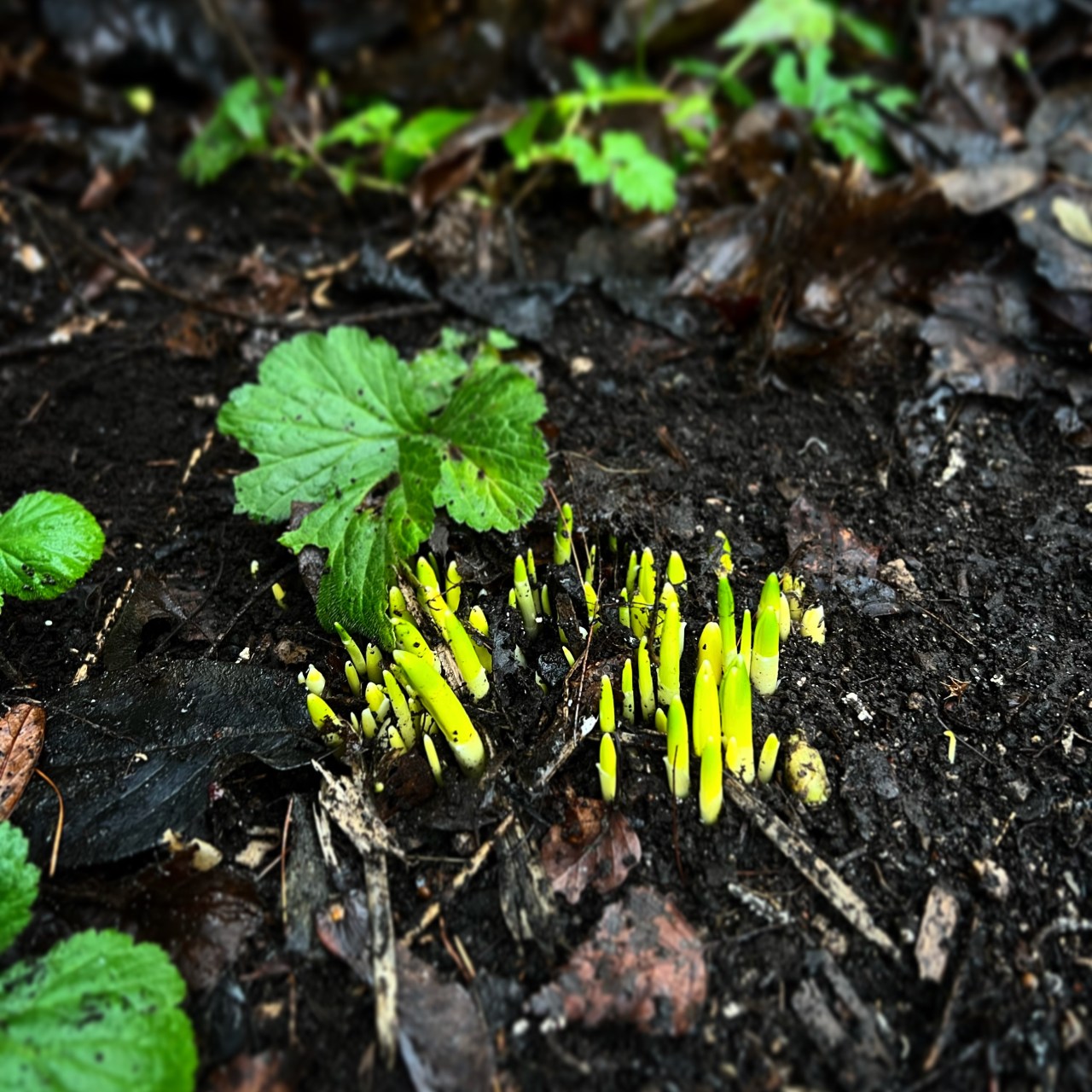
I do always get strangely excited about the turn of the year though, because I know that very soon I’ll be seeing the first little shoots of bulbs poking through the soil – and in fact many of them are already doing just that. January also means it will soon be time to start some early seed sowings. True, it’s still much too early for most annuals or vegetables, but there are a few seeds which do benefit from an early start, especially in Scotland, if you can time it right. 

Bulb shoots are nosing their way out of the soil in my back garden

Instead of making new year resolutions, I prefer to consider what I’ll do more of and what I’ll do less of each year. These are small shifts, as opposed to grand gestures, which are more likely to fall by the wayside.

In the past 12 months I’ve moved up from part time working hours to full time – and that has definitely impacted on the time I can spend in the garden, so I’m taking that into consideration for my 2023 growing plan.       

What will I do less of in the garden this year? 

  • Grow dahlias – I tell myself every year not to buy too many dahlias, and I inevitably fail miserably! However this year I think I’ve really learning my lesson – the dahlias definitely suffered because a lack of time, not to mention the very cold weather we had quite suddenly in November, and as a result of not lifting them and protecting them at the right point I’ve lost most of this year’s tubers.  So this year I will grow fewer dahlias and look after them better. I’m certain I’ll enjoy growing, taking cuttings and nurturing a smaller group, especially if it results in a better display of flowers from them this year. 
  • Growing less, better! – Again, my time in the garden is more limited than it used to be – and I want to avoid spiralling into overwhelm because I have 40 million seedlings to pot on, grass up to my knees and borders full of weeds! So simplification is the key – growing a smaller collection of vegetables, cut flowers and hopefully keeping on top of things as much as possible.
  • Spend less time in the garden – but MORE OFTEN. This is key – I may not have 2 hours to spare every day but I can still get a lot done in 10/15 minutes, or half an hour here and there – and I’m reminded of that every time I do it. Pulling a few weeds, deadheading flowers, pricking out a few seedlings – these things never take quite as long as I think and even a short spell in the garden or greenhouse is time well spent on my own health and a welcome break from work or home life! 
  • Hatching chicks – we love hatching and raising little chicks, but after a difficult time rehoming a number of boys last year, I swore I would not do it again. I’m planning to sell the incubator and enjoy the lovely hens we already have this year.
Molly approves of my plan…

What will I do more of in the garden this year? 

  • Design – I need to revamp one of the main patio areas in the garden; it’s been looking sad and bare (apart from the weeds) all winter and it’s one of our main sitting areas when the weather is good, so I really need to crack on, decide what we’re going to do with it and then get it done! I have a vision for a combination of circular paving, gravel and some drought tolerant, airy planting.
  • More design – I’m interested in Scone Palace’s design competition (details on their Facebook page) – I have no idea if I can do it, but I’d love to give it a try and I already have a few ideas around a possible theme… it seems like a good starting point to test my garden design skills, which I am currently studying to acquire so that I can pass some…
  • …exams – I’m determined to complete the RHS Level 2 course this year so that I can finally achieve a horticulture qualification. Two more exams to go in February – fingers crossed!
  • Pollinator friendly plants – more, more, more. I think this (and a decent level of drought tolerance) will be guiding my decision making this year – I just love seeing bees, hoverflies, butterflies, bee flies, ladybirds, all manner of insects flying or crawling around the flowers in my garden, so I’ll be choosing and growing more of the kinds plants which attract them and feed them. 
  • Podcasting?? This is a very tentative late entry. I miss writing and recording and meeting new and interesting Scottish gardening people. I might need to experiment a bit with format, content or routine, but if I can work out a way to make podcasting fit into my life alongside work, family and the garden itself, then you might be seeing some new episodes of The Scottish Garden Podcast in 2023…
I’ll be growing more pollinator friendly plants in 2023, like this Knauti macedonica, which bees love

Make your hens at home in the garden

Owning a flock of hens doesn’t have to mean bare lawns and patchy plants.  Your chicken coop can be an eye-catching feature, or blend into the background – and you don’t have to sacrifice your lawn for your feathered friends either.  Let’s have a look at how to keep chickens in the garden without compromising the look and feel of your outside space.  

Many of us keep hens in the garden, perhaps because they are family pets, special breeds or simply because they entertain us and it’s good to watch them potter about while we enjoy a cup of tea.  Some people believe that hens and gardens don’t mix – that the birds will destroy precious plants and the coop will be an ugly addition to your beautiful borders. But for those of us keeping a small backyard flock for pleasure (or a small profit) it doesn’t have to be that way.  There are plenty of plants which can co-exist with chickens, and whether your hen house is a thing of beauty or a simple structure, it’s worth thinking about how it fits into your outside space, and perhaps making a few tweaks so that it earns its place in your garden and your daily field of vision.  

Building your coop into the garden

The main things to consider when siting your coop in the garden are, of course, security, safety and the wellbeing of your hens. Fox-proofing and sturdy locks are essential to keep predators out.  Ideally the run should get a decent amount of sunlight as well as providing areas of shade during hot weather.  Existing trees and shrubs can be useful for this, as well as providing the perfect dustbathing area underneath where there is nice dry soil at the roots. So rather than plonking your run on the grass, which will disappear within days and turn to a mud-bath if not moved regularly, why not incorporate it into your borders?  This is what we did when we acquired our first three hens.  There was a suitable gap in the planting which allowed us to fit in a coop (green Eglu Go) and small wire run, surrounded by netting.  The idea was to allow our new little flock to roam within the netting and keep them out of the garden as a whole.  Fast forward four years and, of course, we’ve expanded.  The same coop is now inside a much larger aluminium run, providing more security when the family is out during the day, and allowing them the freedom of the whole garden when we’re around to keep an eye on them.  

I’ve gradually added planting around the walk-in run, including herbs and annuals like catmint, nasturtiums and sunflowers

In upgrading our hens’ housing I wanted to take into consideration how this new structure would look in its setting – after all, steel tubing is not the most attractive material – and I was keen for it to blend into the back garden, rather than sticking out like a sore thumb.  So I decided to incorporate a couple of small planting areas at the front, filled with herbs and flowers which would look attractive and could also be beneficial for the chickens.  Spare bricks were used to mark out two rectangular mini-beds on either side of the run door which were filled with a variety of fast-growing, bushy annuals and perennials, including nepeta (catmint), violas, nasturtium, lavender and mint. The lavender and mint can be used in the coop to fragrance and freshen the nest box and are a natural insecticide. Nasturtium leaves are said to be a natural wormer and antibiotic.  All of the planting filled out nicely over the season, decorating the front of the run without screening it so much that I couldn’t see what the hens were up to.  The addition of a bench close by completed the picture, allowing the opportunity to sit and enjoy watching my flock wander around the garden from time to time – although it’s possible they use the bench for sunbathing more than I use it for sitting!

A coop to suit all styles 

Consider the look and feel of your garden when you’re planning your hen house.  My garden has a natural woodland feel to it so the coop and run blend into the background much better now they’re surrounded by shrubs and plants.  However it’s also possible to make a feature of your coop – after all, some are made to be shown off, with beautiful paintwork or a funky design. A modern garden style lends itself to featuring more unusual structures – plastic coops in bright colours or repurposed materials.  It’s possible to recycle a child’s plastic wendy house or repaint a kennel or shed, including the essential nest boxes and perches required.  Or you might have a more traditional garden which calls for a sturdy wooden house and perhaps a ‘living roof’.  This involves planting a variety of low-growing sedums or wildflowers which will really ensure the coop looks like it’s at home in your garden.  

Protecting your plants

If you’re keen to let your hens free-range in the garden but don’t want to sacrifice your beautiful borders, you may need to take some steps to make sure they’re protected from curious beaks and those dinosaur feet, which are great for digging up insects but don’t care about the new bedding plants or young shoots that get in the way. Equally, if you like to grow your own and you’re keeping a fruit and vegetable patch in the same area as your hens this will also need some security to ensure you manage to harvest any crops before your chickens do.  They will especially enjoy raiding your veg beds for leafy greens, sweetcorn and any berries they can get their beaks on.  If you want to keep chickens away from a whole area, such as a vegetable garden, you could put up a fence made of netting or chicken wire as a barrier – but it will need to be high enough to stop them from flying over (at least 6 ft), or you can clip their wings to keep them closer to the ground.  

Chickens love to perch and jump up on any garden structures – and they don’t care what plants are growing inside!

One of the best ways to avoid damage is simply to grow plants which are tough and not particularly tasty for your hens.  Chickens do seem to know what they can eat and what they can’t.  They’ll avoid anything unpalatable and will find it difficult to destroy more resilient plants, such as varieties of bergenia, hebe, geranium, camellia, hosta or ferns – and there are many other shrubs and perennials to choose from.  It’s fairly straightforward to protect individual plants from harm – place a ready-made cloche over young specimens which are newly planted, or create a wire dome or cylinder, pegging it down to make sure it doesn’t blow over or get knocked off. An upturned wire basket would do a similar job, or netting propped up with bamboo canes.   Once good growth is established with strong roots and plenty of leaves the barrier can be removed and the plant should survive the occasional trampling.  

Wherever you choose to place the chicken coop in your garden, as long as you provide a safe and dry enclosure for your hens, with access to food and water, your hens will be happy.  Whether you allow them to free-range or keep them enclosed, your flock can be a vital part of your own little ecosystem, contributing to the sustainability of your garden and bringing life to your green space in many different ways. They rake moss out of the lawn, reduce pests, aerate the soil and fertilise it too.  Not only that but they entertain AND provide eggs on a daily basis – there isn’t another product on the market that’s so good for your garden! 

This article first appeared in Country Smallholding, June 2020

Quadgrow trial – part 1

Let’s talk tomatoes.  At the beginning of this year’s growing season I was lucky enough to be sent a Quadgrow planter, after spotting them at this year’s Garden Press Event in London (back when we are able to travel freely around the country – remember those days?!). 

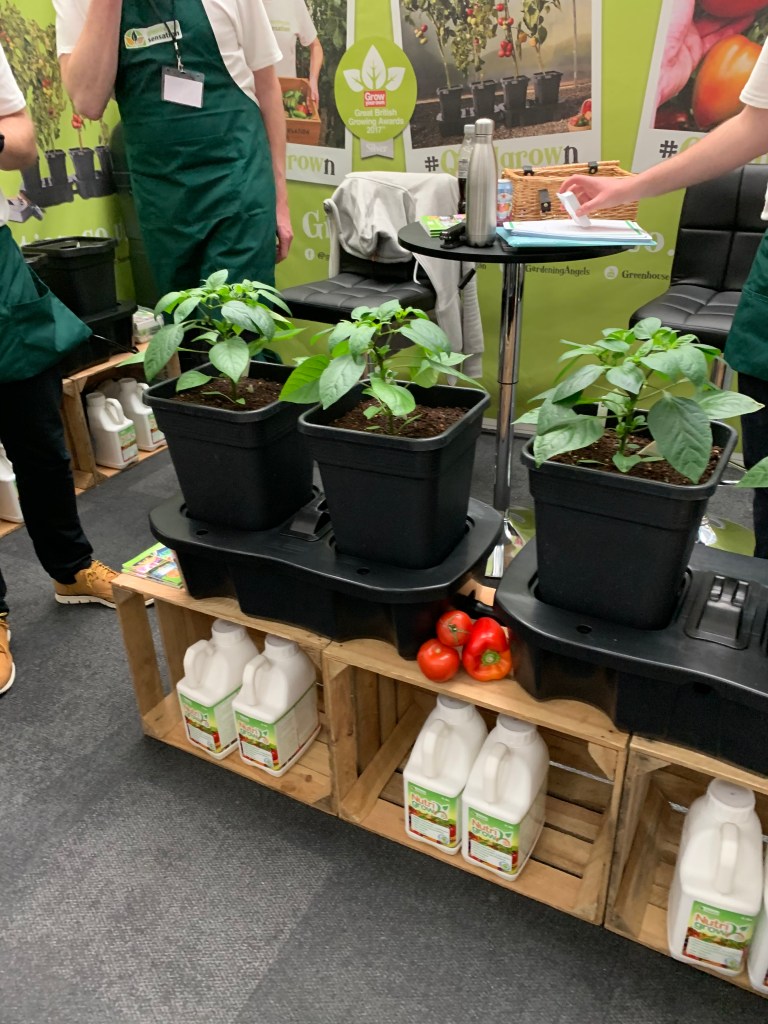
The Quadgrow display at the Garden Press Event, March 2020

I was really impressed with the set up on display – they had a selection of chilis growing in these, as it was March and still early in the season, but they’re also suitable for tomatoes, peppers, cucumbers and other tall cropping plants.  The really big deep pots are placed into a large tray which you fill with water, making it a self-watering system which keeps your plants from drying out for up to 2 weeks.  This makes it incredibly useful during the summer when a) the weather is hopefully nice and warm, making your greenhouse very cosy and b) you might (under non-Covid circumstances) be planning to go on holiday.  With the Quadgrow you simply fill up the tray and can leave your plants for a few days, knowing they won’t be crispy when you come home again! 

After speaking to the guys from Greenhouse Sensation at the GPE they got in touch and asked if I’d like to trial the planter and I jumped at the chance.  Growing tomatoes is one of my favourite things to do in the garden – I love the whole process, from sowing the seed right through to harvesting those ripe red fruits, and as I’m always interested to try new varieties and techniques I thought this would be an excellent system to use this year, in pursuit of the perfect tomato! 

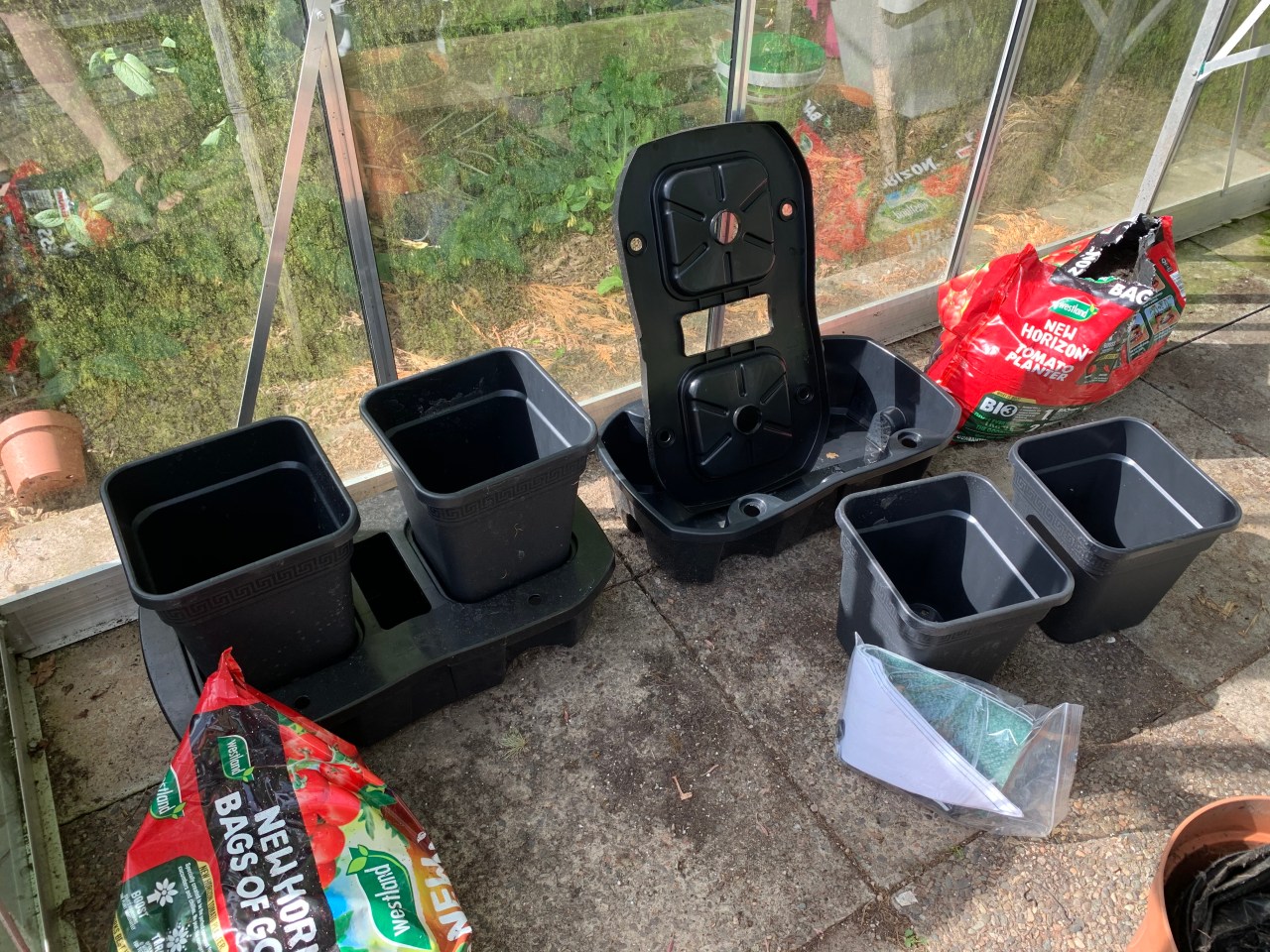
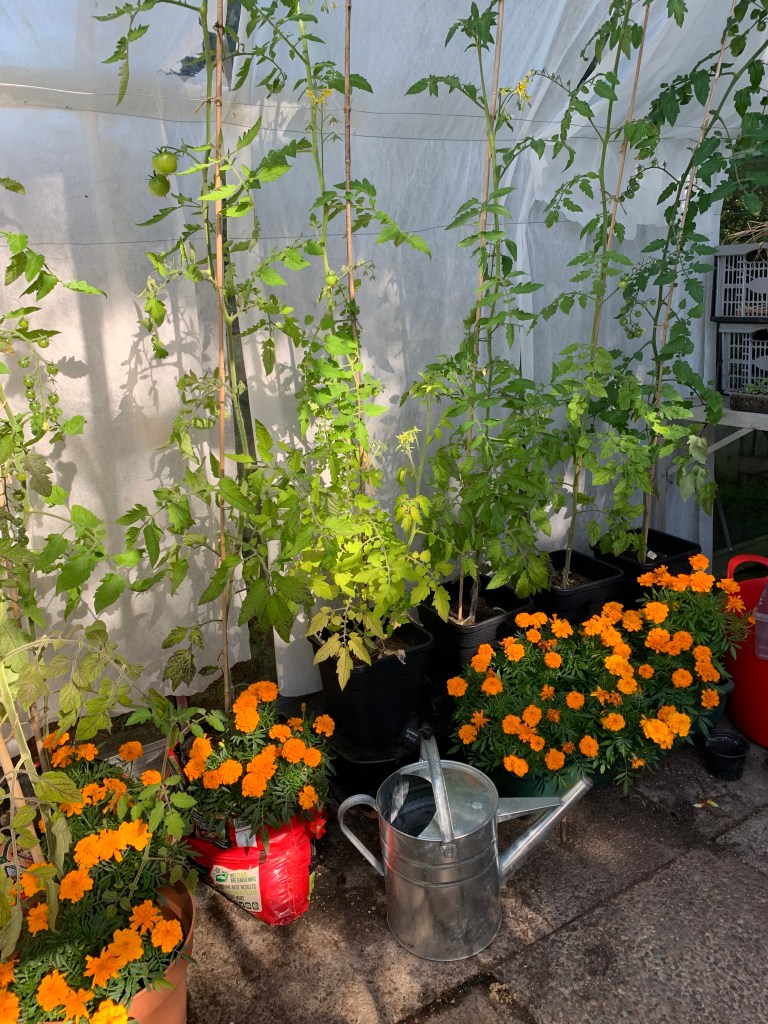
The package came safely in the post, complete with two trays, four pots and some plant food and I set up the system in mid-May when my tomato plants were getting big enough to plant out and live in the greenhouse.  Bearing in mind that I’m not particulary handy or technically-minded it was easy to set up and I had the thing slotted together in minutes.  You simply have to connect the trays with a little pipe and also insert the filters and make sure the wicking material is in place within each pot.  This is how the system keeps the soil moist so it’s important to make sure the wicking material is in contact with the water.  I actually left a little corner of it visible above the soil so that I can check it’s still damp – that way I know the soil is still getting the moisture it needs.  Once the pots were filled up with some peat-free tomato compost I popped in each plant, inserted a bamboo support and tied them into place as I usually do.  

In the interests of not-very-scientific experimentation I’m also growing the same varieties of tomato in the same peat free compost but in growbags and pots.  I’m looking forward to seeing how each method compares, and whether I have healthier plants, or better fruit, from those grown in bags, pots or the Quadgrow.  There will have to be a lot of tasting to find out… 😋

And if you’re wondering what varitieties I’m growing, I’ve got: Gardener’s Delight, Sungold, Rosella and Black Russian.  I’m also growing one plant called Maskotka outdoors – another experiment to see if it’s possible to get a decent crop of tomatoes outdoors in Scotland.  I have my doubts, but actually this plant seems to be doing fine – although a bit more compact than the others it’s setting fruit and looking fairly healthy! 

So far, I’ve topped up the Quadgrow with water about three times and it hasn’t yet been empty when I’ve checked.  The plants are definitely more thirsty the bigger they’ve got so I’m keeping a close eye on the water level each time I’m doing a #Fridayfeed.  

You can check out photos and videos of the Quadgrow on my Instagram feed @mycornerofearth – there’s a series saved to my Stories including the set-up video and I’m including regular updates as the plants develop.  I’ll report back more progress here on this blog as my plants grow and hopefully give me some tasty tomatoes!

My tomato plants are flourishing so far in their Quadgrow planter!

A good year for the roses?

Roses are the quintessential country garden plant – they’re a symbol of royalty and romance, celebrated in art, and even flavour our food. For some, they’re an essential element of a good garden, while others find them old-fashioned or fussy. It’s true that some roses can demand a little extra care, but there are so many varieties today that it’s easy to find a rose which suits your garden and, more importantly, your style of gardening, whether it’s hands-on or low-maintenance. If you’re caring for an existing rose, or want to introduce new plants to your garden, now is an excellent time to lay the groundwork for healthy, happy plants which will reward you with some beautiful blooms later in the year.

Every rose has its thorn…

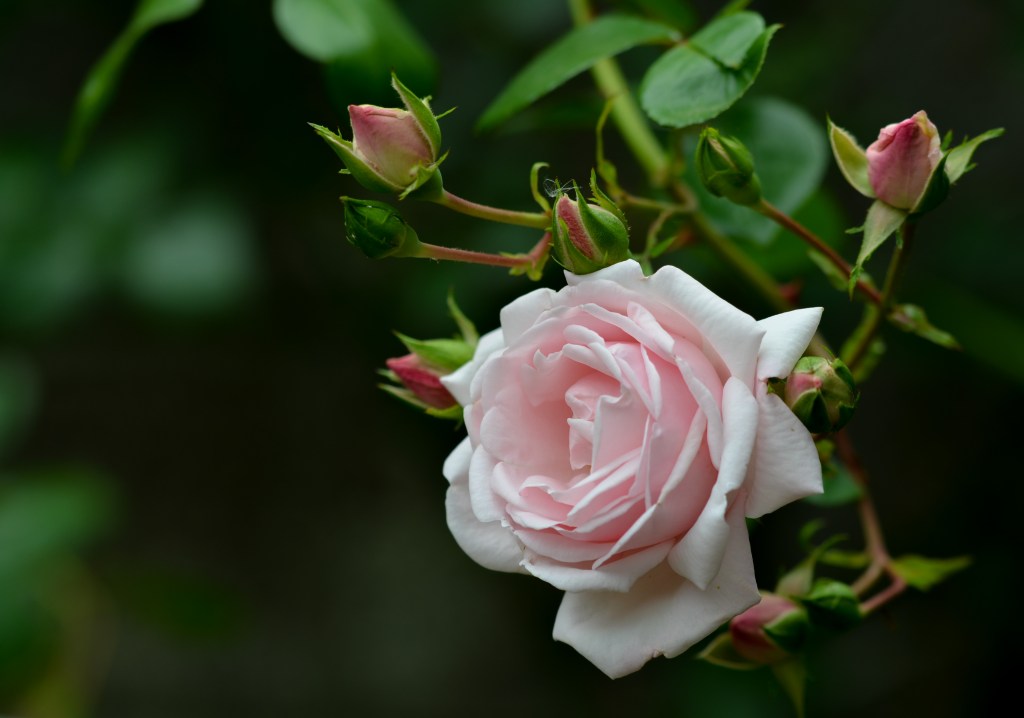
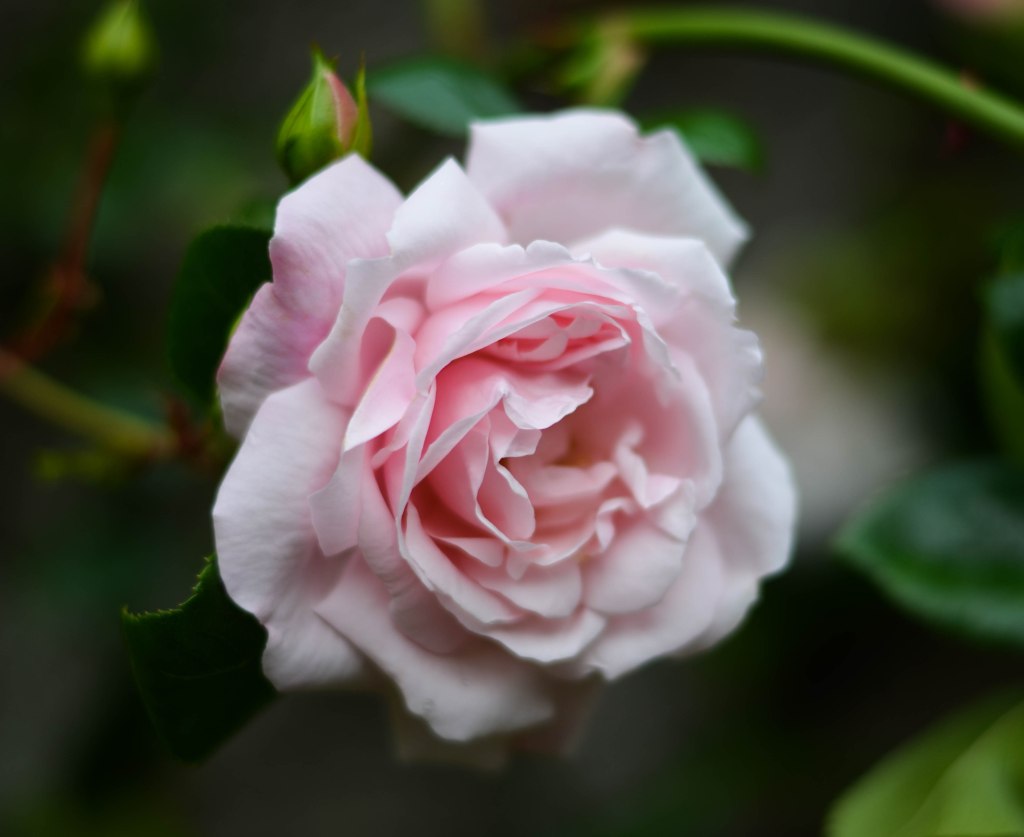
‘New Dawn’

Pruning roses is an important winter task and best done before March, when they will be waking from their dormant state and coming into growth again. Cutting back older, established plants is almost essential for roses, to avoid leggy growth, prevent disease and maintain a good shape. The first thing to do, if you can, is to identify what kind of rose you have in order to make sure you’re following the correct advice for your particular plant. If you’re unsure follow these general rules to reinvigorate the plant and keep it healthy: using secateurs, cut the branches back by one to two thirds and trim off dead or damaged stems, any which are crossing/rubbing as well as any leaves showing signs of blackspot, taking care to remove these from the site completely so as not to re-infect the new growth. The best way to prune is to cut back to just above a new leaf bud (small nodule on the stem).

Bush roses: these include floribunda types and hybrid teas, such as ‘Lady Marmalade’ and ‘Mary Berry’. They flower on new growth each year so can be pruned back hard to encourage fresh new shoots which should also eventually bear flowers. Don’t be afraid to cut right down almost to ground level – these roses respond well to a good cut back and it’s highly unlikely you’ll kill the plant.

Modern shrub/English roses : these are usually larger, repeat flowering, scented roses, including ‘Gertrude Jekyll’ and ‘Sceptr’d Isle’. They need to maintain a more natural framework of stems but it’s still worth wielding the secateurs to remove any dead or damaged stems, cutting back older, woody branches and pruning side stems down to two or three buds.

Climbing roses: such as ‘New Dawn’ or ‘Mme Alfred Carriere’ are tall and vigorous, and need tying in to ensure they don’t end up in a tangled mess. As with other types, remove dead or damaged stems, cutting out any very old branches or any which are rubbing, as this can create a wound and therefore an entry point for disease. Make sure your main framework is tied into its support, then add in any new side shoots, and trim flowering shoots back by two-thirds of their length.

Rambling roses: eg ‘Rambling Rector’, ‘Paul’s Himalayan Musk’ are similar to climbers but usually only flower once in the growing season. They can be pruned similar to climbing roses too by making sure they have a framework of branches fanned out and tied into supports. One in three of the oldest branches can be cut out and side shoots trimmed back by about two-thirds.

Once you’ve got your roses back into shape, they’ll also benefit from a feed of general purpose or fertiliser, sprinkled around the soil at the base of the plant and then covered with a layer of well-rotted manure or compost – this should ensure they’re off to a good start for the new growing season.

‘Ispahan’ – Damask Rose

I never promised you a rose garden…

Gone are the days when having roses in your garden meant a square of bare earth with half a dozen rose bushes displaying only thorny branches for half of the year. Modern planting design encourages combining the roses which best suit your style of garden with other shrubs and perennials in a mixed border. The cottage garden is possibly the best example of this and wouldn’t be complete without a few romantic roses in amongst pretty poppies, airy cosmos and tall spikes of delphiniums and foxgloves. They blend beautifully with the lush and lax style of other cottage garden plants, taking a back seat in the spring when bulbs and other early flowers appear, then centre stage from midsummer until autumn, when regular deadheading will ensure repeat flowering roses are the stars of the border.

Not only that but there’s a colour to suit every palette. Red roses such as the velvety ‘Deep Secret’ are, of course, the classic choice, but pinks are often easier to combine in a mixed bed, with every shade available from bright cerise through to soft blush. ‘Gabriel Oak’ is a brand new rose from renowned breeder David Austin in a shade of deep pink, with a full, rosette style flower and a strong, fruity scent. Climber ‘New Dawn’ on the other hand, is a pale pink, with a classic petal shape and sweet fragrance, and blooms reliably from summer until late autumn.

‘Lady Marmalade’

If you don’t want to go down the ‘obvious’ red or pink route, there’s also a multitude of white and cream roses to choose from, including the top performer ‘Iceberg’, with open, single flowers which are good for pollinators, and the pretty ‘Mary Berry’, a hybrid tea with a traditional shape and beautiful scent. Yellow and orange flowers are not to everyone’s taste and can be trickier to include in a mixed border – but combined well they can also make an impact, providing a hit of colour or a bright contrast to darker shades of purple or green. To test your tolerance of yellow shades try ‘Tottering-By-Gently’ which was introduced at 2018’s Chelsea Flower Show and is a soft yellow shrub rose, with simple, open flowers which would pair beautifully with purple lavender or zingy orange heleniums. In my own border I have the brick-red ‘Hot Chocolate’ next to the orange geum ‘Totally Tangerine’ and deep purple salvia ‘Amistad’ – the colours are unusual but tone well and provide a dramatic contrast to the soft pastels elsewhere in the garden.

Kiss from a rose…

Get roses right and they will reward you. With just a little care and attention they really can be the showstoppers of the garden. To keep your blooms in tip-top condition during the growing season feed, weed and deadhead. As well as mulching and fertilising in the early spring, give your plants a second feed after the first flush of flowers to keep them healthy. Weed around the base regularly (avoiding any spiky thorns!) and cut off faded blooms, which for most floribunda and repeat flowering types, will ensure more flowers will follow. Although established roses don’t need regular watering, a watering can full once a week is beneficial during especially hot and dry spells, although if your rose is in a container, it will need watered and fed more frequently throughout the season.

And finally keep an eye out for greenfly, which will love your roses almost as much as you. There are various chemical sprays on the market to get rid of greenfly but the safer and healthier (and lazier!) approach is simply to sit back and wait. A good garden ecosystem usually balances itself and with aphids come ladybirds. These natural predators will take care of the pests within a short space of time – however, if your infestation is particularly bad you can spray the stems with soapy water, blast them with the hose, or put on your garden gloves and rub them off between your finger and thumb.


Plant a bare-root rose

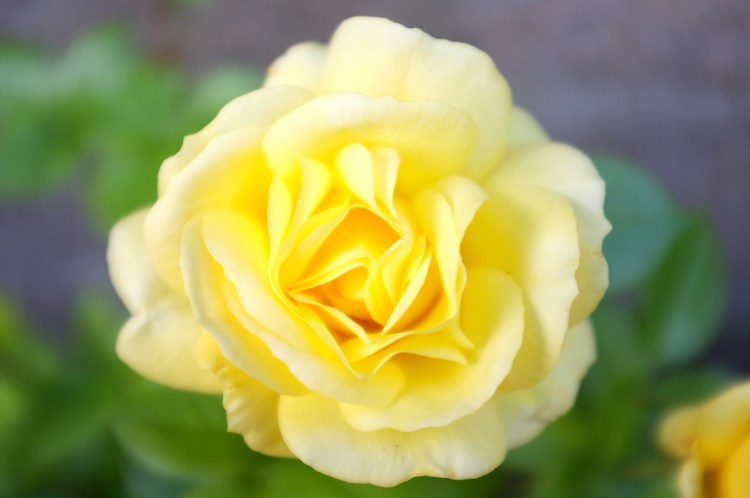
Bare-root roses are available during the winter and up to the end of March, and they’re often the best way to introduce a new plant to your garden. Bare-root simply means they’re sold without a container, with the roots exposed. Although they might not look as attractive as a potted plant, bare-root specimens are cheaper and usually establish better as they have plenty of time to develop a strong and healthy root system before energy is diverted into flowering during the summer months.
To plant a bare-root rose:

  • Rehydrate the plant by placing in a bucket of water for at least 30 minutes before planting
  • Choose a sunny, well-drained position and dig a hole approximately 40cm wide and 60cm deep
  • Add well-rotted manure to the base of the planting hole
  • Place the rose in the hole, spreading out the roots and ensuring the graft union (swollen area between roots and stems) is just below the surface of the soil
  • Fill in the hole with soil and firm in with your foot
  • Water well after planting

This article was published in Platinum magazine’s March 2020 issue

Cosmos – out of this world!

No garden should be without cosmos and its heavenly flowers. After a bit of a slow start with these brightly-coloured blooms, I’ve become a convert, and now I sow them from seed every year to ensure I’ve got plenty of these cheery favourites to brighten up my borders.

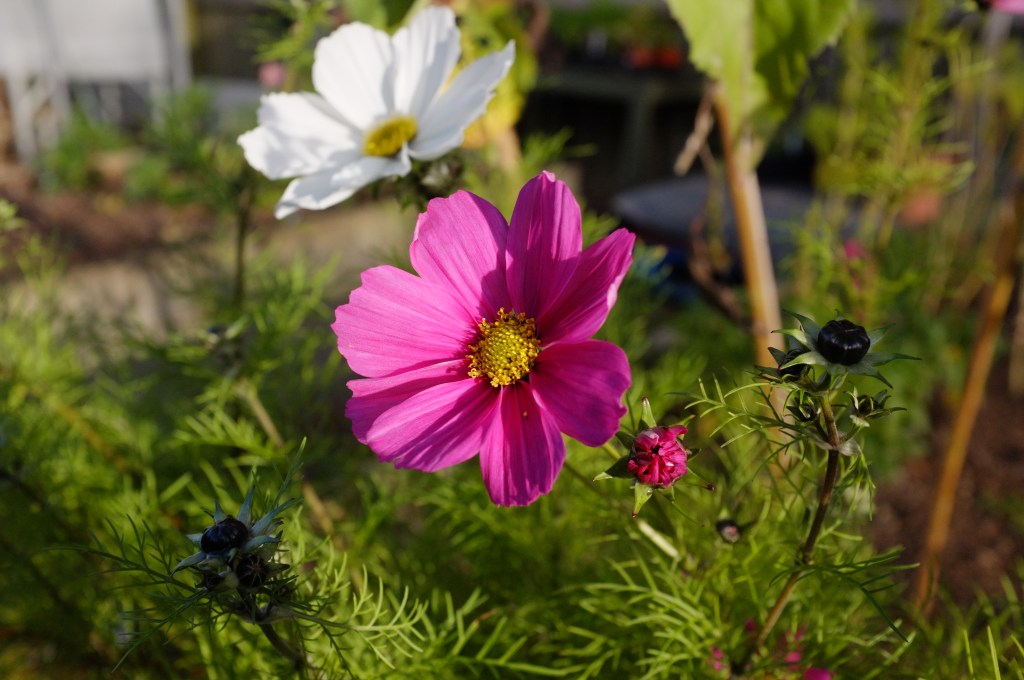
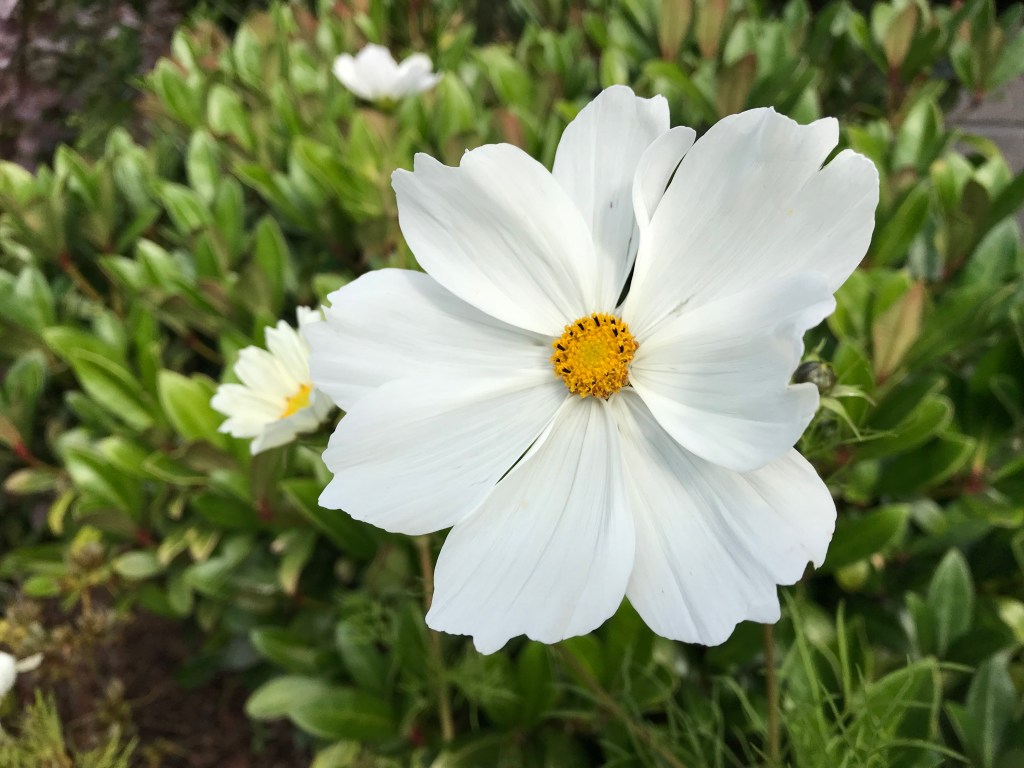
Cosmos bipinnatus are half-hardy annuals, which means, like bedding plants, they will grow and flower within one season, and can then be composted when they’re spent in the autumn. Their large, daisy-like flowers are most often seen in shades of pink or pure white, but they can also be found in ‘hot’ red and orange – there’s even a relatively new yellow variety. They are very easy to grow and you can easily buy them as young plants – but you’ll get much more for your money if you sow them from seed any time between March and May. Simply sprinkle onto a tray of moist compost and cover lightly. They’ll benefit from bottom heat, but will also germinate fairly readily if covered with a plastic bag or clear lid and left in a greenhouse or sunny windowsill.

Once their second pair of leaves is showing (the ‘true’ leaves) they can be pricked out into bigger pots and grown on until they’re ready to plant out after the last frosts. Pinching them out (removing the growing tip) makes for bigger and bushier plants with more flowers so this is well worth doing at this point or when they’re about a foot or so tall. Once they’re in the ground and flowering it’s a good idea to deadhead them regularly as removing the spent flowers makes room for more to bloom – and bloom they will! These generous plants will flower non-stop from midsummer until the first frosts, perhaps even later. With last year’s mild autumn, it took a real dip in the temperatures to kill off my cosmos, so I was able to enjoy them well into November.

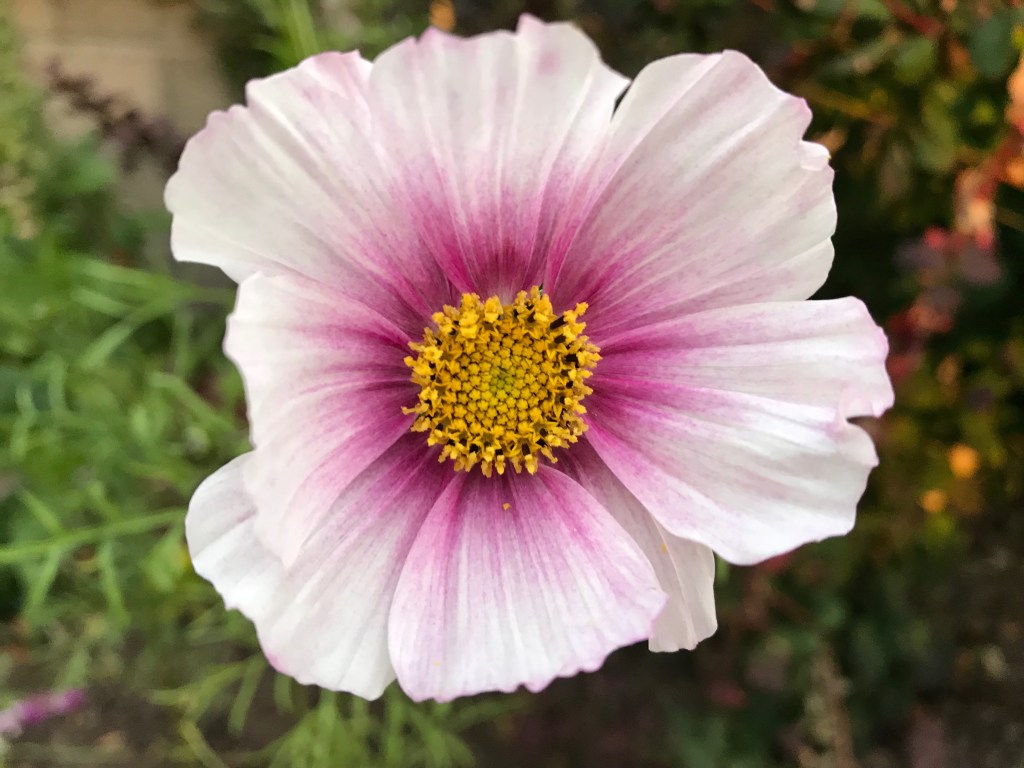
There’s quite a wide variety of cosmos to choose from, but all are reliable performers so choosing is simply a matter of taste. For a pure hit of colour you can’t go wrong with ‘Sensation’ – a mix of light and dark pinks with some white flowers and well worth growing. There’s also ‘Dazzler’ with large deep red flowers, or ‘Versailles Tetra’, which are slate-pink with a red centre surrounding the bright yellow eye of the bloom. Last year I was quite taken with ‘Daydream’, which is a bit more delicate looking – very pale pink, deepening in colour towards the centre of each petal. However my firm favourite is ‘Purity’, These are quite a tall variety, so best towards the back of a border, with large, brilliant white flowers. They look fantastic with other cottage-garden style plants or in a vase, providing light and texture with their feathery foliage and stunning white blooms.

Cosmos ‘Purity’ in a mixed border

Cosmos aren’t just for the garden – dwarf varieties are great in pots – try ‘Sonata’ or ‘Apollo’, which are more compact and will suit container planting. For something a bit different, go for ‘Xanthos’ which flowers prolifically and is the first yellow cosmos in a really pretty, soft shade. There are other more unusual varieties of cosmos which come in all shapes and sizes – ‘Cupcake’ is so-called because its fused and upturned petals look, well, like a cupcake! Or there’s ‘Sea Shells’, which has tubular petals, and ‘Double Click’, with a lovely ruffled, fully double flower, in a range of colours from cranberry through to rose.

Cosmos ‘Xanthe’ (left) with chocolate cosmos in the planter with Stipa tenuissima

Cosmos are easy to grow, flower for ages and are great for filling gaps in borders, or as a temporary fix for an empty flower bed – they can even be planted alongside vegetables, to help bring in those useful pollinators, and they’re a stalwart of the cut flower patch too. They’re great dotted around the garden or in a vast swathe of airy, feathery foliage dotted with those brilliant blooms. Cosmos are cosmic for every garden – so get growing!

Chocolate cosmos
Chocolate cosmos is another member of the cosmos family, but not exactly like the others. Why is it called chocolate cosmos? Well, partly because of its rich, dark, red/brown colouring but also because of its scent – if you get up close to the flower you’ll smell its wonderful vanilla-chocolate aroma. Also known as Cosmos astrosanguineus, this plant is perennial, and if you look after its slim tubers (by lifting or covering during the winter) then it will return year after year. It’s not as common as its bright and beautiful cousins, but it’s got a velvety, sultry charm which is hard to resist. These are most often bought as young plants, as seeds are hard to come by and can be tricky to germinate. Chocolate cosmos are much smaller than Cosmos bipinnnatus, with loose, slender stems. I plant mine in a large container with grasses to give some contrast and also to help support the flowers…after all, I want them as close to my nose as possible for that fantastic hit of chocolate!

This article was originally published in The Courier’s Beautiful Homes supplement, Spring 2019

Garden Goodies @ GPE 2020

Last week I attended the Garden Press Event in London for the first time – this is an event organised to allow the horticulture industry to come together so that journalists can view the latest products, find out about new campaigns and generally share information and news. It was a whistlestop tour of all the big names in the industry, plus lots of smaller and emerging businesses with new and interesting products to bring to the market. Not to mention initiatives like National Children’s Gardening Week and Garden Day which aim to raise the profile of gardening generally.

There were a few items which particularly caught my attention, so here’s my list of Top 5 Garden Goodies from the GPE 2020:

  • Nemaknights – I had spotted this advertised in a magazine and then promptly forgot what it was called, so I was delighted to find NemaKnights had a stall, and quizzed them on this potentially transformative product! Essentially it’s nematodes in granular form which you can shake onto the soil as and when you need it. It’s a biological pest control which is child, pet and wildlife friendly and targets slugs and snails, although it’s also available for vine weevils, ants and sciarid flies. If you’ve used nematodes before you’ll know that up until now they’ve been a bit fiddly to use – with a short shelf life, they’re kept in the fridge then you’ve got to add water, mix and water into your soil. Nemaknights seems to eliminate the fuss, making it much easier to use a pesticide-free solution to an age-old problem. I’m looking forward to trying this as we do have many slugs in our garden – I’d also be keen to use it for fungus gnats because this is the time of year they tend to reappear, when my windowsills are full of germinating seed trays!

Quadgrow – another product I was very taken by was the Quadgrow by Greenhouse Sensation. This is a self-watering planter, ideal for crops such as tomatoes, peppers, aubergines or courgettes, and can be used in the greenhouse, polytunnel or on a patio. It promises to keep plants at just the right moisture level for around 14 days using a wicking system, resulting in 2x bigger harvests compared to grow bags or pots. I can see this working well for my tomatoes – or possibly the aubergines and courgettes which are currently only seedlings… so watch this space!

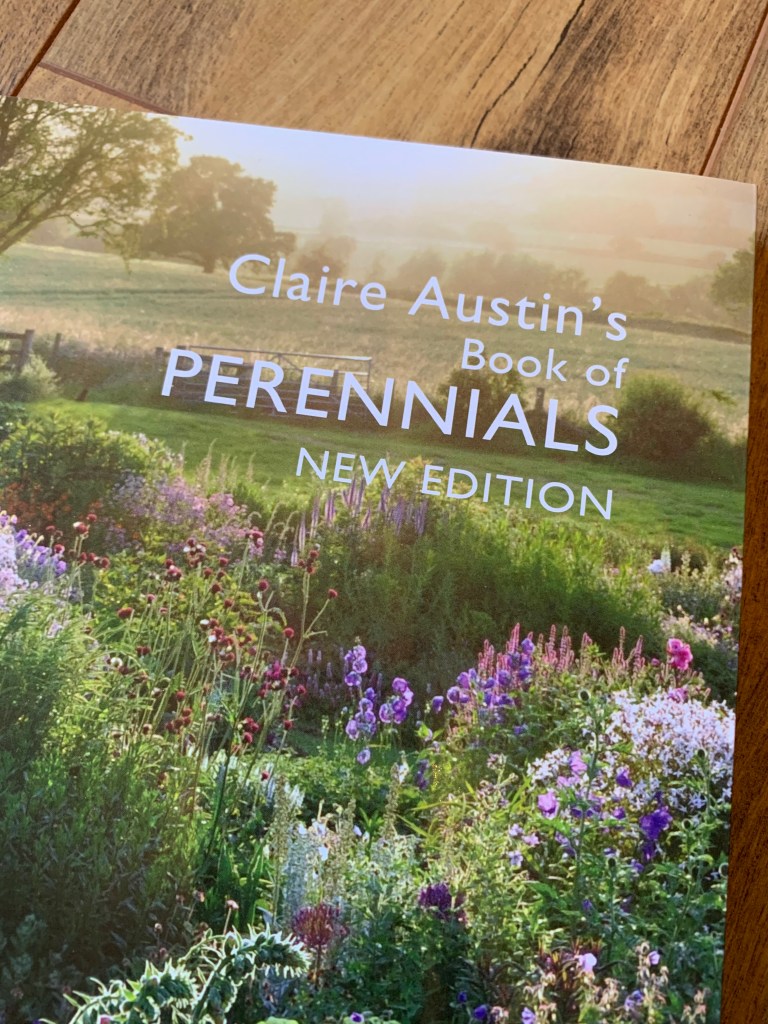
Claire Austin’s Book of Perennials – it was great to speak to Claire Austin herself who was there to promote her newly revised Book of Perennials. I had read about her most recent venture The Sarn in February’s Gardens Illustrated and loved the idea of opening a pub with a plant nursery out the back! Beer and plants – what more could you want?! And I was lucky enough to take away a copy of the book, which I am certain will fuel my daydream of one day owning my own independent nursery. The book was first published in 2015 and has been revised to include 180 new varieties with extended features on peonies and irises. It’s full of advice on choosing and caring for perennials, and how to plant them together. Plus there are 700 plants listed – a perennial lovers paradise.

Honeyfield’s – this is a company producing wild bird food and associated feeders, nest boxes etc. The brand is owned by Marriages, which makes pet food and animal feed, and is now an authority on environmentally friendly wild bird care. Honeyfield’s stands apart from other suppliers in its approach to sourcing seed and sustainability – it’s the first supplier of Fair to Nature bird seed in the UK, which means it’s commited to using cereals and other feeds from farms which grow crops to sustain farmland bird species. So Honeyfield’s not only feeds garden birds, but also looks after those in the countryside too. Not only that, but their packaging is recyclable and they encourage consumer to use a refillable ‘Tub for Life’ for zero-waste shopping. I’ll be popping one of their Easy Clean Seed Feeders out into the garden shortly and I’m certain the local birds are going to love it! Check out Honeyfield’s excellent range of feeding guides here and their brilliant Bird Bites videos, which cover a host of different wild bird care topics.

Activearth – I was very intrigued by this new product, which claims to supercharge your soil. As the owner of some under-performing raised beds, I’m currently on the hunt for ideas to help increase the nutrient levels of my soil and improve the health of the plants I grow in them. Activearth is an organic pellet which provides the soil with 4 essential minerals (Magnesium, Calcium, Hydrogen and Potassium) plus beneficial soil bacteria, to improve fertility and plant growth in a slow release format. Scattered over the growing area, Activearth promises to transform the soil ‘from compacted and dormant to biologically active and nutrient-rich’. This, I like the sound of. So I will try the small sample I’ve got and see if there are any significant improvements – it sounds like a magic formula, and it smells like biscuits! Is it too good to be true? I hope to find out and report back…

Time to plan…

It’s winter, but it’s not cold.

Little green shoots are appearing – but they’re too early.

Hellebores are emerging, the witch hazel is blooming and we even have a couple of snowdrops almost fully out in the front garden.  It’s SpringWinter – not cold enough to be properly winter but not light enough to be properly spring.  Also known – on Instagram at least – as #thatwinterspringthing.

The mild weather and green shoots are not unwelcome – in fact they’re a wonderful reminder of what’s to come. I just wonder if we’re being lulled into a false sense of security, only to be shocked back into the depths of winter by a lengthy icy blast…

In any case there’s not much going on in the garden just yet, and I’m glad of the time to plan ahead for the coming season.  The main projects for this year will be:

  • the white border in the front garden – I’m redesigning one side of the front garden as it’s currently looking the most bare and in need of rejuvenation.  I want to drastically increase the planting and hopefully stick to a mainly white theme, as it’s partly in shade and its backdrop is much larger trees and bushes within the wooded area next door.  The plan is for some lush green/white planting which will lift the whole area during spring/summer
  • planting and sorting the area round the chicken coop – this area needs replanting after we switched the smaller chicken run for a much larger, covered run.  The grass needs fixed and there’s plenty of room at the front of the coop for some new hen-friendly plants
  • growing/selling plants from the Secret Garden – this project began last year when I sold the surplus plants I’d grown for my own garden.  I put the extras onto Facebook Marketplace and they were snapped up by quite a few local folk looking to support a small independent nursery.  I got the best buzz from growing healthy plants for others to enjoy so I definitely want to repeat the experience this year!  (The Secret Garden is so-called because it’s the space I have for raised beds and greenhouse behind a rather unobtrusive-looking door at the bottom corner of the garden.)

So the planning and designing is getting into full swing – I’m researching, drawing, reading and checking my seed stocks to get ready for what is likely to be a busy growing season.

This preparation includes testing out a couple of online drawing/design tools alongside the online systems I already use.  I use a range of different tools for different things – Evernote for clipping and saving articles, photos and plant information; Google Drive for plants/seeds spreadsheets and keeping track of budgets; Microsoft OneNote for drawing and saving designs.  I’m also currently trying the Suttons veg planner tool, which will hopefully help me to plan my fruit/veg growing for this year, as well as my cut flower bed.  And I’ve downloaded an app for my laptop called Bamboo Paper which also allows me to draw and create ‘mood board’ style notebooks.

IMG_8925

Designing the front ‘white’ border with OneNote.  It helps if you do this with wine 🙂

I did contemplate starting an actual physical notebook as a garden journal, and using a real-life pen and ink…but for some reason I seem to get on fine with the online methods.  I think in fact I’m more likely to access these electronic records and keep them updated than a diary-style physical notebook, as lovely as it is to hold and treasure a well-thumbed, dog-eared notebook…

Oh and one more goal which I hope to achieve imminently – sitting two more RHS Level 2 exams in February.  I’ve already been hitting the books again to swot up on plant biology and soil nutrition.  Wish me luck!

Happy 2019 – here’s to a great gardening year!

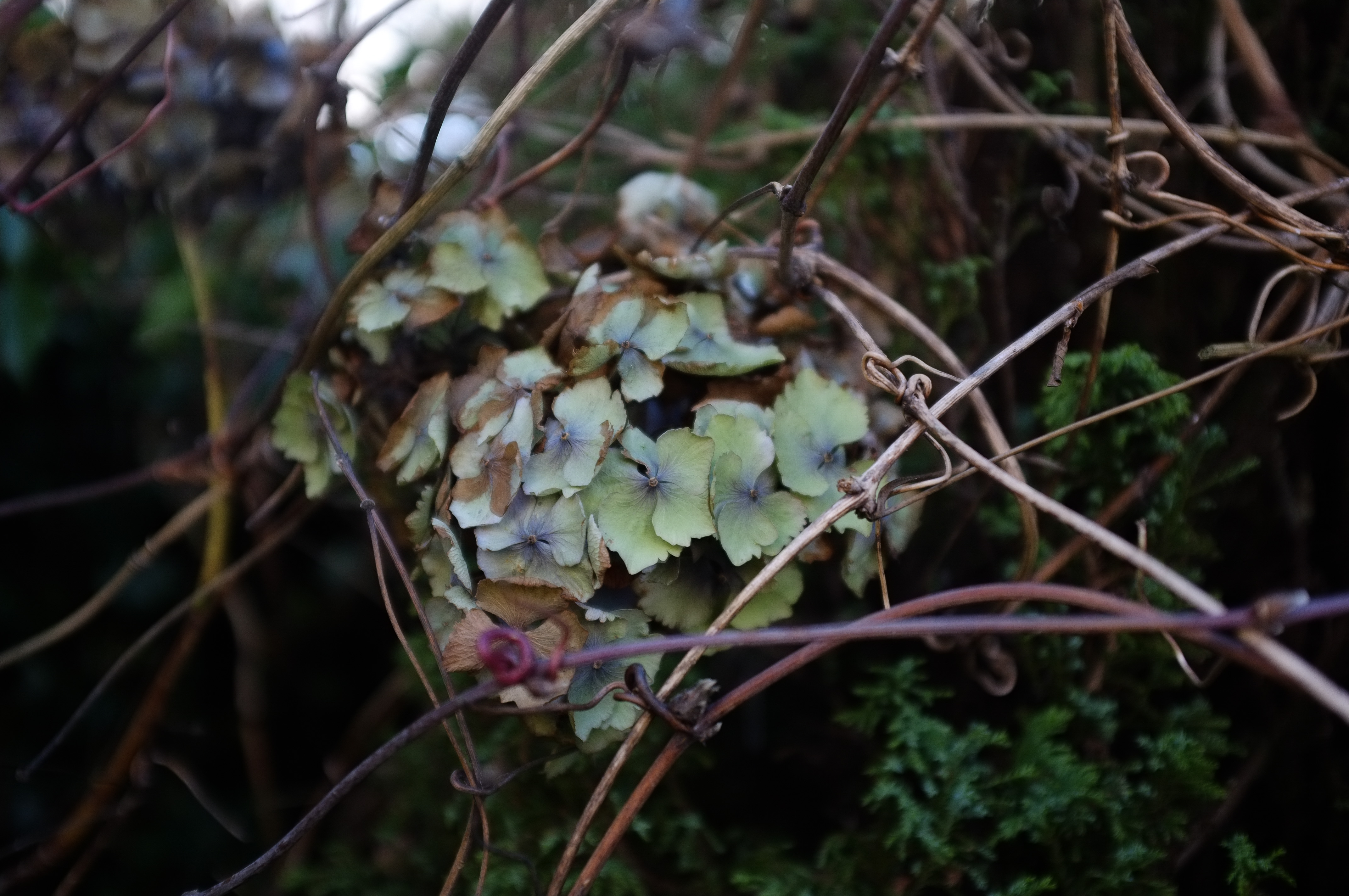
hydrangea jan 2019


September Stars

It seems I have a late summer garden – there’s more colour on show in September than there has been during the rest of the year.

img_6299

The front garden is currently showing off all its colours – yellows, pinks, peachy dahlias and flashes of reds from the crocosmia, roses and even a few second-flowering geums.  I haven’t really planned a late summer garden, but each season I have been adding layers of colour and texture so there’s as much interest throughout the year as possible.  It looks like I’ve certainly been attracted to late season plants!


I do love my dahlias, of course, and they’re really hitting their stride at the moment.  I’m also really enjoying the echinaceas which are flourishing, the rudbeckias (still small, only sown this year) and the cosmos, which is a great gap filler.  I bought a couple of sedums several weeks ago and love to see the bees still busy around these flowers as they deepen in colour each day.  These are all being propped up by some of the shrubs and plants which may have finished flowering but are still providing essential structure and mass – the two cotinus, the damask rose, teasels and eryngium for example, whose spiky texture is also providing soft browns and purples.

20180826-DSC_0503


Some of my front garden plants have had a second wind, most likely due to the very warm summer we’ve had.  The geums I’ve already mentioned – these first bloomed in May I think and are still popping out a few flowers! The hot pink salvia is coming out again for another throw, along with the geranium ‘Lace Time’ with its pretty veined pink flowers.


But the stand-out repeat flowerer has to be the rose ‘Lady Marmalade’.  I might be wrong, but I think she’s currently in flower for the third time – and still looking beautiful.

Lady m BEST-4

‘Lady Marmalade’

It’s lovely, as the summer slips away and the temperature starts to fall, that the hot colours are still warming up the garden.  I feel a bit sad about the season changing – I really loved the hot weather – but I can still enjoy the summer blooms.  Plus now is the time to collect seed, take cuttings and begin thinking about next year.  I know – it’s only September! – but I’m already thinking of what I want to grow and/or sell in the Secret Garden next spring and what I will add to the borders, front and back, to keep building those layers of colour, texture and foliage.

The hit list for next year includes more Stachys byzantina for its gorgeous soft leaves and rich pink flowers; more Verbena bonariensis as it’s so bee-friendly, the usual cosmos, sweet peas and aquilegia, and a plan for some new plants – Sanguisorba (inspired by a recent visit to Cambo’s walled garden) and Cerinthe major (which I loved at Chelsea).  I’ll also be sowing some Stipa tenuissima as I want to add some more soft grasses and I just love the texture and movement of this feathery grass.

image_558445370734348

Sanguisorba and Stipa tenuissima in the beautiful perennial borders at Cambo

And that’s just a small selection of the seed packets I currently have spread out across my dining room table!  There will be a lull around November/December but between now and next spring there’s a lot of sowing and growing to do.  If you want me, I’ll be in the greenhouse…

img_6861


Playing the long game…

Gardening is a lesson in playing the long game.

I’m a quick-fix, instant-gratification type of person, so my growing love of the garden has brought with it an appreciation for taking things a bit slower.  For taking the long view and planning ahead for the same season, the next season, the next year, the next few years…

Very few aspects of gardening are instant.  You can buy a fully grown plant in a pot and have instant colour.  Buy a few of them and you’ve got instant impact.  But like many ‘instant’ things in life, the satisfaction is fleeting.

I’m learning to love the long game.  I have no choice, really, as I don’t have the budget for an instant garden!  But even if I did, I think I would still choose to plan and sow, make careful selections and take the time to move and shape things over the course of days, weeks and months.

Take delphiniums for example.  I have sown many of these this year, some to share and sell, others will hopefully find a home in my garden,  but I am taking the time to grow these in pots until they’re large and healthy and can withstand the assaults of the various snails and slugs patrolling my front garden.  It’s true, even large plants can be decimated by the jaws of a hungry gastropod, but the larger ones stand a better chance of survival.  As an experiment, I planted out a few young delphiniums into the front border and in a matter of days – as I suspected – they’d been torn to shreds.

DSC_0221

Delphiniums…worth waiting for (as this bee will testify) 

This border itself is another example.  In many ways I wish I could blow the bank account and buy dozens of plants to fill the bare soil still showing in the front…and yet by sowing and propagating, along with some careful bargain-spotting at plant sales and garden centres, I’ve managed to gradually fill gaps in around two thirds of the garden so far.  I like seeing it take shape gradually, and it gives me time to pause and redesign areas which aren’t working, or try new ideas when I’m inspired by a photo or magazine article.

In that very border are two mature philadelphus shrubs.  Last autumn I pruned them hard – knowing this would mean no flowering for at least a year.  They had flowered poorly the previous summer anyway and were congested and overgrown.  So I played the long game – removing most of the older stems and branches to leave a healthy selection of wood with a far better structure.  I’ve missed the flowers but hopefully next year I’ll find out if my hard work has paid off and be rewarded with a much healthier and better flowering plant.

img_4647

The front border is filling up slowly but surely…

My studies are part of my long-term plans too.  Much as I would like to, I can’t train in horticulture full-time – work and family commitments demand my time and ensure an income.  But I can take little steps forward – studying for half an hour each morning, taking a couple of exams every few months…inching forward towards a qualification which might come in useful, or might simply make me a better gardener.  Either way, I’m enjoying the process and I know that the theoretical learning is going hand in hand with what I’m practicing over time in my own garden.

This week I sowed biennials – again, another long wait to see how they’ll turn out.  Biennial plants flower the season after sowing, so the foxgloves and hesperis seeds I’ve sown now won’t flower until next spring and will need cared for in the greenhouse during autumn and winter.  But it will be worth it when they’re finally planted out in the garden, proving colour and scent and encouraging insects and wildlife.

img_4687

The teasels I sowed at the end of last summer are making an appearance now

So yes, even though ‘instant’ gardening can be a good thing, playing the long game is better for me – it slows me down and asks me to think and plan and anticipate what’s to come.  When many other aspects of my life seem to be whizzing past at speed, I’m grateful for the garden, which slows me down and helps me to appreciate what I have in front of me.


#TBT to Chelsea Flower Show 2018

As it’s Thursday, and I didn’t have the time to write about it at the time, here’s my own little summary of the joyous day I spent at RHS Chelsea Flower Show 2018!

20180526-DSC_1272

Me on my first visit to Chelsea Flower Show

This was my first ever visit to the show and it’s fair to say I was excited.  Very excited.  The event lived up to my expectations and I felt awed, inspired, influenced and delighted while I was there.  Although watching the highlights on TV give you a pretty in-depth view of the show gardens and plants, as well as a useful commentary from experts and the designers themselves, there’s nothing like standing right beside that garden and experiencing it for yourself.  Admittedly, you’re sharing that experience with hundreds of other people, all jostling for a good view, but it’s still a great experience.

Of the show gardens, my ultimate favourite was probably the Yorkshire Garden – I just loved its lush cottage garden planting, the stream and the beautiful stone building.  It looked like somewhere I could sit and enjoy for hours (assuming it wasn’t still in the middle of Chelsea and being viewed by thousands of plant-hungry people).

20180526-DSC_1190

I also loved the artistic creativity of the Harber and Savills Garden – I enjoyed its colours and the view down the line of the garden to the sculpture at its centre.   The one that took me by surprise was the South African Wine Estate, which I expected to feel ambivalent about – in fact I loved the different stages of this garden and the way it captured all the aspects (I assume) of the kind of land it was depicting.

20180526-DSC_1208

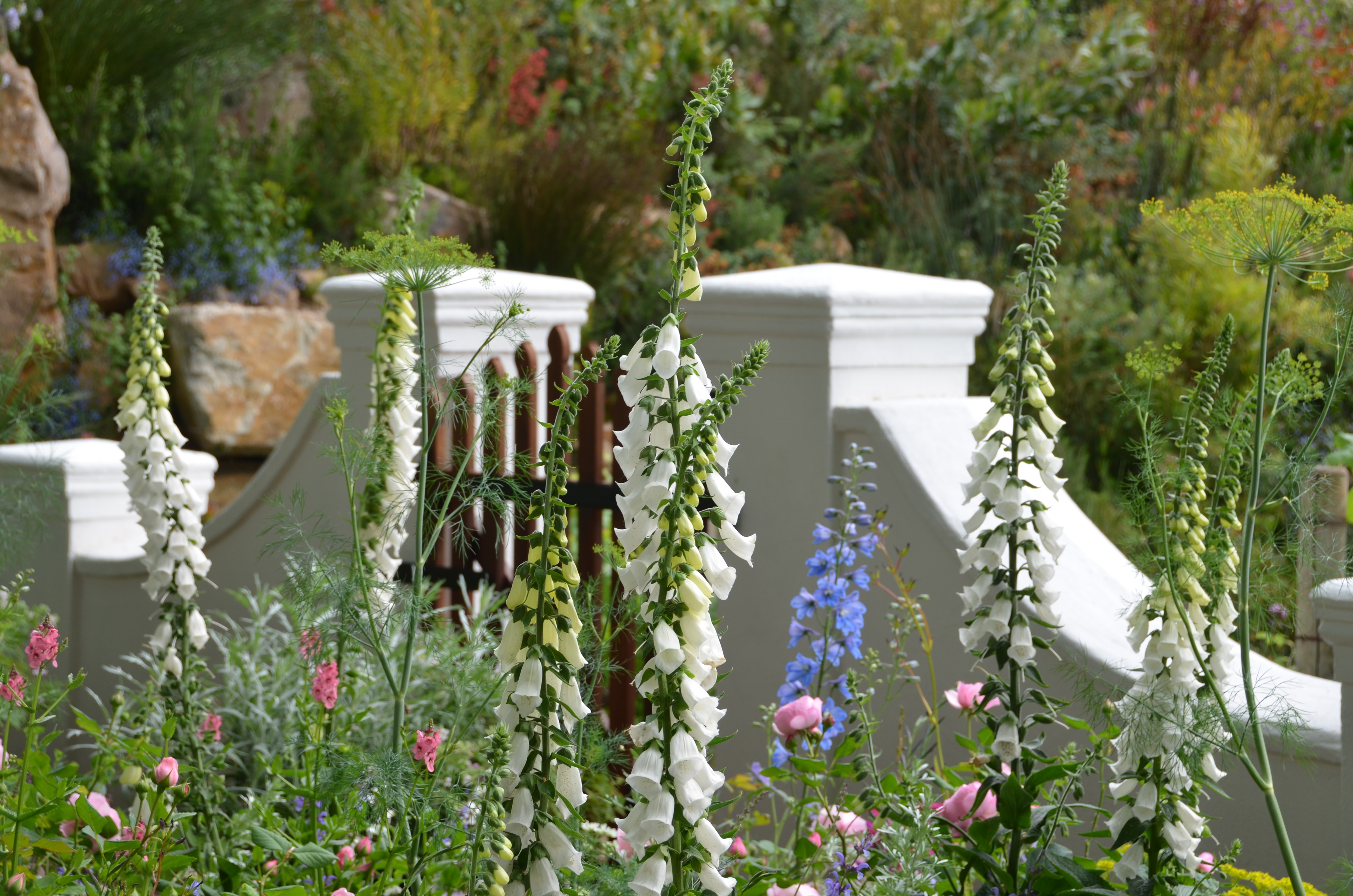
Delphiniums, roses, foxgloves…perfect cottage garden planting

20180526-DSC_1209

Cottage garden section of the South African Wine Estate 

The winner of Best Show Garden was of course Chris Beardshaw’s garden for the NSPCC.  I felt a little underwhelmed by it at the time, but I now wish I could go back and take another look at it again, having read a little more about it.  I think you would also fully appreciate the garden if you were able to get inside it and stand amongst the plants and enjoy the seating spaces.  This is, of course, impossible, but it must give the judges, celebrities and journalists a sense of each garden which we can’t quite achieve observing from the outside.

20180526-DSC_1148

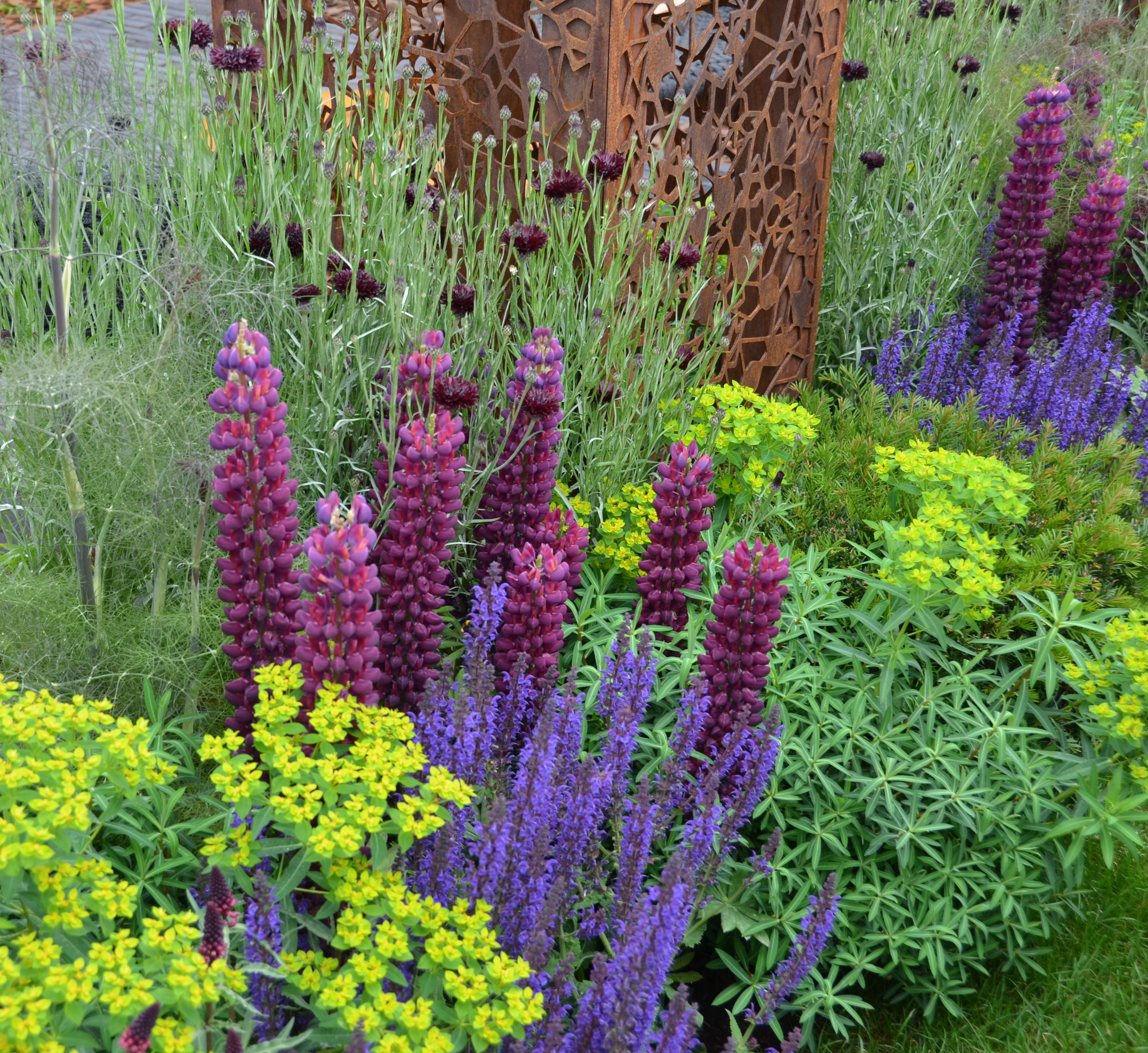
I loved this planting combination – purples, red-purples and zingy greens, with the dark cornflowers popping up in the background

I felt the greatest connection to some of the smaller gardens, however.  The playfulness of the Seedlip Garden was brilliant.  I loved that every plant in it was from the pea family, and yet it was interesting and varied, as well as educational – I never knew there were so many ornamentals in the pea family!   (As a sidenote, if you haven’t tried Seedlip I’d encourage you to do so!  It’s a non-alcoholic spirit and it tastes of the garden.  Lovely with an elderflower tonic.)

20180526-DSC_0974

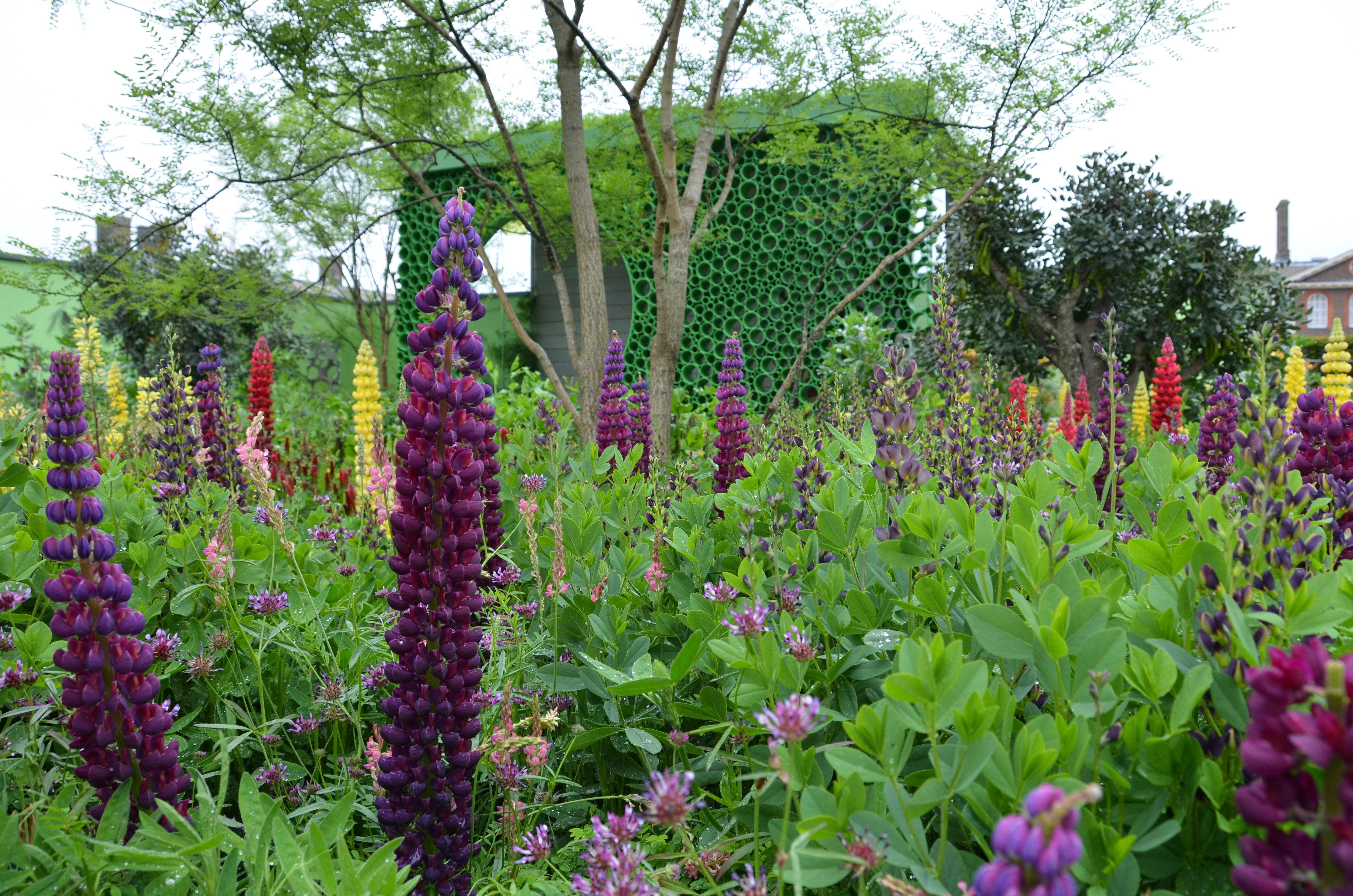
Lupins and other pea-family planting in the Seedlip Garden.  Note the brilliant pea-villion! 

The Artisan Gardens also impressed me – they also seemed more playful in their creativeness; there was a freedom in these which I imagine the bigger Show Gardens can’t quite access.

Of these, the ones which stood out for me were the Billion Dreams Indian garden with its blue Mecanopsis and gorgeous patterned marble walls; the peaceful and elegant Japanese Hospitality Garden (amazing moss balls!) and the Laced with Hope Garden – this last one reflecting on the journey of a child with cancer.  Its graffiti wall certainly wouldn’t be for everyone but I loved the explosion of colour, which was also reflected in the planting, and the sculptures which I think really illustrated what the garden was trying to achieve.

This slideshow requires JavaScript.


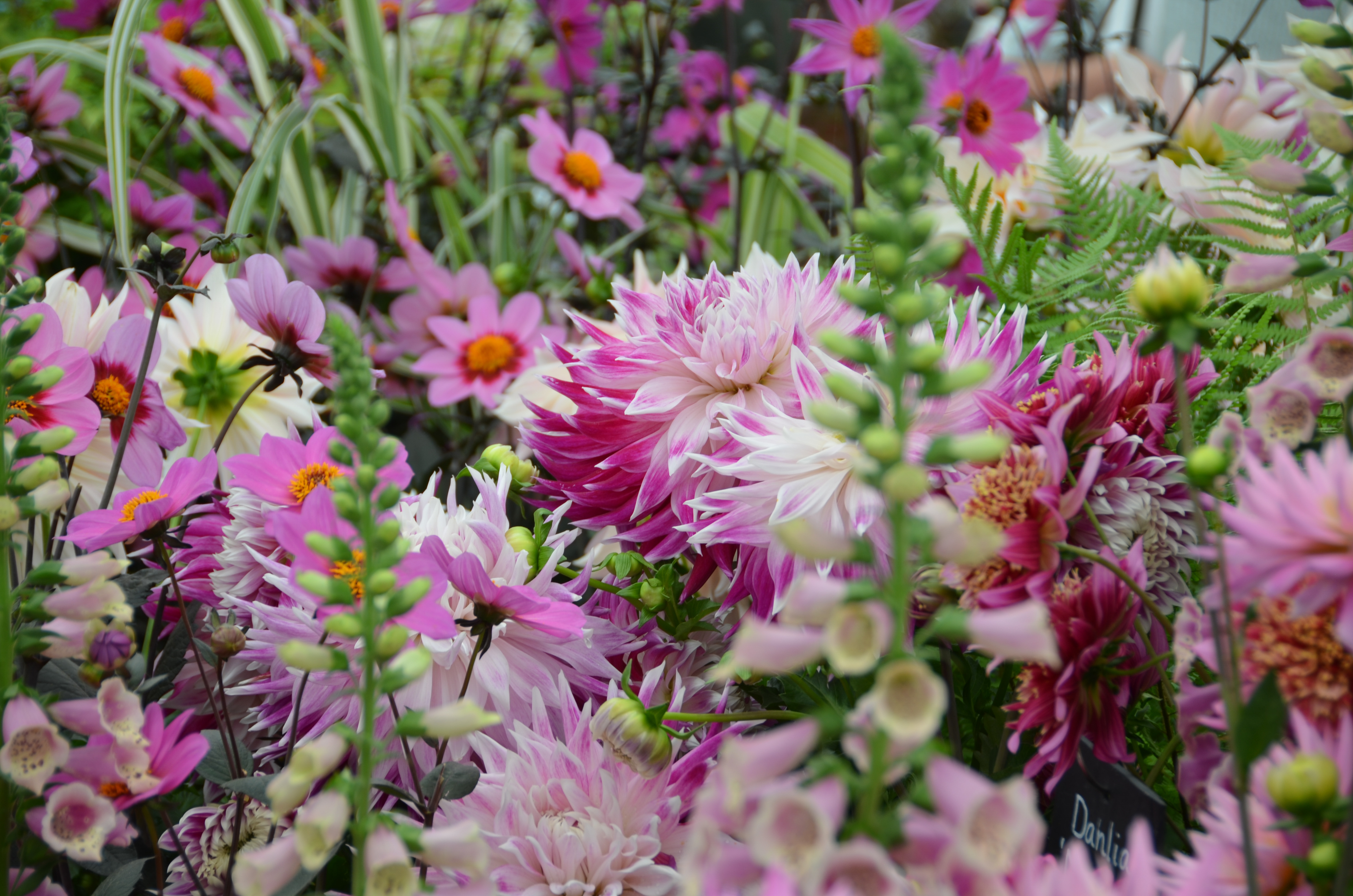
The Great Pavillion was almost overwhelming there were so many flowers and plants on display.  The highlight for me was the The National Dahlia Collection.  So many dahlias on display in one place… I added loads to my wish list but the real inspiration was the planting combinations.  They looked fantastic next to hostas, grasses, foxgloves and aquilegia.  I’m still learning about how and where to grow my dahlias and this was really helpful and interesting.  I will definitely try to combine some of these in my garden in future.

20180526-DSC_1102

Dahlias planted with foxgloves, grasses, ferns, aquilegia 

So, what did I take away from Chelsea? Inspiration, ideas and a packet of seeds.  Sweet pea ‘Harlequin’ in fact.  Other stand-out plants which I will now seek out: lupins (especially ‘Masterpiece’), more geums (‘Mai Tai’, ‘Cosmopolitan’) and it’s reaffirmed my desire for some astrantia, having seen a variety of these on show too.

20180526-DSC_1267

Lupin ‘Masterpiece’ and Cerinthe major

20180526-DSC_1151

Astrantia – I need some! 

20180526-DSC_1177

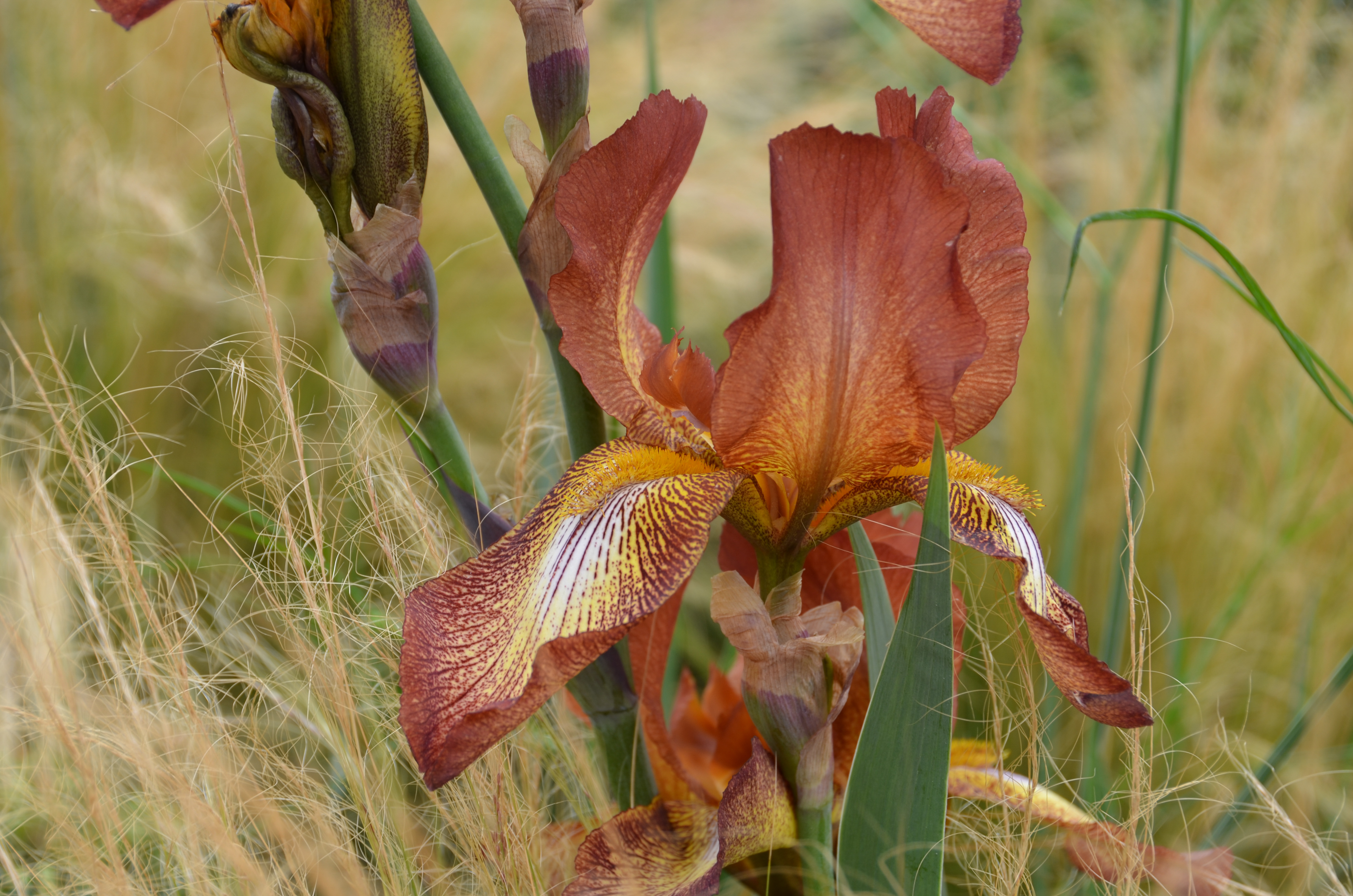
I wasn’t sure about this Iris – until I saw it planted with this straw-coloured grass

I really did love my visit to Chelsea – I felt like I was in Plant Heaven all day, which is how I feel in my own garden, only with extra Pimms and a few more celebrities!  Will I go back?  Yes I think I would – although ideally on a day or time when you could avoid the worst of the crowds.  It’s definitely made me keen to see more of the RHS Shows too – next on the list, Chatsworth… 😉

This slideshow requires JavaScript.


Back garden planning…

It’s time to concentrate on the back garden for a while.

IMG_1528.jpg

View of the back garden.  Obviously, it’s not normally covered in snow…

I’ve been turning my attention to planning the front borders up until now because there’s just so much bare soil out there.   I now have this space three-quarters planned – there’s just one corner I’m not exactly sure what I’ll do with yet.  I’ve moved most of the shrubs I want to move and even binned a couple which have outlived their usefulness.  Now it’s a case of waiting for everything to grow; most of the herbaceous perennials or annuals I want to plant in the front I will grow from seed.  This is probably ambitious, to say the least, but I simply couldn’t afford to go into a garden centre and buy everything I’ll need to fill the front garden, and I kind of want the satisfaction of knowing I’ve created much of it myself, from seed.   Don’t get me wrong – I have bought and will continue to pick up bits and pieces along the way, especially if I spy bargains at a plant sale or special offer.  But I’m trying my best to grow most of it, and that process is already underway.

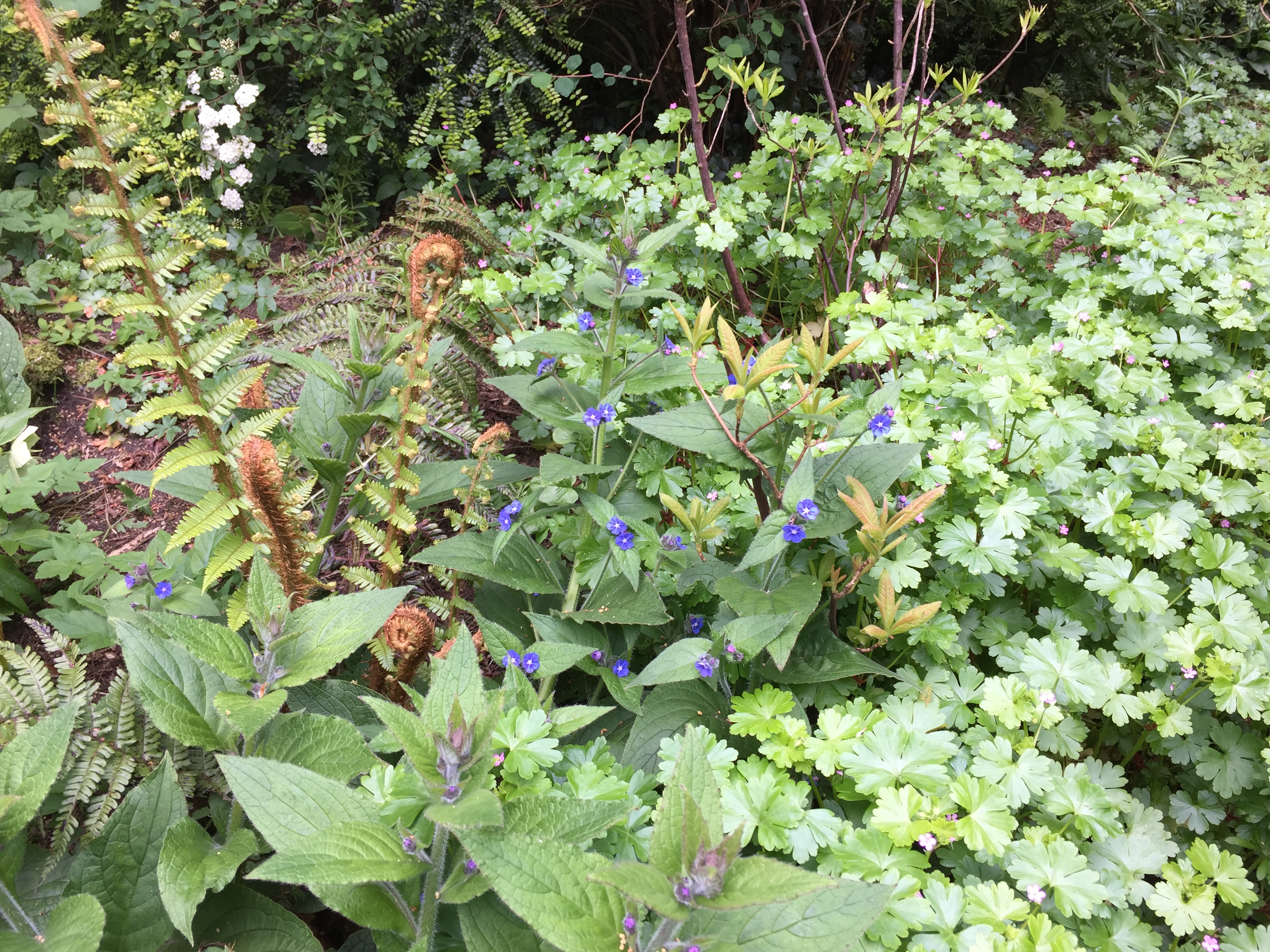
So, with spring fast approaching, it’s time to look again at the rear garden.  There’s plenty of bare soil here too and I want to take a different approach with this area.    I have had the idea of woodland planting for the back garden for a while, as it tends to be more shady and there are a lot of mature, established shrubs and conifers.  This was confirmed on a visit to Belfast Botanic Garden in late spring last year when much of the planting which caught my eye was lovely lush, untamed woodland-style planting and I was inspired by many of the combinations – pulmonaria and geraniums, ferns and tiarella, hostas and hellebores, planted alongside rhodedendrons, pieris and euphorbia.  It struck me that I have the basis of this kind of planting already and want to keep the theme going.
IMG_1358.jpg

Ferns and pulmonaria at Belfast’s Botanic Garden

There are other criteria for the back garden: I would also like it to more or less take care of itself, I’m happy with a slightly ‘wild’ look and the plants will also need to be fairly tough as the chickens are free-ranging out there regularly now and love to scratch about in these borders and take dust baths in the driest spots.

Colour-wise, everything that’s out there already is purple, pink or white and that’s a theme I quite like and will continue – with the exception of wild primroses.  I really want these, as they are perfect woodland plants, will spread and provide early spring colour.  I hope their soft yellow shade will be a nice contrast for other planting in this area.

The plants which already shine in the back garden are geraniums, hostas, aquilegia and some alchemilla mollis which I have to keep an eye on or it would take over.  There are quite a few Fritilliaria melleagris (snakes head fritillaries) which will soon be emerging I hope and I’m also watching for the hellebores to make an appearance.    Last year I also added some white Hesperis matronalis (sweet rocket) which I really like and some Japanese anemones – I hope these will settle in and spread around the back and in between the larger shrubs.

So, the planting is already fairly ‘woodland’ or ‘wildflower’ in theme and I want to continue that, adding some sturdy specimens which will provide more colour for more of the year, and preferably ground cover too.

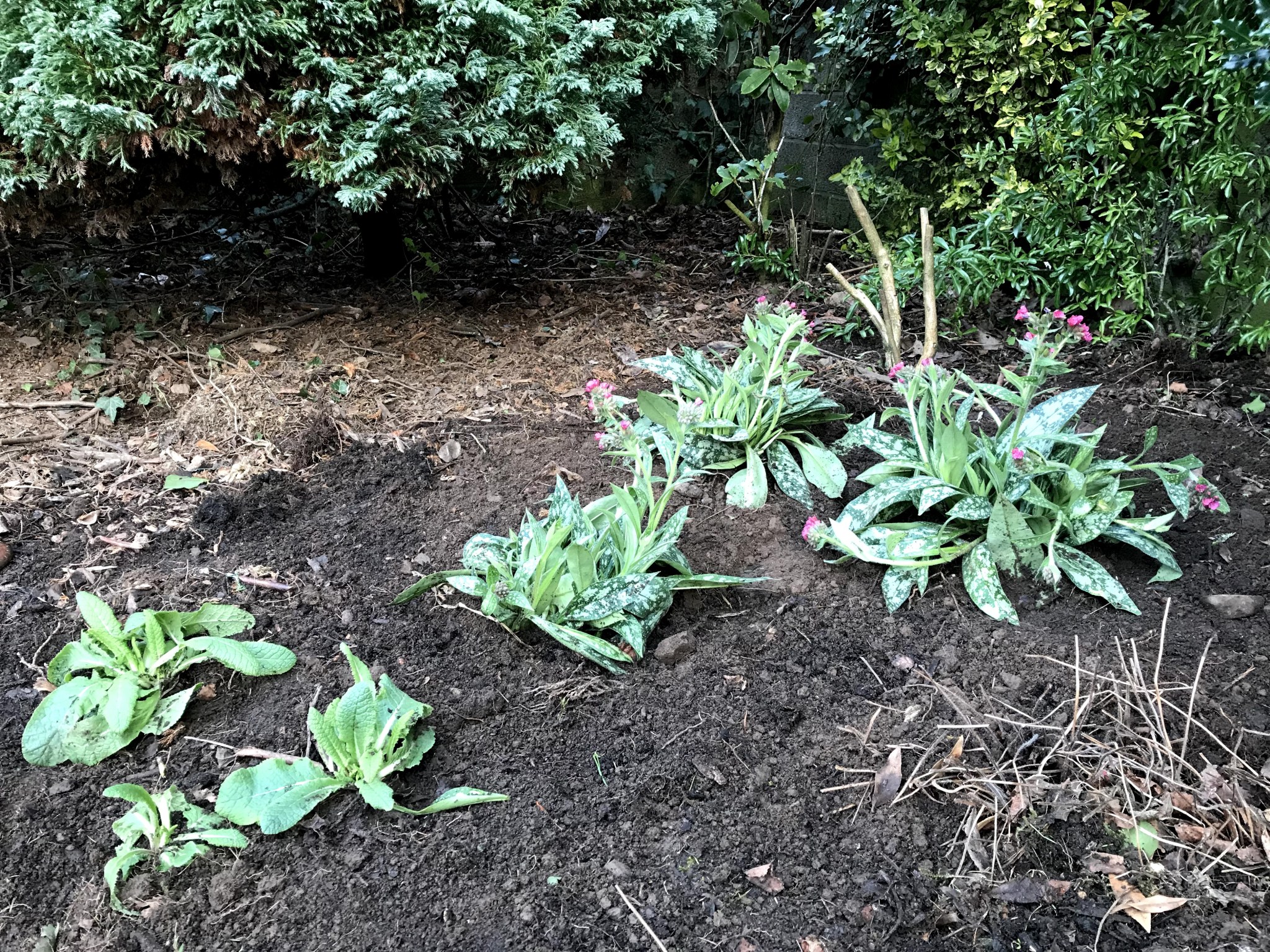
I’ve made a start – my local garden centre had an offer on pulmonaria this weekend, so I’ve picked up three ‘Raspberry Splash’.  These have lovely silvery-variegated leaves and are a pink-red colour which I like as an alternative to the more common purple variety.  They’re quite large so I’m pleased that they’ve already filled quite a good-sized gap.  I also spied primula vulgaris, which I’ve been hankering after and got half a dozen to plant at the front of the border.  They’re not in flower yet but I really hope they’ll establish and provide a very welcome spot of early colour.

Here’s how it’s looking now they’re in place:

IMG_1506.jpg

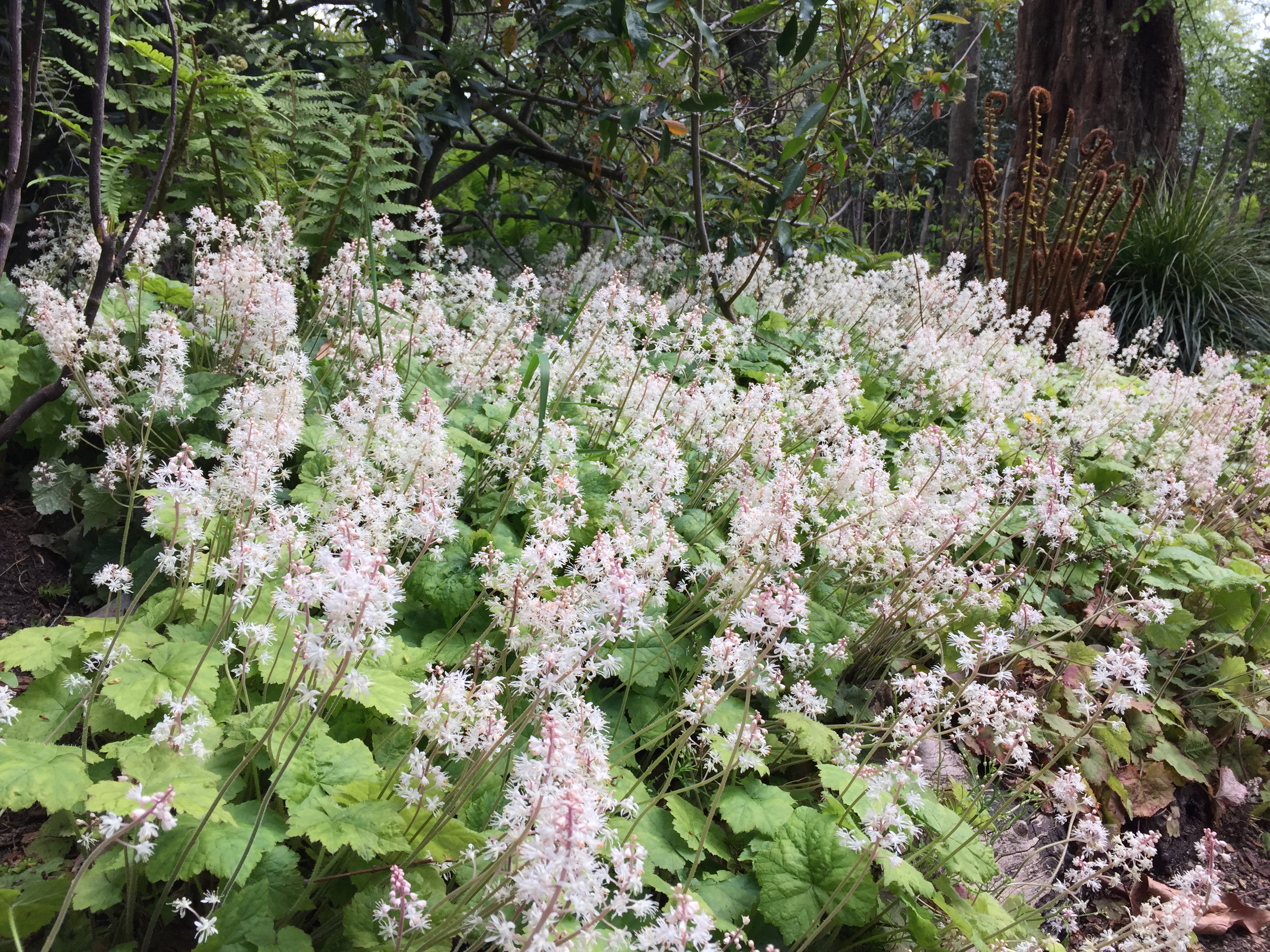
Obviously, still quite a lot of soil on show, but as we know, gardening is about playing the long game, and I’m hopeful these young plants will establish and spread over time.  I expect I may still have to use some annuals or bedding plants to fill in the gaps for a year or two but that’s fine with me.  In fact, I have a plenty of forget me nots grown from seed which will need a home and I think they will work nicely here too.  The other plant I want for the back garden is tiarella – I think the frothy white spires will provide a nice contrast to some of the other plants and, again, should provide some good ground cover in time.

IMG_1355.jpg

Tiarella at Belfast’s Botanic Garden – I love the fresh green leaves of this variety

So watch this space – I certainly am!  I’m checking almost every day for the little green shoots of bulbs, hostas and other perennials emerging in this part of the garden and I’m looking forward to creating a little bit of Belfast Botanic Garden which I can see from my kitchen window.


Sow many seeds…so many seedlings

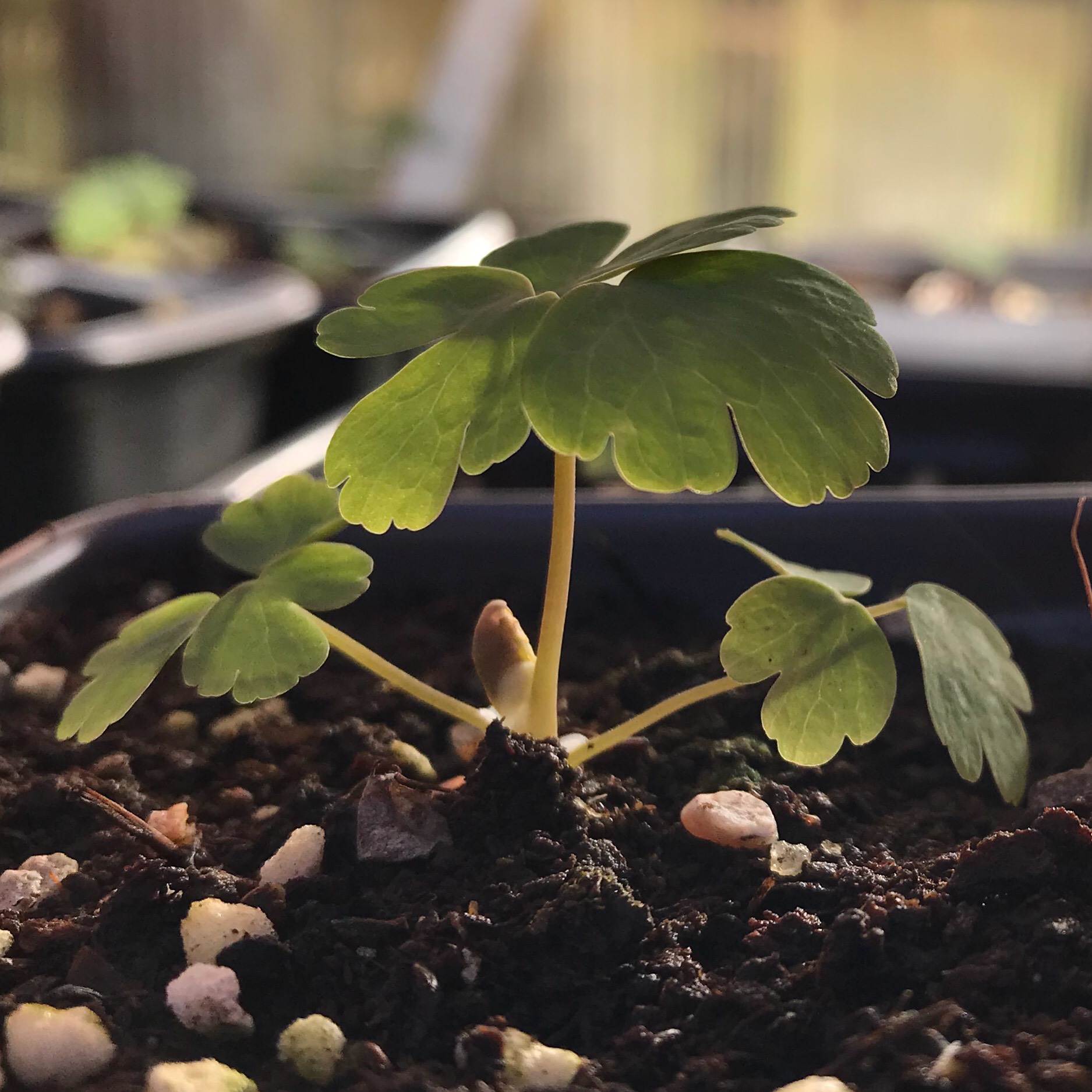
aquilegia seedling

I’ve been on a sowing frenzy.

Although I work part time and theoretically have two days each week to spend in the garden/greenhouse doing lots of lovely gardening…it never usually works out that way.  Family/work/home responsibilities often creep into this time and so I have to grab gardening opportunities with both hands and make the most of it.  This sometimes means that I will sow like mad or get planting even if conditions aren’t perfect or if it’s a bit early or late – because if I wait until just the right time, I may miss it.

Yesterday gave me just the right opportunity for a bit of seed-sowing: some spare time, a sunny day and the need to stay close to home to nurse a poorly hen (latest on her on my Instagram feed @mycorneroftheearth).  Also we’re into another month – February! – and this brings with it a whole new set of seed packets to crack open and sow to get things off to a nice and early start.  I realise this can be a risky move, as seedlings can end up leggy or be exposed to frosty weather if sown very early.  However, where we live (North-east Scotland) it can be fairly cold and even frosty right into April/May and summers are frustratingly short.  So this year I’ve decided to give many of my plants a good head start so that they can flower for as much as possible of that short window of time when summer properly begins and autumn hits us again.

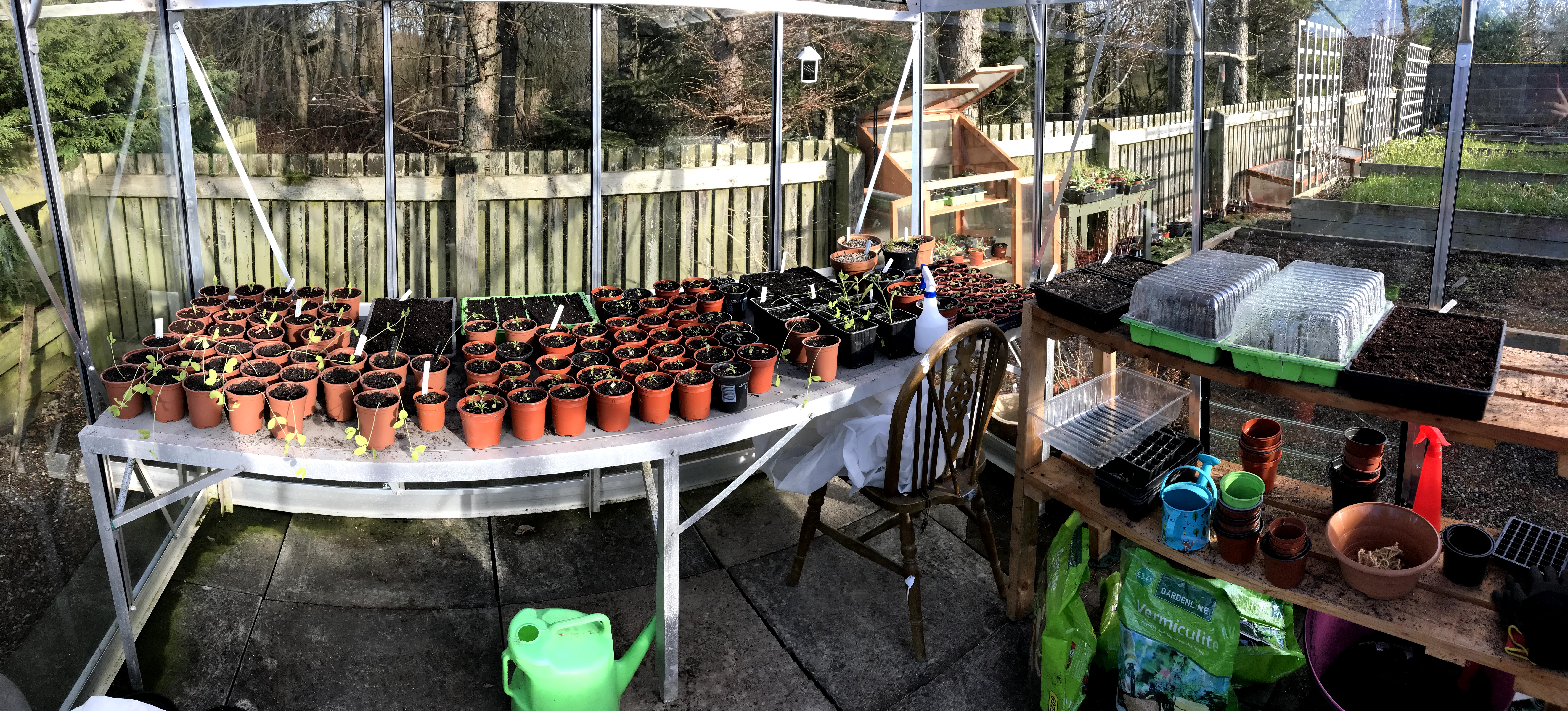
So my greenhouse is already looking pretty busy…

IMG_1255.jpg

This panoramic shot makes it look like the bench is bending under the weight – but we’re not quite at that stage…yet!  We have: sweet peas, calendula, greater knapweed, leeks, wallflowers, more sweet peas, nasturtiums, various cuttings, astrantia (taking a while to germinate!) two varieties of cosmos and shasta daisies.

And outside I’m hardening off the seedlings which were sown in the autumn and have been overwintering in the greenhouse…

This selection includes aquilegia, gypsophila, some geum cuttings, plus hollyhocks and stipa tenuissima.  What you can’t see on the ground under the table and along the fence is all the extra teasels, lavender and various cuttings of shrubs and fruit trees which I grew last autumn too!

What am I going to do with all these plants?  Well, some of them will definitely be planted out in the front garden.  I’m deliberately sowing a lot of herbaceous perennials and hardy annuals according to my planting plans for the front.  However, I know I’ll end up with too many.  Some, I will probably gift to family and friends but if I really end up with a lot of extra plants, I’m seriously considering selling them – I’m just not quite sure how to do that yet.  More on that later, perhaps.
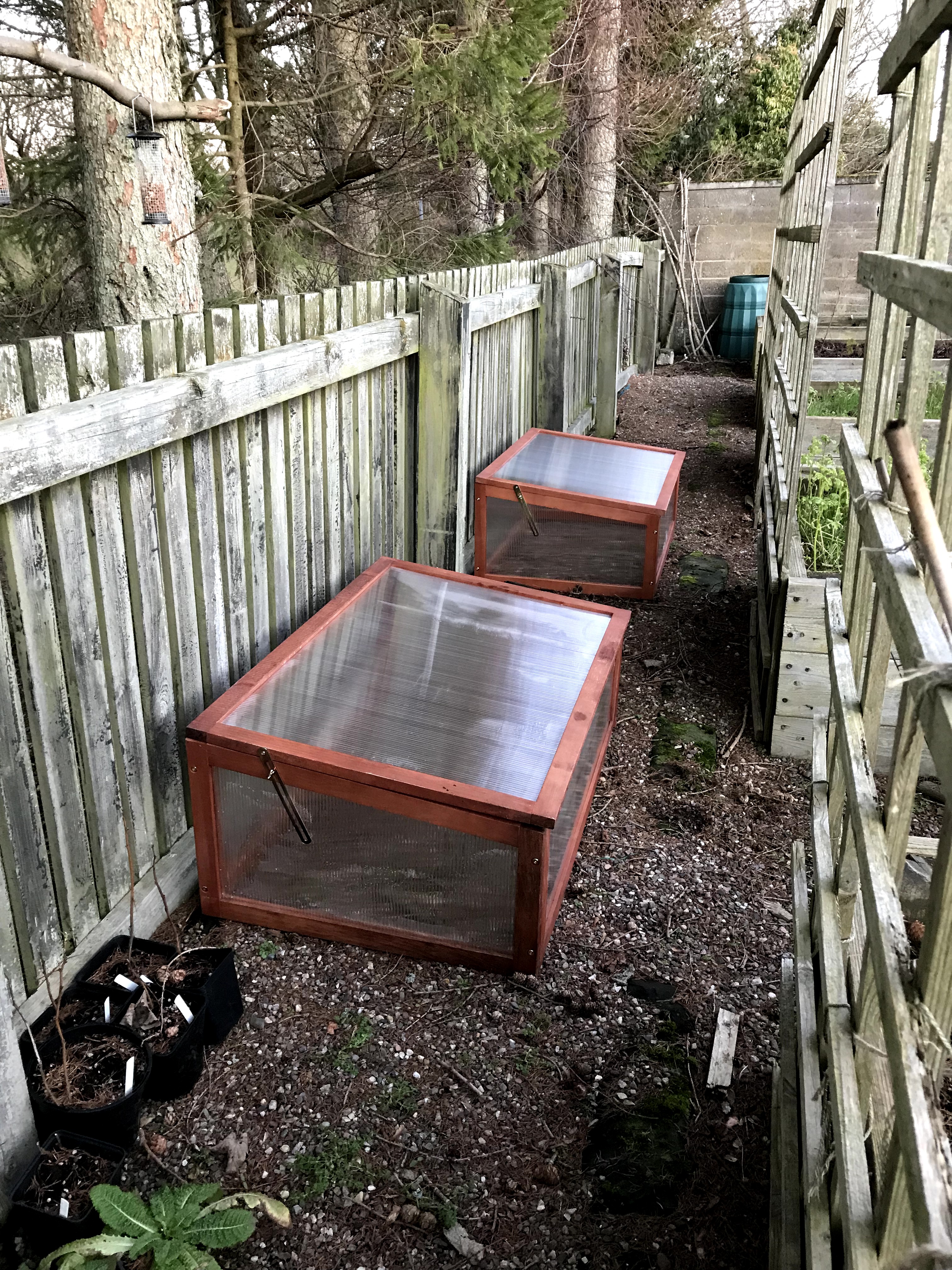
Bearing in mind all this new growing activity, I’m going to need more kit.  I will definitely need more pots.  Thankfully I spied a bargain recently which will help with hardening off all these new seedlings – my local B&Q was selling off hardwood cold frames marked down from £48 to £20, so I snapped up two!  My husband very kindly put them together for me yesterday.

IMG_1248.jpg

So that’s what’s going on in the Secret Garden at the moment.  Lots of sowing and growing already – and I haven’t even started on veg and/or cut flowers for the raised beds yet!  Spring isn’t quite here yet but I’m getting ready for her…

A total redesign

These are scary words!  A TOTAL REDESIGN of the front garden.  This means digging, moving, sowing, replanting, more digging, weeding, propagating… I can’t wait.

We’ve lived here for three years now and I have tweaked the front garden only slightly each year.  It’s been good to wait and live with the garden for a while.  To see what thrives and what doesn’t; what I look forward to seeing each year and what bores me.  I’ve added bulbs for spring colour and a number of roses.  I’ve hauled out a couple of shrubs which did nothing for me or the garden, and experimented with adding a few annuals and perennials.   It’s a very mature ‘shrubby’ garden – there are several rhodedendrons and azaleas, a skimmia and a couple of handsome continus, for example.  And while many of these plants do very well and have their moments throughout the season I want to introduce interest right through from spring to autumn.

Last year saw the biggest change and I chose a section beside the driveway to add more planting than ever – mostly herbaceous perennials and a couple of new roses and shrubs.  And even though I didn’t really plan it properly and added things ad-hoc, perhaps slightly haphazardly and sometimes just to fill gaps…it looked great!  It gave me a vision for how the whole of the garden could look and made me realise that cottage garden style planting is the way forward.  For this particular section of the border I was attracted to echinaceas, lavender, roses, hollyhocks, geums, more roses, salvias and gypsophila.  Soft colour, blousy petals, frothy flowers were held together by showy dahlias and some good old-fashioned roses.  I enjoyed the colour, the scent, the fact that there was always something in flower to enjoy and that the seedheads and stems are there to keep things interesting even now, in the middle of winter.

So – a cottage garden it is.  And the planning is underway…

Now, I am not a designer – I’m not even a particularly good artist so please forgive the slightly scrappy drawings, but I’m loving sketching out plans for what should go where and creating ‘mood boards’ to give me a clear idea of the kinds of plants I want to grow and plant.  I’ve even gone into Full Organisation Mode, using spreadsheets to keep track of what seeds I have, when to sow them and to keep a record of what I’ve grown as I go along this year.

IMG_0567.jpg

I’ll be honest – I’m not normally this organised, and you don’t have to do this to be a ‘good gardener’.  Up until now I’ve had a pretty relaxed ‘it’ll grow when it grows’ attitude to what I’ve sown and planted!  But this is such a big project for me – my first proper garden project in fact – that I want to try and document it as much as I can.  I feel like I’ve been my own apprentice up until now, messing about with growing a few veg, sowing some flowers and I’ve been surprised at my own success.  Now I feel like it’s time to graduate up to Assistant Gardener/Trainee Designer!

Work will begin in earnest in a few short weeks but as well as all the indoor planning and a little bit of seed-sowing (sweet peas, delphiniums, astrantia and echinacea are in the propagators as I write) I’ve managed to do a bit of preparation in the garden itself, taking away some of the lawn to widen the borders at each corner, hard pruning of two shrubs (which are either Philadelphus or Deutzia but haven’t flowered for a couple of years so I can’t ID them! Hence the hard pruning…) and I’ve also moved the Monkey Puzzle, as blogged here.  As soon as the weather warms up enough for me to dig a bit more I’ll move some more shrubs into better locations – I want to keep them for structure and because I like most of them, but they need spaced out to make way for interplanting of all those lovely herbaceous perennials and annuals.

A few ‘Before’ photos…

IMG_3945.jpgIMG_3946.jpgIMG_3944.jpg

See – lots of bare soil and potential.  Wish me luck, there’s lots of ground to cover!

And finally some of the stars last year’s trial ‘herbaceous border’…

This slideshow requires JavaScript.


Monkeying around…

I’m really quite pleased with this weekend’s main gardening project – moving my monkey puzzle tree.

Actually I’m really quite pleased to have been in the garden at all – it’s been ages.  Pre-Christmas, Christmas and post-Christmas did not leave much time to get outside and tackle winter gardening jobs, and when there was a bit of spare time the ground was so hard and frosted there wasn’t much point!

So now that we’re back to school/work and in the regular routine, I spent a few hours on my non-working days in the greenhouse and the front garden.  It was so good to get my hands dirty again.  As well as sowing a few seeds in the greenhouse and my new propagator – see below, isn’t she pretty…?

IMG_0725.jpg

This was an early birthday present to myself – a bargain in the Black Friday sales.  It’s currently warming up some astrantia and echinacea seeds – fingers crossed it will do the trick.

Anyway, back to the monkey puzzle.  Moving it is Step 1 of my grand plan for the front garden, which I am attempting to totally redesign.  Previously shrubby and a bit, well, boring, I have already begun removing the most dull/old/overgrown shrubs and last year managed to introduce a few perennials.  This year I will be moving a few plants around, and planting as many perennials as I can get my hands on.   More on the Grand Plan in a later post – back to Step 1.

I wanted to move the monkey puzzle as I had put it to the front corner of the garden after we moved in here.  We acquired it when my youngest daughter was just a few days old so it’s almost 8 now.  It’s done fine and is gradually getting bigger (they grow very slowly for the first 5-10 years) but the branches are growing towards one direction, a bit like arms which are stretching towards you for a hug…but this would be a very bad idea as it’s incredibly prickly.  I think this is because the trees behind are shading it and it’s been growing in the direction it gets most sunlight (west).  So I’m hoping that moving it into the middle will enable it to get a more even tan, so to speak, and might help it to rebalance its direction of growth.

I was a bit nervous about moving a tree which is about seven years old and had been in its current position for about three years, but when I came across Rachel the Gardeners post on this here I was reassured that, with a bit of care, it should survive the transplanting process.  So I dug carefully around it, lifted it with as many roots intact as possible and replaced it into the nice deep hole I dug in the centre* of the front garden.

*Please note my entirely UNscientific method of measuring the centre: pace lengthways across the garden and pace the breadth.  Then take half the number of paces each way and you’re in the middle.  Simples.  I don’t really do measuring.

Et voila – one replanted monkey puzzle tree.

IMG_0754.jpg

I really like it there – it seems to change the whole nature of the front garden.  I guess it’s the addition of a focal point.  So I’m hoping that I can nurture it into its new home and that it will continue to grow and thrive, and that in years to come I can give people directions to my home by telling them ‘we’re the first house as you enter the village – you can’t miss us as there’s a massive monkey puzzle tree slap bang in the middle of the front garden.’
Now for the botanical bit…

Monkey puzzle (Araucaria araucana) originates in Chile, South America and came to Britain in the 1800s.  Its common name derives from this time, when it was very rare to see one.  Apparently Sir William Molesworth, who owned a young specimen at Pencarrow garden in Cornwall was showing it to a friend who remarked “It would puzzle a monkey to climb that”.  The name has stuck – as has the novelty of seeing one in someone’s garden and my own children frequently enjoying shouting ‘MONKEY PUZZLE’ at the top of their voices when we pass one.
Trees can grow more than 12 metres tall, although it will take at least 20 years for it to reach its full height.  They usually bear either male or female cones, although it won’t produce seeds until it is at least 30-40 years old.  It’s thought they can live up to 1000 years.