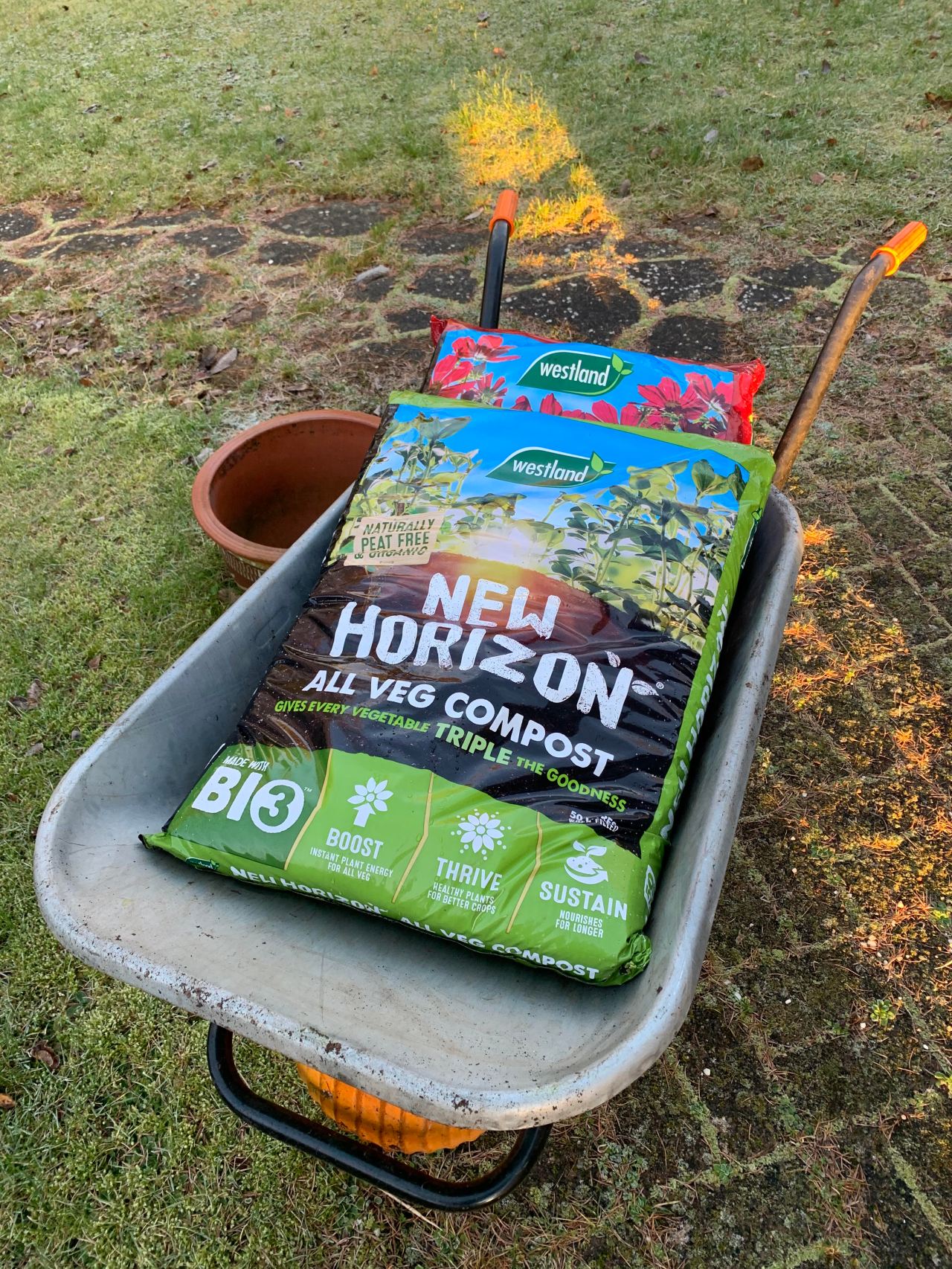
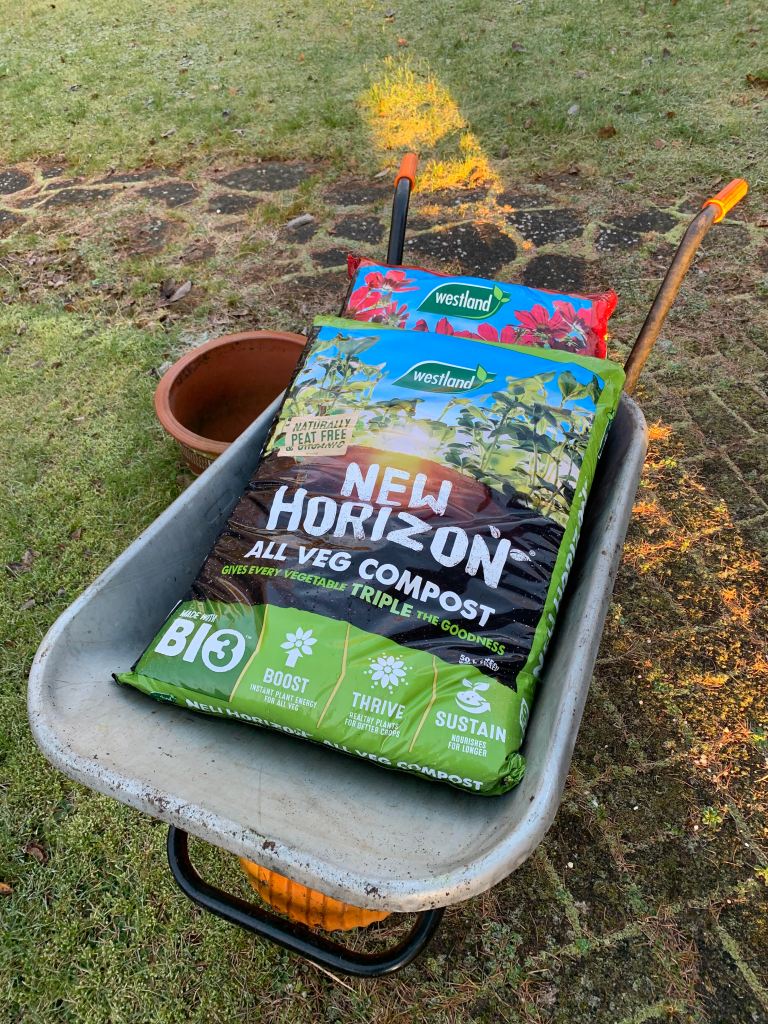
I was recently sent a couple of sample bags of peat-free compost from Westland* – in fact, they turned up shortly before Christmas – cue much head-scratching as I tried to work out what on earth kind of huge, heavy present had I forgotten about ordering…
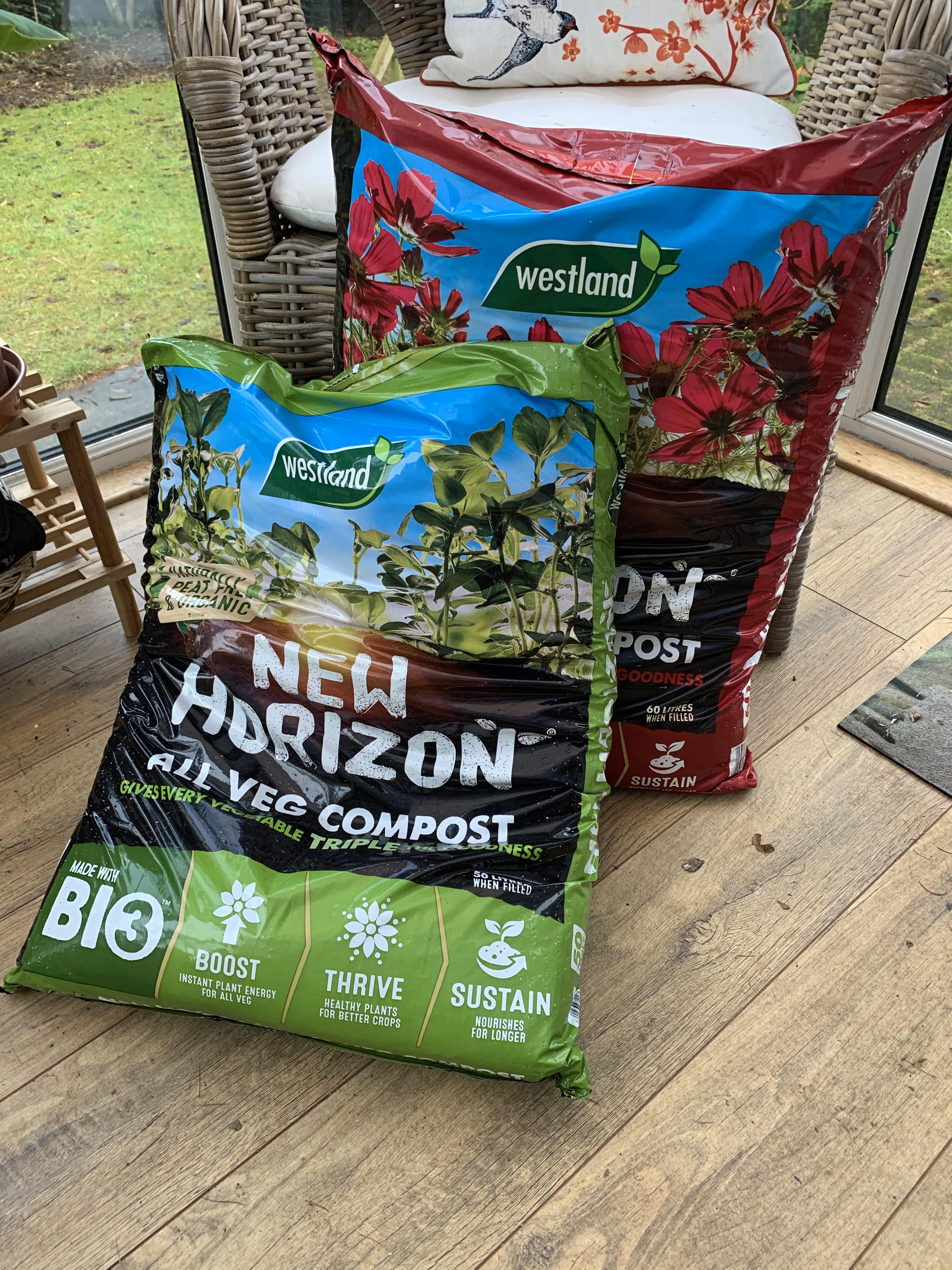
The two kinds are New Horizon All Plant compost and New Horizon All Veg compost – both claim to be 100% sustainable, natural & peat-free compost. Now, I will confess that up until now I haven’t been a huge fan of peat-free compost, although this is very likely because I’ve bought poor quality stuff. The last bag I had was dry, woody and hard to handle – I didn’t have a very good experience of growing dahlias in it last year so it really put me off. However, I’m fully aware of the issues around peat, so I’m very keen to find a good quality (and hopefully good value) brand which will be as good for my plants as it is for the environment.
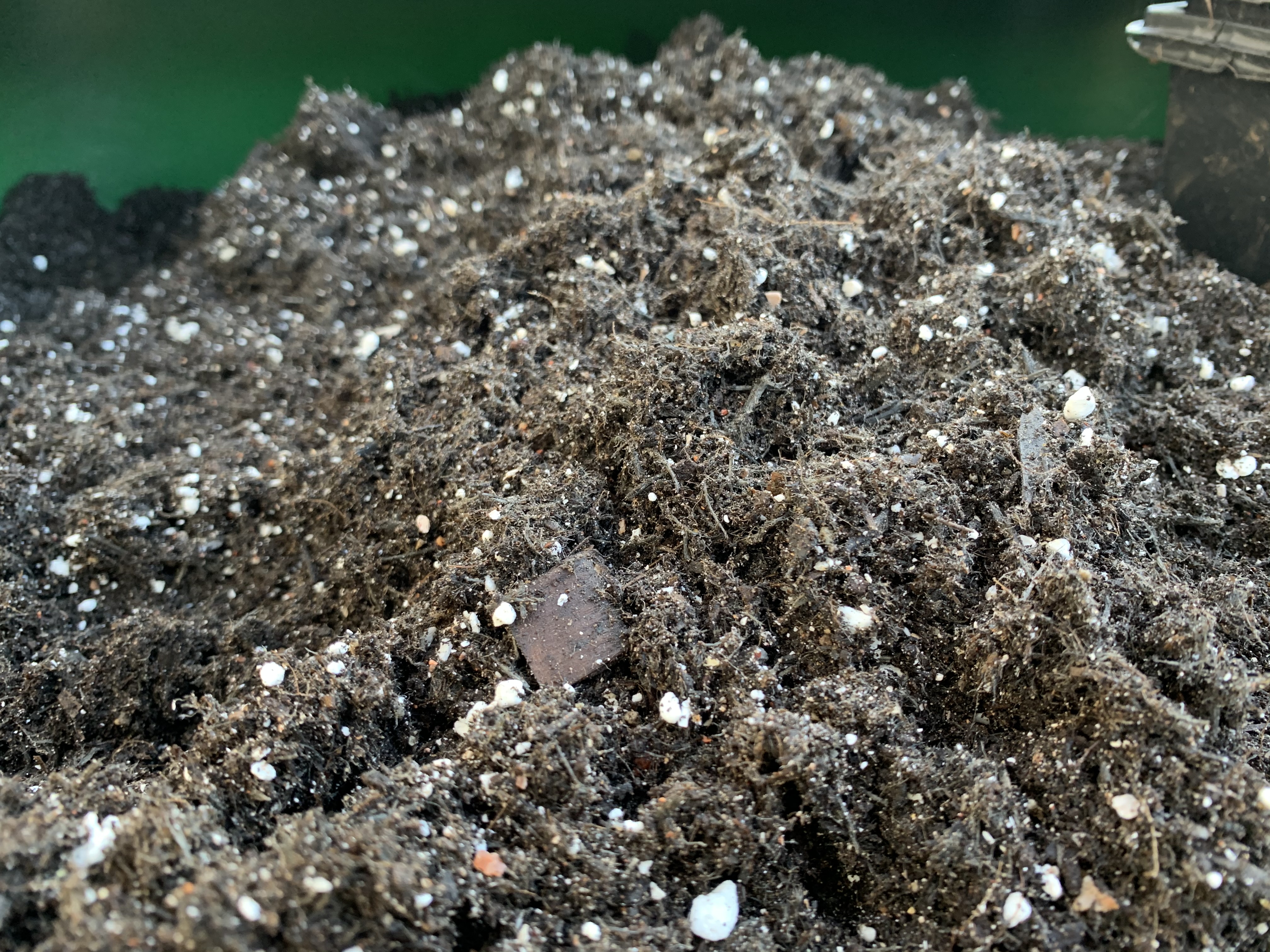
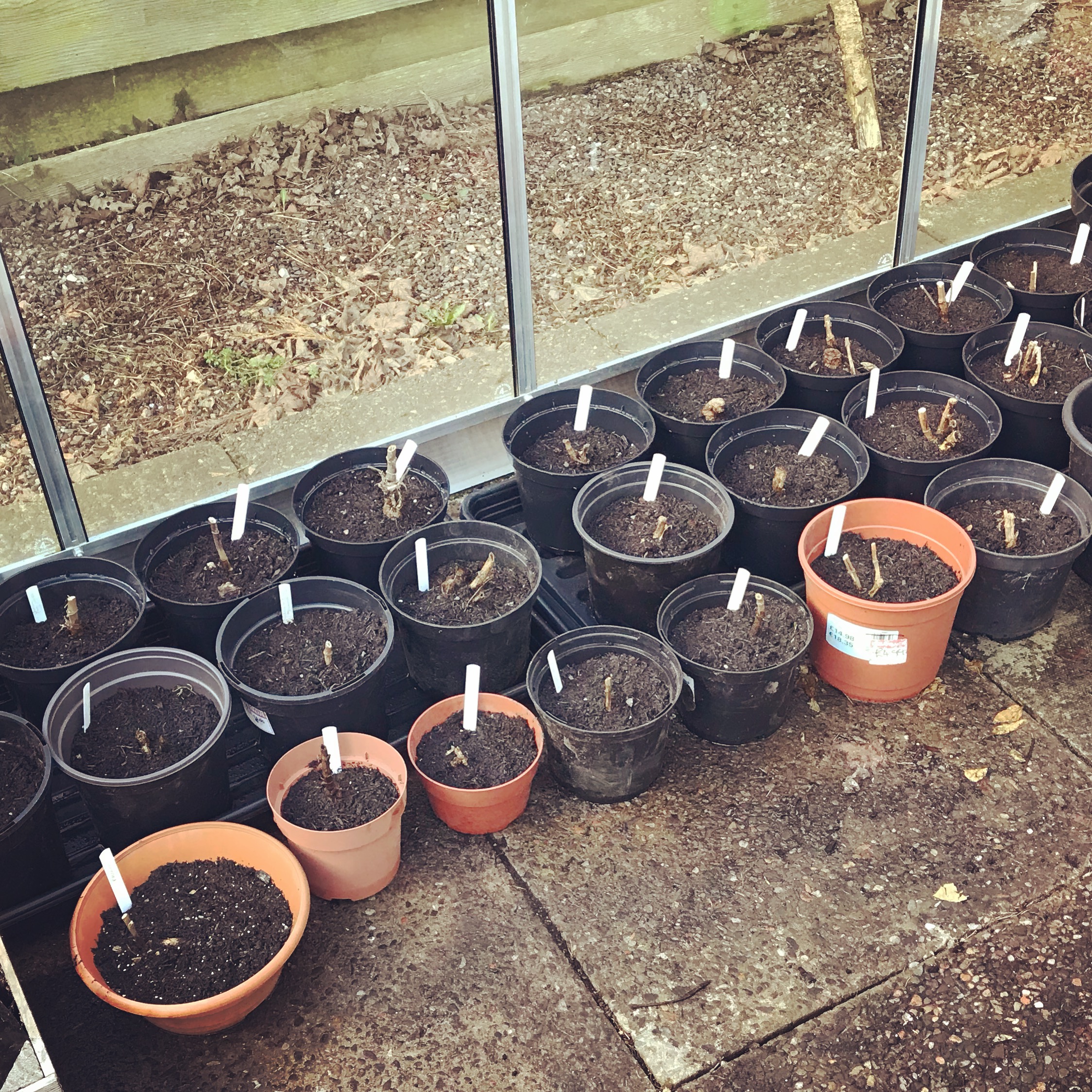
So I recently gave the first New Horizon bag a try – the All Plant version – for some pots of bulbs and for sowing some early seeds**. In contrast to the previous variety of peat-free compost I tried, this stuff is lovely and soft, it’s dark in colour and nice to work with – I would have a hard time distinguishing it from ordinary compost containing peat. So, first impressions are good.
I will report back a little later in the season once I’ve raised some seeds and used it for containers but I’m expecting good things and I’m looking forward to trying the veggie version too. I recently had a conversation on The Scottish Garden Podcast with Ken Cox, who was quite forthright with his views on peat and how it may not be the black-and-white issue it’s portrayed in the media. I found his views really interesting and I do think it’s sensible for gardeners to do their bit in avoiding the use of peat where there’s a suitable substitute. So I’m already hoping these are products I’ll be able to use again.
For more discussion about peat and peat-free compost, you could listen to the Roots and All budcast on Going Peat Free with John Walker (scroll down about 2/3 of the way down the page) or there’s some useful advice on peat free growing for houseplants in this episode of On the Ledge. And Garden Organic has good info on peat free on this page, along with great tips on the best mixes for various growing media.
*This isn’t a sponsored post or anything – I was simply offered the chance to try some of this compost, so I took it! I hope it’s interesting for others to read about my experiences of this new product.
**So what have I sown so far in 2020? Not much, as it’s still only January! But I’ve started a couple of varieties of sweet peas and I also wanted to get a good early start on some snapdragons, which need a long growing season I believe. I’ve also fired up the propagator and popped in some Verbena bonariensis (I want loads more of this in my front garden!) and some Stipa tenuissima, which is great for pots and borders too.


























 I have quite dry skin and these have been a hand-saver all winter – I’m still using them now while the weather is still a bit on the nippy side. They’re lined with soft, cosy material and genuinely keep my fingers warm. This makes them a bit thicker so they’re not ideal for fiddly jobs but for general digging, moving, lifting bags of compost or whatever they’re great and fairly waterproof too so your hands don’t freeze off when the hose drips all over the place.
 I love these mainly because they’re a thing of beauty. I am drawn to certain materials – wood, corduroy and I’m a total sucker for tan leather. I love these so much I bought matching loppers and shears. I wish I could say I have a set of well-loved wooden-handled tools handed down by a relative or the head gardener of a huge estate, but these were simply bargains in TK Maxx! They may not have the heritage but they look wonderful and I feel like I will care for them more because of it. Hand tools tend to end up a bit rusty and rickety for me – I will confess I don’t usually clean and sharpen them regularly the way you’re supposed to. These look so simple and refined it’ll be easy to give them a wipe down or sharpen them up – I’m sure of it!
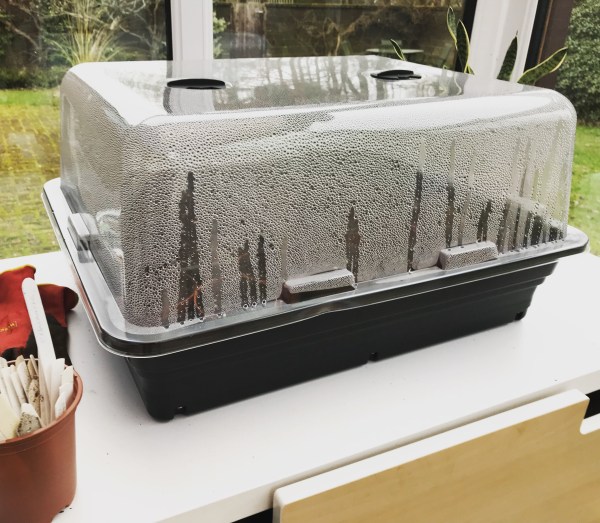 This model is a 52 cm Stewart Essentials electric propagator which I picked up for just over £20 during the last Black Friday sale. It’s not thermostatically controlled but as I use the rear sun room as a sort of indoor greenhouse it keeps my seeds at a good temperature for germination in a room where the temperature can fluctuate quite a lot, especially at night when it’s pretty cold. I am currently trying to germinate my pelargonium seeds in there and they’re taking AGES. I’ve also have very limited success with astrantia – only two seedlings so far. But I think this is down to my choice of tricky-to-grow plants rather than the propagator! I’m not very patient and need the space in that propagator for other seeds so I think I will very soon cut my losses and move these out in favour of something that will grow much easier.
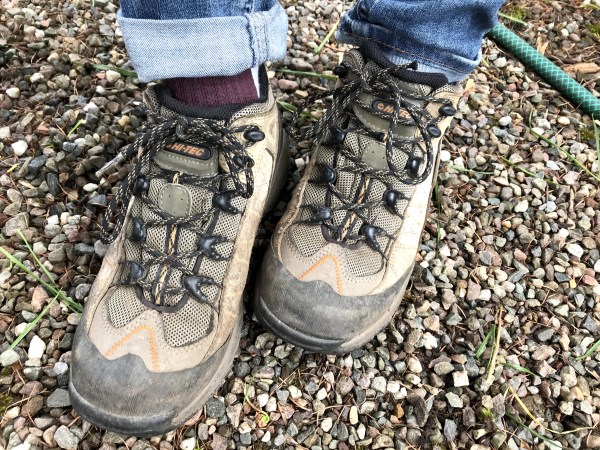 These are my beloved and very scruffy gardening boots. I’ve had them for years, they’re still reasonably comfy but not very waterproof. However when I’m wearing them I feel in ‘gardening mode’ – I feel like I can dig and sow and weed and do garden-y things because I’m in my Gardening Boots.
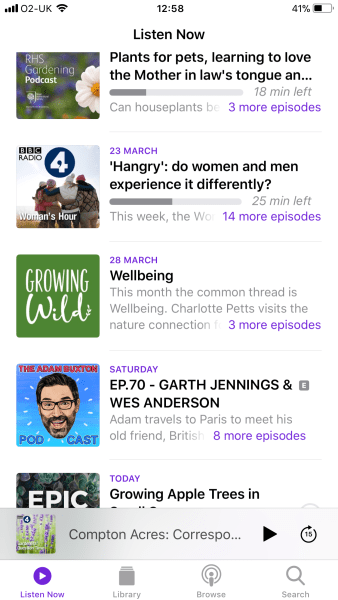 I also really love to listen to podcasts while I’m in the garden or greenhouse, and my podcast library is rapidly expanding – everything from Gardeners’ Question Time to Womens Hour to Adam Buxton to On The Ledge. I’ve added quite a few more gardening podcasts recently, including this new one from Andrew O’Brien and Laeticia Maklouf. I find them so useful and interesting – I like to absorb more garden knowledge through my ears and into my brain as I’m getting my hands dirty in the soil!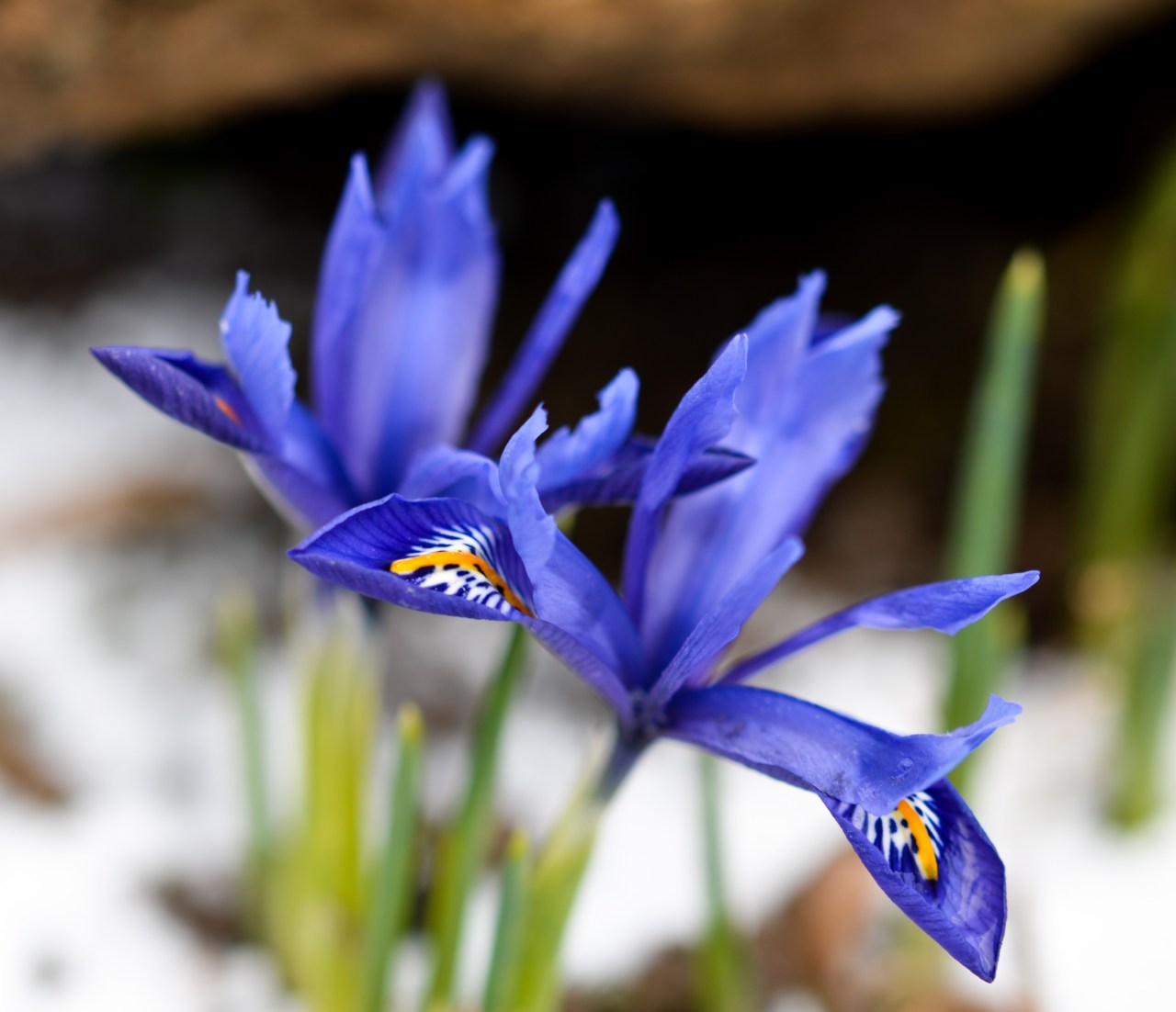






 Julianne Robertson