Exit January… enter February

Did you feel it? The subtle season shift? 

Yesterday, on the 1st of February, the air felt different. The sky was a bit lighter, the greens were a bit greener. It was as if – once January was finally out the door – the world could breathe a sigh and get on with the business of spring. 

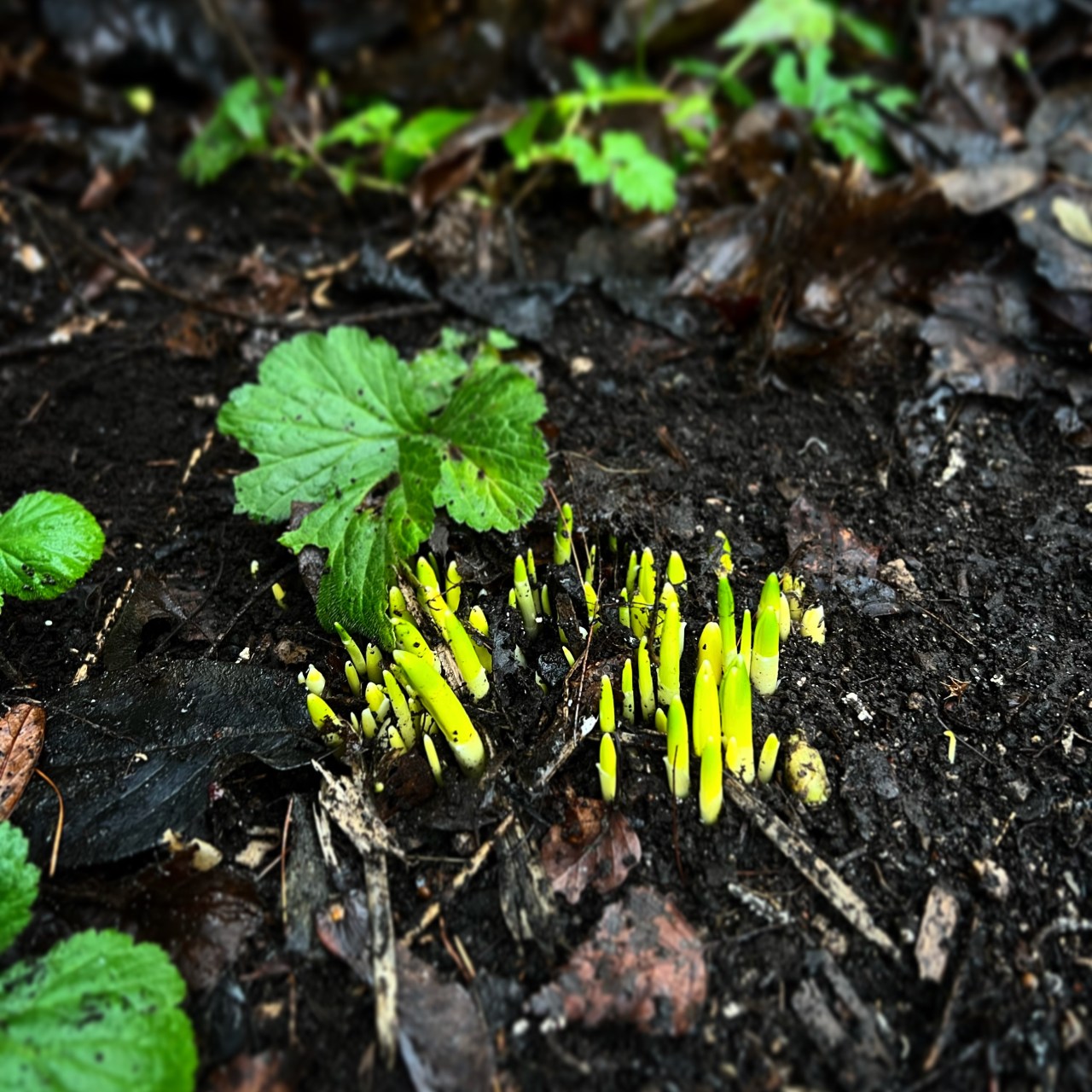
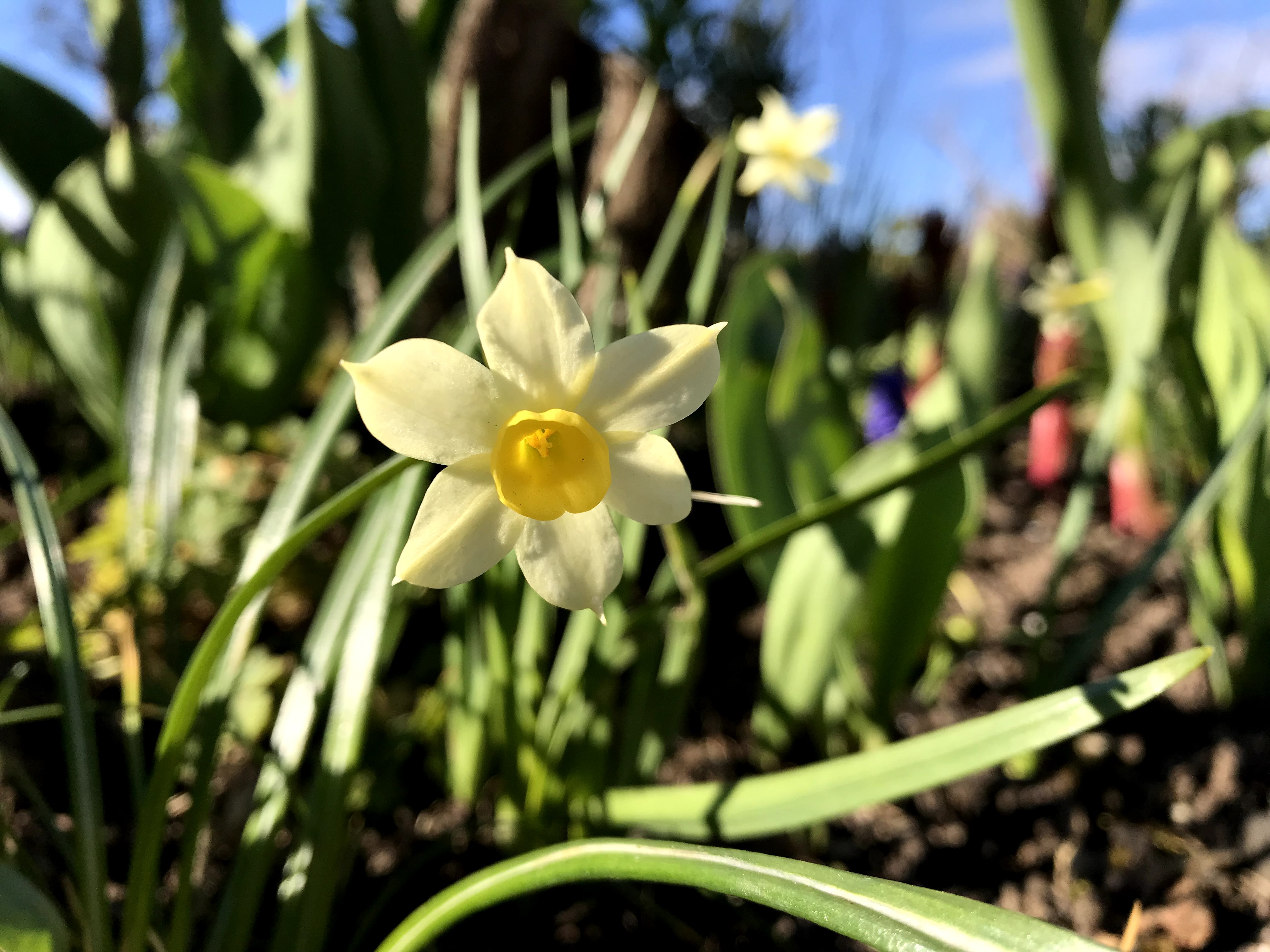
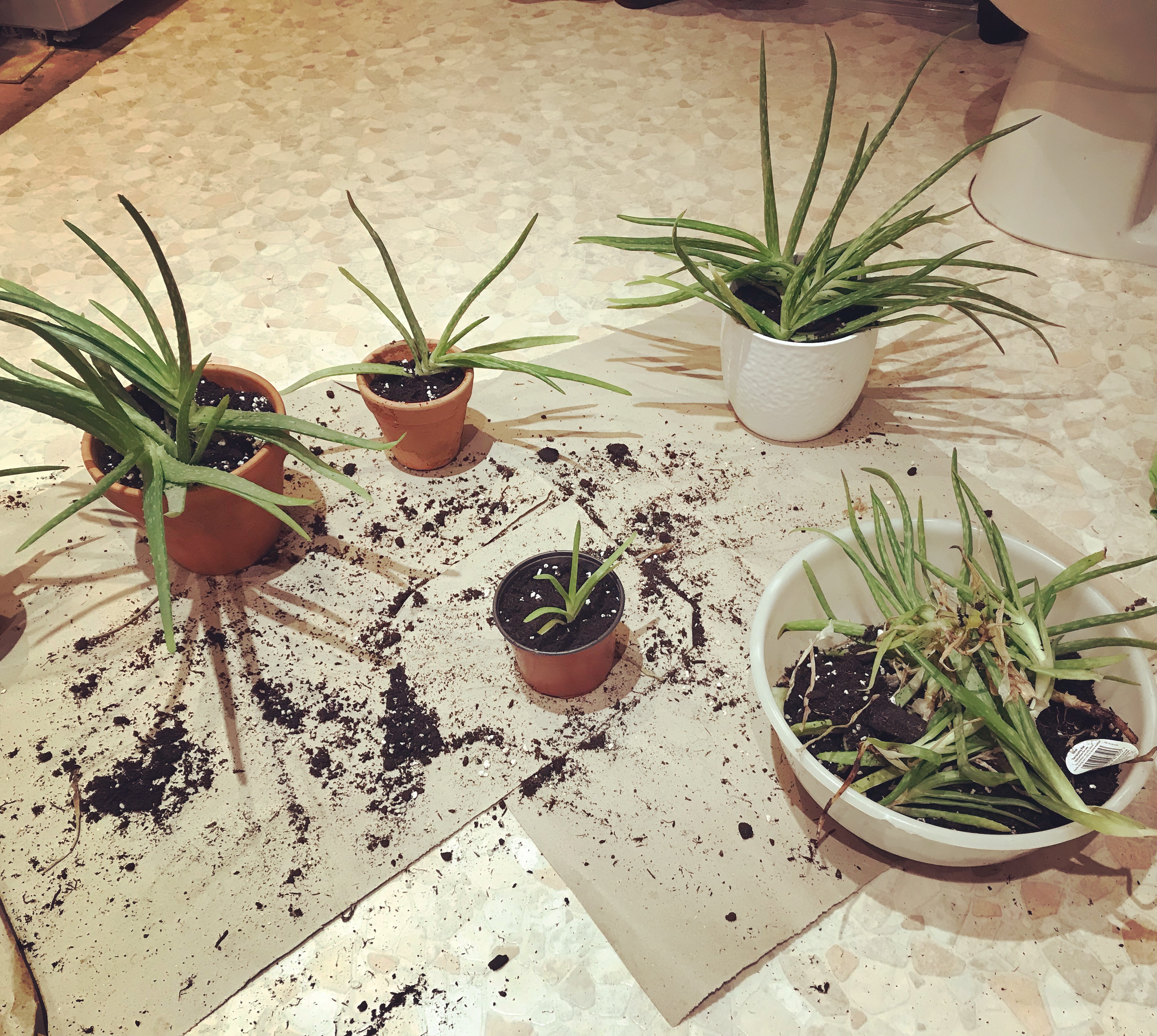
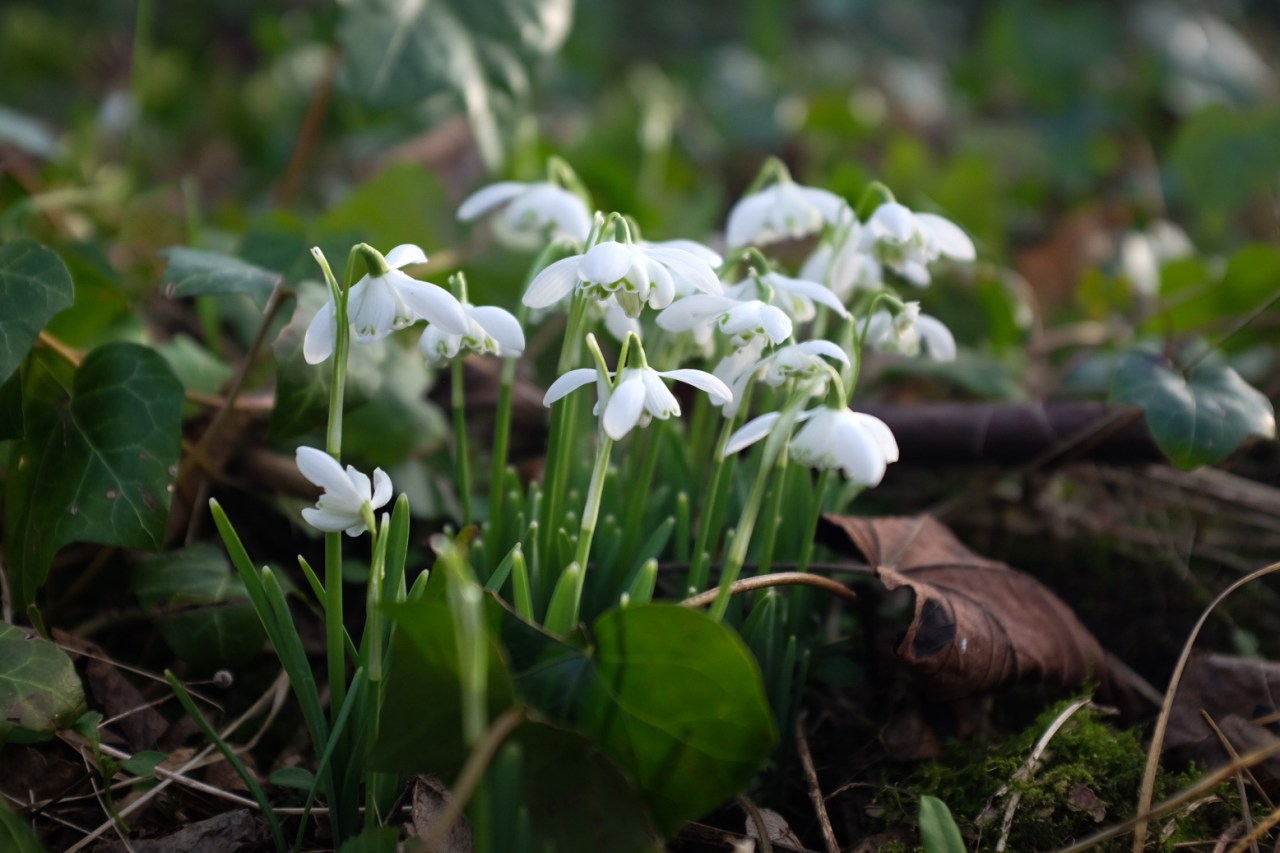
There are only very early signs: a few little snowdrops nodding on their stalks, fat shoots of daffodils poking out of the soil and leaf litter, an extra few minutes of daylight each afternoon. I even heard the sound of a woodpecker hammering on a tree in the woods – which always gives me a thrill because it’s one of the earliest spring sounds. 

These are just little things, small signs, and we are still very much in the depths of winter here in Scotland – but it’s enough to inspire hope and a sense of anticipation about the new season that’s around the corner.

Spring preparations 

While we wait out the last blasts of the winter winds and (no doubt) icy, cold days still to come I’m getting busy with preparing indoors for the growing season. That means sorting my seeds: checking which open packets still have seeds in them, assessing their likelihood of germination against the suggested expiry date, reminding myself of those plants I want to grow again, and those which I’ve lost enthusiasm for. 

One of the beautiful things about growing a garden is that you can change it up every year if you like – or keep things exactly the same. Or something in between! There are some flowers and vegetables that are on my ‘must grow’ list, including tomatoes, dahlias, sweet peas and cosmos. I grow these every year and I mix a few favourites with new varieties and colours.

Then I also look down the notes and lists in my phone or saved photos on Instagram which remind me about new plants I want to grow or new varieties to try. I think about the colours I’m most drawn to – I like to choose shades which complement each other and at the moment I’m loving soft pinks, creams, apricots but also pairing this with a dash of dramatic dark red or purple. 

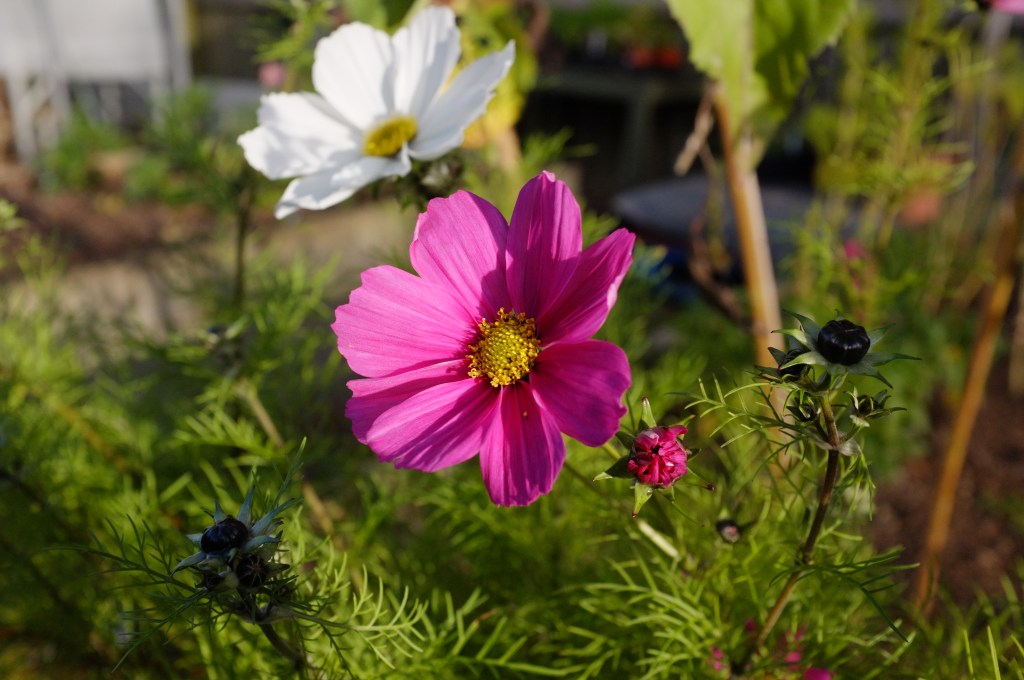
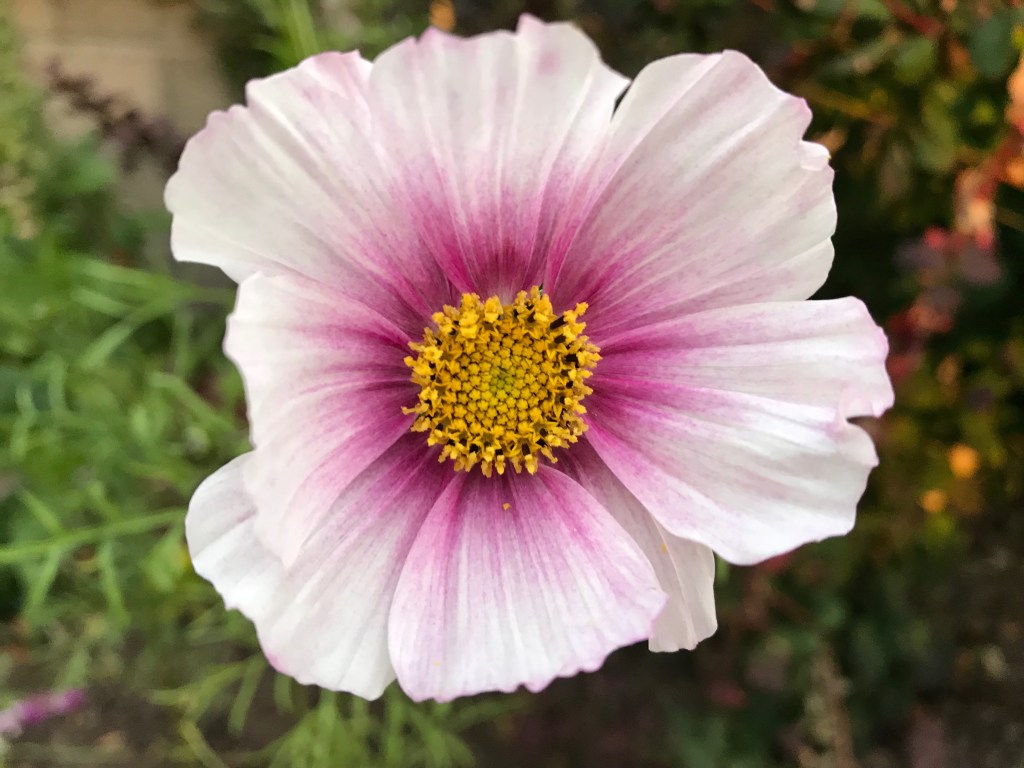
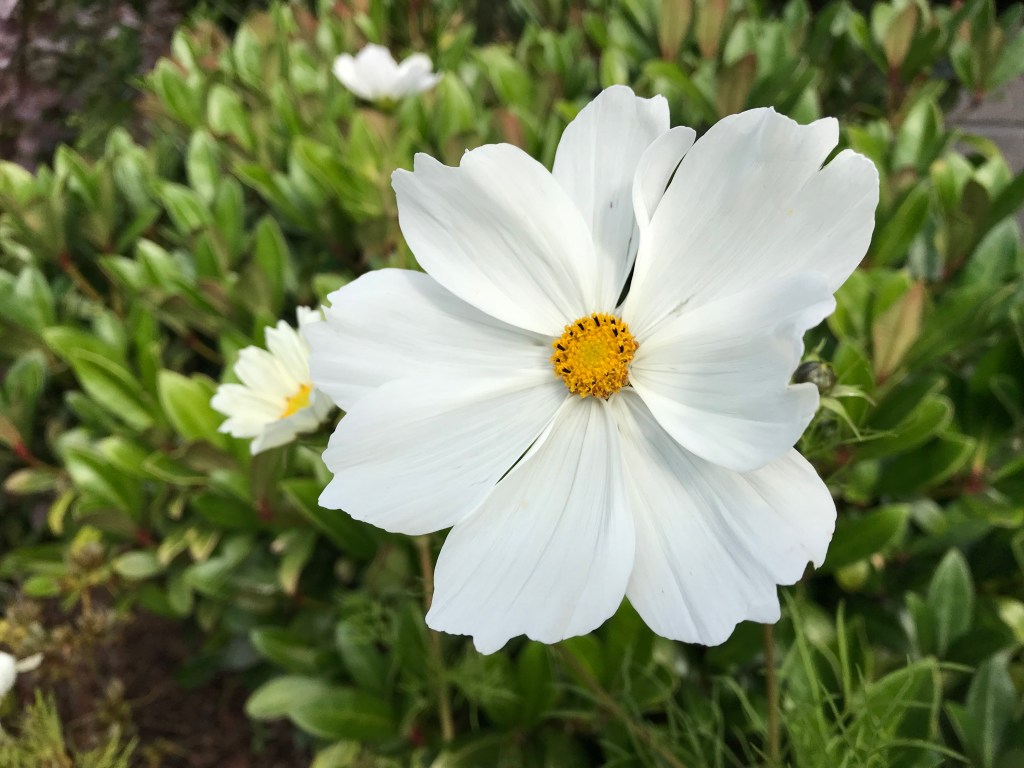
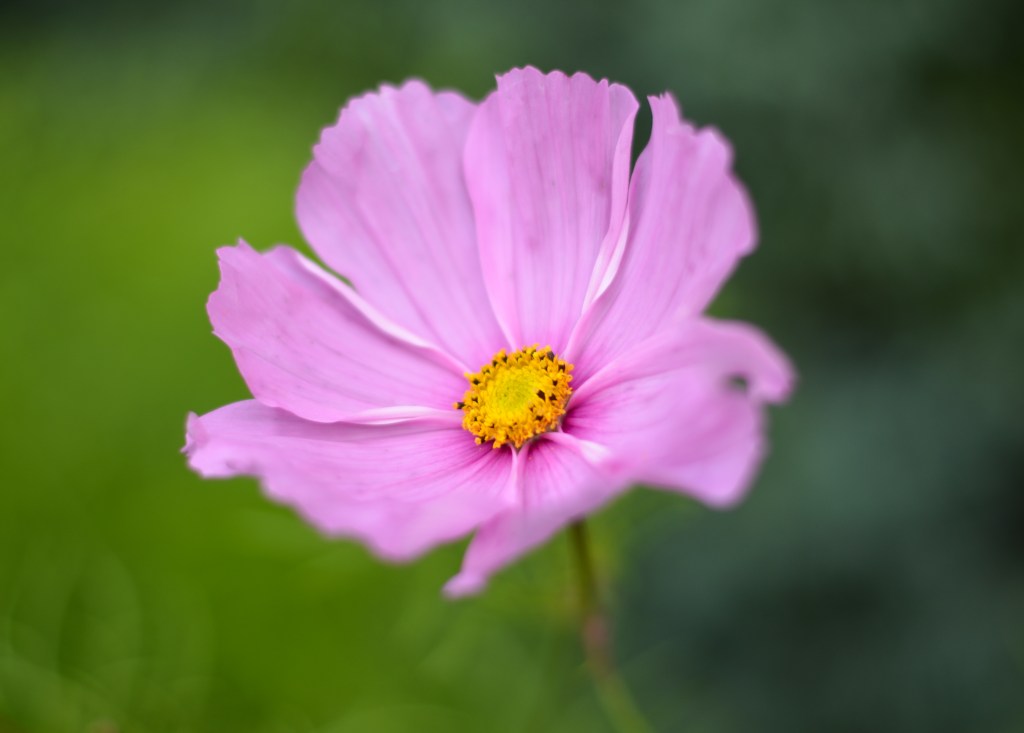
For example, I love cosmos and will nearly always grow white ‘Purity’ as it’s such a fantastic, reliable plant and great in cut flower arrangements. But this year I’m very excited to try ‘Apricotta’ as I’ve admired the many Instagram photos I’ve seen other growers posting last summer! It looks like a gorgeous soft colour which will probably vary between blooms and change as the petals age, which is often the way with coloured cosmos.

Cosmos ‘Apricot Lemonade’

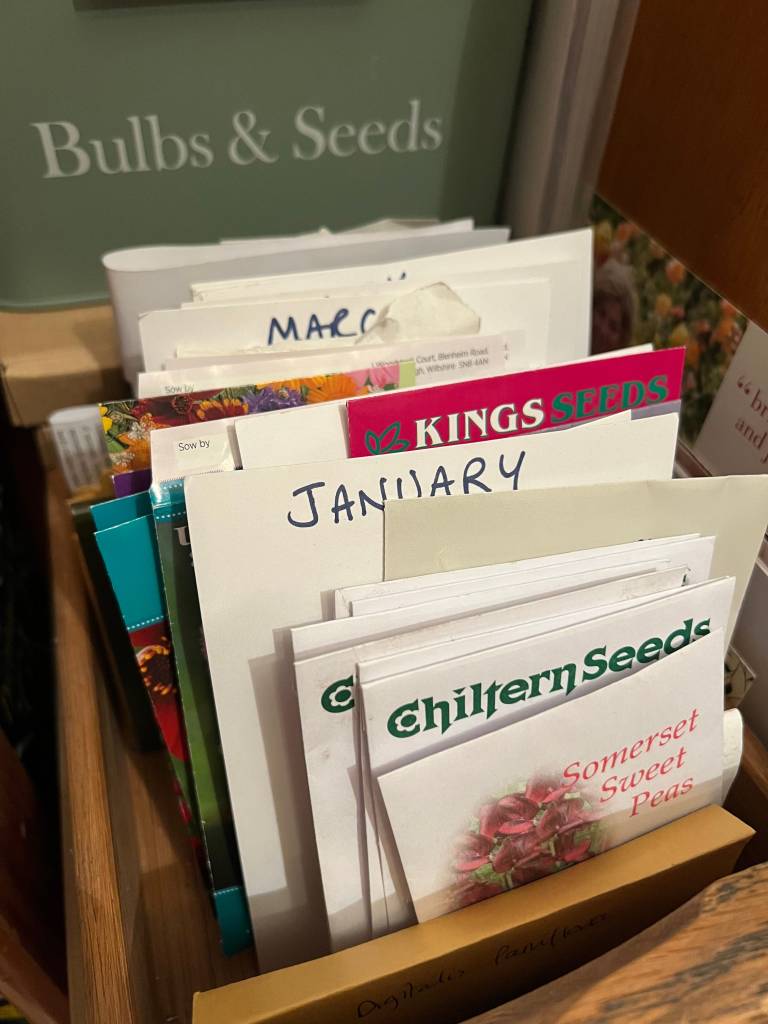
So, now I’ve got an idea of the seeds I already have, and I like to arrange these (and any new additions as they arrive in the post) into the months I’ll plan to sow them so that I can keep track of what to do and when. It makes it much easier when I have an opportunity to get into the greenhouse to simply glance through the collection and pick the ones I want or need to sow that month. 

January and February’s selection is always much smaller than March and April! But there’s no rush – for me, the timings are more of a guide and way to prioritise rather than a hard and fast rule. And it’s also important to keep an eye on the weather – I may hold off some of the sowings in February and March in order to give more plants a better start later in the spring as they will catch up fast in warmer, sunnier conditions.
In the meantime, I’m browsing some of my favourite seed suppliers to fill the gaps in my wish list and look out for any good bargains. 

In terms of other indoor prep, I also usually draw a plan of the raised beds in The Secret Garden and figure out what I should plant and where, with a loose idea of crop rotation. If I’m feeling really nerdy I’ll open my spreadsheets (Airtable in fact) and update the plants and seeds I’ve got in stock – I might even start a mood board of colours for my sweet peas and dahlias! 

Most of these plans will probably change and be adapted as the season goes, but it always feels good to start off with a plan – and it’s something enjoyable and constructive to do when the days are still short or the weather is, as they say round here, “blowing a hoolie” and making it difficult to get outside.

What I’m looking forward to growing in 2024 

Here are some of the flowers I can’t wait to see in flower in my garden this year: 

Cosmos ‘Double Click Cranberries’ – I resisted growing these for ages but sowed some last year and instantly fell in love with them; gorgeous deep pink coloured flowers, a good size with little frilly double petals – like a jewel in your garden.

Sweet pea ‘Juliet’ – I usually go for pinks and purples (and have plenty of these this year too!) but I was drawn to the soft cream-apricot colour of these, so I’m giving them a try.

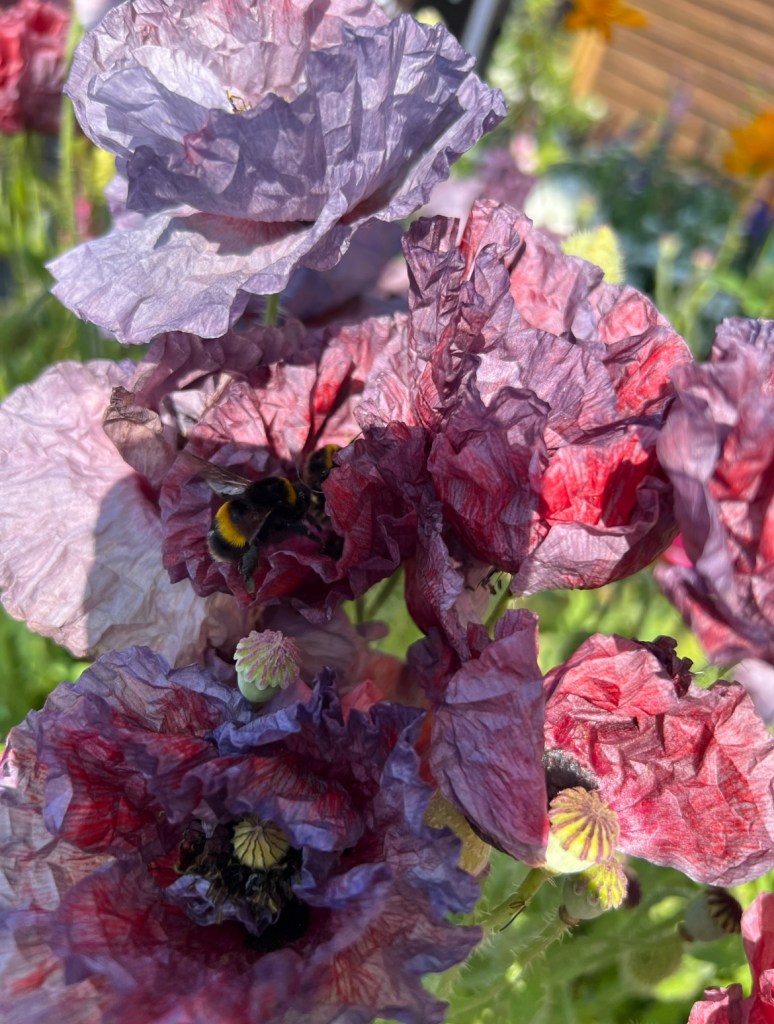
‘Amazing Grey’ poppies – they look a bit weird in photos but when I saw these in real life at Gardeners World Live not only were they a mesmerising grey-red-purple colour, they were heaving with bees! I managed to resist buying one then and there, and ordered seeds instead to grow my own! 

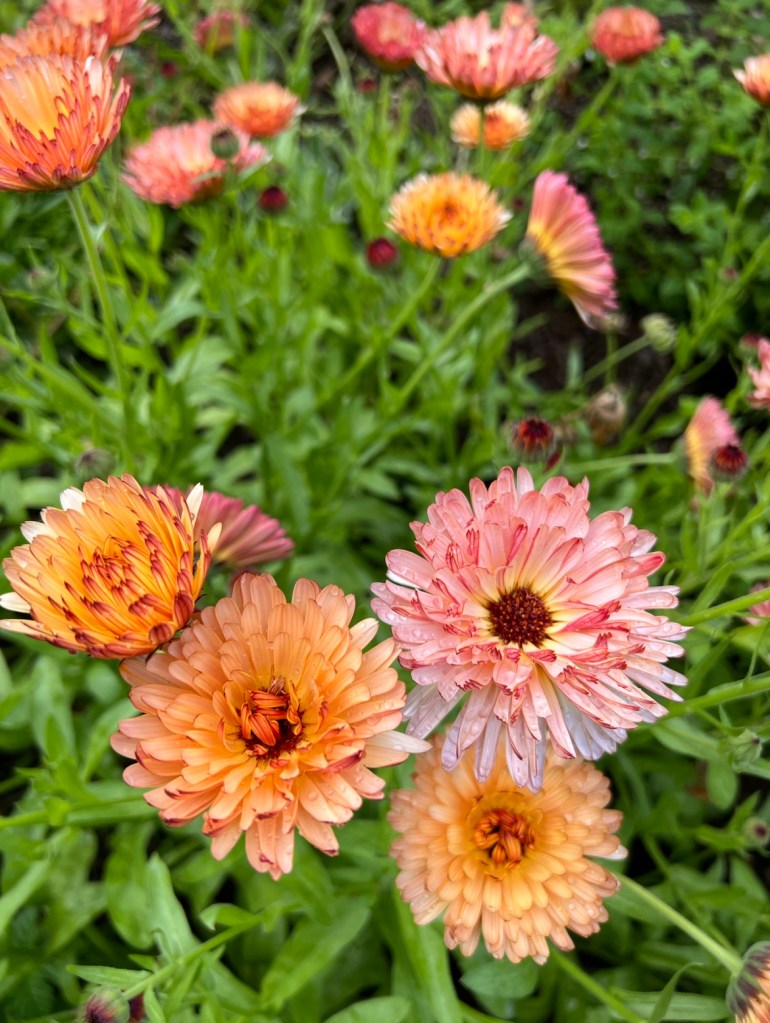
Calendula ‘Sunset Buff’ – these grew in huge clumps at Hospitalfield where I’m a garden volunteer and they are the prettiest soft peach-pink. A lovely alternative to the more common bright orange varieties and they just caught my eye every time I visited. 

Dahlia ‘Café de Paris’ – related to the Insta-popular ‘Café au Lait’ dahlia, this one has a similar shape with a soft pink blush to the petals – it looks absolutely gorgeous.

Other good stuff…

📖 I can’t wait to get started on Arthur Parkinson’s latest book The Flower Yard: Planting a Paradise. I want to do more container growing this year and Arthur has the best eye for combinations of plants which also benefit pollinators and wildlife – I’m certain I’ll be inspired.

🧤 More spring prep – I’m ordering more gloves from Niwaki. These are my favourite light gloves with a nice neat fit which makes it easier to weed or do more fiddly work with them on – I dislike bulky gloves. I’m ordering two pairs this time as I lost one of my existing pair and have been bereft ever since! 

👩🏻‍🌾 I love the variety of international horticultural jobs in this list from Mr Plant Geek. It really shows the variety of roles and skills you can combine in the world of horticulture – so check it out if you are entering the industry or fancy a career change.

Finally… are you going to this? I’m tempted 🤔 The brand new RHS Urban Show seems like it will step away from the usual, more traditional ideas of gardening with its focus on urban and indoor growing and an emphasis on wellbeing. I’d be interested to see if the kind of gardens and exhibits they will have on show are realistic and achievable for all or simply a token nod to houseplants and balcony gardens… could be interesting!

Winter Sown Sweet Peas

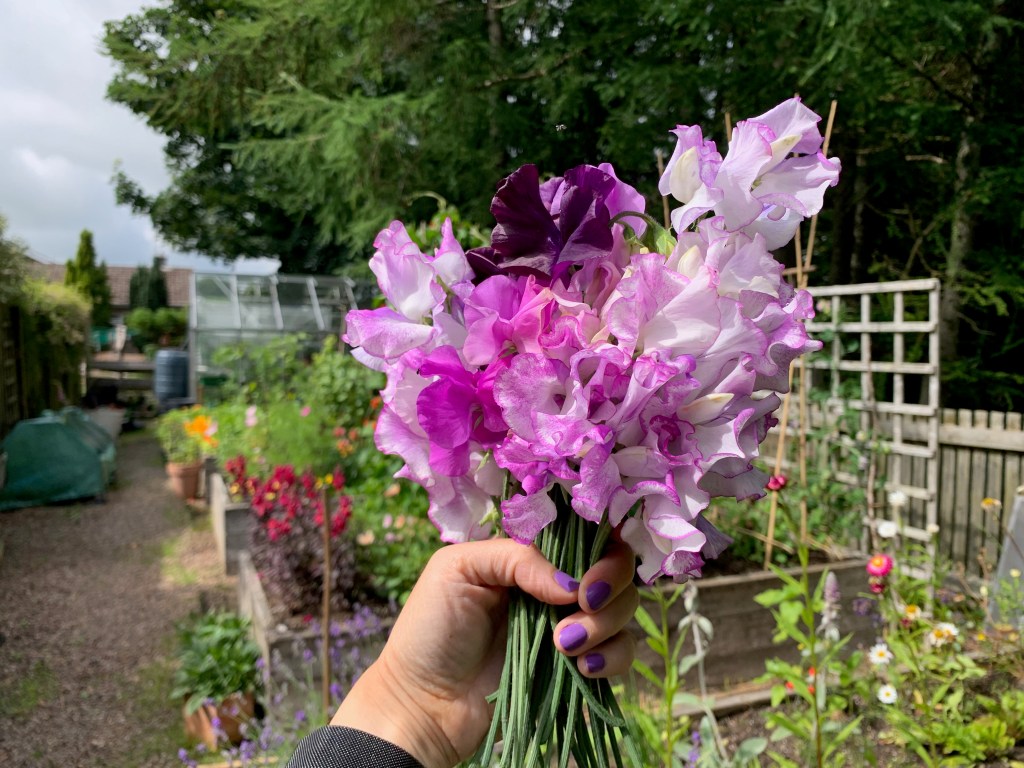
Sweet peas were one of the first plants I grew from seed – or, now that I think about it, from seedlings. It was quite a long time ago when my children were still small, and I felt the urge to grow something in our little garden. It needed to be easy and rewarding and I remember picking up some small sweet pea plants in cardboard pots from somewhere – probably a local garden centre. 

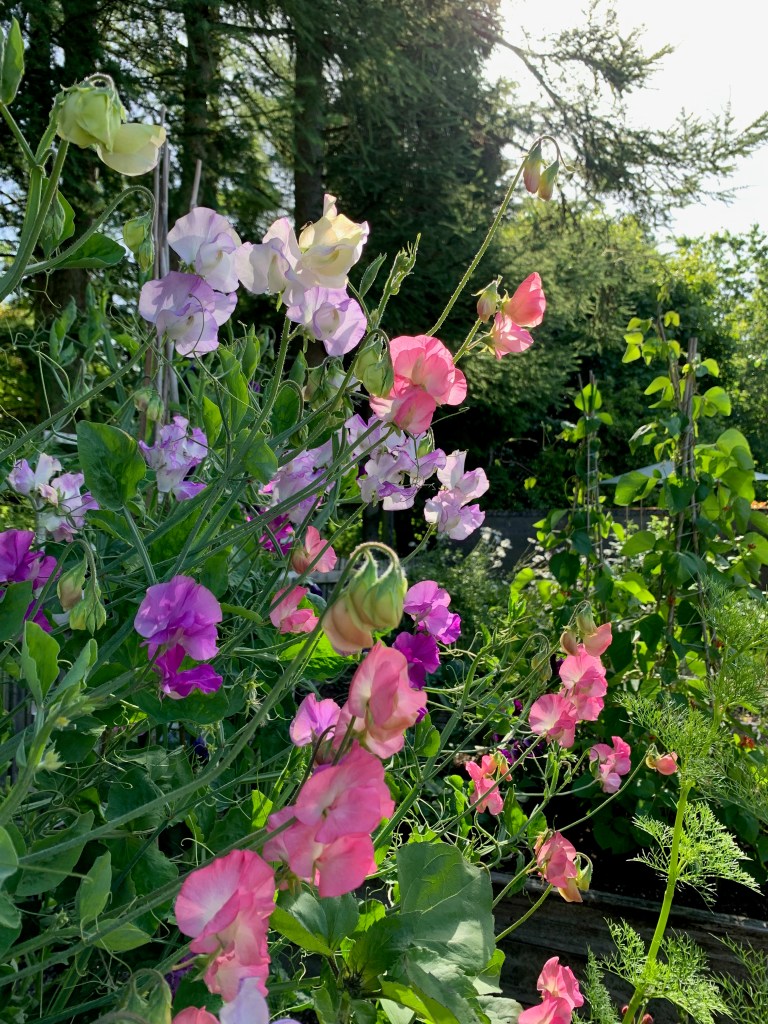
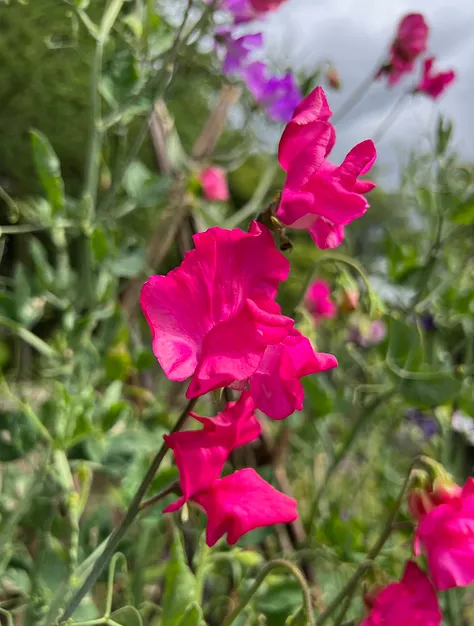
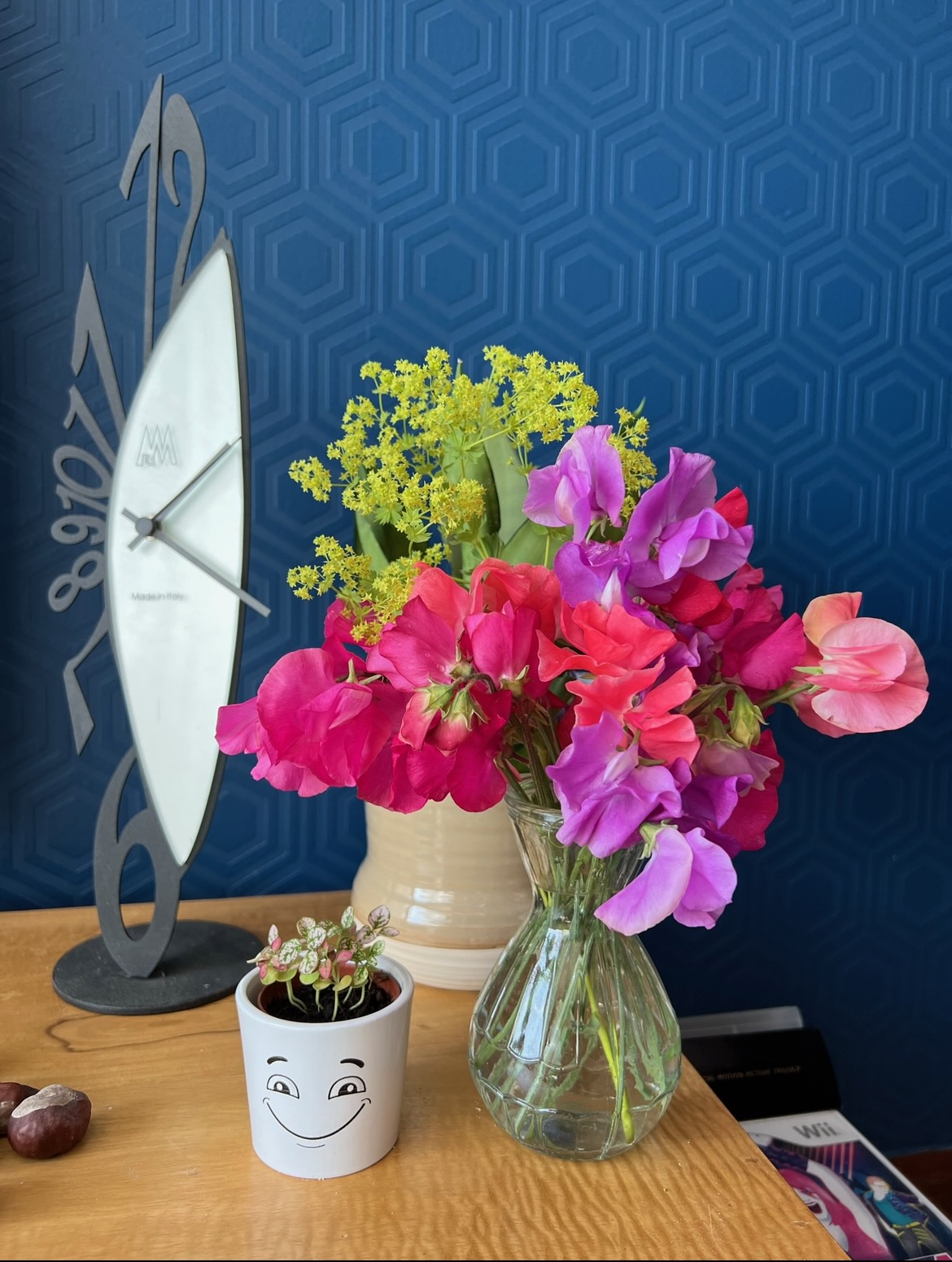
They succeeded, and the love of growing was awakened from deep within, although at the time I had two youngsters and a job and not very much time to do anything about it. Fast forward a few years later and sweet peas are still one of the stalwarts of my garden. I sow some in late autumn/winter and usually some in the spring too, aiming to have at least two or three large frames with a variety of colours and scents, and a steady supply of flowers to pick and bring inside for the vase.

As far as I’m concerned these are fair game to sow at any point between now and spring. I sometimes even make a point of sowing on New Year’s Day – a welcome break from the festivities to mark the turning of the year and the beginning of a new growing season.

Autumn/winter sown sweet peas are generally stronger and flower earlier than spring-sown, but you do have to have a bit of space somewhere to raise them and overwinter them. This year I’m germinating mine on a windowsill in a small north-facing sunroom at the back of the house, and will then move them to the greenhouse where they can grow on, slowly and steadily, until spring when they can be planted out surprisingly early – sweet peas are hardier than they look.

Sowing

Some people soak sweet pea seeds first but I’ve never done this and my seeds usually germinate very reliably. I use a mix of general purpose peat-free compost with a couple of handfuls of horticultural grit and perlite. For pots, I either sow one seed each into rootrainer modules (like these from Sarah Raven) or three seeds into regular square 9cm pots.

The benefit of the rootrainers is that they are nice and deep, giving the roots lots of space to develop, running up and down the grooves inside each module. And once the seedlings are big enough to be planted out there’s very little root disturbance as you can just pull apart each module and plant out the whole seedling, roots and compost and all.

Although not quite as deep as rootrainers, 9cm pots also do a good job, they save a little bit of space and compost as you can sow three seeds into each one, and you can opt to pop the three seedlings from container to ground as well, no need to pull apart each plant.

Pinching out

This needs done when the seedlings have put on some good growth, which is likely to have happened by spring. When the plant has three or four pairs of leaves, either snip or squeeze off the top of the main stem, leaving one or two pairs of leaves. This means side shoots will develop, leading to bushier plants and more flowers.

Planting out

This will depend on the spring weather! For me, in Scotland, I choose an opportunity in April or May when the weather is reasonable and there’s no imminent heavy frost or cold snap. This wouldn’t necessarily kill them off, but would certainly check their growth, so ideally I’ll try to wait until I’m fairly sure the weather will be settled to let them get established. If it’s very mild it’s possible (but perhaps more risky) to plant out in March. As I said above, sweet peas are tougher than they seem and although a touch of frost may nip the youngest leaves, it shouldn’t do more harm than naturally pinching out the top growth.

Support

Sweet peas need support, and when they’re first planted out they may need tied in or at least pointed in the right direction – as they grow they’ll develop little twining tendrils which will keep them attached to the structure you provide (or to nearby plants!) So check on them regularly and tie them in with soft wool or jute twine to ensure they’re growing against the structure, otherwise the weight of the stems or a stiff wind could bend them over and damage the plants. 

I used to craft a V-shaped structure out of bamboo canes and twine – until summer 2022 when most of the twine was stolen by nesting squirrels, leading to major structural integrity issues! Last year I bought a couple of these willow obelisks from Wilko and they’re fab – they look natural and are really easy to pop up and place wherever you want them in your garden. I put them onto the surface of the raised beds where I grow most of my cut flowers, but they’d blend in really well in a mixed border too.

Varieties

When it comes to what kind of sweet peas to grow, that’s entirely up to you and there’s a plethora of colours, sizes and scents to choose from. There are different groups of sweet peas, so you can choose broadly depending on what you’re looking for:

Grandiflora – as the name suggests, have large flowers and a good scent

Spencer – bred to be frilly and brightly coloured, good for showing

Species/heirloom – these have smaller blooms and simpler colours and a really strong scent

There are also dwarf varieties – these are compact and good for containers.

NB – there’s also an everlasting sweet pea – this is a perennial variety, so it comes back year after year, but it doesn’t have any scent so if that’s important to you then make sure you go for the annual types!

Recommendations

I’ve grown a lot of different varieties – I usually mix it up year to year, going for colours that I’m drawn to, or names that are meaningful – or simply sowing whatever packet I happened to have received as a gift or special offer!

These are some of the sweet peas I’ve enjoyed most in recent years and would be happy to grow again: Jimmy Shand, Cupani, Judith Wilkinson, Cream Egg, Erewhon. I also usually grow a packet of heritage mix, which reliably provides a variety of colours and good scent.

New Year, new blog post, new garden plans

It’s 2023! Garden-wise January can be a bit of a grim month. Everything looks brown and soggy and the days are still very short and usually cold, offering far fewer opportunities to get outside and do anything more than tidying up fallen leaves or cut down decaying stalks.

I do always get strangely excited about the turn of the year though, because I know that very soon I’ll be seeing the first little shoots of bulbs poking through the soil – and in fact many of them are already doing just that. January also means it will soon be time to start some early seed sowings. True, it’s still much too early for most annuals or vegetables, but there are a few seeds which do benefit from an early start, especially in Scotland, if you can time it right. 

Bulb shoots are nosing their way out of the soil in my back garden

Instead of making new year resolutions, I prefer to consider what I’ll do more of and what I’ll do less of each year. These are small shifts, as opposed to grand gestures, which are more likely to fall by the wayside.

In the past 12 months I’ve moved up from part time working hours to full time – and that has definitely impacted on the time I can spend in the garden, so I’m taking that into consideration for my 2023 growing plan.       

What will I do less of in the garden this year? 

  • Grow dahlias – I tell myself every year not to buy too many dahlias, and I inevitably fail miserably! However this year I think I’ve really learning my lesson – the dahlias definitely suffered because a lack of time, not to mention the very cold weather we had quite suddenly in November, and as a result of not lifting them and protecting them at the right point I’ve lost most of this year’s tubers.  So this year I will grow fewer dahlias and look after them better. I’m certain I’ll enjoy growing, taking cuttings and nurturing a smaller group, especially if it results in a better display of flowers from them this year. 
  • Growing less, better! – Again, my time in the garden is more limited than it used to be – and I want to avoid spiralling into overwhelm because I have 40 million seedlings to pot on, grass up to my knees and borders full of weeds! So simplification is the key – growing a smaller collection of vegetables, cut flowers and hopefully keeping on top of things as much as possible.
  • Spend less time in the garden – but MORE OFTEN. This is key – I may not have 2 hours to spare every day but I can still get a lot done in 10/15 minutes, or half an hour here and there – and I’m reminded of that every time I do it. Pulling a few weeds, deadheading flowers, pricking out a few seedlings – these things never take quite as long as I think and even a short spell in the garden or greenhouse is time well spent on my own health and a welcome break from work or home life! 
  • Hatching chicks – we love hatching and raising little chicks, but after a difficult time rehoming a number of boys last year, I swore I would not do it again. I’m planning to sell the incubator and enjoy the lovely hens we already have this year.
Molly approves of my plan…

What will I do more of in the garden this year? 

  • Design – I need to revamp one of the main patio areas in the garden; it’s been looking sad and bare (apart from the weeds) all winter and it’s one of our main sitting areas when the weather is good, so I really need to crack on, decide what we’re going to do with it and then get it done! I have a vision for a combination of circular paving, gravel and some drought tolerant, airy planting.
  • More design – I’m interested in Scone Palace’s design competition (details on their Facebook page) – I have no idea if I can do it, but I’d love to give it a try and I already have a few ideas around a possible theme… it seems like a good starting point to test my garden design skills, which I am currently studying to acquire so that I can pass some…
  • …exams – I’m determined to complete the RHS Level 2 course this year so that I can finally achieve a horticulture qualification. Two more exams to go in February – fingers crossed!
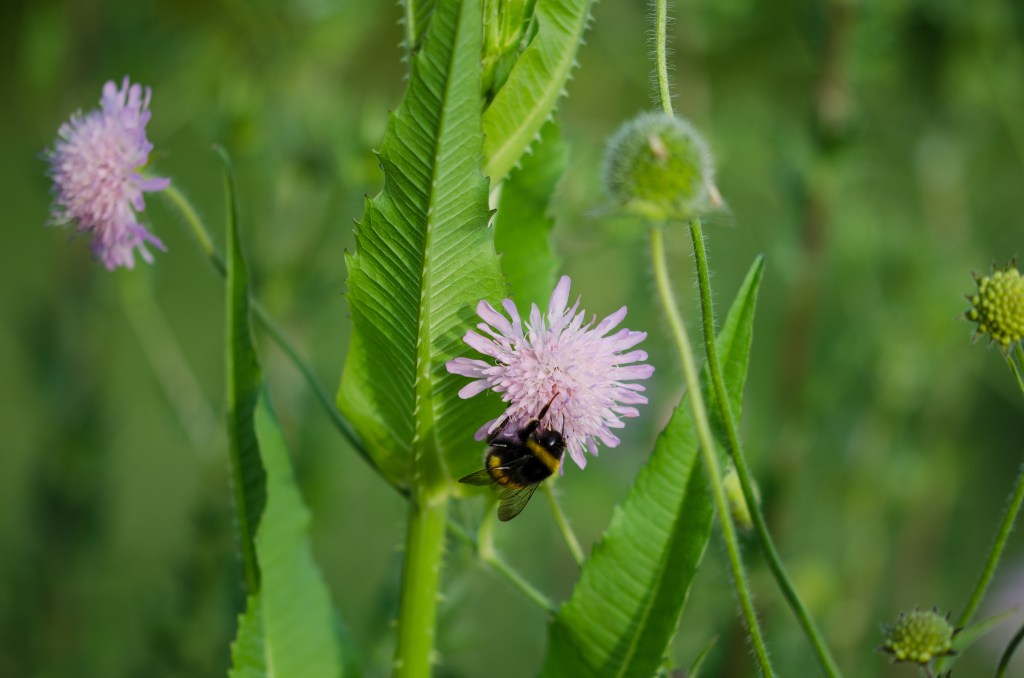
  • Pollinator friendly plants – more, more, more. I think this (and a decent level of drought tolerance) will be guiding my decision making this year – I just love seeing bees, hoverflies, butterflies, bee flies, ladybirds, all manner of insects flying or crawling around the flowers in my garden, so I’ll be choosing and growing more of the kinds plants which attract them and feed them. 
  • Podcasting?? This is a very tentative late entry. I miss writing and recording and meeting new and interesting Scottish gardening people. I might need to experiment a bit with format, content or routine, but if I can work out a way to make podcasting fit into my life alongside work, family and the garden itself, then you might be seeing some new episodes of The Scottish Garden Podcast in 2023…
I’ll be growing more pollinator friendly plants in 2023, like this Knauti macedonica, which bees love

Cosmos – out of this world!

No garden should be without cosmos and its heavenly flowers. After a bit of a slow start with these brightly-coloured blooms, I’ve become a convert, and now I sow them from seed every year to ensure I’ve got plenty of these cheery favourites to brighten up my borders.

Cosmos bipinnatus are half-hardy annuals, which means, like bedding plants, they will grow and flower within one season, and can then be composted when they’re spent in the autumn. Their large, daisy-like flowers are most often seen in shades of pink or pure white, but they can also be found in ‘hot’ red and orange – there’s even a relatively new yellow variety. They are very easy to grow and you can easily buy them as young plants – but you’ll get much more for your money if you sow them from seed any time between March and May. Simply sprinkle onto a tray of moist compost and cover lightly. They’ll benefit from bottom heat, but will also germinate fairly readily if covered with a plastic bag or clear lid and left in a greenhouse or sunny windowsill.

Once their second pair of leaves is showing (the ‘true’ leaves) they can be pricked out into bigger pots and grown on until they’re ready to plant out after the last frosts. Pinching them out (removing the growing tip) makes for bigger and bushier plants with more flowers so this is well worth doing at this point or when they’re about a foot or so tall. Once they’re in the ground and flowering it’s a good idea to deadhead them regularly as removing the spent flowers makes room for more to bloom – and bloom they will! These generous plants will flower non-stop from midsummer until the first frosts, perhaps even later. With last year’s mild autumn, it took a real dip in the temperatures to kill off my cosmos, so I was able to enjoy them well into November.

There’s quite a wide variety of cosmos to choose from, but all are reliable performers so choosing is simply a matter of taste. For a pure hit of colour you can’t go wrong with ‘Sensation’ – a mix of light and dark pinks with some white flowers and well worth growing. There’s also ‘Dazzler’ with large deep red flowers, or ‘Versailles Tetra’, which are slate-pink with a red centre surrounding the bright yellow eye of the bloom. Last year I was quite taken with ‘Daydream’, which is a bit more delicate looking – very pale pink, deepening in colour towards the centre of each petal. However my firm favourite is ‘Purity’, These are quite a tall variety, so best towards the back of a border, with large, brilliant white flowers. They look fantastic with other cottage-garden style plants or in a vase, providing light and texture with their feathery foliage and stunning white blooms.

Cosmos ‘Purity’ in a mixed border

Cosmos aren’t just for the garden – dwarf varieties are great in pots – try ‘Sonata’ or ‘Apollo’, which are more compact and will suit container planting. For something a bit different, go for ‘Xanthos’ which flowers prolifically and is the first yellow cosmos in a really pretty, soft shade. There are other more unusual varieties of cosmos which come in all shapes and sizes – ‘Cupcake’ is so-called because its fused and upturned petals look, well, like a cupcake! Or there’s ‘Sea Shells’, which has tubular petals, and ‘Double Click’, with a lovely ruffled, fully double flower, in a range of colours from cranberry through to rose.

Cosmos ‘Xanthe’ (left) with chocolate cosmos in the planter with Stipa tenuissima

Cosmos are easy to grow, flower for ages and are great for filling gaps in borders, or as a temporary fix for an empty flower bed – they can even be planted alongside vegetables, to help bring in those useful pollinators, and they’re a stalwart of the cut flower patch too. They’re great dotted around the garden or in a vast swathe of airy, feathery foliage dotted with those brilliant blooms. Cosmos are cosmic for every garden – so get growing!

Chocolate cosmos
Chocolate cosmos is another member of the cosmos family, but not exactly like the others. Why is it called chocolate cosmos? Well, partly because of its rich, dark, red/brown colouring but also because of its scent – if you get up close to the flower you’ll smell its wonderful vanilla-chocolate aroma. Also known as Cosmos astrosanguineus, this plant is perennial, and if you look after its slim tubers (by lifting or covering during the winter) then it will return year after year. It’s not as common as its bright and beautiful cousins, but it’s got a velvety, sultry charm which is hard to resist. These are most often bought as young plants, as seeds are hard to come by and can be tricky to germinate. Chocolate cosmos are much smaller than Cosmos bipinnnatus, with loose, slender stems. I plant mine in a large container with grasses to give some contrast and also to help support the flowers…after all, I want them as close to my nose as possible for that fantastic hit of chocolate!

This article was originally published in The Courier’s Beautiful Homes supplement, Spring 2019

Get Into Grow Your Own

“Nothing tastes as good as home-grown!” – a familiar cry from allotment owners and keen gardeners everywhere. But is it true? And are you ready to find out for yourself?

Why?
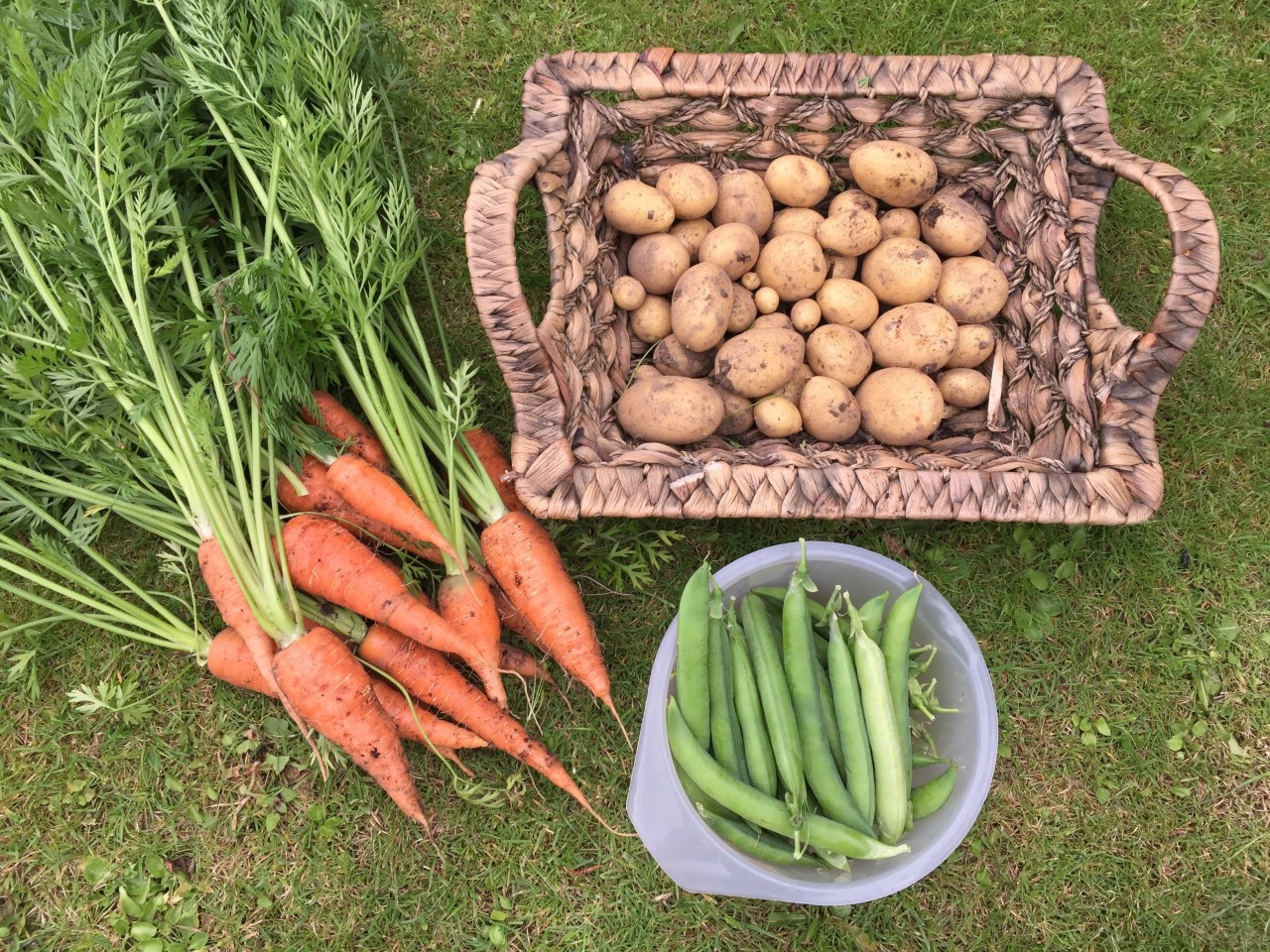
There are many reasons why growing your own is a good thing to do – both for yourself, and for the environment. When you grow your own food, you know exactly where it’s come from: your own soil, pesticide-free and freshly picked. Often, the produce we buy from the supermarket shelves is already several days or even weeks old and may have been treated with preservatives to prevent them from spoiling. Carrots, for example, are typically stored for anything from 1 to 9 months before being sold in the shops; in contrast, you can pick a carrot from your garden and have it cooked and on your plate within minutes – guaranteed freshness which also means fantastic flavour.

And the total food miles? Zero! At a time when the climate emergency is on everyone’s lips, reducing the amount of carbon emitted by food transportation is another way we can contribute to the fight against global warming. Not to mention that growing your own food completely bypasses the plastic packaging involved in unnecessarily wrapping fresh produce. But perhaps one of the best reasons to get into ‘grow your own’ is because it’s really enjoyable! It’s incredibly satisfying to sow some seed, watch the shoots germinate and grow and eventually harvest some delicious food to feed yourself and others.

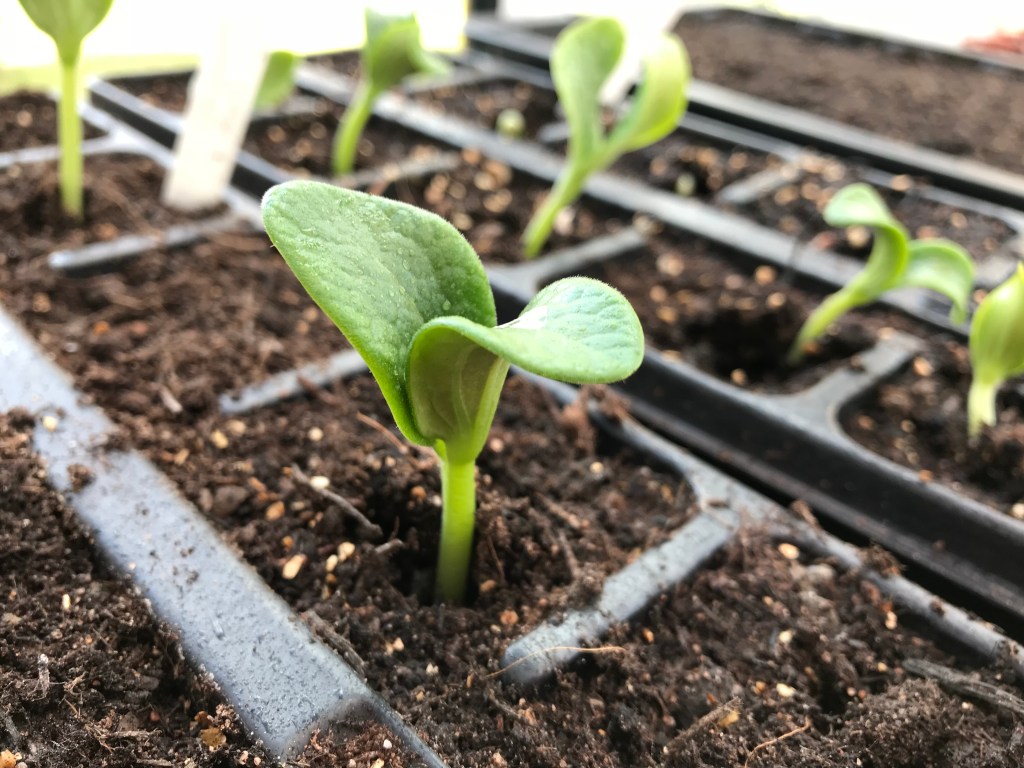
Courgette seedlings

Where?
You don’t need a huge garden or allotment plot to begin growing fruit and vegetables – any outdoor space can be adapted for growing. Garden beds are useful, but if space is limited you can grow in pots, window boxes or growbags. If you are fortunate enough to have some room in the garden, or even an entire allotment plot, you can sow straight into the ground or create raised beds, which can be constructed from various materials, and can offer easier access to the soil and plants. In terms of tools, a basic but useful set would include: a spade and/or fork, a rake, a trowel and a watering can or hose.

Your growing area should be prepared during autumn to late winter, so that the ground is ready for planting in spring when the soil warms up. This is the time of year to begin sowing – a wide range of vegetables can be started from seed either indoors on a sunny windowsill or under glass in a greenhouse or cold frame; these will be planted out into your veg beds once they’ve established a good root system and after the last frosts (generally around mid-late May for Scotland).

What?
You’ve got the space and the tools – now what to grow? The best place to start is to think about what you like to eat, and grow that. Love potatoes? They’re quick and easy, and even better fresh from the plot. Can’t stand carrots? Then don’t bother – they have a relatively long growing season, so put your efforts into something you prefer. Figure out how much space you’ve got, and choose the crop to suit. Peas and beans grow vertically, so don’t take up much room; potatoes, on the other hand, are large and leafy and need to be spaced around a foot apart. Smaller, fast-growing salad veg such as lettuce, radish, beetroot and spring onion can often be planted among those which take longer to harvest, maximising your growing space.
Tomatoes require some extra effort, but are well worth it – there is nothing to compare with the flavour of a fresh, homegrown tomato. These usually need to be grown in a greenhouse, with careful watering – but there are some outdoor varieties which may withstand the variable weather of a Scottish summer. Other greenhouse (or warm conservatory) options include chillis, peppers, cucumber and aubergines.

The other addition to your plot should be some flowers – these are important for attracting beneficial insects and repelling pests. Pollinators will visit for bright blooms such as cosmos, calendula or nasturtium, while marigolds are said to be effective at repelling aphids.

How?
To find out more information on growing your own you don’t have to look far – there is a plethora of books on the subject, along with websites, apps, magazines and podcasts. Charles Dowding is the creator of the ‘no-dig’ movement and a master of grow your own – his books and website are a great place to start. If you’re short of space, try Huw Richard’s book ‘Veg in One Bed’ for a very simple guide to growing as much as possible in a small area. The book ‘Fruit and Vegetables for Scotland’ by Ken Cox and Caroline Beaton is especially useful for identifying the best varieties for Scottish gardeners.

If Instagram is your thing use the hashtag #GYO or #growyourown to find a community of like-minded gardeners and allotment holders who love to share photos and advice. There are also plenty of podcasts covering food growing and related topics – such as The Organic Gardening Podcast or The Dirt, which is produced by Grow Your Own magazine, another excellent source of information and advice – plus each issue comes with free seeds!

If you’re thinking now’s the time to try growing some food – just go for it. You’ve nothing to lose but the price of a packet of seeds – and you might gain a new passion, better health, more time outdoors and some really tasty fruit and veg!

This article appeared in the Weekend supplement of The Courier, 11th April 2020

Peat free compost

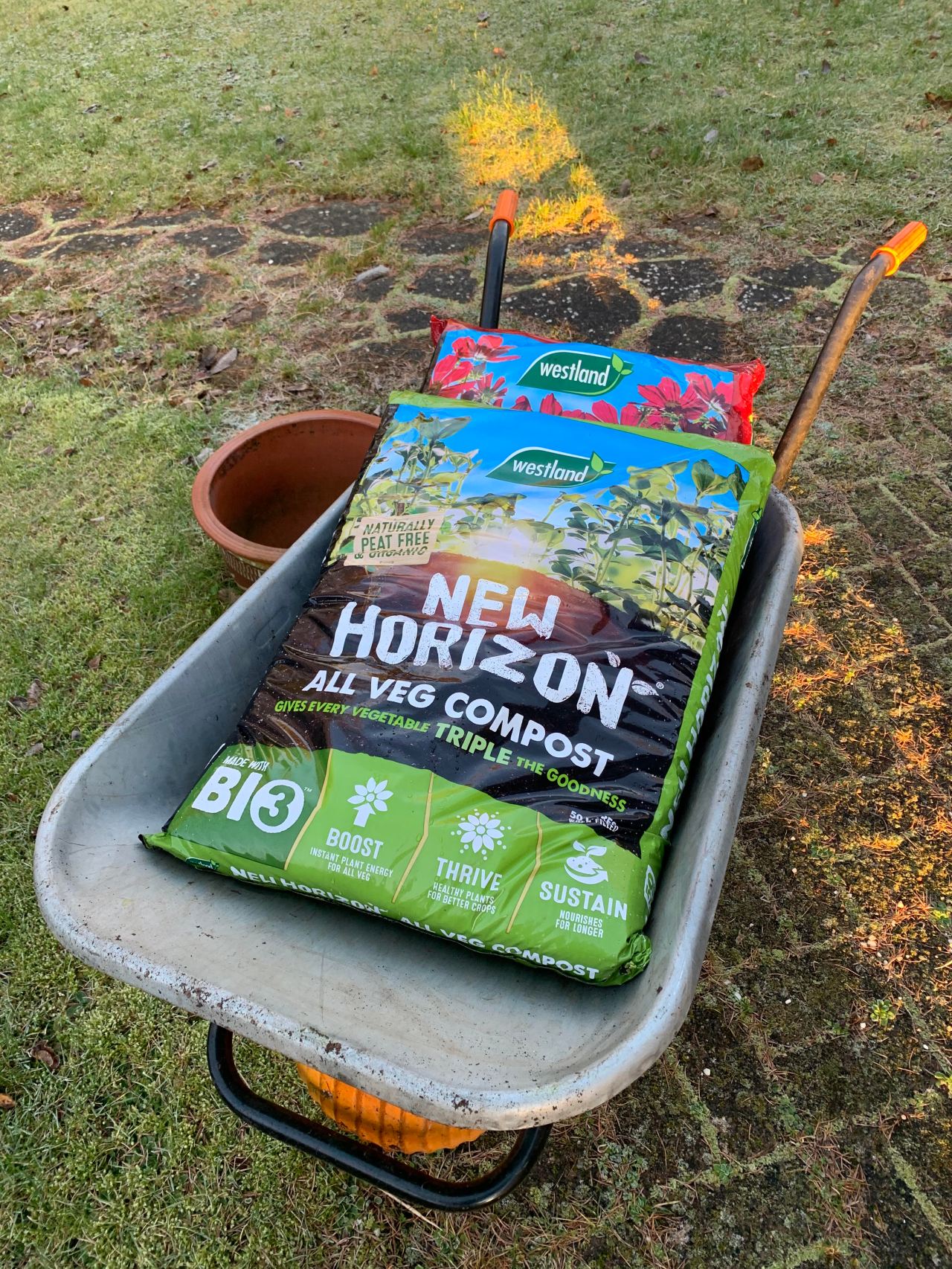
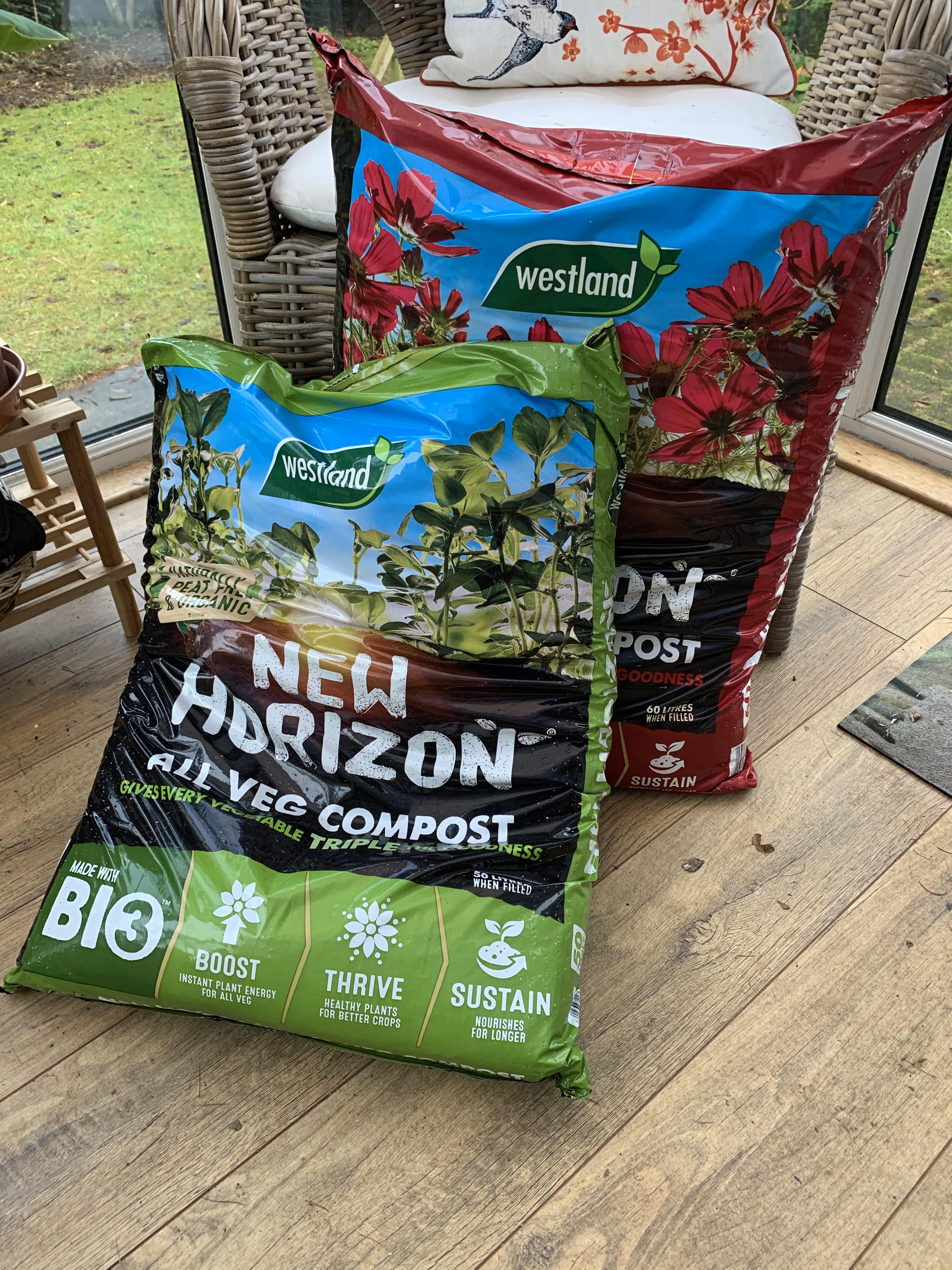
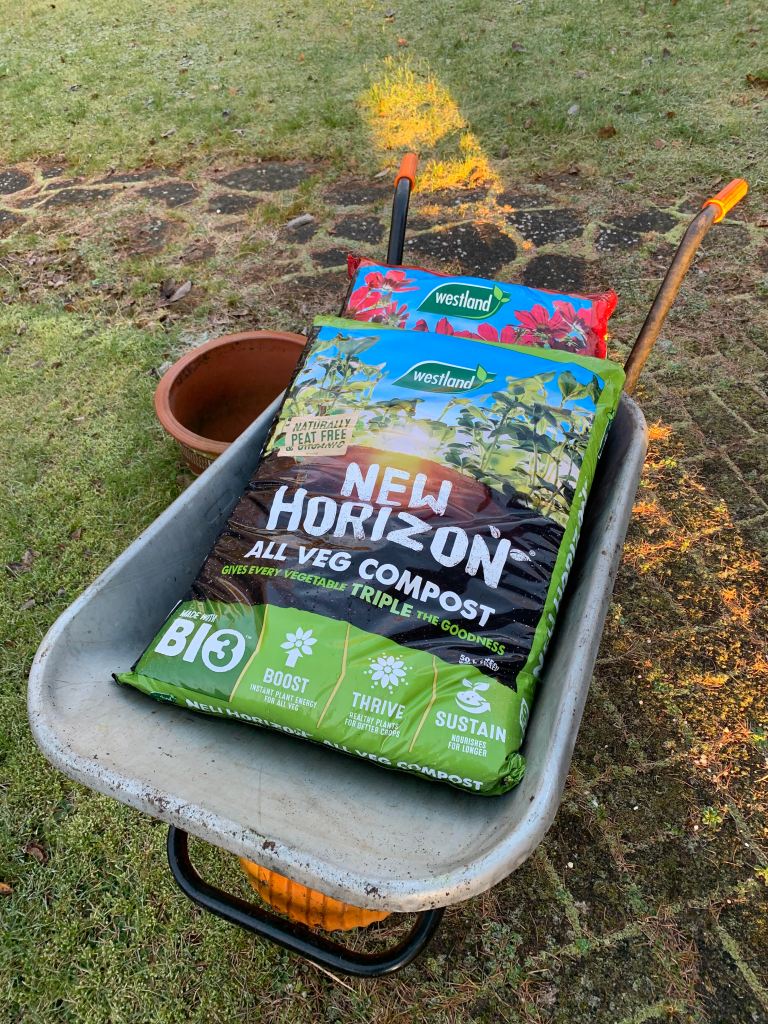
I was recently sent a couple of sample bags of peat-free compost from Westland* – in fact, they turned up shortly before Christmas – cue much head-scratching as I tried to work out what on earth kind of huge, heavy present had I forgotten about ordering…

The two kinds are New Horizon All Plant compost and New Horizon All Veg compost – both claim to be 100% sustainable, natural & peat-free compost. Now, I will confess that up until now I haven’t been a huge fan of peat-free compost, although this is very likely because I’ve bought poor quality stuff. The last bag I had was dry, woody and hard to handle – I didn’t have a very good experience of growing dahlias in it last year so it really put me off. However, I’m fully aware of the issues around peat, so I’m very keen to find a good quality (and hopefully good value) brand which will be as good for my plants as it is for the environment.

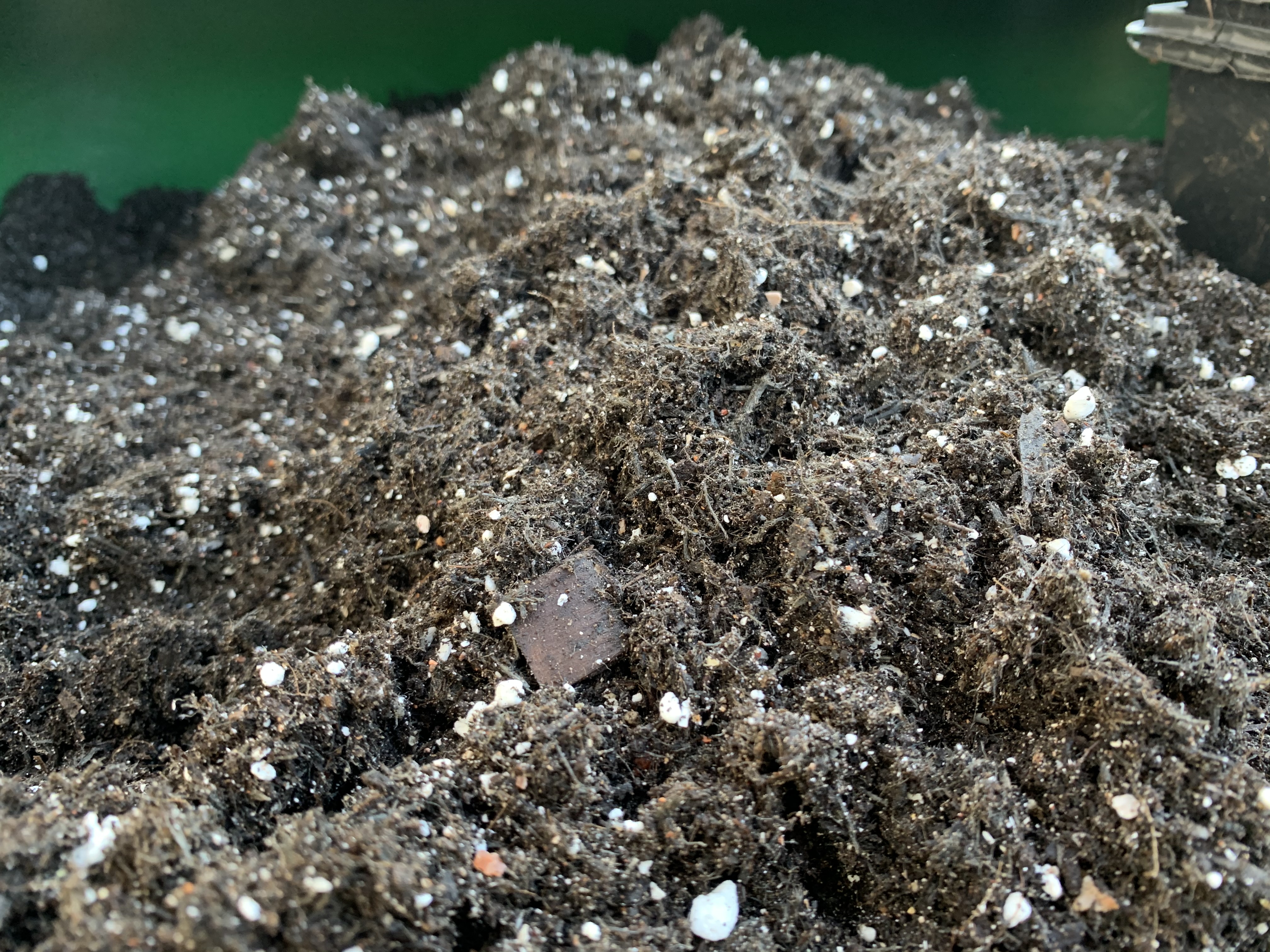
So I recently gave the first New Horizon bag a try – the All Plant version – for some pots of bulbs and for sowing some early seeds**. In contrast to the previous variety of peat-free compost I tried, this stuff is lovely and soft, it’s dark in colour and nice to work with – I would have a hard time distinguishing it from ordinary compost containing peat. So, first impressions are good.

My current seed-sowing mix: New Horizon All Plants peat free compost plus a trowelful of grit and a couple of handfuls of perlite

I will report back a little later in the season once I’ve raised some seeds and used it for containers but I’m expecting good things and I’m looking forward to trying the veggie version too. I recently had a conversation on The Scottish Garden Podcast with Ken Cox, who was quite forthright with his views on peat and how it may not be the black-and-white issue it’s portrayed in the media. I found his views really interesting and I do think it’s sensible for gardeners to do their bit in avoiding the use of peat where there’s a suitable substitute. So I’m already hoping these are products I’ll be able to use again.

For more discussion about peat and peat-free compost, you could listen to the Roots and All budcast on Going Peat Free with John Walker (scroll down about 2/3 of the way down the page) or there’s some useful advice on peat free growing for houseplants in this episode of On the Ledge. And Garden Organic has good info on peat free on this page, along with great tips on the best mixes for various growing media.

The 2020 growing season is off to a good start!

*This isn’t a sponsored post or anything – I was simply offered the chance to try some of this compost, so I took it! I hope it’s interesting for others to read about my experiences of this new product.

**So what have I sown so far in 2020? Not much, as it’s still only January! But I’ve started a couple of varieties of sweet peas and I also wanted to get a good early start on some snapdragons, which need a long growing season I believe. I’ve also fired up the propagator and popped in some Verbena bonariensis (I want loads more of this in my front garden!) and some Stipa tenuissima, which is great for pots and borders too.

Time to plan…

It’s winter, but it’s not cold.

Little green shoots are appearing – but they’re too early.

Hellebores are emerging, the witch hazel is blooming and we even have a couple of snowdrops almost fully out in the front garden.  It’s SpringWinter – not cold enough to be properly winter but not light enough to be properly spring.  Also known – on Instagram at least – as #thatwinterspringthing.

The mild weather and green shoots are not unwelcome – in fact they’re a wonderful reminder of what’s to come. I just wonder if we’re being lulled into a false sense of security, only to be shocked back into the depths of winter by a lengthy icy blast…

In any case there’s not much going on in the garden just yet, and I’m glad of the time to plan ahead for the coming season.  The main projects for this year will be:

  • the white border in the front garden – I’m redesigning one side of the front garden as it’s currently looking the most bare and in need of rejuvenation.  I want to drastically increase the planting and hopefully stick to a mainly white theme, as it’s partly in shade and its backdrop is much larger trees and bushes within the wooded area next door.  The plan is for some lush green/white planting which will lift the whole area during spring/summer
  • planting and sorting the area round the chicken coop – this area needs replanting after we switched the smaller chicken run for a much larger, covered run.  The grass needs fixed and there’s plenty of room at the front of the coop for some new hen-friendly plants
  • growing/selling plants from the Secret Garden – this project began last year when I sold the surplus plants I’d grown for my own garden.  I put the extras onto Facebook Marketplace and they were snapped up by quite a few local folk looking to support a small independent nursery.  I got the best buzz from growing healthy plants for others to enjoy so I definitely want to repeat the experience this year!  (The Secret Garden is so-called because it’s the space I have for raised beds and greenhouse behind a rather unobtrusive-looking door at the bottom corner of the garden.)

So the planning and designing is getting into full swing – I’m researching, drawing, reading and checking my seed stocks to get ready for what is likely to be a busy growing season.

This preparation includes testing out a couple of online drawing/design tools alongside the online systems I already use.  I use a range of different tools for different things – Evernote for clipping and saving articles, photos and plant information; Google Drive for plants/seeds spreadsheets and keeping track of budgets; Microsoft OneNote for drawing and saving designs.  I’m also currently trying the Suttons veg planner tool, which will hopefully help me to plan my fruit/veg growing for this year, as well as my cut flower bed.  And I’ve downloaded an app for my laptop called Bamboo Paper which also allows me to draw and create ‘mood board’ style notebooks.

IMG_8925

Designing the front ‘white’ border with OneNote.  It helps if you do this with wine 🙂

I did contemplate starting an actual physical notebook as a garden journal, and using a real-life pen and ink…but for some reason I seem to get on fine with the online methods.  I think in fact I’m more likely to access these electronic records and keep them updated than a diary-style physical notebook, as lovely as it is to hold and treasure a well-thumbed, dog-eared notebook…

Oh and one more goal which I hope to achieve imminently – sitting two more RHS Level 2 exams in February.  I’ve already been hitting the books again to swot up on plant biology and soil nutrition.  Wish me luck!

Happy 2019 – here’s to a great gardening year!

hydrangea jan 2019


September Stars

It seems I have a late summer garden – there’s more colour on show in September than there has been during the rest of the year.

img_6299

The front garden is currently showing off all its colours – yellows, pinks, peachy dahlias and flashes of reds from the crocosmia, roses and even a few second-flowering geums.  I haven’t really planned a late summer garden, but each season I have been adding layers of colour and texture so there’s as much interest throughout the year as possible.  It looks like I’ve certainly been attracted to late season plants!


I do love my dahlias, of course, and they’re really hitting their stride at the moment.  I’m also really enjoying the echinaceas which are flourishing, the rudbeckias (still small, only sown this year) and the cosmos, which is a great gap filler.  I bought a couple of sedums several weeks ago and love to see the bees still busy around these flowers as they deepen in colour each day.  These are all being propped up by some of the shrubs and plants which may have finished flowering but are still providing essential structure and mass – the two cotinus, the damask rose, teasels and eryngium for example, whose spiky texture is also providing soft browns and purples.

20180826-DSC_0503


Some of my front garden plants have had a second wind, most likely due to the very warm summer we’ve had.  The geums I’ve already mentioned – these first bloomed in May I think and are still popping out a few flowers! The hot pink salvia is coming out again for another throw, along with the geranium ‘Lace Time’ with its pretty veined pink flowers.


But the stand-out repeat flowerer has to be the rose ‘Lady Marmalade’.  I might be wrong, but I think she’s currently in flower for the third time – and still looking beautiful.

Lady m BEST-4

‘Lady Marmalade’

It’s lovely, as the summer slips away and the temperature starts to fall, that the hot colours are still warming up the garden.  I feel a bit sad about the season changing – I really loved the hot weather – but I can still enjoy the summer blooms.  Plus now is the time to collect seed, take cuttings and begin thinking about next year.  I know – it’s only September! – but I’m already thinking of what I want to grow and/or sell in the Secret Garden next spring and what I will add to the borders, front and back, to keep building those layers of colour, texture and foliage.

The hit list for next year includes more Stachys byzantina for its gorgeous soft leaves and rich pink flowers; more Verbena bonariensis as it’s so bee-friendly, the usual cosmos, sweet peas and aquilegia, and a plan for some new plants – Sanguisorba (inspired by a recent visit to Cambo’s walled garden) and Cerinthe major (which I loved at Chelsea).  I’ll also be sowing some Stipa tenuissima as I want to add some more soft grasses and I just love the texture and movement of this feathery grass.

image_558445370734348

Sanguisorba and Stipa tenuissima in the beautiful perennial borders at Cambo

And that’s just a small selection of the seed packets I currently have spread out across my dining room table!  There will be a lull around November/December but between now and next spring there’s a lot of sowing and growing to do.  If you want me, I’ll be in the greenhouse…

img_6861


Learning lessons…

This summer I have been learning a few lessons.  Not the book-reading kind – I’ve taken a break from horticulture studies as I decided that it would be madness to add this to the summer agenda of school holidays, parenting, working, enjoying the heatwave and almost constant watering.  I plan to resume studies in September (seems like a good ‘new-term’ kind of time to do it) but there have been plenty of other things to learn on a more practical level during the past few weeks:

1. I CAN have a nursery in my back garden.  This is number one because it’s been the most exciting and satisfying lesson of recent weeks.  For quite a while I’ve dreamed of having my own nursery – growing the kind of plants I love to sell to others – and I’ve take a big step forward by simply doing it.  I had quite a large number of surplus perennials and annuals which I had grown for planting in the front garden.  So I started a Facebook page, listed a few plants on FB Marketplace – and people actually wanted to buy them!

img_58871
The Secret Garden is open for busines…

I’ve called this a micro-nursery because it really is tiny – both in size and in stock availability – compared to a proper commercial nursery anyway! It’s very small-scale and I have not made a huge amount of money – perhaps enough to re-invest in some plants and seeds for next year.  But it has been worth it for the experience of producing plants for others, learning how to market them and deal with customers and moving towards my dream of owning a little independent nursery growing wonderful perennials, annuals, herbs and shrubs suitable for Scottish gardens.  In fact, I suddenly realised that not only moving towards it but I’m actually doing my dream – the Secret Garden micro-nursery is my own little corner of the earth for doing just that.  It may be small, and I may not make a living from it just now – or ever – but I’m doing it!  Having dipped my toe in the water this summer, so to speak, I’m excited to see how I can take it forward.  I am already planning ahead for next year: which plants to grow again and which were not successful or less popular; better ways to market the business, how to grow and expand via social media…. I have so many ideas for how to keep going and growing – and I’m so glad I’ve taken the first step.

2. Echinaceas are tricky to grow from seed.

When they do succeed and flower in the garden they are gorgeous and are currently providing a fantastic pop of pink in my front border.  But I have been trying since early spring to grow the intriguing looking variety ‘Double Decker’ and this is the result…

img_59072

Barely an inch of growth for the entire season.  I don’t know if it’s the seed, the soil, the conditions, or my lack of faith.  But those echinaceas are not going to grow into beautiful, flowering plants.  Mainly because I’ve composted them.

3. Don’t grow cucamelons too close together.

This was a difficult lesson to learn, resulting in me recruiting my eldest daughter to help me untangle about 20 young cucamelon seedlings which had started to twine around each other as well as other plants in the greenhouse.   We spent some time separating the cucamelons’ delicate tendrils, trying not to damage them.  Finally we got them all apart, so I potted up the ones I wanted to grow on, supporting them with bamboo canes.  I also potted a few more into a hanging basket, to see if they’ll grow as successfully hanging down.  However I was still left with quite a number of plants which no-one showed any interest in buying (I guess my local customers are not as interested as I am in experimental or exotic fruit/veg!) so I had to compost these too.  Which leads me to the next lesson…

3. Don’t sow too many seeds!

I do this Every.  Single.  Year.  and tell myself I don’t care – I just want loads of plants!

img_59191
Composting healthy cucamelons…argh! 

But inevitably there are Too Many Plants.  So I have to spend more time and effort potting on, watering and resisting throwing them away because I hate getting rid of potential plants.  However they do end up going in the compost as I have no room or they’re not selling or become too poor quality to sell.  If I want to raise more plants to sell I must be more efficient with space, materials and my time. So – I will sow more sensibly next year.  I will sow more sensibly next year.  I will sow more sensibly next year… I will…

4. Don’t dig – and don’t do green manure

I wanted to have a no-dig policy this year…but then I also decided it would be a good idea to sow green manure.  But these two things are not entirely compatible.  Yes, I think it is possible to do both – but I ended up doing neither very well.  The green manure grew well in some beds, but not so well in others, at least giving me an indication of the soil quality in each one.  But in the spring I then had to cut down and either remove or dig in the plants.  I tried to remove the majority of the largest plants, but eventually ended up digging over most of the soil, which still had shoots and roots left in them.  This is, of course, what you are supposed to do with green manure – but didn’t comply with the no-dig theory!  This autumn I will try to mulch the beds and may well cover some over if they are bare.  I don’t tend to grow many winter crops so I think I will mulch, cover and officially begin my no-dig policy next spring.

img_5915
The Secret Garden in early August

5. It’s all about layers

The front garden is looking well – probably deserves its own separate post to update on how it’s developing – but I still see lots of gaps.  I can see bare soil and smaller-than-they-should-be plants.  When I visit other gardens, I notice the fullness of the planting, how each plant blends together and merges to create a whole effect.  I think I am moving towards this, but it’s taking time.  And that’s ok.  I’m learning that I can’t achieve this look in one growing season, unless I empty the bank account at the local garden centre (not an option, according to my husband).  But I appreciate that this year there’s an extra layer that wasn’t there last year.  And next year there will be another and then another, until I’ve got the overflowing herbaceous border that I can see in my mind’s eye!  I’m playing the long game – and that’s good, because I’m really enjoying it.

20170821-DSC_0438
Echinacea purpurea – as it should look – in the front garden

Playing the long game…

Gardening is a lesson in playing the long game.

I’m a quick-fix, instant-gratification type of person, so my growing love of the garden has brought with it an appreciation for taking things a bit slower.  For taking the long view and planning ahead for the same season, the next season, the next year, the next few years…

Very few aspects of gardening are instant.  You can buy a fully grown plant in a pot and have instant colour.  Buy a few of them and you’ve got instant impact.  But like many ‘instant’ things in life, the satisfaction is fleeting.

I’m learning to love the long game.  I have no choice, really, as I don’t have the budget for an instant garden!  But even if I did, I think I would still choose to plan and sow, make careful selections and take the time to move and shape things over the course of days, weeks and months.

Take delphiniums for example.  I have sown many of these this year, some to share and sell, others will hopefully find a home in my garden,  but I am taking the time to grow these in pots until they’re large and healthy and can withstand the assaults of the various snails and slugs patrolling my front garden.  It’s true, even large plants can be decimated by the jaws of a hungry gastropod, but the larger ones stand a better chance of survival.  As an experiment, I planted out a few young delphiniums into the front border and in a matter of days – as I suspected – they’d been torn to shreds.

DSC_0221

Delphiniums…worth waiting for (as this bee will testify) 

This border itself is another example.  In many ways I wish I could blow the bank account and buy dozens of plants to fill the bare soil still showing in the front…and yet by sowing and propagating, along with some careful bargain-spotting at plant sales and garden centres, I’ve managed to gradually fill gaps in around two thirds of the garden so far.  I like seeing it take shape gradually, and it gives me time to pause and redesign areas which aren’t working, or try new ideas when I’m inspired by a photo or magazine article.

In that very border are two mature philadelphus shrubs.  Last autumn I pruned them hard – knowing this would mean no flowering for at least a year.  They had flowered poorly the previous summer anyway and were congested and overgrown.  So I played the long game – removing most of the older stems and branches to leave a healthy selection of wood with a far better structure.  I’ve missed the flowers but hopefully next year I’ll find out if my hard work has paid off and be rewarded with a much healthier and better flowering plant.

img_4647

The front border is filling up slowly but surely…

My studies are part of my long-term plans too.  Much as I would like to, I can’t train in horticulture full-time – work and family commitments demand my time and ensure an income.  But I can take little steps forward – studying for half an hour each morning, taking a couple of exams every few months…inching forward towards a qualification which might come in useful, or might simply make me a better gardener.  Either way, I’m enjoying the process and I know that the theoretical learning is going hand in hand with what I’m practicing over time in my own garden.

This week I sowed biennials – again, another long wait to see how they’ll turn out.  Biennial plants flower the season after sowing, so the foxgloves and hesperis seeds I’ve sown now won’t flower until next spring and will need cared for in the greenhouse during autumn and winter.  But it will be worth it when they’re finally planted out in the garden, proving colour and scent and encouraging insects and wildlife.

img_4687

The teasels I sowed at the end of last summer are making an appearance now

So yes, even though ‘instant’ gardening can be a good thing, playing the long game is better for me – it slows me down and asks me to think and plan and anticipate what’s to come.  When many other aspects of my life seem to be whizzing past at speed, I’m grateful for the garden, which slows me down and helps me to appreciate what I have in front of me.


Spring has sprung…

…and my blog is suffering!  But it’s a good sign – I’m blogging less because I’m spending more time in the garden.  I have to – there are seedlings to prick out, beds to mulch, weeds to weed and plants to pot up.  And it’s only going to get busier from here on in!

Real Life is also getting in the way of Creative Life, as it sometimes does.

The best way to bring you up to speed is perhaps to post a few photographs of some of the garden jobs I’ve been up to in the past month or so…

IMG_2400.jpg

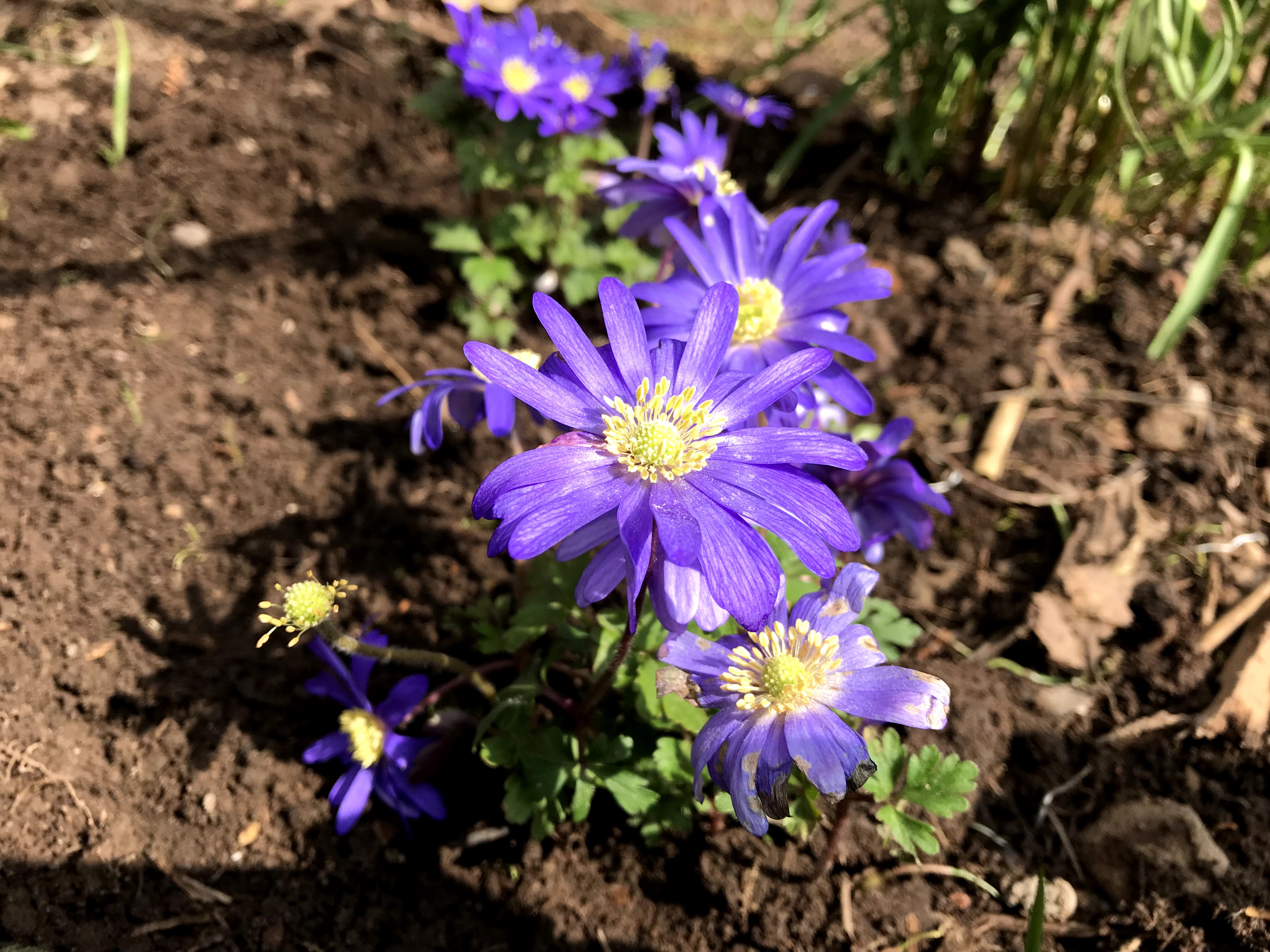
I’ve bought and planted half a dozen Anemone blanda to perk up a bare patch of earth under the magnolia in the back garden

IMG_2367.jpg

I’ve got two plants for my tin-bath pond – a lovely double marsh marigold and a corkscrew rush

IMG_2657.jpg

The forced rhubarb is about ready to pick!


IMG_2629.jpg

I briefly considered starting a sycamore farm – these are all the seedlings germinating at the side of the greenhouse… and there are many, many, many more popping up around the raised beds, paths, plant pots, in between paving stones…

IMG_2046.jpg

I’ve started all my dahlias…and *may* have bought some more along the way… #dahliaaddict

IMG_2406.jpg

Most of my seedlings and young plants are progressing well – some of these I’ve already planted out, like the forget-me-nots, wallflowers and gypsophilia.

IMG_2810.jpg

Basically I am loving the fact that Spring has arrived, bulbs are blooming and the sun is occasionally shining – long may it continue!

It’s the age-old battle for a garden blogger – blog vs garden.

I suspect I will be posting monthly for the forseeable, however I do post much more frequently on Instagram and you can follow me there for some micro-blogging action at @mycorneroftheearth.


Best kit – top 5

Well the weather is still deeply disappointing here.  I look on Instagram and see photos of daffodils, anemones, primroses and even some tomatoes beginning to flower!  And then I look out the window and see grey, brown, damp and a chicken coop slowly turning into s a swimming pool.  I must keep reminding myself that even without the grim wintery weather, our growing season is a good 2-4 weeks behind many other parts of the UK…

While I wait out this particular wintry blast (yep, it’s actually snowing again here) I thought I’d share with you some of by best bits of kit – the gardening tools I love the most or find indespensible.

  1. Thermal gardening gloves. IMG_2058.jpgI have quite dry skin and these have been a hand-saver all winter – I’m still using them now while the weather is still a bit on the nippy side.  They’re lined with soft, cosy material and genuinely keep my fingers warm.  This makes them a bit thicker so they’re not ideal for fiddly jobs but for general digging, moving, lifting bags of compost or whatever they’re great and fairly waterproof too so your hands don’t freeze off when the hose drips all over the place.
  2. Wooden tools.IMG_2189.jpg I love these mainly because they’re a thing of beauty.  I am drawn to certain materials – wood, corduroy and I’m a total sucker for tan leather.  I love these so much I bought matching loppers and shears.  I wish I could say I have a set of well-loved wooden-handled tools handed down by a relative or the head gardener of a huge estate, but these were simply bargains in TK Maxx!  They may not have the heritage but they look wonderful and I feel like I will care for them more because of it.  Hand tools tend to end up a bit rusty and rickety for me – I will confess I don’t usually clean and sharpen them regularly the way you’re supposed to.  These look so simple and refined it’ll be easy to give them a wipe down or sharpen them up – I’m sure of it!
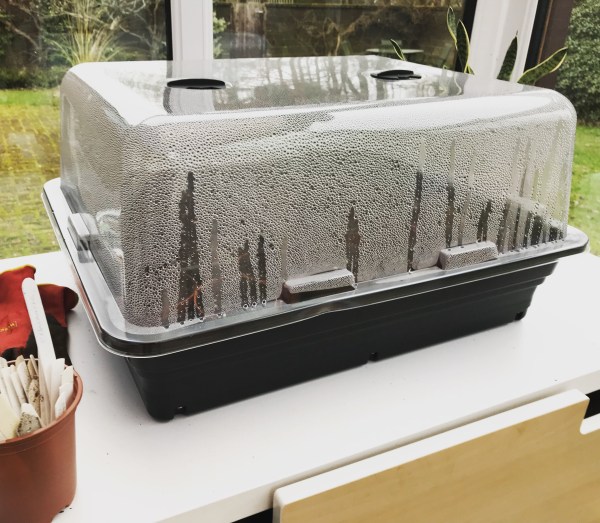
  3. Propagator IMG_0729.jpg This model is a 52 cm Stewart Essentials electric propagator which I picked up for just over £20 during the last Black Friday sale.  It’s not thermostatically controlled but as I use the rear sun room as a sort of indoor greenhouse it keeps my seeds at a good temperature for germination in a room where the temperature can fluctuate quite a lot, especially at night when it’s pretty cold.  I am currently trying to germinate my pelargonium seeds in there and they’re taking AGES.  I’ve also have very limited success with astrantia – only two seedlings so far.  But I think this is down to my choice of tricky-to-grow plants rather than the propagator!  I’m not very patient and need the space in that propagator for other seeds so I think I will very soon cut my losses and move these out in favour of something that will grow much easier.
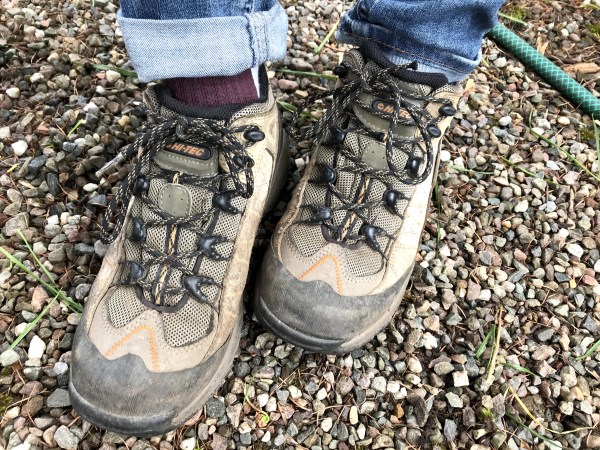
  4. Boots. IMG_2037.jpg These are my beloved and very scruffy gardening boots.  I’ve had them for years, they’re still reasonably comfy but not very waterproof.  However when I’m wearing them I feel in ‘gardening mode’ – I feel like I can dig and sow and weed and do garden-y things because I’m in my Gardening Boots.
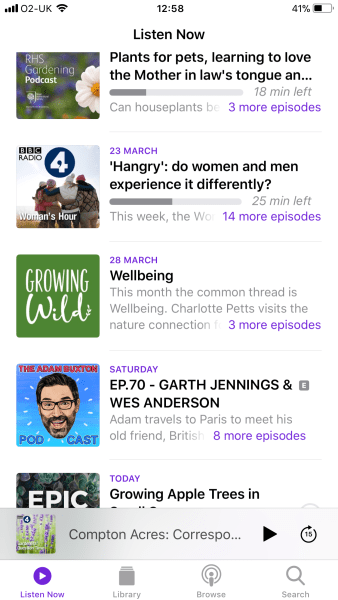
  5. iphone.  Truly indespensible in the garden for me.  Obviously it’s useful if anyone needs to get hold of me, I also take photos to post to my Instagram feed, check sowing times or names of plants, or for various bits of gardening advice if I come across something I’m unsure about.  IMG_2191.pngI also really love to listen to podcasts while I’m in the garden or greenhouse, and my podcast library is rapidly expanding – everything from Gardeners’ Question Time to Womens Hour to Adam Buxton to On The Ledge.  I’ve added quite a few more gardening podcasts recently, including this new one from Andrew O’Brien and Laeticia Maklouf.  I find them so useful and interesting – I like to absorb more garden knowledge through my ears and into my brain as I’m getting my hands dirty in the soil!
Houseplants

Blame it on the winter weather, blame it on Instagram, blame it on Jane Perrone and her brilliant On the Ledge podcast… Actually I think I have only myself to blame – it was only a matter of time before my plant obsession came indoors…

IMG_1479.jpg

Yes, I have succumbed to the charms of houseplants.

I have resisted in the past as they honestly didn’t interest me that much; I have had a handful for a while which I have either been given or were picked up when I took pity on them in the bargain basement section of the local DIY store.  I have ignored them a lot, watering sporadically, allowing the dust to collect, and they’ve mostly survived, despite the neglect.  I’ve taken little interest in them in garden centres, plant fairs, books and magazines.

But something has changed in the past few weeks and I’m looking at houseplants with a fresh, and somewhat lustful, eye.

Monstera delisiosa Philodendron                                                                                                                                                      More

Monstera deliciosa – image courtesy of Pinterest

I mean, who couldn’t love a plant with the name Monstera deliciosa.

We had one of these, growing up in a bungalow in Northern Ireland in the 80s.  It’s also known as the Swiss Cheese Plant.  The leaves are whole when they begin to grow and then later develop the ‘swiss cheese’ holes.  I want one now for my own house – a really big one. I would put it in the dining room and polish its leaves lovingly.  See, my attitude to houseplants is definitely shifting…

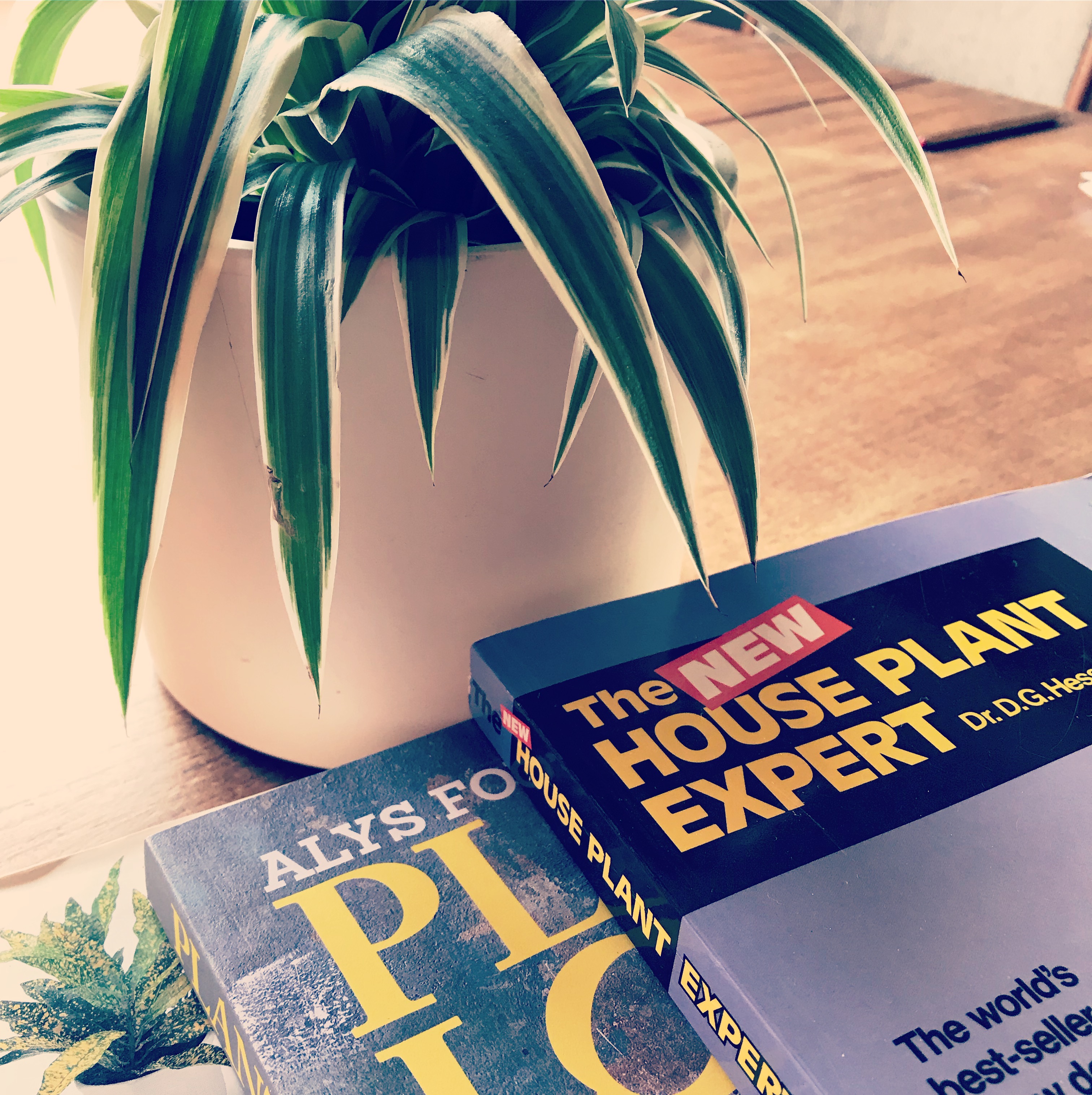
Binge-listening to On The Ledge certainly hasn’t helped – Jane and her guests discuss various houseplant related issues and the podcast is full of top tips and helpful advice for getting the most out of indoor gardening.  I recently listened to Jane and James Wong enthuse about ‘Dr H’ and his House Plant Expert book – one of the many books in Dr Hessayon’s ‘Expert’ range.  The next day I was in town for a meeting and decided to kill some time in one of the local charity shops (I always make a beeline for the gardening books – there are always gardening books in charity shops).  What did I find?  The new (well, 1980s!), updated bumper edition of Dr Hessayon’s House Plant Expert, plus another excellent guide with lots of useful photos, written by Matt Biggs of GQT fame.  Both of these cost me just £5!

I’ve also invested in Alys Fowler’s ‘Plant Love’ , which I think I would be tempted to buy even if I wasn’t newly-obsessed with houseplants as it’s a really beautiful book.

I’m already loving learning about a whole new genre of plants, and as well as picking up a couple of waifs at B&Q (a sorry looking Guzmania and a yet-to-be-identified but healthy looking possible ficus) I’m also growing my own.  Yes, yet another way I can indulge my love of sowing and growing.  There’s a sowalong happening over at On The Ledge so I’m joining in by growing Pelargonium ‘Attar of Roses’ and Sempervivum tectorum, otherwise known as houseleeks.

IMG_1514.jpg

Seeds of Pelargonium ‘Attar of Roses’

The pelargonium seeds are AMAZING.  They have twisty tails which wind and unwind according to the moisture of the soil, helping them to bury themselves into it and then germinate.  AMAZING.

And the joy of houseplants is that even when the weather is not great for gardening outside, you can still care for and take joy from your indoor plants.  Today has been a great example of this; we are currently in the grip of the Beast from the East – a Siberian snow storm which has dumped about a foot of snow on us and closed schools and workplaces.  Gardening is out of the question – but today I managed to get my hands dirty and do some propagation, sowing the Sempervivum seeds and splitting and re-potting a large Aloe vera.

IMG_1621.jpg

I commandeered the laundry room floor for some indoor gardening

Instagram is currently heaving with trendy photos of fashionable houseplants – it’s the New Thing in gardening.  Am I being brainwashed?  Possibly.  Am I jumping on the bandwagon?  Maybe.  Do I care?  No!  I’m looking forward to growing my collection of beautiful houseplants – glossy green foliage, strappy variegated leaves, delicate flowers and patterns – and taking my own trendy photos to post on Instagram!

#plantaddict #sorrynotsorry