Quadgrow trial – part 1

Let’s talk tomatoes.  At the beginning of this year’s growing season I was lucky enough to be sent a Quadgrow planter, after spotting them at this year’s Garden Press Event in London (back when we are able to travel freely around the country – remember those days?!). 

The Quadgrow display at the Garden Press Event, March 2020

I was really impressed with the set up on display – they had a selection of chilis growing in these, as it was March and still early in the season, but they’re also suitable for tomatoes, peppers, cucumbers and other tall cropping plants.  The really big deep pots are placed into a large tray which you fill with water, making it a self-watering system which keeps your plants from drying out for up to 2 weeks.  This makes it incredibly useful during the summer when a) the weather is hopefully nice and warm, making your greenhouse very cosy and b) you might (under non-Covid circumstances) be planning to go on holiday.  With the Quadgrow you simply fill up the tray and can leave your plants for a few days, knowing they won’t be crispy when you come home again! 

After speaking to the guys from Greenhouse Sensation at the GPE they got in touch and asked if I’d like to trial the planter and I jumped at the chance.  Growing tomatoes is one of my favourite things to do in the garden – I love the whole process, from sowing the seed right through to harvesting those ripe red fruits, and as I’m always interested to try new varieties and techniques I thought this would be an excellent system to use this year, in pursuit of the perfect tomato! 

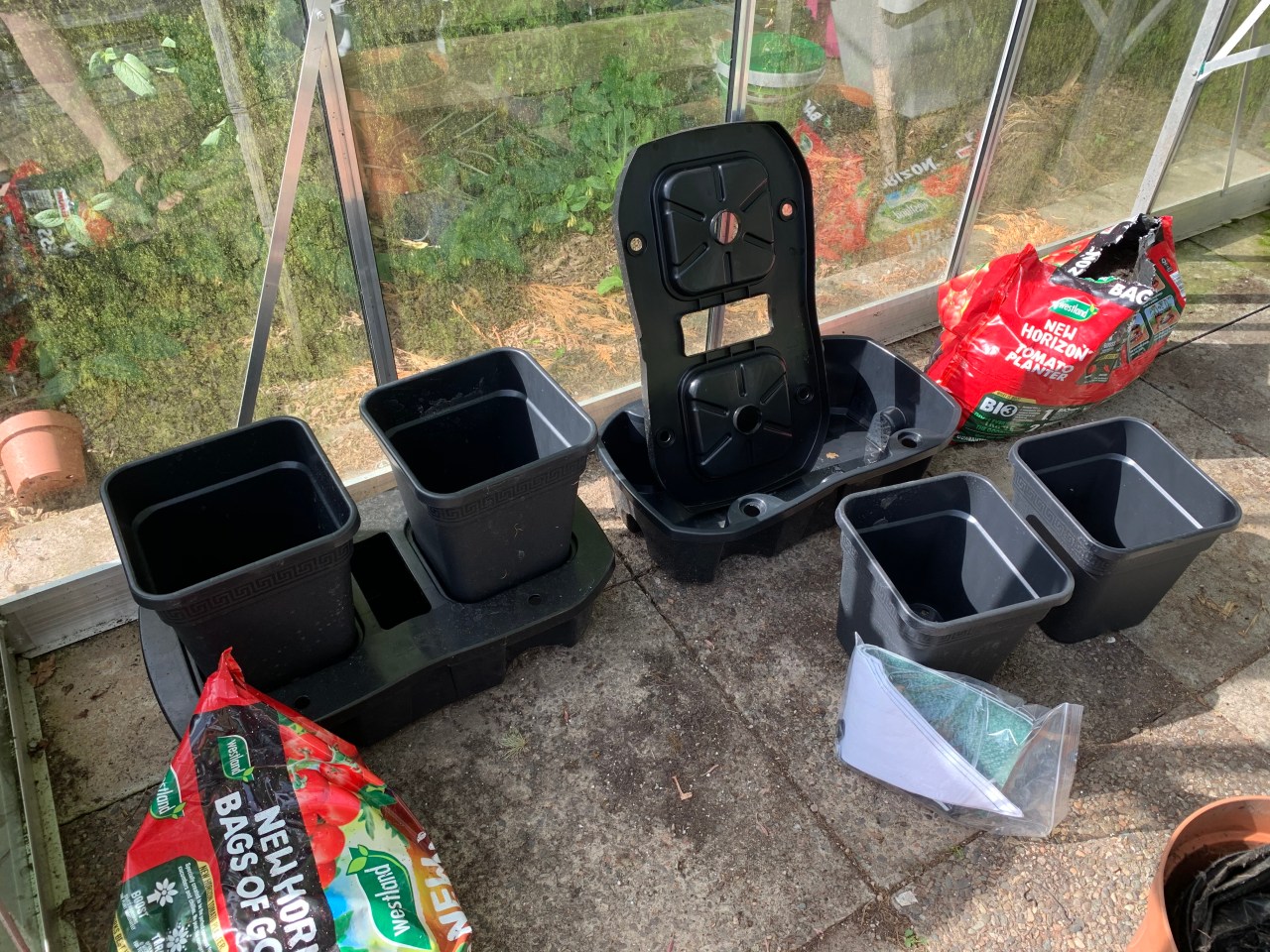
The package came safely in the post, complete with two trays, four pots and some plant food and I set up the system in mid-May when my tomato plants were getting big enough to plant out and live in the greenhouse.  Bearing in mind that I’m not particulary handy or technically-minded it was easy to set up and I had the thing slotted together in minutes.  You simply have to connect the trays with a little pipe and also insert the filters and make sure the wicking material is in place within each pot.  This is how the system keeps the soil moist so it’s important to make sure the wicking material is in contact with the water.  I actually left a little corner of it visible above the soil so that I can check it’s still damp – that way I know the soil is still getting the moisture it needs.  Once the pots were filled up with some peat-free tomato compost I popped in each plant, inserted a bamboo support and tied them into place as I usually do.  

In the interests of not-very-scientific experimentation I’m also growing the same varieties of tomato in the same peat free compost but in growbags and pots.  I’m looking forward to seeing how each method compares, and whether I have healthier plants, or better fruit, from those grown in bags, pots or the Quadgrow.  There will have to be a lot of tasting to find out… 😋

And if you’re wondering what varitieties I’m growing, I’ve got: Gardener’s Delight, Sungold, Rosella and Black Russian.  I’m also growing one plant called Maskotka outdoors – another experiment to see if it’s possible to get a decent crop of tomatoes outdoors in Scotland.  I have my doubts, but actually this plant seems to be doing fine – although a bit more compact than the others it’s setting fruit and looking fairly healthy! 

So far, I’ve topped up the Quadgrow with water about three times and it hasn’t yet been empty when I’ve checked.  The plants are definitely more thirsty the bigger they’ve got so I’m keeping a close eye on the water level each time I’m doing a #Fridayfeed.  

You can check out photos and videos of the Quadgrow on my Instagram feed @mycornerofearth – there’s a series saved to my Stories including the set-up video and I’m including regular updates as the plants develop.  I’ll report back more progress here on this blog as my plants grow and hopefully give me some tasty tomatoes!
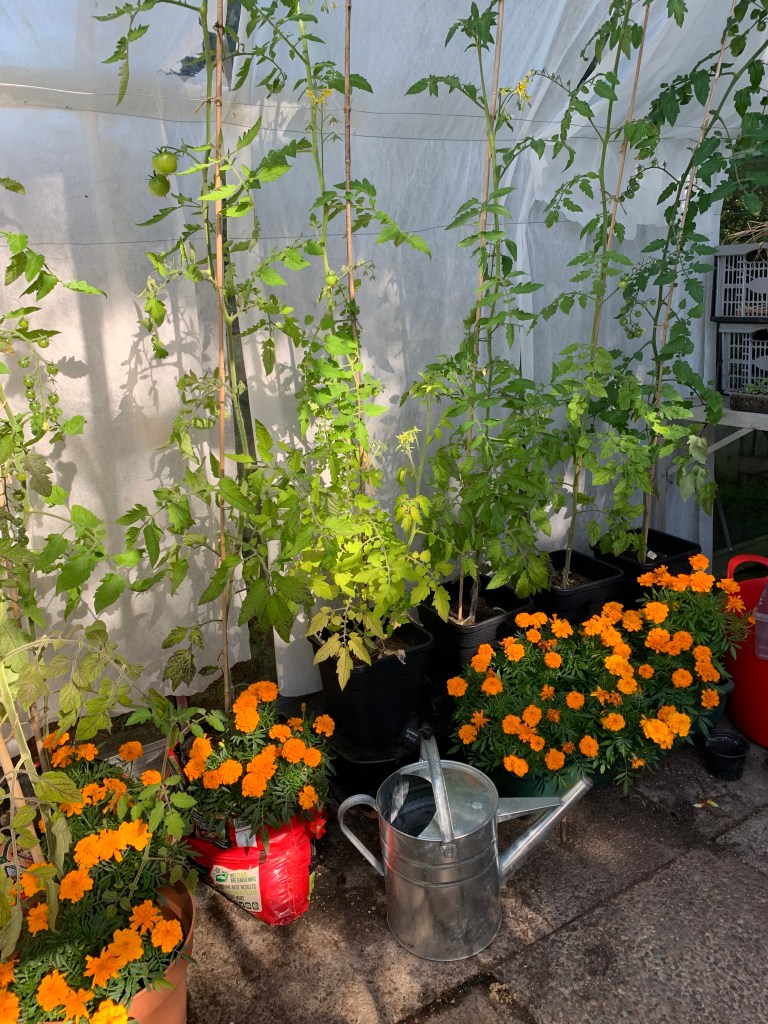
My tomato plants are flourishing so far in their Quadgrow planter!

Cosmos – out of this world!

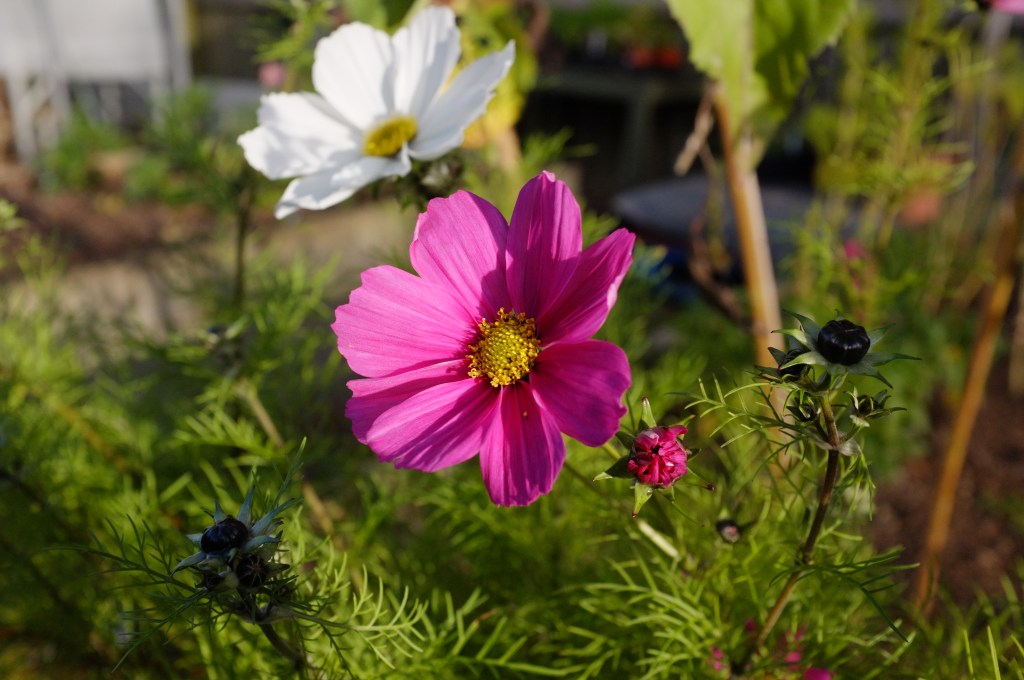
No garden should be without cosmos and its heavenly flowers. After a bit of a slow start with these brightly-coloured blooms, I’ve become a convert, and now I sow them from seed every year to ensure I’ve got plenty of these cheery favourites to brighten up my borders.

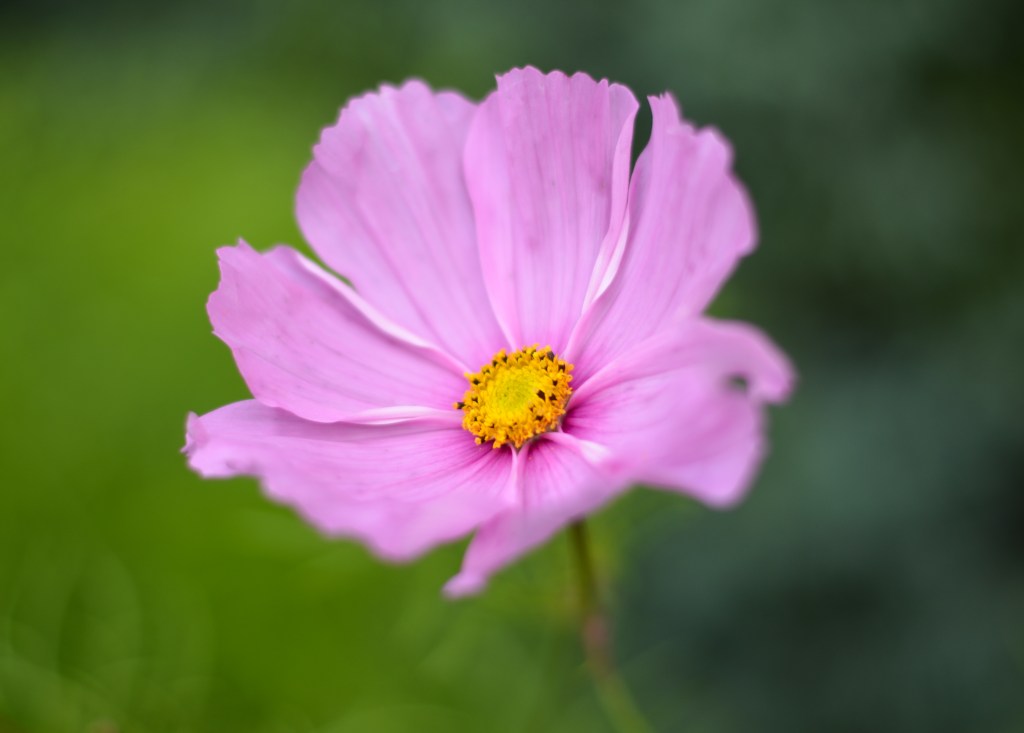
Cosmos bipinnatus are half-hardy annuals, which means, like bedding plants, they will grow and flower within one season, and can then be composted when they’re spent in the autumn. Their large, daisy-like flowers are most often seen in shades of pink or pure white, but they can also be found in ‘hot’ red and orange – there’s even a relatively new yellow variety. They are very easy to grow and you can easily buy them as young plants – but you’ll get much more for your money if you sow them from seed any time between March and May. Simply sprinkle onto a tray of moist compost and cover lightly. They’ll benefit from bottom heat, but will also germinate fairly readily if covered with a plastic bag or clear lid and left in a greenhouse or sunny windowsill.

Once their second pair of leaves is showing (the ‘true’ leaves) they can be pricked out into bigger pots and grown on until they’re ready to plant out after the last frosts. Pinching them out (removing the growing tip) makes for bigger and bushier plants with more flowers so this is well worth doing at this point or when they’re about a foot or so tall. Once they’re in the ground and flowering it’s a good idea to deadhead them regularly as removing the spent flowers makes room for more to bloom – and bloom they will! These generous plants will flower non-stop from midsummer until the first frosts, perhaps even later. With last year’s mild autumn, it took a real dip in the temperatures to kill off my cosmos, so I was able to enjoy them well into November.

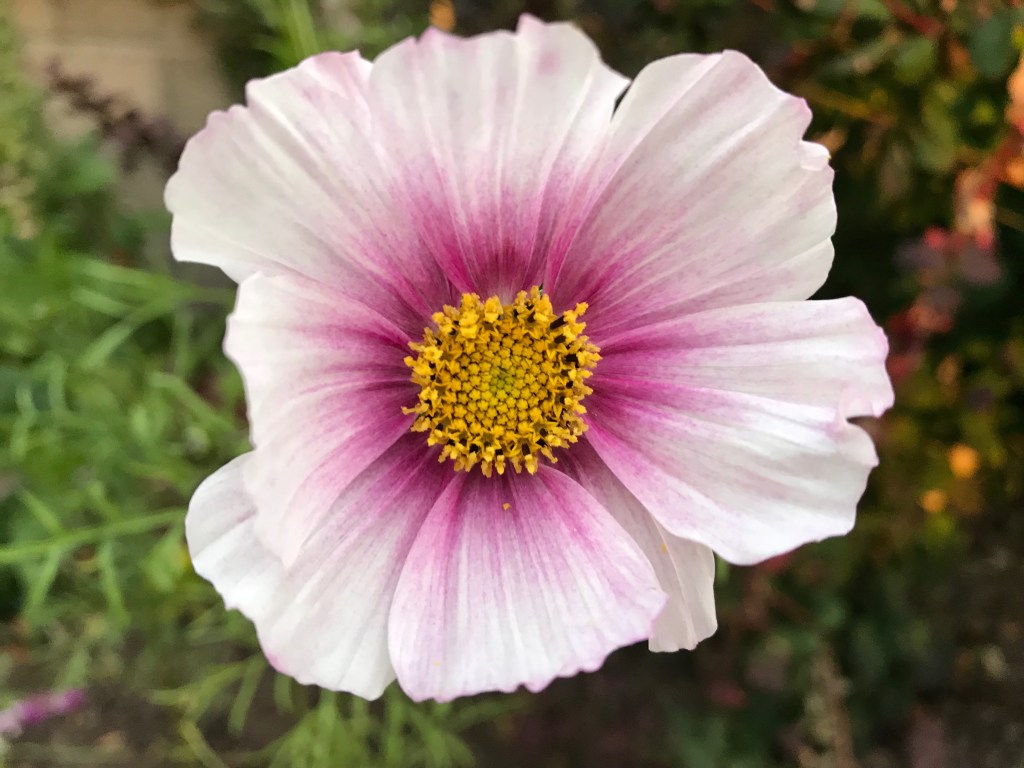
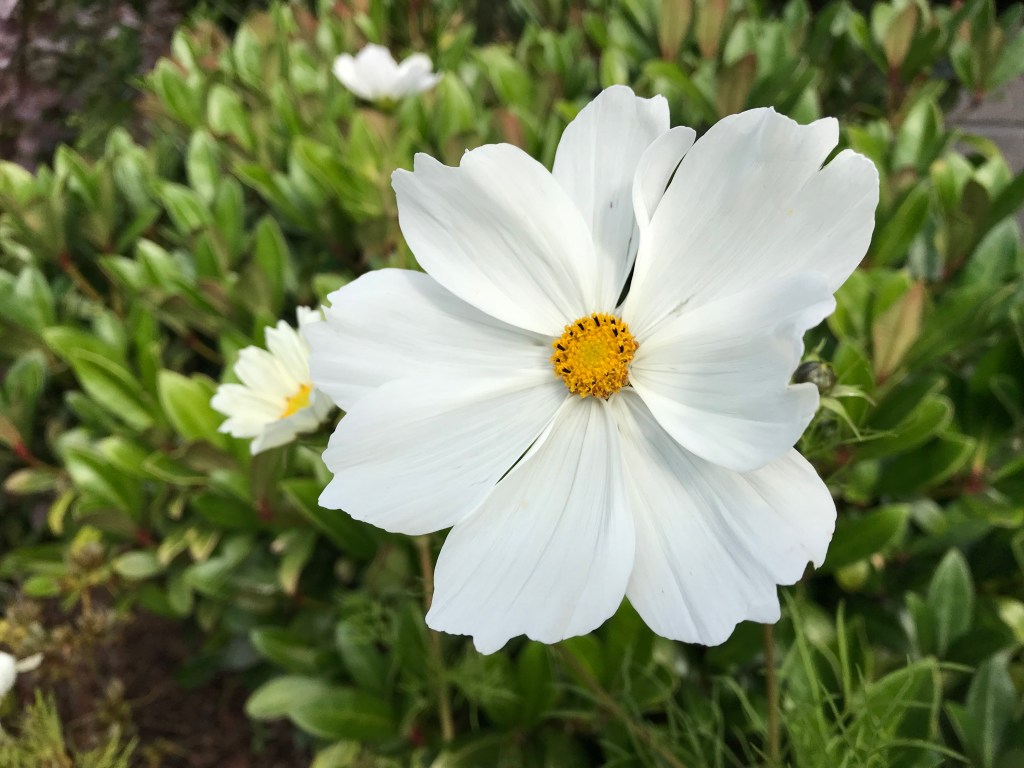
There’s quite a wide variety of cosmos to choose from, but all are reliable performers so choosing is simply a matter of taste. For a pure hit of colour you can’t go wrong with ‘Sensation’ – a mix of light and dark pinks with some white flowers and well worth growing. There’s also ‘Dazzler’ with large deep red flowers, or ‘Versailles Tetra’, which are slate-pink with a red centre surrounding the bright yellow eye of the bloom. Last year I was quite taken with ‘Daydream’, which is a bit more delicate looking – very pale pink, deepening in colour towards the centre of each petal. However my firm favourite is ‘Purity’, These are quite a tall variety, so best towards the back of a border, with large, brilliant white flowers. They look fantastic with other cottage-garden style plants or in a vase, providing light and texture with their feathery foliage and stunning white blooms.

Cosmos ‘Purity’ in a mixed border

Cosmos aren’t just for the garden – dwarf varieties are great in pots – try ‘Sonata’ or ‘Apollo’, which are more compact and will suit container planting. For something a bit different, go for ‘Xanthos’ which flowers prolifically and is the first yellow cosmos in a really pretty, soft shade. There are other more unusual varieties of cosmos which come in all shapes and sizes – ‘Cupcake’ is so-called because its fused and upturned petals look, well, like a cupcake! Or there’s ‘Sea Shells’, which has tubular petals, and ‘Double Click’, with a lovely ruffled, fully double flower, in a range of colours from cranberry through to rose.

Cosmos ‘Xanthe’ (left) with chocolate cosmos in the planter with Stipa tenuissima

Cosmos are easy to grow, flower for ages and are great for filling gaps in borders, or as a temporary fix for an empty flower bed – they can even be planted alongside vegetables, to help bring in those useful pollinators, and they’re a stalwart of the cut flower patch too. They’re great dotted around the garden or in a vast swathe of airy, feathery foliage dotted with those brilliant blooms. Cosmos are cosmic for every garden – so get growing!

Chocolate cosmos
Chocolate cosmos is another member of the cosmos family, but not exactly like the others. Why is it called chocolate cosmos? Well, partly because of its rich, dark, red/brown colouring but also because of its scent – if you get up close to the flower you’ll smell its wonderful vanilla-chocolate aroma. Also known as Cosmos astrosanguineus, this plant is perennial, and if you look after its slim tubers (by lifting or covering during the winter) then it will return year after year. It’s not as common as its bright and beautiful cousins, but it’s got a velvety, sultry charm which is hard to resist. These are most often bought as young plants, as seeds are hard to come by and can be tricky to germinate. Chocolate cosmos are much smaller than Cosmos bipinnnatus, with loose, slender stems. I plant mine in a large container with grasses to give some contrast and also to help support the flowers…after all, I want them as close to my nose as possible for that fantastic hit of chocolate!

This article was originally published in The Courier’s Beautiful Homes supplement, Spring 2019

Bittersweet peas

I’m having a love/hate relationship with sweet peas.

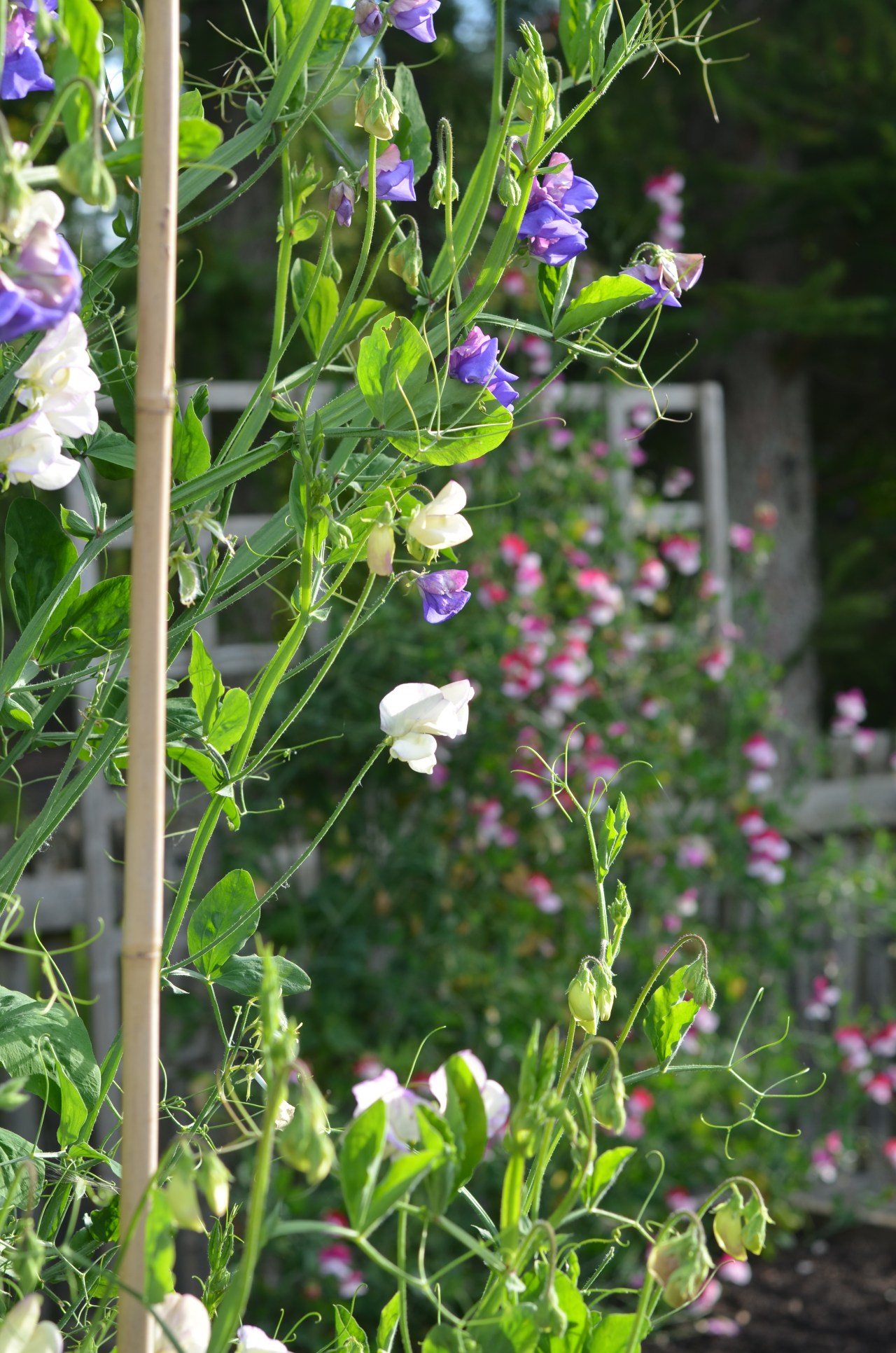
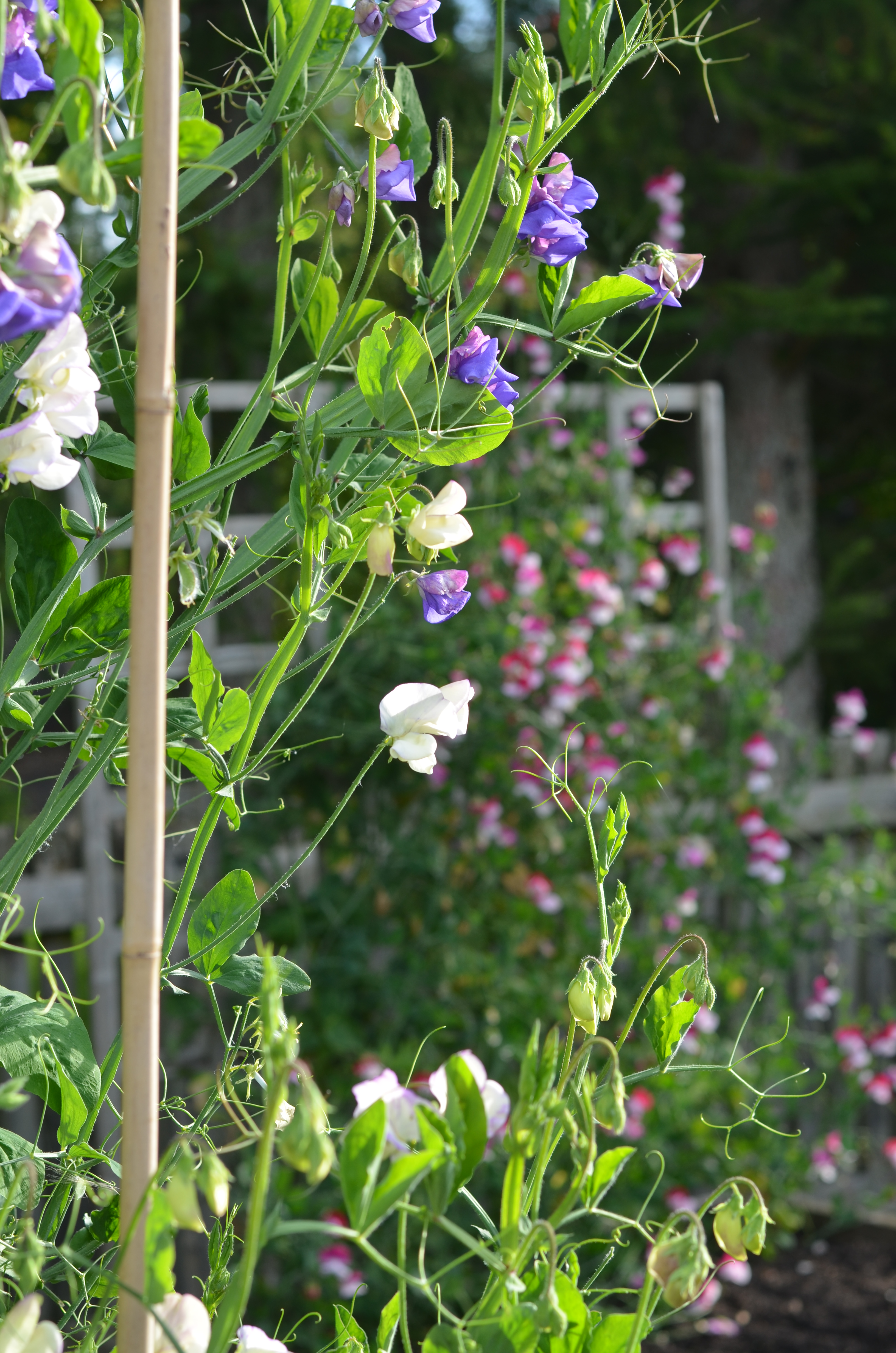
Actually that’s not strictly true – I love them really, but I hate the way they make me sneeze.  I’m growing lots of different varieties this year and although it’s now September and Autumn is definitely peeking its head round the corner, they’re still going strong in my garden.  So I’m bringing in bunches of them every few days – but the pollen is definitely exacerbating my allergies and every morning when I wake up I explode a number of times and end up looking like I’ve been crying for a week.  But that scent though…

I nabbed some photos of the main offenders this morning to ‘review’ the varieties I’ve been growing this year.  Way back in March I treated myself to a window propagator from Marshalls like this one, which came with a selection of new varieties of sweet pea seeds.   I grew a few of each in two batches, one of which was quite late and I guess that’s why I’m still picking them mid-September.

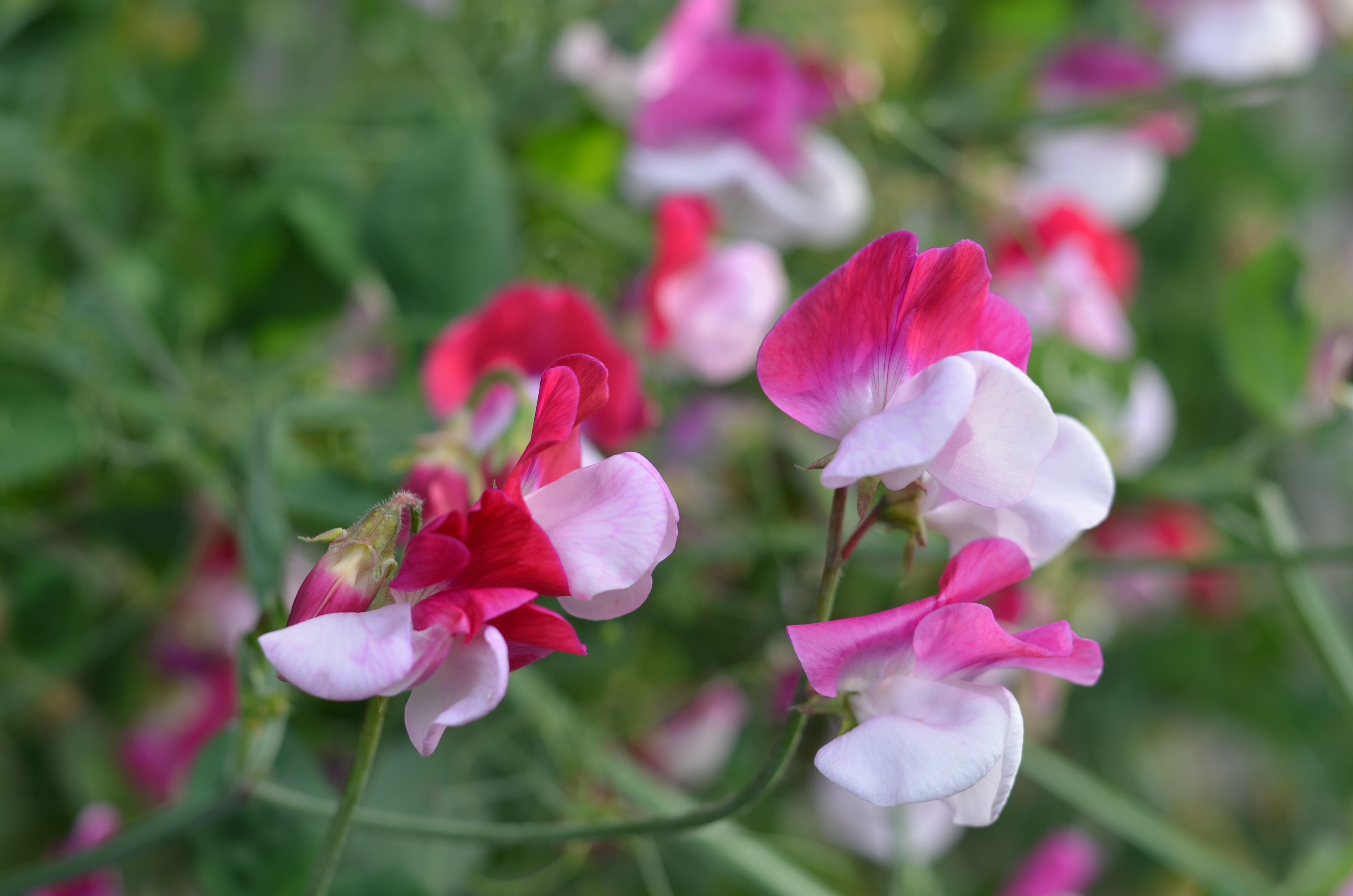
The prize for the most prolific goes to…Little Red Riding Hood:

DSC_0628

This one has been covered in flowers for a number of weeks and is really bright and cheery.  There are so many that I’ve never yet managed to take off every flower with each picking – I’d run out of vases!  The stems are on the short side but if you don’t mind that, this flower just gives and gives the whole season.

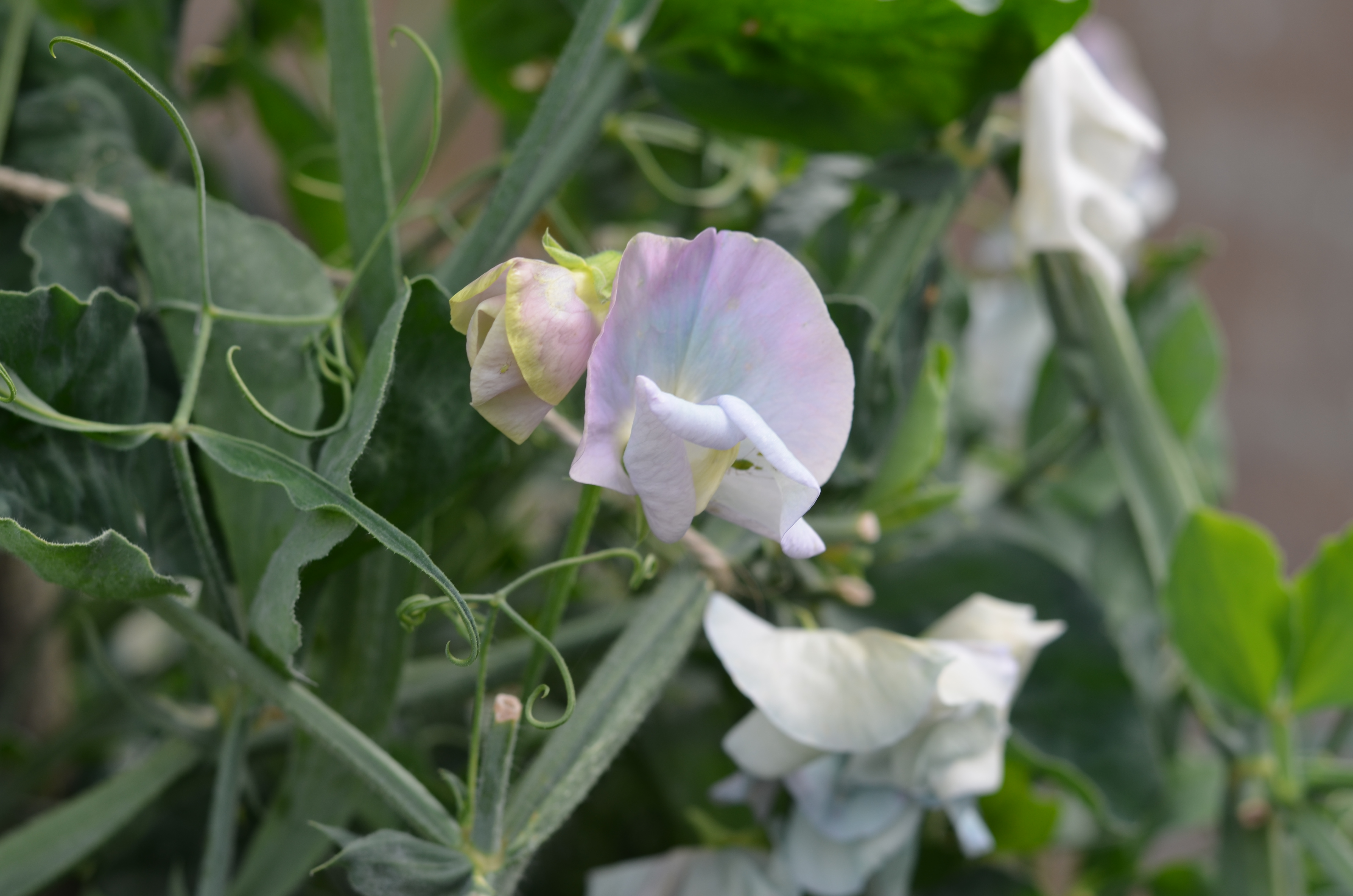
The prize for the prettiest colour goes to…Erewhon:

DSC_0610

This flower is such a delicate blue-purple with just a hint of pink.  It’s really gorgeous and very subtle.  Can you spot the aphid in the photo above by the way??

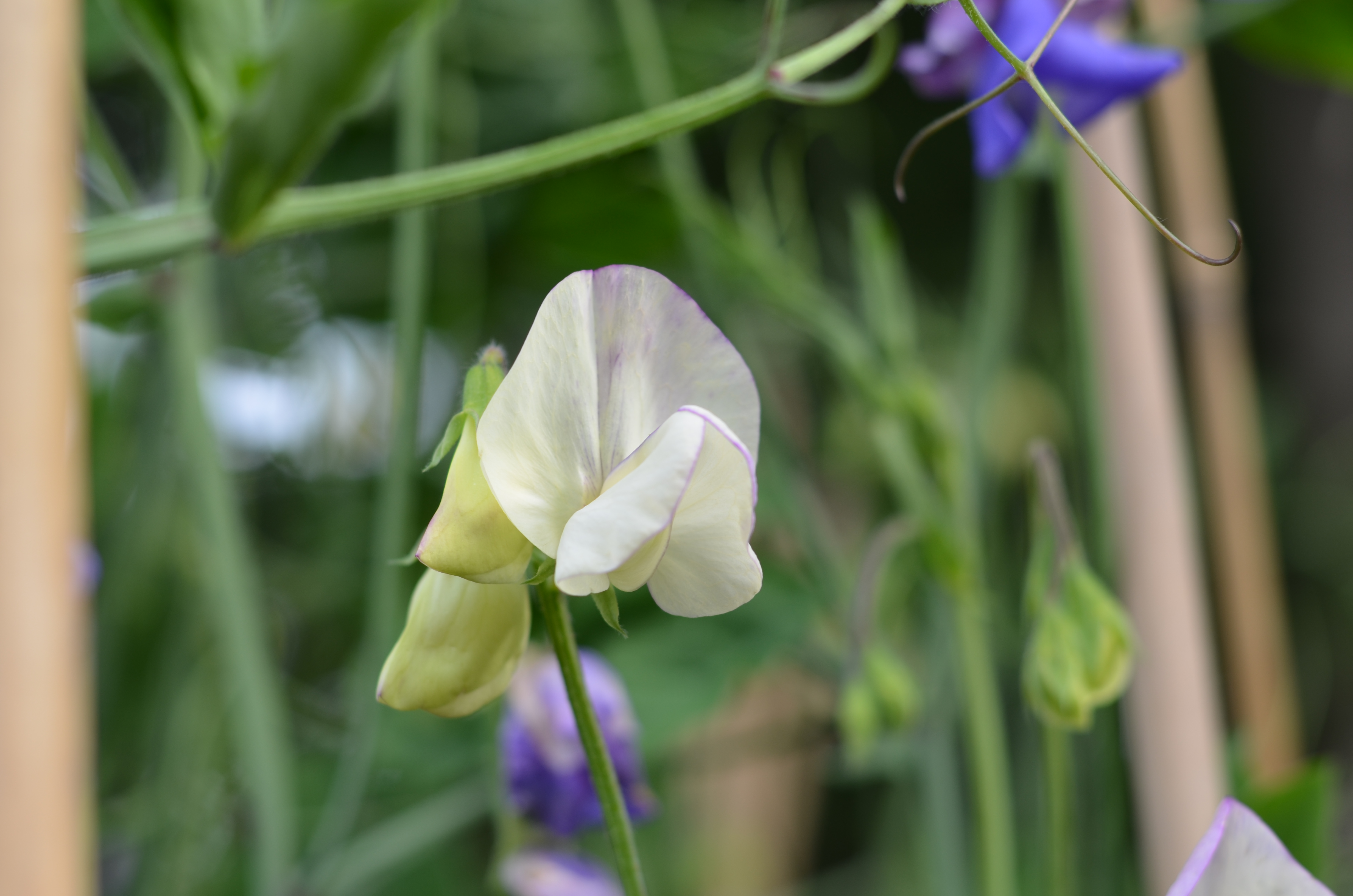
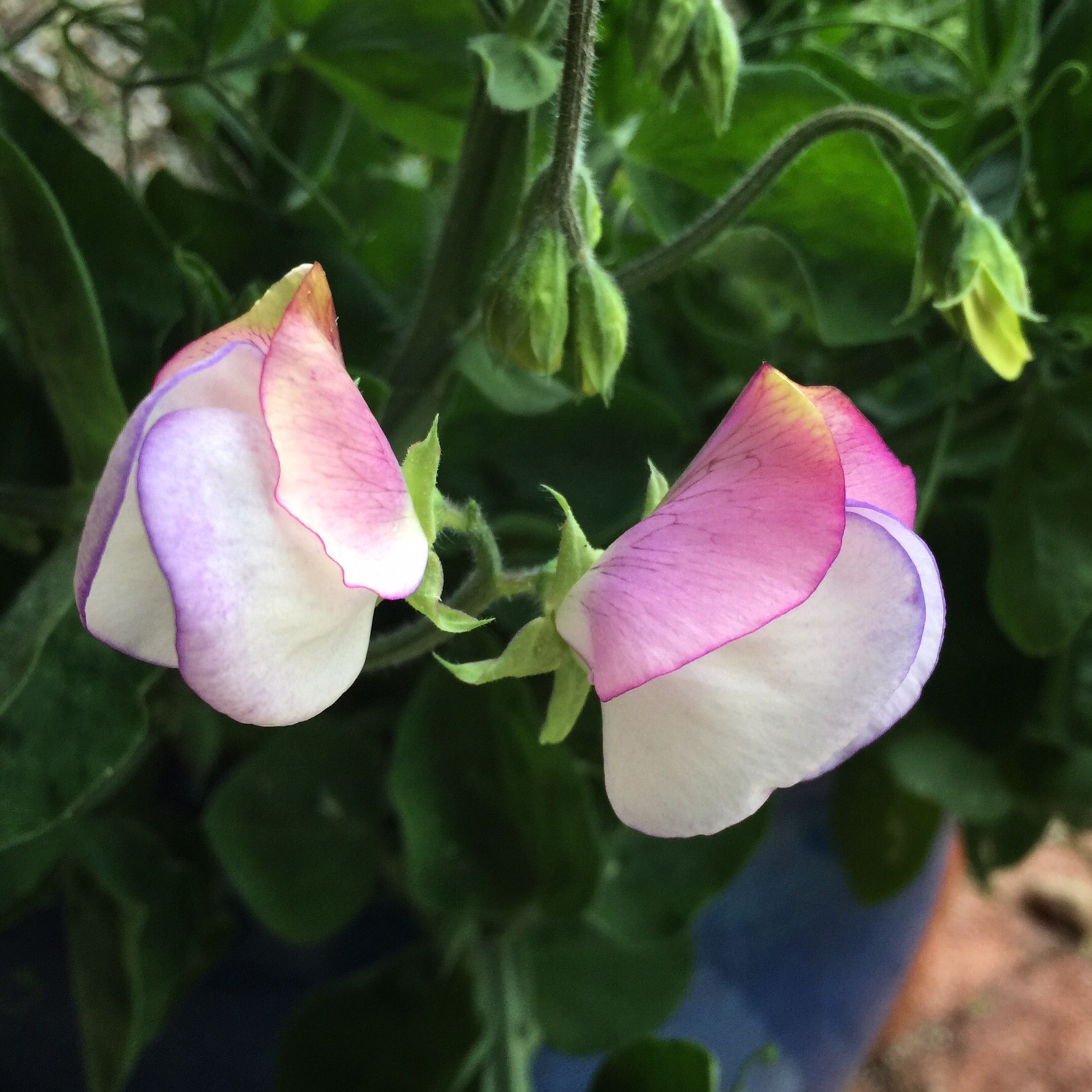
Which brings me to – the prize for the most covered in aphids goes to…Cream Eggs:

DSC_0623

These are also a really pretty colour, with delicate purple veining inside and around the edges, and they smell beautiful.  However, I’ve been chasing aphids off the buds and flowers for several weeks – they hide inside the folds of the flower until you bring them inside and then invade your house too – grrr.

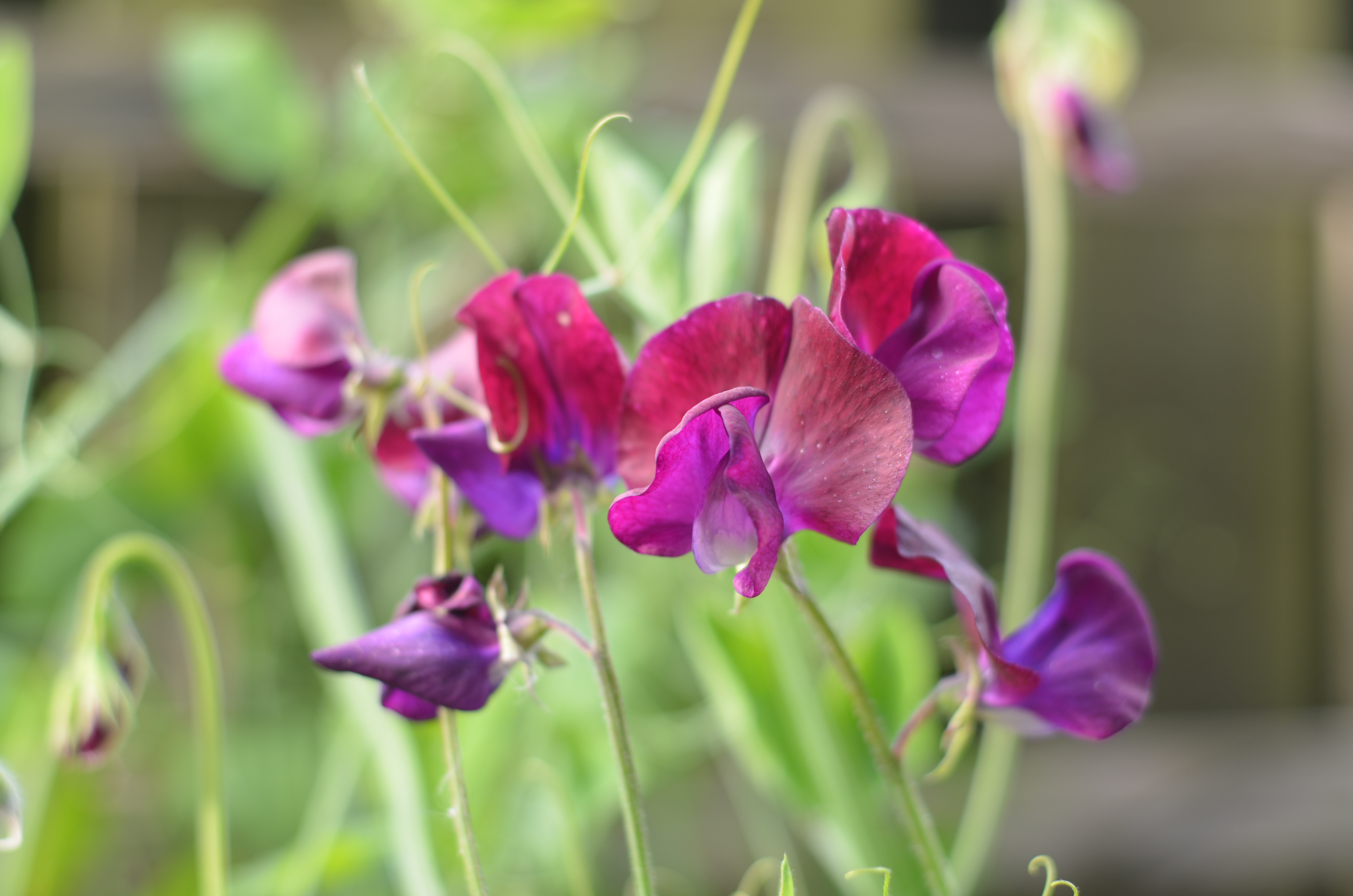
The prize for the most dramatic flower goes to…Berry Kiss: DSC_0618

This has produced lovely deep pink and purple flowers, although these tend to fade quicker and can look a bit tatty after rain.

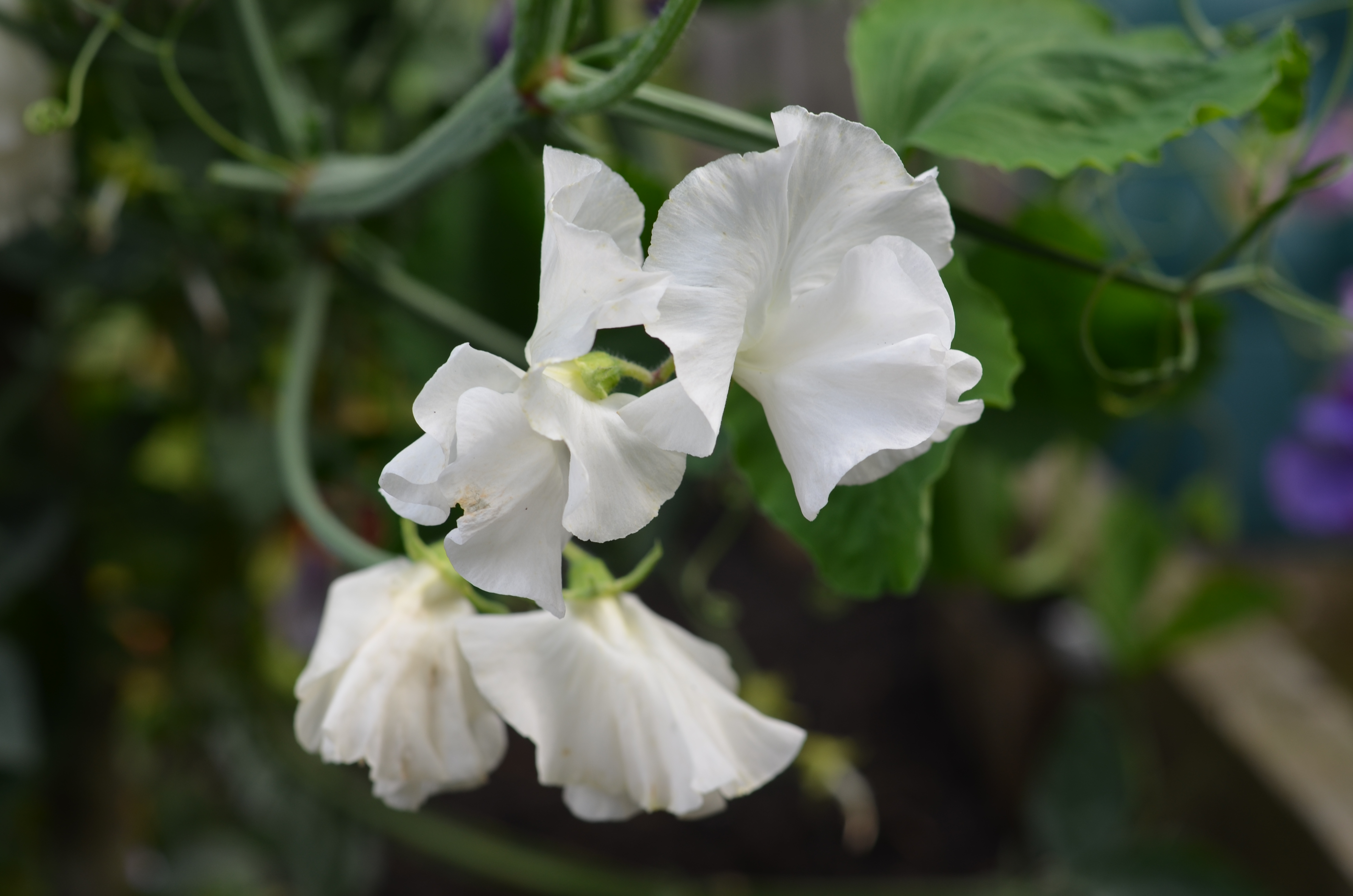
And the prize for the purest, ruffliest sweet pea goes to…Misty Mountains:

DSC_0608

This mix also has dark and paler purple flowers in it, but I’ve been most struck by the white ones, which look like they’ve fallen straight off an Elizabethan gentleman’s shirt sleeves.  Lovely.

However my favourite sweet pea for this season is a bit of a wild card – it’s a dwarf variety which I planted into a blue pot and set by the front door.  Although it didn’t last as long as the rest, the colour was magical – it’s Northern Lights:

IMG_2165

What a beauty.  The plant has finished flowering but I’ve kept it aside in the hope of keeping some of the seed to sow more next year.

So there you have it, my sweet pea selection.  I’m off to take another antihistamine and enjoy more of one of my favourite flowers in the garden…

DSC_0636

Too busy gardening to blog about gardening!

Which is a good thing, really!  But I have missed writing these updates and sharing the photos and plants which I’ve accumulated in the past couple of weeks.

The weather has, unbelievably, been marvellous – sunny and warm and perfect for getting into the garden and planting out all the seedlings and young plants which have, until now, been crowding the utility/greenhouse, plastic growhouse and my ‘hardening off table’ outside the kitchen door.  Over the past fortnight I’ve planted out marigolds (mostly in the veg garden), cosmos (corner patio), zinnia (in the raised bed with other cut flowers) and filled an enormous hanging basket with lobelia.

The garden’s also filling up with some new additions, thanks to a local church plant sale which was quickly followed by the school summer fair – I managed to pick up about maybe 20 different cuttings and small plants for less than a tenner!  Annoyingly I forgot to photograph them, so I can’t display this triumphant haul, and I have now planted most of them!

They included some crocosmia ‘Lucifer’ which is now in the front borders in between the rhodedendrons to provide some late summer colour.  I’m looking forward to seeing those spring up.  I also picked up some gorgeous little forget-me-nots, which I’ve put into the side patio bed (the plan for this has changed somewhat – but that’s for another post!).    There was a cutting of rosemary, two cornflower plants, some more lobelia and a mystery plant which I’ve put in a pot to see how it will turn out!

I’ve also picked up some new plants at Gardening Scotland – an event in Edinburgh which featured show gardens, plants, floral displays, food and lots and lots of gardening-related equipment for sale.  My mum and I had a great day wandering around and enjoying the sights and scents.  There was a wide variety of plants for sale, most by independent Scottish nurseries, and I found some beautiful, delicate alpines (I love them so much I will also do a separate post on these) and two hydrangea.  I just couldn’t resist the hydrangea, as I have a weakness for these anyway, but also because these were unusual varieties and beautifully coloured.  One is called ‘Popcorn Blue’, basically because it’s blue and looks like popcorn!

So, along with these new additions to the gardening, and thanks to the abundant sunshine, everything is filling out nicely and the garden’s beginning to look properly lush. The nearby trees have obviously filled out and we’re now surrounded by greenery.  I’m spotting young birds visiting frequently and if you pause to listen you can often hear the squeaks and cheeps of a little feathered family nearby.  The starlings are still doing daily raids too – I wonder if they’ll stick around when they’re grown, as we don’t usually get starlings in our garden.

The fruit and veg in the secret garden’s also looking brilliant, but I think this post is long enough and they deserve their own entry!  So, it’s time to get back outside.  I’ll leave you with a few photos of the various plants which are new or are showing off in the garden just now…


Sunshine and snow

It has been a week of VERY mixed weather, with the past couple of days seeing glorious sunshine…while little flakes of snow gently drift down from above.  Beautiful but c-c-c-cold.

So I’ve been wrapping up some of my tender plants or bringing in those in pots which I’ve been hardening off, like geraniums and fuschia.  The passiflora I planted up in a lovely blue pot just last week is currently ‘dressed’ in one of my husband’s old t-shirts pinned together with clothes pegs.  And my pea seedlings, which are showing signs of slight frost damage have most recently been protected by a free fleece cover which I got when I  recently bought a little growhouse.

I chose the wrong week to move my seedlings from the utility/greenhouse into their new growhouse (I got it partly for hardening them off and to make watering easier, and partly to get some space back in the utility room!) because I think they’ll be ok inside their little plastic cocoon but I’ve been worrying about them during the snowy days – maybe it’s just too cold for them to be outside??  I’d be frustrated to lose them after spending the last few weeks watching them grow.  But I suppose that’s the joy/despair of gardening! Fingers crossed they are protected enough and will survive this cold snap.

Checking the raised beds in the secret garden, I discovered signs of germination – hurrah!  The purple sprouting broccolli is emerging, along with a few pea shoots and some rocket and lettuce.  I am slightly worried about my potatoes – not a sign yet, although my dad, who planted his just the day before I did, has already got green tops showing.

Back in the main back garden, the blossom on the apple and plum trees is there, tightly wadded up, just waiting for the next warm and sunny day to burst out and really show off.  I love blossom.  One or two little flowers are already emerging – a hint of what’s to come…

DSC_0542


Lobelia learning curve

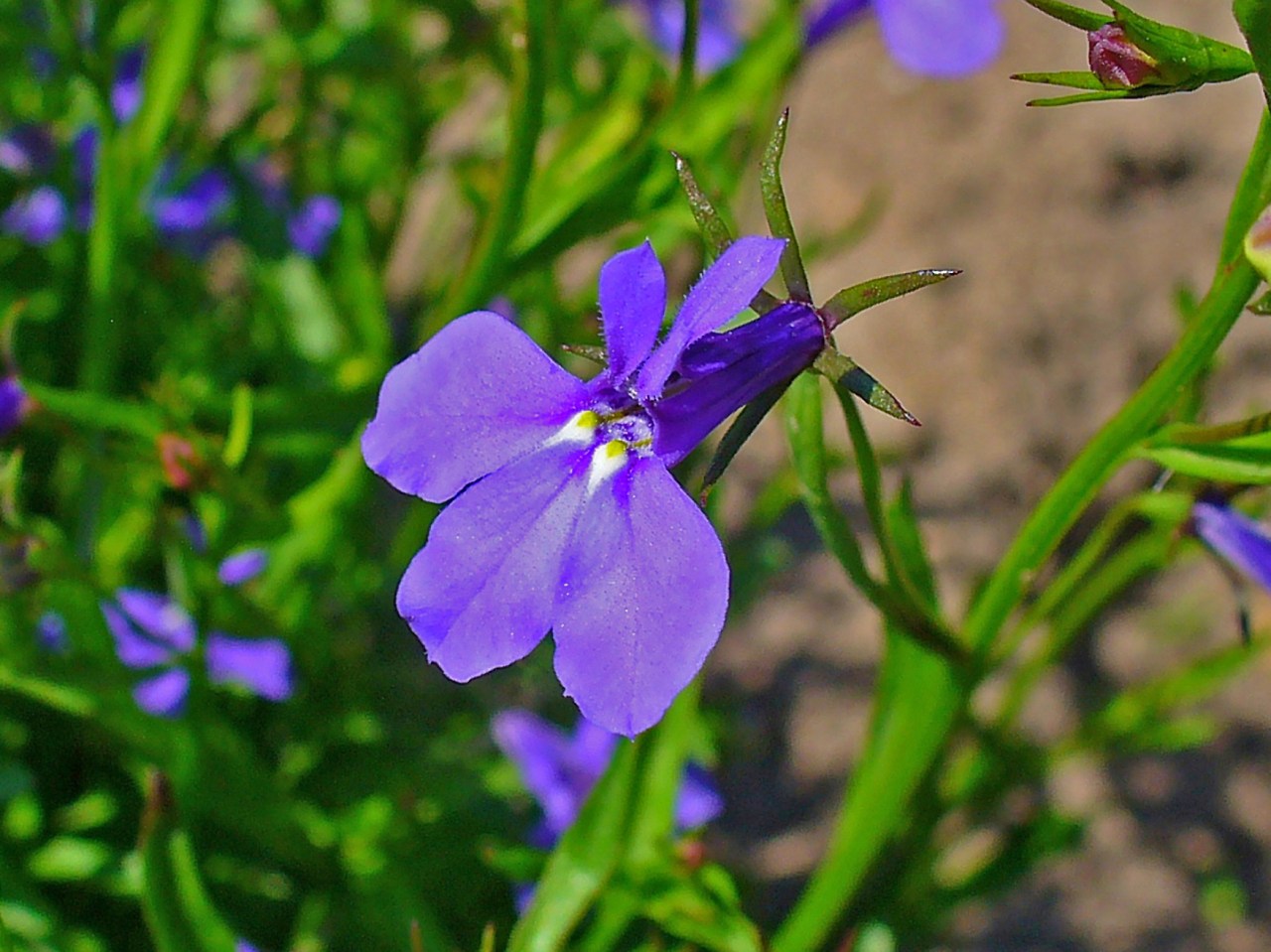
I sowed lobelia last year, directly into the raised bed I used to grow cut flowers* and they did quite well, but flowered fairly late in the season and are not really great for cutting, they’re better for baskets or pots.  So this year I sowed early under cover, with the aim of using the plants for two large wire hanging baskets which we inherited with the house.  I have a vision of these lovely trailing purple flowers decorating the front of our house and making visitors ‘ooh’ appreciatively when they visit.

lobelia_erinus_003

Lobelia erinus

However.  Lobelia seeds and indeed their seedlings are ickle tiny wee things and quite tricky to prick out, as I have discovered!  It’s not impossible, and I did manage to transfer most of the delicate little plants from the seed tray in clumps into a slightly bigger modular tray.  I’m hoping from here they will grow big enough to then plant into baskets so that they can look beautiful at the front of the house, visitors will ‘ooh’, etc etc… However.  Having dragged the wire baskets from the back of the shed to have a good look at them, they are BIG.  60cm each in fact, and I’m pretty sure my little crop of lobelias will only fill one of these at best.

I will definitely keep growing them anyway, they’ll do for a smaller basket or pot – but perhaps in the meantime I might have to invest in some pre-grown bedding plants for the hanging baskets, especially if I want them on display any time soon!

In other garden news, I did the first grass cut of the season – yay!  I observed two things:

1) the chickens didn’t freak out as much as I thought they might at the sound of the lawnmower. This is good, as I really didn’t want to have to cut the grass fortnightly during the summer under cover of darkness after they’d gone to bed to avoid scaring them!

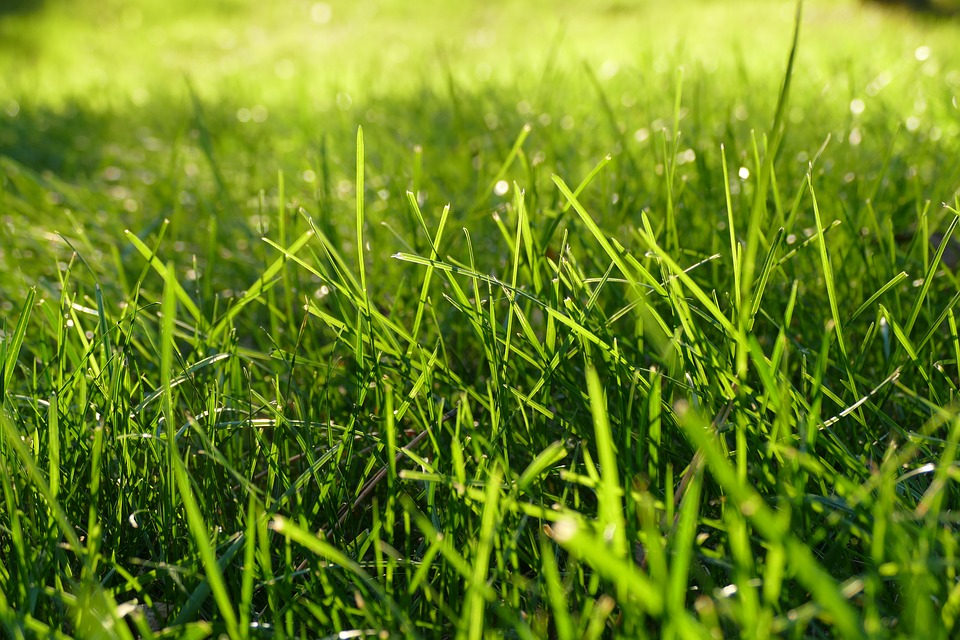
2) The grass is in a pretty crappy state.  What with scarifying, plus a bit of extra treading around fixing up a chicken run, plus a lot of rain recently, it’s not exactly looking green and lush and is still very mossy.  This will be a long-running battle I think, to restore it to a healthy state.

grass-1147851_960_720

My grass does NOT look like this <sob>

*This sounds impressive, but didn’t work as well as I’d hoped, apart from the cornflowers and a few snapdragons.  I am giving it another bash this year and have sowed earlier so hopefully will get better results!